Tether and DMCC MOU Targets Blockchain Education, Tokenization in Dubai
Tether and the Dubai Multi Commodities Centre (DMCC) have signed a memorandum of understanding focused on advancing blockchain education and asset tokenization in Dubai, signaling a formal cooperation between the stablecoin issuer and one of the emirate’s largest free zone authorities.
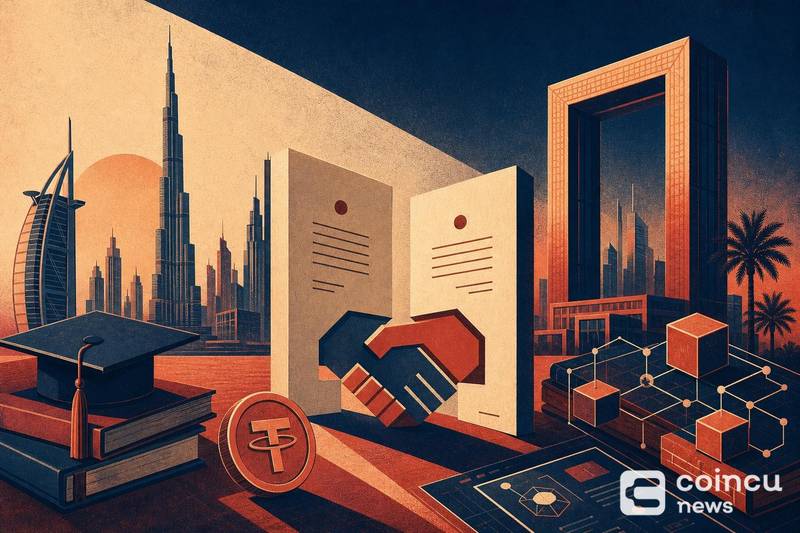
The MOU outlines two primary areas of collaboration: blockchain education initiatives and the development of asset tokenization frameworks. A memorandum of understanding is a non-binding agreement that establishes intent to cooperate, rather than a finalized product launch or regulatory approval.
DMCC Executive Chairman and CEO Ahmed Bin Sulayem announced the partnership on X, confirming the agreement between the two organizations. The announcement positions the collaboration as part of Dubai’s broader efforts to build blockchain infrastructure.
What the Tether-DMCC MOU Covers
The agreement centers on two pillars. The first is blockchain education, which aims to expand literacy among businesses, developers, and institutions operating within Dubai’s free zone ecosystem. The second is asset tokenization, the process of representing real-world assets such as commodities, real estate, or financial instruments as digital tokens on a blockchain.
Tether, the issuer of the USDT stablecoin, brings global crypto infrastructure experience to the partnership. DMCC, as Dubai’s flagship free zone, provides access to a network of over 20,000 registered companies spanning commodities, financial services, and technology sectors.
The MOU does not specify launch dates, product details, or regulatory milestones. It represents a statement of intent rather than a completed rollout, and concrete outcomes will depend on how the two parties execute on the outlined goals.
Why Blockchain Education and Tokenization Were Paired
Education and tokenization address different stages of the same adoption challenge. Blockchain education lowers entry barriers for enterprises and new market participants who may lack technical understanding of distributed ledger technology. Without that foundation, tokenization initiatives risk limited uptake.
Asset tokenization translates blockchain capability into practical business applications. By converting physical or financial assets into digital tokens, businesses can potentially improve liquidity, reduce settlement times, and enable fractional ownership. These use cases have drawn increasing attention from traditional finance and commodities firms exploring digital infrastructure.
Pairing the two themes suggests the partnership aims at long-term ecosystem building rather than short-term product announcements. Education creates demand; tokenization creates utility. As blockchain platforms increasingly expand into new product verticals, the combination reflects a strategy to develop both supply and demand sides of blockchain adoption within Dubai’s business community.
Why Dubai and DMCC Matter in This Partnership
Dubai has positioned itself as a hub for digital asset and blockchain activity, attracting major crypto firms to establish regional headquarters in its free zones. DMCC, which oversees one of the largest free trade zones in the UAE, serves as a direct channel to enterprises already operating in the region.
For Tether, partnering with a government-backed free zone authority provides institutional credibility and access to a concentrated business ecosystem. For DMCC, the collaboration adds blockchain-native expertise to its portfolio of member services, potentially differentiating its offering for technology-focused companies.
Local institutional partnership is central to execution in the UAE’s regulatory environment. Free zone authorities like DMCC operate with significant autonomy in setting business rules within their jurisdictions, making them effective partners for piloting new technology frameworks. The arrangement parallels how other blockchain firms, including major exchanges operating in the region, have sought local partnerships to establish credibility and regulatory footing.
Potential Impact on Businesses and Real-World Asset Adoption
If executed effectively, the education component could benefit startups entering the blockchain space by providing structured learning resources and institutional validation. Enterprises already registered with DMCC may gain exposure to tokenization frameworks that could be applied to commodities trading, a core activity within the free zone.
The tokenization element could attract firms exploring digital representations of physical assets. The commodities sector, which forms a significant portion of DMCC’s membership base, represents a natural testing ground for asset tokenization given its reliance on complex supply chains and trade documentation.
However, the impact remains contingent on execution details that have not yet been disclosed. The MOU does not specify funding commitments, program timelines, or the scope of educational offerings. As with similar announcements across the crypto industry, including institutional moves into digital assets, the gap between stated intent and delivered outcomes can be significant.
Investors and businesses considering engagement should monitor both Tether’s official announcements and DMCC’s communications for follow-up details on program launches, eligibility criteria, and partnership milestones.
FAQ About the Tether and DMCC Dubai MOU
What is the Tether and DMCC MOU?
It is a memorandum of understanding, a formal but non-binding agreement, between Tether and the Dubai Multi Commodities Centre to collaborate on blockchain education and asset tokenization initiatives in Dubai.
Why is Dubai important to this deal?
Dubai has actively courted blockchain and crypto companies through its free zone framework. DMCC provides access to thousands of registered businesses and operates with regulatory autonomy that can facilitate pilot programs for new technologies.
What does asset tokenization mean in this context?
Asset tokenization refers to creating digital representations of real-world assets, such as commodities, real estate, or financial instruments, on a blockchain. In the context of DMCC’s commodities-focused membership, it could apply to trade finance, supply chain documentation, or fractional commodity ownership.
Does this MOU mean Tether is launching new products in Dubai?
Not immediately. An MOU signals intent to cooperate, not a confirmed product launch. Specific programs, timelines, and deliverables have not been announced as of the signing.
Disclaimer: This article is for informational purposes only and does not constitute financial or investment advice. Cryptocurrency and digital asset markets carry significant risk. Always do your own research before making decisions.
No tags available.




- China, US Conclude Trade Talks with Focus on Cooperation
- Crypto Weekly: NYSE Backs OKX, Kraken Gets Fed Access, BTC Sells
- DeriW Launches Edge Hour Trading Competition Platform for Derivatives Traders
- Court Upholds Fed’s Rejection of Custodia Bank’s Request
- Former CFO Convicted for $35M Fraudulent Crypto Investment
- Michael Saylor Denies Bitcoin Sell-Off Amid Large BTC Transfer
- Kazakhstan Explores Crypto Reserves Backed by National Funds
- JPMorgan Increases Holdings in BlackRock’s Bitcoin ETF
- Buy Dogecoin on eToro: Step-by-Step Guide for Beginners (2024)
- Nordea Bank Introduces Bitcoin ETP Trading for Nordic Customers
- XRP Spot ETF Launches on Nasdaq Amid Market Fluctuations
- Crypto Leaders Address Macro Volatility Amid Market Shifts
- Peter Schiff Challenges Michael Saylor on MSTR’s Business Model
- Thailand Orders Worldcoin to Delete 1.2 Million Biometric Records
- UK Proposes New DeFi Tax Framework to Ease User Burden
- WLFI Under Fire: Analyst Warns Hyperliquid Could Be Next
- Ancient Ethereum Whale Moves $1.19 Billion After Decade
- BlackRock Receives Large Crypto Transfers from Coinbase
- SEC Scrutiny on ALT5 Sigma’s Leadership Disclosure Timing
- MoonPay Gains Trust License for Crypto Operations in New York
- China, US Conclude Trade Talks with Focus on Cooperation
- Crypto Weekly: NYSE Backs OKX, Kraken Gets Fed Access, BTC Sells
- DeriW Launches Edge Hour Trading Competition Platform for Derivatives Traders
- Court Upholds Fed’s Rejection of Custodia Bank’s Request
- Former CFO Convicted for $35M Fraudulent Crypto Investment
- Michael Saylor Denies Bitcoin Sell-Off Amid Large BTC Transfer
- Kazakhstan Explores Crypto Reserves Backed by National Funds
- JPMorgan Increases Holdings in BlackRock’s Bitcoin ETF
- Buy Dogecoin on eToro: Step-by-Step Guide for Beginners (2024)
- Nordea Bank Introduces Bitcoin ETP Trading for Nordic Customers
- XRP Spot ETF Launches on Nasdaq Amid Market Fluctuations
- Crypto Leaders Address Macro Volatility Amid Market Shifts
- Peter Schiff Challenges Michael Saylor on MSTR’s Business Model
- Thailand Orders Worldcoin to Delete 1.2 Million Biometric Records
- UK Proposes New DeFi Tax Framework to Ease User Burden
- WLFI Under Fire: Analyst Warns Hyperliquid Could Be Next
- Ancient Ethereum Whale Moves $1.19 Billion After Decade
- BlackRock Receives Large Crypto Transfers from Coinbase
- SEC Scrutiny on ALT5 Sigma’s Leadership Disclosure Timing
- MoonPay Gains Trust License for Crypto Operations in New York
- China, US Conclude Trade Talks with Focus on Cooperation
- Crypto Weekly: NYSE Backs OKX, Kraken Gets Fed Access, BTC Sells
- DeriW Launches Edge Hour Trading Competition Platform for Derivatives Traders
- Court Upholds Fed’s Rejection of Custodia Bank’s Request
- Former CFO Convicted for $35M Fraudulent Crypto Investment
- Michael Saylor Denies Bitcoin Sell-Off Amid Large BTC Transfer
- Kazakhstan Explores Crypto Reserves Backed by National Funds
- JPMorgan Increases Holdings in BlackRock’s Bitcoin ETF
- Buy Dogecoin on eToro: Step-by-Step Guide for Beginners (2024)
- Nordea Bank Introduces Bitcoin ETP Trading for Nordic Customers
- XRP Spot ETF Launches on Nasdaq Amid Market Fluctuations
- Crypto Leaders Address Macro Volatility Amid Market Shifts
- Peter Schiff Challenges Michael Saylor on MSTR’s Business Model
- Thailand Orders Worldcoin to Delete 1.2 Million Biometric Records
- UK Proposes New DeFi Tax Framework to Ease User Burden
- WLFI Under Fire: Analyst Warns Hyperliquid Could Be Next
- Ancient Ethereum Whale Moves $1.19 Billion After Decade
- BlackRock Receives Large Crypto Transfers from Coinbase
- SEC Scrutiny on ALT5 Sigma’s Leadership Disclosure Timing
- MoonPay Gains Trust License for Crypto Operations in New York


Binance to Delist Five Spot Trading Pairs Including ADX/BTC on June 19, 2026

Mara Holdings Increases Bitcoin Holdings by 1,000 BTC to 36,303 BTC

Wallet V Launches Public Performance Benchmark for AI Trading Agents on Hyperliquid and Aster