India has reportedly requested that GitHub remove the Bitchat code repository associated with Jack Dorsey, placing the open-source project at the center of a fresh platform-governance question. As of now the request has not been confirmed as enforced, and details on its scope and legal basis remain limited.
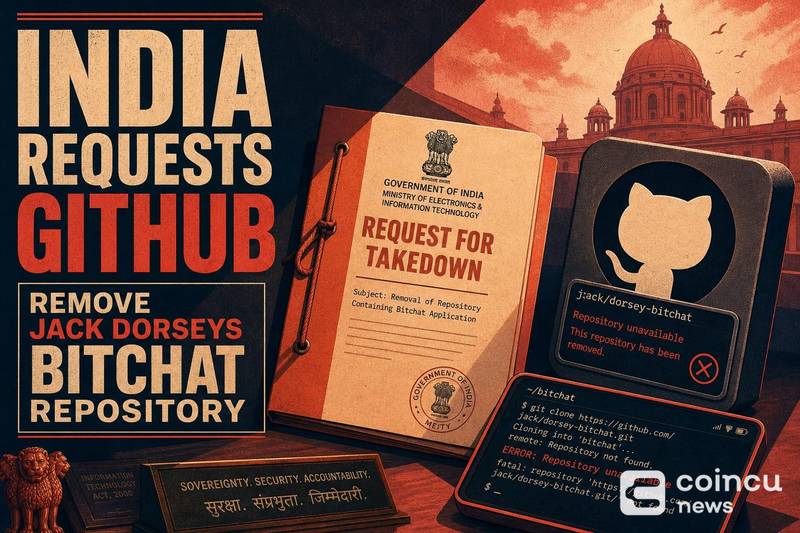
The reported development centers on three named parties: the Indian authorities making the request, GitHub as the code-hosting platform, and Jack Dorsey, the figure publicly linked to Bitchat. Dorsey has referenced the project through his own channels, including a post on X, and coverage of the request has circulated on social platforms. The specifics of what India is asking GitHub to do have not been independently verified.
What makes the story notable is that it concerns a source-code repository rather than a consumer app listing or a social media account. The Bitchat repository hosts the project’s underlying code, and additional information about the project appears on its public site.
Why a code repository, not an app, is the sensitive point
Removing a repository is different from removing a finished application. A repository holds source code, commit history, forks, and developer discussion, so a takedown can affect public access to the code itself and to the copies other developers have made. For related coverage, see World Datacentre Summit India 2026 Opens Sponsorship, Speaking, and Exhibition Opportunities.
That is why code-hosting takedown requests tend to draw attention from the open-source community. When the artifact in question is code rather than a packaged product, questions about who can read, copy, or continue the work become immediate. For related coverage, see Raydium Launches Permissioned AMM for Compliant Asset Trading on Solana.
Request, review, or removal: the distinction matters
GitHub is a global code-hosting platform that can receive legal or government removal demands, and a request from a national authority introduces both compliance obligations and speech-governance questions. How a platform weighs those demands is a recurring point of tension between governments and hosting services. For related coverage, see Samsung Wallet to Support Native Stablecoins: What It Means.
It is important to separate three stages: a request has been reported, but there is no confirmation of a formal review outcome or an actual removal. Treating a reported request as a completed takedown would overstate what the available evidence supports. For related coverage, see Lien Finance loses about $542,000 after attacker exploits vulnerability to steal USDC.
Why the crypto and open-source audience is watching
Repository access issues touch directly on the decentralization and open-source debates that crypto and blockchain communities follow closely. The same audiences that track India’s on-chain activity, such as the market conditions behind the USDT premium in India rising above 8.5%, tend to monitor how developer tools and code access are governed in the country.
India’s broader technology footprint is also expanding, with events like the World Datacentre Summit India 2026 reflecting growing infrastructure interest. Any direct token-market impact from this particular repository request is unclear, and the more concrete near-term angle is how the developer community responds.
Key questions readers are asking
- Has GitHub removed the repository? There is no confirmation that the repository has been taken down. The reporting describes a request, not a completed removal.
- What is Bitchat? Based on its public repository and site, Bitchat is an open-source project linked to Jack Dorsey. Further technical details are not confirmed in the current reporting.
- What could happen next? A reported request could proceed to platform review, be challenged, or lapse. Any of those paths would change the status, and none is confirmed yet.
Disclaimer: This article is for informational purposes only and does not constitute financial or investment advice. Cryptocurrency and digital asset markets carry significant risk. Always do your own research before making decisions.
No tags available.


Other Posts








- China, US Conclude Trade Talks with Focus on Cooperation
- Crypto Weekly: NYSE Backs OKX, Kraken Gets Fed Access, BTC Sells
- Court Upholds Fed’s Rejection of Custodia Bank’s Request
- Former CFO Convicted for $35M Fraudulent Crypto Investment
- DeriW Launches Edge Hour Trading Competition Platform for Derivatives Traders
- Michael Saylor Denies Bitcoin Sell-Off Amid Large BTC Transfer
- Buy Dogecoin on eToro: Step-by-Step Guide for Beginners (2024)
- Kazakhstan Explores Crypto Reserves Backed by National Funds
- JPMorgan Increases Holdings in BlackRock’s Bitcoin ETF
- Nordea Bank Introduces Bitcoin ETP Trading for Nordic Customers
- XRP Spot ETF Launches on Nasdaq Amid Market Fluctuations
- Peter Schiff Challenges Michael Saylor on MSTR’s Business Model
- Thailand Orders Worldcoin to Delete 1.2 Million Biometric Records
- UK Proposes New DeFi Tax Framework to Ease User Burden
- WLFI Under Fire: Analyst Warns Hyperliquid Could Be Next
- Ancient Ethereum Whale Moves $1.19 Billion After Decade
- BlackRock Receives Large Crypto Transfers from Coinbase
- SEC Scrutiny on ALT5 Sigma’s Leadership Disclosure Timing
- Yala Injects $5.5 Million Amid Recovery Efforts
- Radiant Capital Faces $50M Loss in Major Security Breach
- China, US Conclude Trade Talks with Focus on Cooperation
- Crypto Weekly: NYSE Backs OKX, Kraken Gets Fed Access, BTC Sells
- Court Upholds Fed’s Rejection of Custodia Bank’s Request
- Former CFO Convicted for $35M Fraudulent Crypto Investment
- DeriW Launches Edge Hour Trading Competition Platform for Derivatives Traders
- Michael Saylor Denies Bitcoin Sell-Off Amid Large BTC Transfer
- Buy Dogecoin on eToro: Step-by-Step Guide for Beginners (2024)
- Kazakhstan Explores Crypto Reserves Backed by National Funds
- JPMorgan Increases Holdings in BlackRock’s Bitcoin ETF
- Nordea Bank Introduces Bitcoin ETP Trading for Nordic Customers
- XRP Spot ETF Launches on Nasdaq Amid Market Fluctuations
- Peter Schiff Challenges Michael Saylor on MSTR’s Business Model
- Thailand Orders Worldcoin to Delete 1.2 Million Biometric Records
- UK Proposes New DeFi Tax Framework to Ease User Burden
- WLFI Under Fire: Analyst Warns Hyperliquid Could Be Next
- Ancient Ethereum Whale Moves $1.19 Billion After Decade
- BlackRock Receives Large Crypto Transfers from Coinbase
- SEC Scrutiny on ALT5 Sigma’s Leadership Disclosure Timing
- Yala Injects $5.5 Million Amid Recovery Efforts
- Radiant Capital Faces $50M Loss in Major Security Breach
- China, US Conclude Trade Talks with Focus on Cooperation
- Crypto Weekly: NYSE Backs OKX, Kraken Gets Fed Access, BTC Sells
- Court Upholds Fed’s Rejection of Custodia Bank’s Request
- Former CFO Convicted for $35M Fraudulent Crypto Investment
- DeriW Launches Edge Hour Trading Competition Platform for Derivatives Traders
- Michael Saylor Denies Bitcoin Sell-Off Amid Large BTC Transfer
- Buy Dogecoin on eToro: Step-by-Step Guide for Beginners (2024)
- Kazakhstan Explores Crypto Reserves Backed by National Funds
- JPMorgan Increases Holdings in BlackRock’s Bitcoin ETF
- Nordea Bank Introduces Bitcoin ETP Trading for Nordic Customers
- XRP Spot ETF Launches on Nasdaq Amid Market Fluctuations
- Peter Schiff Challenges Michael Saylor on MSTR’s Business Model
- Thailand Orders Worldcoin to Delete 1.2 Million Biometric Records
- UK Proposes New DeFi Tax Framework to Ease User Burden
- WLFI Under Fire: Analyst Warns Hyperliquid Could Be Next
- Ancient Ethereum Whale Moves $1.19 Billion After Decade
- BlackRock Receives Large Crypto Transfers from Coinbase
- SEC Scrutiny on ALT5 Sigma’s Leadership Disclosure Timing
- Yala Injects $5.5 Million Amid Recovery Efforts
- Radiant Capital Faces $50M Loss in Major Security Breach



Lien Finance loses about $542,000 after attacker exploits vulnerability to steal USDC

Zoomex X Space Recap With Fernando Llorente and the World Cup Final Panel
CoinRabbit and GoMining Report: Managing Bitcoin Matters More Than Mining Volume