Solana Mainnet Launches 100M CU Blocks, Increasing Capacity by 66%
Solana has launched 100M CU blocks on mainnet, a network upgrade positioned to raise per-block compute capacity by 66%. The change lifts the compute unit ceiling that determines how much work the network can pack into each block, targeting higher throughput for the applications built on it.
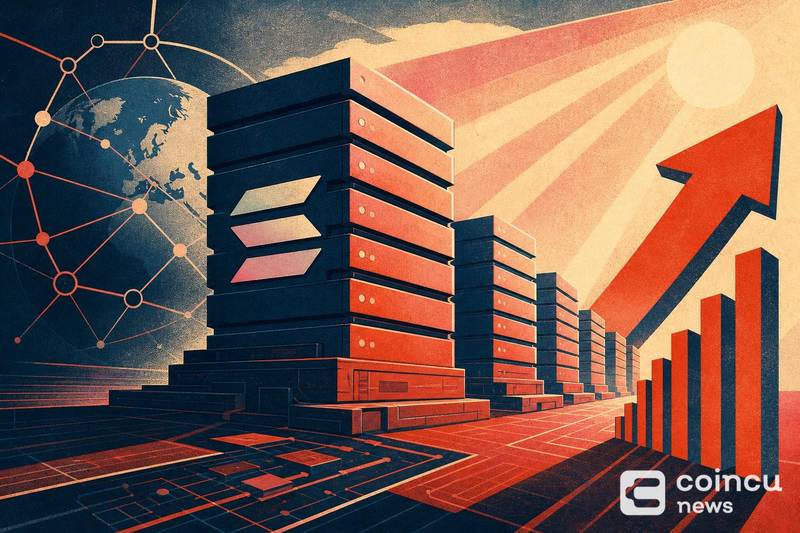
The upgrade centers on compute units, or CU, the metric Solana uses to meter how much processing each transaction consumes. Raising the block-level CU limit means more of that compute can fit into a single block, which is the parameter this rollout changes, according to Solana’s upgrade page. For related coverage, see Emirates Launches Crypto.com Pay for Flight Bookings in the UAE.
This is a live mainnet change rather than a testnet experiment. It applies to the production network where real transactions settle, not an isolated staging environment. For related coverage, see BNY Mellon Migrates $8.6T Fund Transfer-Agent Records to Blockchain.
What the 66% capacity increase means for throughput
The higher ceiling is framed as a roughly two-thirds increase in block capacity. A larger CU budget per block allows more compute-intensive activity to be included before a block is full, which is where the headroom for additional throughput comes from. For related coverage, see HashKey Plans to Acquire APEX Shares as Singapore Derivatives Push Expands.
Capacity is not the same as guaranteed speed. A higher limit expands how much the network can process, but real-world performance still depends on validator behavior, demand, and how applications use the added room, per Solana’s network upgrades overview. For related coverage, see Central Bank of Russia Releases Draft Crypto Exchange Rules.
Why the change matters across the Solana ecosystem
For end users, more compute per block can ease conditions during high-demand periods, since blocks reach their limit less quickly. That is the practical mechanism behind smoother processing at peak times.
For developers, a larger block budget matters most for applications with heavier compute needs, including trading and DeFi protocols. Projects such as Raydium, which recently launched a permissioned AMM for compliant asset trading on Solana, run on the same block-level constraints this upgrade adjusts.
For validators, the change is tied directly to block production. A higher CU ceiling affects how much work each produced block can carry, placing the parameter at the core of network operations.
How the upgrade fits Solana’s scaling narrative
The launch centers on scaling through higher compute capacity rather than governance or token mechanics. Expanding what each block can hold is a supply-side lever on network capacity, connecting the infrastructure change to broader ecosystem growth potential.
FAQ: Solana’s 100M CU blocks
What does 100M CU blocks mean? It refers to the raised compute unit limit for each Solana block, expanding how much transaction processing can be included per block.
Does the capacity increase guarantee faster transactions? No. It raises the ceiling on how much the network can process, but actual speed depends on demand and validator performance, not the limit alone.
Who benefits most from higher block compute capacity? Compute-heavy applications and their users, along with validators responsible for producing larger-capacity blocks.
Disclaimer: This article is for informational purposes only and does not constitute financial or investment advice. Cryptocurrency and digital asset markets carry significant risk. Always do your own research before making decisions.
No tags available.


Other Posts








- China, US Conclude Trade Talks with Focus on Cooperation
- Crypto Weekly: NYSE Backs OKX, Kraken Gets Fed Access, BTC Sells
- Court Upholds Fed’s Rejection of Custodia Bank’s Request
- Former CFO Convicted for $35M Fraudulent Crypto Investment
- DeriW Launches Edge Hour Trading Competition Platform for Derivatives Traders
- Michael Saylor Denies Bitcoin Sell-Off Amid Large BTC Transfer
- Buy Dogecoin on eToro: Step-by-Step Guide for Beginners (2024)
- Kazakhstan Explores Crypto Reserves Backed by National Funds
- JPMorgan Increases Holdings in BlackRock’s Bitcoin ETF
- Nordea Bank Introduces Bitcoin ETP Trading for Nordic Customers
- XRP Spot ETF Launches on Nasdaq Amid Market Fluctuations
- Peter Schiff Challenges Michael Saylor on MSTR’s Business Model
- Thailand Orders Worldcoin to Delete 1.2 Million Biometric Records
- UK Proposes New DeFi Tax Framework to Ease User Burden
- WLFI Under Fire: Analyst Warns Hyperliquid Could Be Next
- Ancient Ethereum Whale Moves $1.19 Billion After Decade
- BlackRock Receives Large Crypto Transfers from Coinbase
- SEC Scrutiny on ALT5 Sigma’s Leadership Disclosure Timing
- Yala Injects $5.5 Million Amid Recovery Efforts
- Radiant Capital Faces $50M Loss in Major Security Breach
- China, US Conclude Trade Talks with Focus on Cooperation
- Crypto Weekly: NYSE Backs OKX, Kraken Gets Fed Access, BTC Sells
- Court Upholds Fed’s Rejection of Custodia Bank’s Request
- Former CFO Convicted for $35M Fraudulent Crypto Investment
- DeriW Launches Edge Hour Trading Competition Platform for Derivatives Traders
- Michael Saylor Denies Bitcoin Sell-Off Amid Large BTC Transfer
- Buy Dogecoin on eToro: Step-by-Step Guide for Beginners (2024)
- Kazakhstan Explores Crypto Reserves Backed by National Funds
- JPMorgan Increases Holdings in BlackRock’s Bitcoin ETF
- Nordea Bank Introduces Bitcoin ETP Trading for Nordic Customers
- XRP Spot ETF Launches on Nasdaq Amid Market Fluctuations
- Peter Schiff Challenges Michael Saylor on MSTR’s Business Model
- Thailand Orders Worldcoin to Delete 1.2 Million Biometric Records
- UK Proposes New DeFi Tax Framework to Ease User Burden
- WLFI Under Fire: Analyst Warns Hyperliquid Could Be Next
- Ancient Ethereum Whale Moves $1.19 Billion After Decade
- BlackRock Receives Large Crypto Transfers from Coinbase
- SEC Scrutiny on ALT5 Sigma’s Leadership Disclosure Timing
- Yala Injects $5.5 Million Amid Recovery Efforts
- Radiant Capital Faces $50M Loss in Major Security Breach
- China, US Conclude Trade Talks with Focus on Cooperation
- Crypto Weekly: NYSE Backs OKX, Kraken Gets Fed Access, BTC Sells
- Court Upholds Fed’s Rejection of Custodia Bank’s Request
- Former CFO Convicted for $35M Fraudulent Crypto Investment
- DeriW Launches Edge Hour Trading Competition Platform for Derivatives Traders
- Michael Saylor Denies Bitcoin Sell-Off Amid Large BTC Transfer
- Buy Dogecoin on eToro: Step-by-Step Guide for Beginners (2024)
- Kazakhstan Explores Crypto Reserves Backed by National Funds
- JPMorgan Increases Holdings in BlackRock’s Bitcoin ETF
- Nordea Bank Introduces Bitcoin ETP Trading for Nordic Customers
- XRP Spot ETF Launches on Nasdaq Amid Market Fluctuations
- Peter Schiff Challenges Michael Saylor on MSTR’s Business Model
- Thailand Orders Worldcoin to Delete 1.2 Million Biometric Records
- UK Proposes New DeFi Tax Framework to Ease User Burden
- WLFI Under Fire: Analyst Warns Hyperliquid Could Be Next
- Ancient Ethereum Whale Moves $1.19 Billion After Decade
- BlackRock Receives Large Crypto Transfers from Coinbase
- SEC Scrutiny on ALT5 Sigma’s Leadership Disclosure Timing
- Yala Injects $5.5 Million Amid Recovery Efforts
- Radiant Capital Faces $50M Loss in Major Security Breach

BNY Mellon Migrates $8.6T Fund Transfer-Agent Records to Blockchain

HashKey Plans to Acquire APEX Shares as Singapore Derivatives Push Expands


Zoomex to Attend Coinfest Asia 2026 as Gold Sponsor and Host Summer Bay Party in Bali

1inch launches Aqua to the public, introducing the first shared liquidity layer for DeFi