U.S. Senate Minority Leader Chuck Schumer is pushing legislation to create a first-ever federal anti-corruption bureau, framing the proposal as a response to concerns that a sitting president could cash in on public office, including through crypto-linked business interests. The measure is a proposal, not an enacted agency, and its powers and path forward remain unsettled.
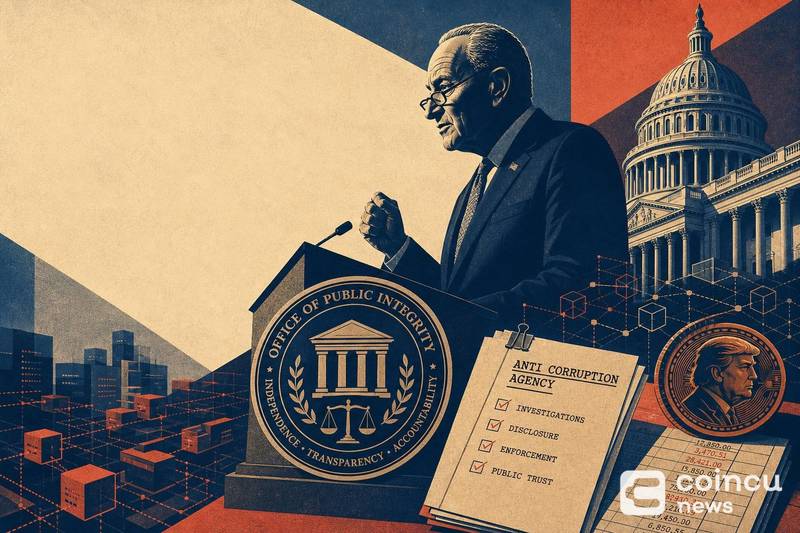
Schumer announced the push to create the anti-corruption bureau in a Senate Democratic press release, casting it as the first federal body of its kind designed to stop presidents from profiting off the presidency, according to the official rollout. Senator Alex Padilla joined Schumer in introducing the legislation, a separate Senate statement confirmed.
Local coverage of the rollout identified the measure as the Anti-Corruption Bureau Creation Act, reported on July 30, 2026. The bill is at the introduction stage and has not become law, so no new federal enforcement body currently exists. For related coverage, see Ready Crypto Card Suspended After Kulipa Collapse.
Why Trump’s Crypto Business Became the Flashpoint
The Democratic framing ties the proposal directly to the argument that President Trump is profiting from his office, positioning the bureau as a check on presidential self-enrichment rather than a generic ethics reform. That framing is set out in the sponsors’ own announcement of the legislation. For related coverage, see Upbit to List Conflux (CFX) in KRW, BTC, and USDT Markets.
The crypto dimension is central to the political case. One outlet reported that Schumer’s bill targets what it described as Trump’s roughly $1.4 billion in crypto income, in coverage published this week. That figure comes from secondary reporting and is not independently verified in the available research, so it should be read as a cited concern rather than established financial proof. For related coverage, see Coldcard Mk3 Seed Risk Warning Tied to $38.3M BTC Transfer.
A crypto-linked conflict narrative draws sharper attention than a standard ethics complaint because digital-asset ventures can generate income quickly and across borders, making the line between public duty and private gain harder to trace. The concern here is framed as a governance question, not a claim about any specific transaction.
What It Could Mean for Crypto Policy Watchers
For readers tracking regulation, the significance is precedent, not price. A dedicated anti-corruption bureau built around presidential financial conduct would extend political-risk discussion into crypto-linked business interests, an area lawmakers have already probed in Senate debate over stablecoin profit provisions in the GENIUS Act.
Policy watchers have reason to follow the measure even if it faces a difficult path in Congress, because the framing itself signals how crypto exposure is now being written into corruption and oversight arguments. The useful takeaway is headline and compliance risk, not a short-term token move.
The proposal also lands amid an already tense political backdrop involving the same figures, including public sparring after Vice President JD Vance’s remarks tying Schumer to a shutdown fight.
What Remains Unclear
The bureau’s precise powers, structure, and jurisdiction are not fully specified in the available research, and it is not clear how enforcement would function or which office would house it. Those details would need to come from the bill text and subsequent committee steps.
Claims about Trump-linked crypto income remain unverified in the current record, and the primary Senate materials frame the crypto business as a concern rather than a proven figure. Readers should wait for the full legislative text, committee scheduling, and any independent accounting before treating the income estimates as fact.
FAQ
What is the anti-corruption bureau Schumer is proposing? A proposed federal body, introduced by Schumer and Padilla, described in the rollout as the first of its kind and aimed at stopping presidents from profiting off public office. It is a legislative proposal, not an existing agency.
Why is Trump’s crypto business part of the argument? The sponsors frame the bill around concerns that the president is enriching himself through his office, and secondary reporting has connected the effort specifically to Trump’s crypto income. That income figure is a cited concern, not independently confirmed here.
Has the proposal become law or changed crypto rules? No. The measure is at the introduction stage, no bureau exists yet, and it has not altered any crypto regulations.
Disclaimer: This article is for informational purposes only and does not constitute financial or investment advice. Cryptocurrency and digital asset markets carry significant risk. Always do your own research before making decisions.
No tags available.


Other Posts








- China, US Conclude Trade Talks with Focus on Cooperation
- Crypto Weekly: NYSE Backs OKX, Kraken Gets Fed Access, BTC Sells
- Court Upholds Fed’s Rejection of Custodia Bank’s Request
- Former CFO Convicted for $35M Fraudulent Crypto Investment
- DeriW Launches Edge Hour Trading Competition Platform for Derivatives Traders
- Michael Saylor Denies Bitcoin Sell-Off Amid Large BTC Transfer
- Buy Dogecoin on eToro: Step-by-Step Guide for Beginners (2024)
- Kazakhstan Explores Crypto Reserves Backed by National Funds
- JPMorgan Increases Holdings in BlackRock’s Bitcoin ETF
- Nordea Bank Introduces Bitcoin ETP Trading for Nordic Customers
- XRP Spot ETF Launches on Nasdaq Amid Market Fluctuations
- Peter Schiff Challenges Michael Saylor on MSTR’s Business Model
- Thailand Orders Worldcoin to Delete 1.2 Million Biometric Records
- UK Proposes New DeFi Tax Framework to Ease User Burden
- WLFI Under Fire: Analyst Warns Hyperliquid Could Be Next
- Ancient Ethereum Whale Moves $1.19 Billion After Decade
- BlackRock Receives Large Crypto Transfers from Coinbase
- SEC Scrutiny on ALT5 Sigma’s Leadership Disclosure Timing
- Yala Injects $5.5 Million Amid Recovery Efforts
- Radiant Capital Faces $50M Loss in Major Security Breach
- China, US Conclude Trade Talks with Focus on Cooperation
- Crypto Weekly: NYSE Backs OKX, Kraken Gets Fed Access, BTC Sells
- Court Upholds Fed’s Rejection of Custodia Bank’s Request
- Former CFO Convicted for $35M Fraudulent Crypto Investment
- DeriW Launches Edge Hour Trading Competition Platform for Derivatives Traders
- Michael Saylor Denies Bitcoin Sell-Off Amid Large BTC Transfer
- Buy Dogecoin on eToro: Step-by-Step Guide for Beginners (2024)
- Kazakhstan Explores Crypto Reserves Backed by National Funds
- JPMorgan Increases Holdings in BlackRock’s Bitcoin ETF
- Nordea Bank Introduces Bitcoin ETP Trading for Nordic Customers
- XRP Spot ETF Launches on Nasdaq Amid Market Fluctuations
- Peter Schiff Challenges Michael Saylor on MSTR’s Business Model
- Thailand Orders Worldcoin to Delete 1.2 Million Biometric Records
- UK Proposes New DeFi Tax Framework to Ease User Burden
- WLFI Under Fire: Analyst Warns Hyperliquid Could Be Next
- Ancient Ethereum Whale Moves $1.19 Billion After Decade
- BlackRock Receives Large Crypto Transfers from Coinbase
- SEC Scrutiny on ALT5 Sigma’s Leadership Disclosure Timing
- Yala Injects $5.5 Million Amid Recovery Efforts
- Radiant Capital Faces $50M Loss in Major Security Breach
- China, US Conclude Trade Talks with Focus on Cooperation
- Crypto Weekly: NYSE Backs OKX, Kraken Gets Fed Access, BTC Sells
- Court Upholds Fed’s Rejection of Custodia Bank’s Request
- Former CFO Convicted for $35M Fraudulent Crypto Investment
- DeriW Launches Edge Hour Trading Competition Platform for Derivatives Traders
- Michael Saylor Denies Bitcoin Sell-Off Amid Large BTC Transfer
- Buy Dogecoin on eToro: Step-by-Step Guide for Beginners (2024)
- Kazakhstan Explores Crypto Reserves Backed by National Funds
- JPMorgan Increases Holdings in BlackRock’s Bitcoin ETF
- Nordea Bank Introduces Bitcoin ETP Trading for Nordic Customers
- XRP Spot ETF Launches on Nasdaq Amid Market Fluctuations
- Peter Schiff Challenges Michael Saylor on MSTR’s Business Model
- Thailand Orders Worldcoin to Delete 1.2 Million Biometric Records
- UK Proposes New DeFi Tax Framework to Ease User Burden
- WLFI Under Fire: Analyst Warns Hyperliquid Could Be Next
- Ancient Ethereum Whale Moves $1.19 Billion After Decade
- BlackRock Receives Large Crypto Transfers from Coinbase
- SEC Scrutiny on ALT5 Sigma’s Leadership Disclosure Timing
- Yala Injects $5.5 Million Amid Recovery Efforts
- Radiant Capital Faces $50M Loss in Major Security Breach




Performa Marks One Year Live with Major Upgrade for Digital-Native SMBs

Zoomex to Attend Coinfest Asia 2026 as Gold Sponsor and Host Summer Bay Party in Bali