Best Bitcoin L2 Projects in 2026: Settlement, Smart Contracts, and BTCFi Compared
Citrea is the strongest proof-oriented starting point, Bitlayer is the computation and verification comparison, BOB is the hybrid route, Stacks is the application-depth reference, and Rootstock is the EVM compatibility reference.
The right choice depends on the asset route and the security property the reader can verify today. That narrower shortlist prevents payment rails, federated asset networks and security services from being republished as generic L2 competitors. The sBTC Bitcoin DeFi article retains those separate categories.
Quick comparison: the Bitcoin L2 projects worth evaluating
| Project | Positioning to verify | Best-fit workflow |
|---|---|---|
| Citrea | Bitcoin-connected ZK execution | EVM applications and BTC settlement |
| Bitlayer | Bitcoin computation and BitVM-oriented route | DeFi and programmable Bitcoin applications |
| BOB | Hybrid Bitcoin/Ethereum L2 | EVM liquidity with Bitcoin alignment |
| Stacks | Bitcoin application platform | BTCFi and smart contracts |
| Rootstock | Bitcoin-connected EVM environment | Solidity-compatible BTCFi |
The table is a research shortlist, not a token ranking. The Bitcoin DeFi and Layer 2 pillar covers payment, federated settlement and security-layer categories separately.
Best Bitcoin L2 Projects in 2026
1. Citrea: a proof-oriented Bitcoin execution route
Citrea is relevant for readers who want an EVM-style application environment with a Bitcoin settlement narrative and a proof-oriented design. The key decision is not whether the project uses zero-knowledge language; it is whether the current bridge, finality stages, wallet support and application liquidity match the user’s transaction.
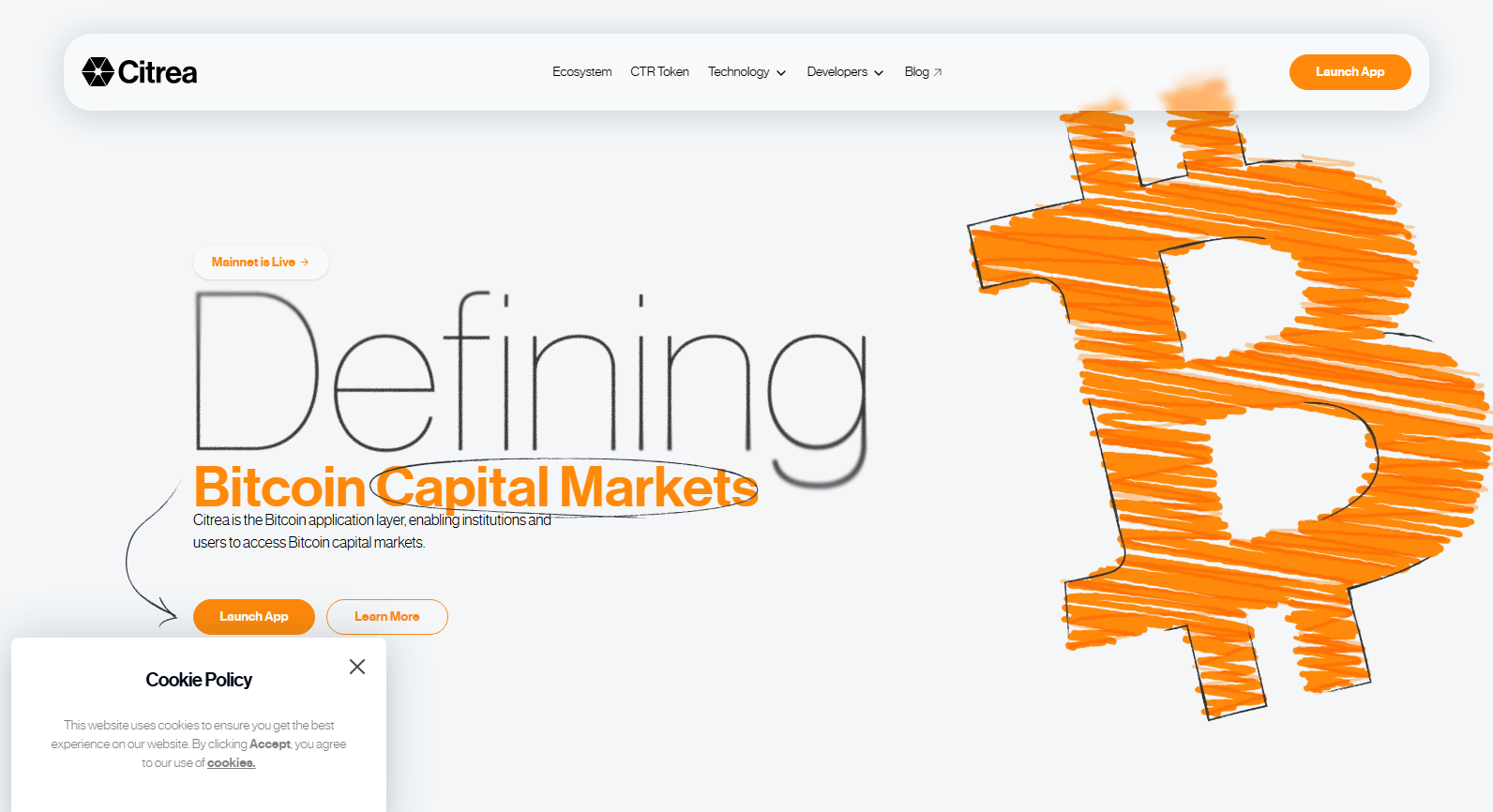
For a builder, the route should be assessed in four layers: how BTC or a BTC representation enters the network, where the application state is executed, what evidence supports the settlement or proof claim, and how the user exits.
These layers answer different questions. A working testnet or public interface can demonstrate developer access, but it does not by itself demonstrate that a production user can move value back to Bitcoin under stress.
The practical Citrea review should therefore record the bridge asset, gas asset, confirmation requirement, application contract, wallet used and peg-out condition. Then run the same small route for a swap or lending action and compare the realized fee and withdrawal time with the advertised path.
If the required application exists only on a roadmap or if the exit depends on an unavailable permission, Citrea belongs in the research shortlist but not in a production recommendation.
- Best for: readers comparing proof-oriented Bitcoin execution and EVM application access.
- Reject when: the required application or peg-out path remains unavailable at the intended size.
2. Bitlayer: computation and BitVM-oriented infrastructure
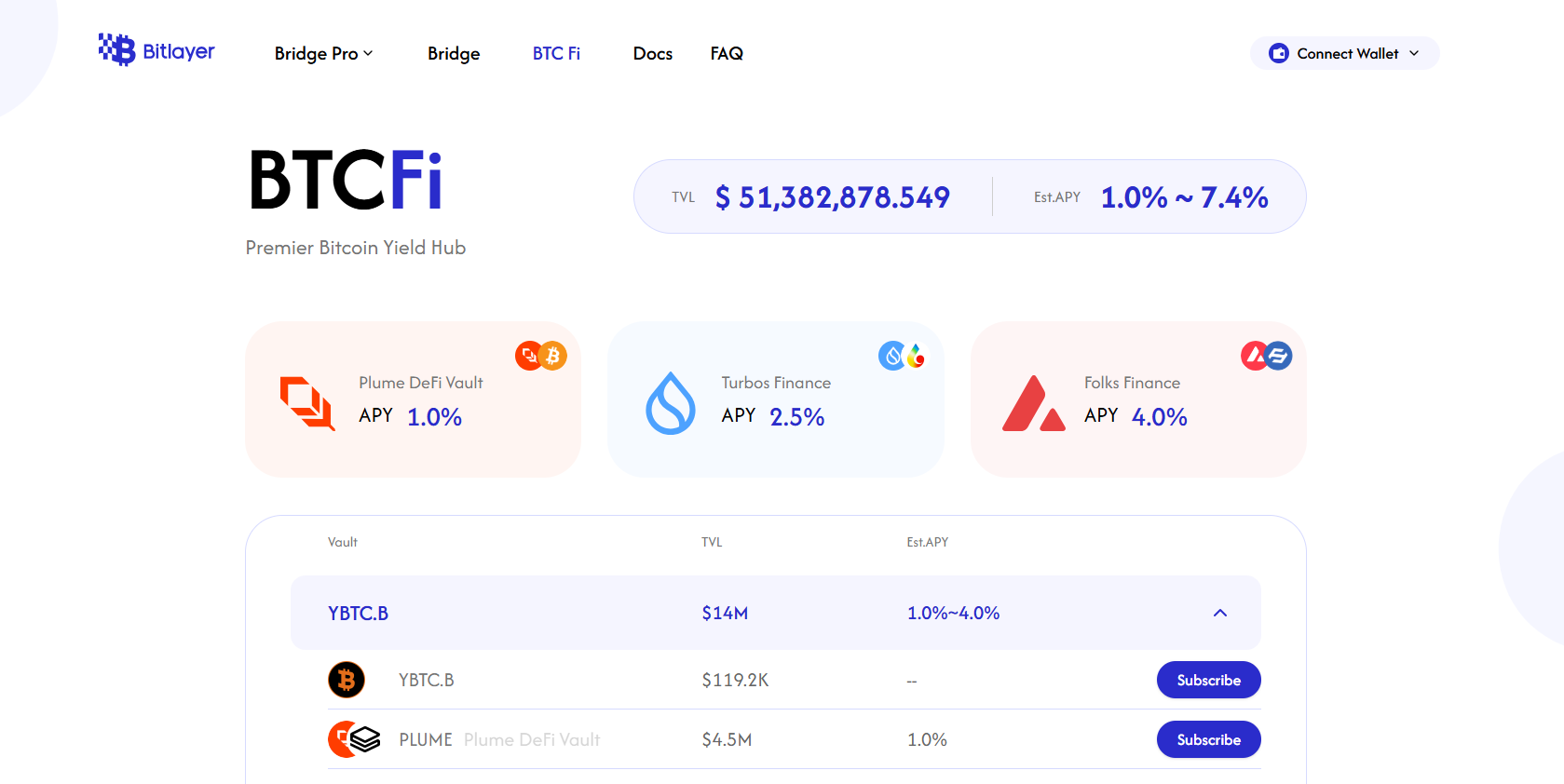
Bitlayer belongs in a Bitcoin-L2 comparison when the reader wants to examine computation, bridge design and the boundary between current network operation and future proof architecture.
A review should separate the live route from roadmap claims and record whether the user’s BTC representation, application and withdrawal are currently usable.Bitlayer’s important distinction is the gap between an architecture claim and a user-operable security path.
A technical reader should ask which component executes transactions, which component verifies or settles them, who can intervene during an incident and what the user receives on exit.
The same checklist should be applied to the bridge and to any DeFi application built on top, because application risk does not disappear when the base network uses Bitcoin-oriented terminology. For a DeFi team, the useful test is a complete route rather than a benchmark screenshot: fund a wallet, acquire the required gas asset, deposit the chosen BTC representation, call the target contract, observe finality, and withdraw.
Record whether the route is permissionless, whether liquidity is sufficient for the intended size and which parts are current versus planned. That makes Bitlayer a meaningful infrastructure comparison instead of a speculative technology label.
- Best for: technical teams evaluating Bitcoin computation and DeFi infrastructure.
- Reject when: the security or bridge property required by the product is only described as a future upgrade.
3. BOB: hybrid Bitcoin and Ethereum liquidity
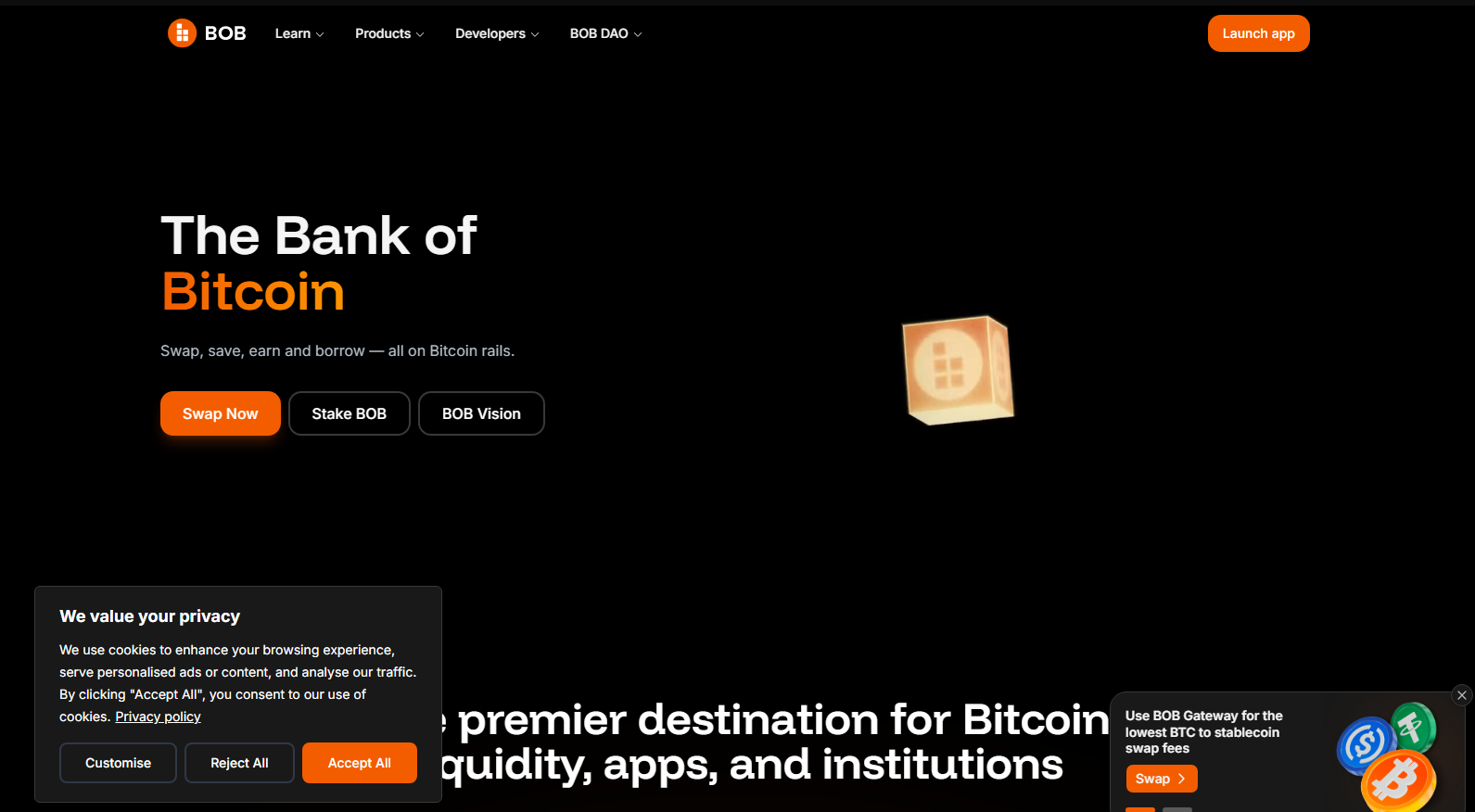
BOB is relevant to teams that want an EVM environment while maintaining a Bitcoin-oriented product position. Its value proposition should be tested through the actual bridge, gas asset, finality, wallet and application route rather than assumed from the hybrid label.
The hybrid design changes the diligence question because a user may cross more than one ecosystem boundary before reaching the application. The review should identify the source chain, destination chain, bridge or messaging layer, gas asset, confirmation state and reconciliation process for a failed transfer.
A route that is cheap after settlement can still be operationally expensive if the team must monitor two balances, two finality models and a separate recovery process. BOB is most useful for a product that already has an EVM operating model and wants access to Bitcoin-aligned liquidity or users.
It is a weaker fit when the application cannot tolerate bridge dependency, cross-chain delay or uncertain asset provenance. The comparison should use a fixed transaction size and name the asset at every step rather than treating “Bitcoin plus Ethereum” as a sufficient security description.
- Best for: EVM teams comparing Bitcoin-aligned liquidity and application deployment.
- Reject when: the product cannot accept the bridge, gas or cross-chain reconciliation assumptions.
4. Stacks: Bitcoin application depth rather than a generic L2 label
Stacks remains relevant when the user’s priority is Bitcoin-oriented application access, but it should not be used as a default example in every cluster. Here it is included only because the shortlist asks how a mature Bitcoin application platform compares with newer proof and hybrid routes.
Stacks should be evaluated through application depth rather than through a generic L2 score. Choose one real BTCFi workflow, such as a swap, lending deposit or stablecoin transfer, and identify the BTC representation, contract permissions, oracle, pool depth and withdrawal asset.
This reveals whether the ecosystem’s maturity helps the user’s transaction or whether the route still depends on a thin market or a separate bridge assumption.
For a builder, Stacks can reduce the research gap between Bitcoin positioning and an application surface, but the product still needs to account for network-specific tooling, wallet support and the behavior of the chosen contract.
A mature ecosystem is not a blanket guarantee for every protocol. The project earns its place in this shortlist because it provides a useful application-depth comparison, not because every Stacks route should replace the newer execution candidates.
- Best for: BTCFi users who value an established Bitcoin application surface.
- Reject when: the target route needs a different proof, bridge or liquidity profile.
5. Rootstock: EVM compatibility with an explicit bridge boundary
Rootstock is useful as the EVM comparison point, not as a universal representative of Bitcoin L2s. Its review should focus on Solidity compatibility, BTC bridge custody, gas management, active DeFi routes and recoverable exit.
The strongest Rootstock use case is a Solidity-oriented team that wants to reuse familiar contract patterns while serving users holding Bitcoin-connected assets.
That advantage should be measured against the work required to manage the BTC or RBTC route, gas conversion, bridge permissions and application liquidity. A contract that deploys easily is not necessarily a product that settles or exits easily.
The operational review should include the bridge custodian or federation, the gas asset held by the user, the contract approval scope, the route back to the starting asset and the failure response if the bridge or application pauses. Rootstock is therefore a valuable EVM reference in this article, while its inclusion does not turn every Rootstock application into evidence for the wider Bitcoin L2 category.
- Best for: Solidity-oriented builders and EVM users with Bitcoin-aligned requirements.
- Reject when: bridge or liquidity controls do not pass the product’s custody policy.
How to choose between these five execution routes
Choose Citrea when the main question is proof-oriented execution, Bitlayer when computation and security architecture deserve the deepest review, and BOB when the product needs a hybrid Bitcoin/Ethereum liquidity route.
Those are not interchangeable labels: they change the bridge, wallet, gas and finality questions that must be answered before a deployment decision. Choose Stacks when application access and Bitcoin-oriented contract activity matter more than matching an EVM migration path.
Choose Rootstock when Solidity compatibility is the deciding constraint and the team is prepared to evaluate the BTC bridge as a separate custody and exit boundary. In both cases, “Bitcoin-connected” is not enough evidence that the route is suitable for a particular treasury, exchange or DeFi application.
| User requirement | First comparison | What to test before committing |
|---|---|---|
| Deploy an EVM application with a Bitcoin settlement narrative | Citrea vs Bitlayer | Bridge entry, proof/finality state, wallet support and exit time |
| Bring Ethereum users and liquidity into a Bitcoin-aligned environment | BOB | Cross-chain asset handling, gas model, finality and reconciliation |
| Use a Bitcoin-native application surface | Stacks | Contract activity, supported BTC representation and application liquidity |
| Reuse Solidity tooling and contracts | Rootstock | EVM compatibility, bridge controls, gas and recovery route |
The fastest practical test is a small end-to-end transaction rather than a feature checklist. Record the asset you start with, the wallet used, the bridge or deposit mechanism, the application action, the fee paid and the exact exit path. Repeat the check at the target transaction size, because a route that works for a small test may still fail the product’s liquidity or operational requirements.
Also separate “available” from “comfortable to operate.” A route may be technically live but still require manual approvals, a narrow bridge window, an unfamiliar gas asset or a withdrawal process that does not fit an exchange’s service-level target.
Those details belong in the selection decision because the cheapest or most technically ambitious route can create more operational work than the application team can safely support.
Finally, treat roadmap language as a separate editorial status. A planned prover, bridge upgrade or permission change can be strategically important, but it should not be scored as if it were already protecting user funds. Keeping live capability and planned capability in different columns is the simplest way to stop a promising project from looking safer or more mature than the route a reader can use today.
This is why the Coincu Bitcoin appchain coverage matters. It separates settlement claims from execution claims, while the GOAT Network BitVM2 testnet report focuses on the failure point most comparison tables hide: how the user gets the asset out.
Conclusion
Choose Citrea or Bitlayer for proof and computation research, BOB for hybrid Bitcoin/Ethereum liquidity, Stacks for Bitcoin-oriented applications, and Rootstock for Solidity compatibility. Before committing, test one deposit, one application action and one withdrawal with the exact asset and wallet the product will use.
Reject any project when the required bridge, application liquidity, security property or exit exists only on a roadmap. The best Bitcoin L2 is the route that completes reliably for the reader’s workflow, size and custody policy.
FAQs
Which Bitcoin L2 is best for payments?
Lightning is the strongest starting point for payment-first workflows because its design is built around payment channels. Spark may be relevant for specific payment and asset routes, but its custody and exit assumptions must be checked separately.
Which Bitcoin L2 is best for smart contracts?
Stacks and Rootstock are the clearest first comparisons for smart-contract use. Stacks is more Bitcoin-application oriented, while Rootstock offers EVM familiarity. Merlin belongs in the comparison when current BTCFi liquidity and application activity are verified.
Is Babylon a Bitcoin L2?
Babylon is better described as a Bitcoin staking and security layer. It extends BTC-denominated security to other systems and should not be compared with payment or smart-contract execution platforms as if the user workflow were identical.
Does every Bitcoin L2 use native BTC?
No. Some workflows use native BTC, while others use a federated asset, wrapped BTC, bridged BTC or synthetic exposure. The representation determines custody, redemption, bridge and depeg risk.
Disclaimer: This article is for informational purposes only and does not constitute financial or investment advice. Cryptocurrency and digital asset markets carry significant risk. Always do your own research before making decisions.
No tags available.




- China, US Conclude Trade Talks with Focus on Cooperation
- Crypto Weekly: NYSE Backs OKX, Kraken Gets Fed Access, BTC Sells
- Court Upholds Fed’s Rejection of Custodia Bank’s Request
- Former CFO Convicted for $35M Fraudulent Crypto Investment
- DeriW Launches Edge Hour Trading Competition Platform for Derivatives Traders
- Michael Saylor Denies Bitcoin Sell-Off Amid Large BTC Transfer
- Buy Dogecoin on eToro: Step-by-Step Guide for Beginners (2024)
- Kazakhstan Explores Crypto Reserves Backed by National Funds
- JPMorgan Increases Holdings in BlackRock’s Bitcoin ETF
- Nordea Bank Introduces Bitcoin ETP Trading for Nordic Customers
- XRP Spot ETF Launches on Nasdaq Amid Market Fluctuations
- Peter Schiff Challenges Michael Saylor on MSTR’s Business Model
- Thailand Orders Worldcoin to Delete 1.2 Million Biometric Records
- UK Proposes New DeFi Tax Framework to Ease User Burden
- WLFI Under Fire: Analyst Warns Hyperliquid Could Be Next
- Ancient Ethereum Whale Moves $1.19 Billion After Decade
- BlackRock Receives Large Crypto Transfers from Coinbase
- SEC Scrutiny on ALT5 Sigma’s Leadership Disclosure Timing
- Yala Injects $5.5 Million Amid Recovery Efforts
- Radiant Capital Faces $50M Loss in Major Security Breach
- China, US Conclude Trade Talks with Focus on Cooperation
- Crypto Weekly: NYSE Backs OKX, Kraken Gets Fed Access, BTC Sells
- Court Upholds Fed’s Rejection of Custodia Bank’s Request
- Former CFO Convicted for $35M Fraudulent Crypto Investment
- DeriW Launches Edge Hour Trading Competition Platform for Derivatives Traders
- Michael Saylor Denies Bitcoin Sell-Off Amid Large BTC Transfer
- Buy Dogecoin on eToro: Step-by-Step Guide for Beginners (2024)
- Kazakhstan Explores Crypto Reserves Backed by National Funds
- JPMorgan Increases Holdings in BlackRock’s Bitcoin ETF
- Nordea Bank Introduces Bitcoin ETP Trading for Nordic Customers
- XRP Spot ETF Launches on Nasdaq Amid Market Fluctuations
- Peter Schiff Challenges Michael Saylor on MSTR’s Business Model
- Thailand Orders Worldcoin to Delete 1.2 Million Biometric Records
- UK Proposes New DeFi Tax Framework to Ease User Burden
- WLFI Under Fire: Analyst Warns Hyperliquid Could Be Next
- Ancient Ethereum Whale Moves $1.19 Billion After Decade
- BlackRock Receives Large Crypto Transfers from Coinbase
- SEC Scrutiny on ALT5 Sigma’s Leadership Disclosure Timing
- Yala Injects $5.5 Million Amid Recovery Efforts
- Radiant Capital Faces $50M Loss in Major Security Breach
- China, US Conclude Trade Talks with Focus on Cooperation
- Crypto Weekly: NYSE Backs OKX, Kraken Gets Fed Access, BTC Sells
- Court Upholds Fed’s Rejection of Custodia Bank’s Request
- Former CFO Convicted for $35M Fraudulent Crypto Investment
- DeriW Launches Edge Hour Trading Competition Platform for Derivatives Traders
- Michael Saylor Denies Bitcoin Sell-Off Amid Large BTC Transfer
- Buy Dogecoin on eToro: Step-by-Step Guide for Beginners (2024)
- Kazakhstan Explores Crypto Reserves Backed by National Funds
- JPMorgan Increases Holdings in BlackRock’s Bitcoin ETF
- Nordea Bank Introduces Bitcoin ETP Trading for Nordic Customers
- XRP Spot ETF Launches on Nasdaq Amid Market Fluctuations
- Peter Schiff Challenges Michael Saylor on MSTR’s Business Model
- Thailand Orders Worldcoin to Delete 1.2 Million Biometric Records
- UK Proposes New DeFi Tax Framework to Ease User Burden
- WLFI Under Fire: Analyst Warns Hyperliquid Could Be Next
- Ancient Ethereum Whale Moves $1.19 Billion After Decade
- BlackRock Receives Large Crypto Transfers from Coinbase
- SEC Scrutiny on ALT5 Sigma’s Leadership Disclosure Timing
- Yala Injects $5.5 Million Amid Recovery Efforts
- Radiant Capital Faces $50M Loss in Major Security Breach


Coldcard Bitcoin Exploit Losses Reach $88 Million Amid Security Fallout

Lightning vs Spark vs Liquid: Bitcoin Settlement Compared in 2026

Performa Marks One Year Live with Major Upgrade for Digital-Native SMBs

Zoomex to Attend Coinfest Asia 2026 as Gold Sponsor and Host Summer Bay Party in Bali