Losses tied to Coldcard hardware wallets are approaching $114 million, a rise reported alongside a spike in small Bitcoin transfers, marking the latest escalation in a self-custody security story that has drawn scrutiny across the Bitcoin ecosystem.
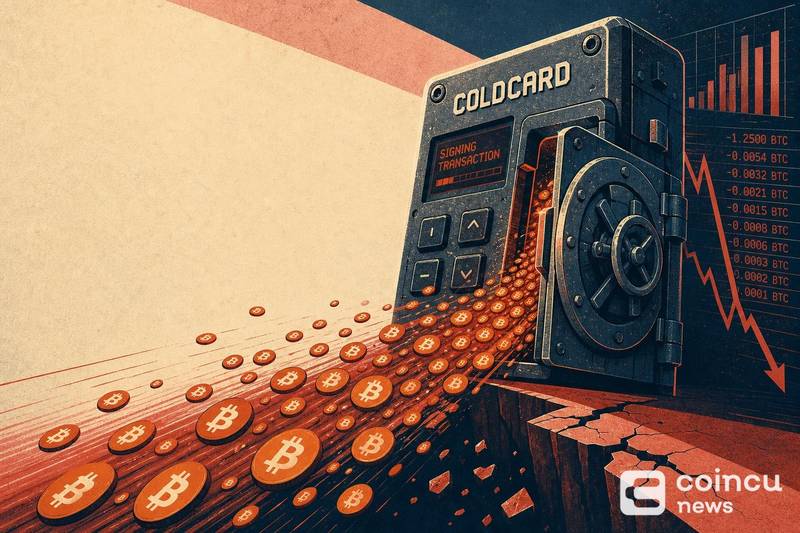
The figure was reported by Decrypt, which framed the losses as concentrated around Coldcard devices rather than the broader hardware-wallet sector. The report also tied the mounting total to an unusual increase in low-value Bitcoin transactions. For related coverage, see Fidelity-Linked Wallet Transfers 260,000 ETH to Three Wallets.
At this stage the near-$114 million total is best understood as tracked exposure attributed to affected wallets, not a single confirmed on-chain theft. The reporting does not establish whether every dollar reflects realized loss or funds still in motion, so the figure should be read as an evolving estimate. For related coverage, see Texas Crypto Kiosk Scam Losses Hit $56.8M in 2025 Amid Crackdown.
The Losses Sit Downstream of a Known Coldcard Seed Warning
The current total builds on a documented issue rather than an isolated event. Coldcard maker Coinkite previously published a seed generation warning covering certain Mk3 devices, flagging conditions that could weaken the randomness protecting a wallet’s recovery phrase.
That warning is the same thread running through earlier coverage, including a Coldcard Mk3 seed risk warning tied to a $38.3M BTC transfer and an earlier tally when Coldcard exploit losses reached $88 million. The move from that prior figure toward the current one shows the exposure has continued to climb rather than settle.
Why Small Bitcoin Transfers Are Rising Alongside the Losses
The second signal in the reporting is a spike in small Bitcoin transfers, meaning a rise in low-value on-chain movements rather than large whale-sized transactions. Decrypt linked this pattern directly to the Coldcard situation.
A cluster of smaller transfers can reflect several behaviors: users moving funds off potentially compromised devices in pieces, testing wallet access, or redistributing holdings cautiously. The reporting describes the pattern but does not confirm a single motive, so the transfer spike is best treated as an observed trend, not proof of cause.
What the Combined Signals Could Mean for Bitcoin Holders
Read together, a rising loss estimate and a jump in small transfers point to a period of heightened caution among affected self-custody users. A security event involving recovery seeds can prompt fast, defensive movement of funds.
It is important to separate correlation from causation here. The small-transfer spike overlaps with the Coldcard losses in time, but the available evidence does not establish that one directly produced the other. For holders tracking Bitcoin behavior, the more durable question is whether these patterns are a short-term reaction or a longer shift in how seed-generation risk is managed. Users weighing self-custody options may also look at how the broader Bitcoin ecosystem is evolving.
What to Watch Next
- The loss estimate: whether the near-$114 million figure keeps rising or stabilizes as more wallets are traced.
- Transfer activity: whether the elevated small-transfer volume persists or normalizes.
- Vendor guidance: any further updates from Coinkite building on its existing seed warning.
FAQ
What does the $114M loss figure refer to? It represents tracked losses reported as tied to Coldcard wallets, an evolving estimate rather than a single confirmed theft.
Why are small Bitcoin transfers increasing? Reporting links the rise to the Coldcard situation, possibly reflecting cautious movement of funds, though no single cause is confirmed.
Does the transfer spike prove a link to the losses? No. The two overlap in time, but the evidence does not establish direct causation.
What should Bitcoin holders watch next? Whether the loss estimate keeps climbing, whether small-transfer activity stays elevated, and any further vendor guidance.
Disclaimer: This article is for informational purposes only and does not constitute financial or investment advice. Cryptocurrency and digital asset markets carry significant risk. Always do your own research before making decisions.
No tags available.


Other Posts








- China, US Conclude Trade Talks with Focus on Cooperation
- Crypto Weekly: NYSE Backs OKX, Kraken Gets Fed Access, BTC Sells
- Court Upholds Fed’s Rejection of Custodia Bank’s Request
- Former CFO Convicted for $35M Fraudulent Crypto Investment
- DeriW Launches Edge Hour Trading Competition Platform for Derivatives Traders
- Michael Saylor Denies Bitcoin Sell-Off Amid Large BTC Transfer
- Buy Dogecoin on eToro: Step-by-Step Guide for Beginners (2024)
- Kazakhstan Explores Crypto Reserves Backed by National Funds
- JPMorgan Increases Holdings in BlackRock’s Bitcoin ETF
- Nordea Bank Introduces Bitcoin ETP Trading for Nordic Customers
- XRP Spot ETF Launches on Nasdaq Amid Market Fluctuations
- Peter Schiff Challenges Michael Saylor on MSTR’s Business Model
- Thailand Orders Worldcoin to Delete 1.2 Million Biometric Records
- UK Proposes New DeFi Tax Framework to Ease User Burden
- WLFI Under Fire: Analyst Warns Hyperliquid Could Be Next
- Ancient Ethereum Whale Moves $1.19 Billion After Decade
- BlackRock Receives Large Crypto Transfers from Coinbase
- SEC Scrutiny on ALT5 Sigma’s Leadership Disclosure Timing
- Yala Injects $5.5 Million Amid Recovery Efforts
- Radiant Capital Faces $50M Loss in Major Security Breach
- China, US Conclude Trade Talks with Focus on Cooperation
- Crypto Weekly: NYSE Backs OKX, Kraken Gets Fed Access, BTC Sells
- Court Upholds Fed’s Rejection of Custodia Bank’s Request
- Former CFO Convicted for $35M Fraudulent Crypto Investment
- DeriW Launches Edge Hour Trading Competition Platform for Derivatives Traders
- Michael Saylor Denies Bitcoin Sell-Off Amid Large BTC Transfer
- Buy Dogecoin on eToro: Step-by-Step Guide for Beginners (2024)
- Kazakhstan Explores Crypto Reserves Backed by National Funds
- JPMorgan Increases Holdings in BlackRock’s Bitcoin ETF
- Nordea Bank Introduces Bitcoin ETP Trading for Nordic Customers
- XRP Spot ETF Launches on Nasdaq Amid Market Fluctuations
- Peter Schiff Challenges Michael Saylor on MSTR’s Business Model
- Thailand Orders Worldcoin to Delete 1.2 Million Biometric Records
- UK Proposes New DeFi Tax Framework to Ease User Burden
- WLFI Under Fire: Analyst Warns Hyperliquid Could Be Next
- Ancient Ethereum Whale Moves $1.19 Billion After Decade
- BlackRock Receives Large Crypto Transfers from Coinbase
- SEC Scrutiny on ALT5 Sigma’s Leadership Disclosure Timing
- Yala Injects $5.5 Million Amid Recovery Efforts
- Radiant Capital Faces $50M Loss in Major Security Breach
- China, US Conclude Trade Talks with Focus on Cooperation
- Crypto Weekly: NYSE Backs OKX, Kraken Gets Fed Access, BTC Sells
- Court Upholds Fed’s Rejection of Custodia Bank’s Request
- Former CFO Convicted for $35M Fraudulent Crypto Investment
- DeriW Launches Edge Hour Trading Competition Platform for Derivatives Traders
- Michael Saylor Denies Bitcoin Sell-Off Amid Large BTC Transfer
- Buy Dogecoin on eToro: Step-by-Step Guide for Beginners (2024)
- Kazakhstan Explores Crypto Reserves Backed by National Funds
- JPMorgan Increases Holdings in BlackRock’s Bitcoin ETF
- Nordea Bank Introduces Bitcoin ETP Trading for Nordic Customers
- XRP Spot ETF Launches on Nasdaq Amid Market Fluctuations
- Peter Schiff Challenges Michael Saylor on MSTR’s Business Model
- Thailand Orders Worldcoin to Delete 1.2 Million Biometric Records
- UK Proposes New DeFi Tax Framework to Ease User Burden
- WLFI Under Fire: Analyst Warns Hyperliquid Could Be Next
- Ancient Ethereum Whale Moves $1.19 Billion After Decade
- BlackRock Receives Large Crypto Transfers from Coinbase
- SEC Scrutiny on ALT5 Sigma’s Leadership Disclosure Timing
- Yala Injects $5.5 Million Amid Recovery Efforts
- Radiant Capital Faces $50M Loss in Major Security Breach


Coldcard Bitcoin Exploit Losses Reach $88 Million Amid Security Fallout

Performa Marks One Year Live with Major Upgrade for Digital-Native SMBs

Zoomex to Attend Coinfest Asia 2026 as Gold Sponsor and Host Summer Bay Party in Bali