A solo Bitcoin miner has struck a rare jackpot, successfully mining a full block and claiming a reward worth roughly $200,000 without sharing it with a mining pool. The win, an unusual outcome in an industry dominated by industrial-scale operations, has reignited interest in independent Bitcoin mining.
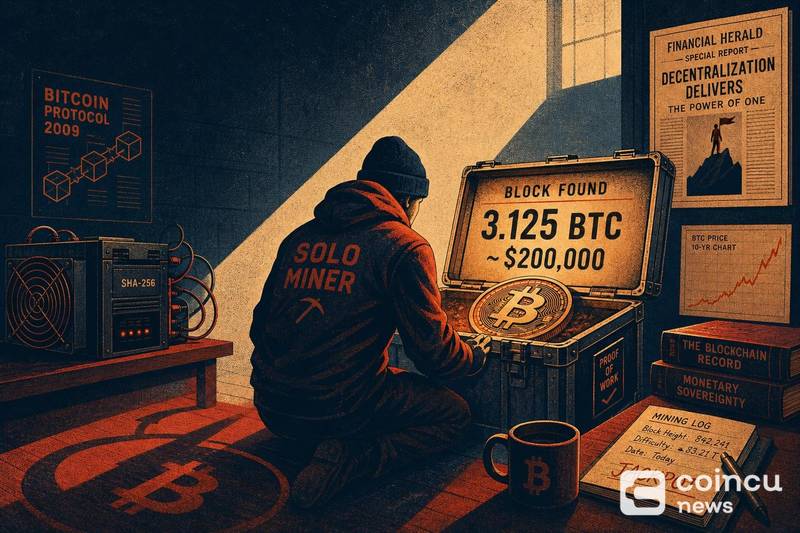
Solo Bitcoin Miner Lands a Full Block Reward
The story centers on a single independent participant solving a Bitcoin block on their own, an outcome first surfaced in reporting on the solo miner’s win. Because the miner was not part of a pool, the entire payout went to them alone. For related coverage, see Bruno Mars Net Worth Hits High Notes in 2026 Earnings.
A Bitcoin block reward is the payment a miner receives for adding a valid block to the blockchain. It combines the fixed block subsidy with the transaction fees included in that block, and its dollar value moves with the price of Bitcoin at the time it is mined. For related coverage, see Potential Losses From Coldcard Bitcoin Hack Near $114 Million.
The roughly $200,000 figure reflects the BTC-denominated reward converted at the price when the block was found. That framing matters: the same number of coins can be worth more or less depending on where Bitcoin trades on any given day.
How Solo Bitcoin Mining Works
Solo mining means running mining hardware independently rather than combining hash power with others in a pool. Services such as the CKPool solo mining service let individual miners point their machines at the network and keep the full reward if they find a block.
The core difference from pool mining is how rewards are shared. In a pool, thousands of miners combine hash power and split payouts proportionally, smoothing out income. A solo miner receives nothing until they personally solve a block, at which point they take the entire reward.
Finding a block is fundamentally a probability game tied to hash power. More hashing means more chances per second to solve the cryptographic puzzle, so a small solo operation faces long odds against the network’s total computing power.
Why a Solo Miner Win Is So Rare
Bitcoin mining is overwhelmingly concentrated among large pools that command enormous aggregate hash power. Against that backdrop, a lone miner solving a block is a genuine outlier, closer to a lottery hit than a repeatable strategy.
The rarity is structural, not accidental. Block discovery is driven by probability, and an individual controls only a tiny fraction of total network hash power, making each attempt a long shot. A single win does not shorten those odds for the next block.
The CKPool operator, who runs the solo service, has documented similar independent wins over time through the CKPool developer account on X. Such posts underscore how infrequent these events are relative to the scale of pooled mining.
What This Means for Bitcoin Mining Sentiment
Wins like this tend to revive fascination with home and independent mining, even though they change nothing about the underlying economics. For most participants, the expected payout from solo mining remains vanishingly small.
Symbolically, a solo win resonates with Bitcoin’s decentralization narrative, showing that a single participant can still, in principle, secure a block against industrial competitors. That appeal sits alongside broader independent-Bitcoin themes explored in coverage of the BTCFi ecosystem and the leading Bitcoin Layer 2 projects.
The measured reality is that one jackpot does not make solo mining broadly profitable. The structural dominance of large mining operations is unchanged, and readers weighing self-custody or settlement choices may find more practical context in comparisons of Bitcoin settlement layers.
FAQ
Can a solo Bitcoin miner really win a full block reward? Yes. A solo miner who solves a valid block keeps the entire reward rather than splitting it with a pool, as documented in the reporting on this win.
How much BTC is roughly equal to $200K in this context? The dollar value reflects the block reward converted at Bitcoin’s price when the block was mined, so the exact BTC amount depends on that price.
Is solo Bitcoin mining profitable for most people? No. The odds of an individual solving a block are extremely low, so solo mining is not a reliable income source for most participants.
Why do most miners join pools instead of mining alone? Pools combine hash power and pay out proportionally, giving steadier income instead of the all-or-nothing outcome a solo miner faces.
Disclaimer: This article is for informational purposes only and does not constitute financial or investment advice. Cryptocurrency and digital asset markets carry significant risk. Always do your own research before making decisions.
No tags available.


Other Posts








- China, US Conclude Trade Talks with Focus on Cooperation
- Crypto Weekly: NYSE Backs OKX, Kraken Gets Fed Access, BTC Sells
- Court Upholds Fed’s Rejection of Custodia Bank’s Request
- Former CFO Convicted for $35M Fraudulent Crypto Investment
- DeriW Launches Edge Hour Trading Competition Platform for Derivatives Traders
- Michael Saylor Denies Bitcoin Sell-Off Amid Large BTC Transfer
- Buy Dogecoin on eToro: Step-by-Step Guide for Beginners (2024)
- Kazakhstan Explores Crypto Reserves Backed by National Funds
- JPMorgan Increases Holdings in BlackRock’s Bitcoin ETF
- Nordea Bank Introduces Bitcoin ETP Trading for Nordic Customers
- XRP Spot ETF Launches on Nasdaq Amid Market Fluctuations
- Peter Schiff Challenges Michael Saylor on MSTR’s Business Model
- Thailand Orders Worldcoin to Delete 1.2 Million Biometric Records
- UK Proposes New DeFi Tax Framework to Ease User Burden
- WLFI Under Fire: Analyst Warns Hyperliquid Could Be Next
- Ancient Ethereum Whale Moves $1.19 Billion After Decade
- BlackRock Receives Large Crypto Transfers from Coinbase
- SEC Scrutiny on ALT5 Sigma’s Leadership Disclosure Timing
- Yala Injects $5.5 Million Amid Recovery Efforts
- Radiant Capital Faces $50M Loss in Major Security Breach
- China, US Conclude Trade Talks with Focus on Cooperation
- Crypto Weekly: NYSE Backs OKX, Kraken Gets Fed Access, BTC Sells
- Court Upholds Fed’s Rejection of Custodia Bank’s Request
- Former CFO Convicted for $35M Fraudulent Crypto Investment
- DeriW Launches Edge Hour Trading Competition Platform for Derivatives Traders
- Michael Saylor Denies Bitcoin Sell-Off Amid Large BTC Transfer
- Buy Dogecoin on eToro: Step-by-Step Guide for Beginners (2024)
- Kazakhstan Explores Crypto Reserves Backed by National Funds
- JPMorgan Increases Holdings in BlackRock’s Bitcoin ETF
- Nordea Bank Introduces Bitcoin ETP Trading for Nordic Customers
- XRP Spot ETF Launches on Nasdaq Amid Market Fluctuations
- Peter Schiff Challenges Michael Saylor on MSTR’s Business Model
- Thailand Orders Worldcoin to Delete 1.2 Million Biometric Records
- UK Proposes New DeFi Tax Framework to Ease User Burden
- WLFI Under Fire: Analyst Warns Hyperliquid Could Be Next
- Ancient Ethereum Whale Moves $1.19 Billion After Decade
- BlackRock Receives Large Crypto Transfers from Coinbase
- SEC Scrutiny on ALT5 Sigma’s Leadership Disclosure Timing
- Yala Injects $5.5 Million Amid Recovery Efforts
- Radiant Capital Faces $50M Loss in Major Security Breach
- China, US Conclude Trade Talks with Focus on Cooperation
- Crypto Weekly: NYSE Backs OKX, Kraken Gets Fed Access, BTC Sells
- Court Upholds Fed’s Rejection of Custodia Bank’s Request
- Former CFO Convicted for $35M Fraudulent Crypto Investment
- DeriW Launches Edge Hour Trading Competition Platform for Derivatives Traders
- Michael Saylor Denies Bitcoin Sell-Off Amid Large BTC Transfer
- Buy Dogecoin on eToro: Step-by-Step Guide for Beginners (2024)
- Kazakhstan Explores Crypto Reserves Backed by National Funds
- JPMorgan Increases Holdings in BlackRock’s Bitcoin ETF
- Nordea Bank Introduces Bitcoin ETP Trading for Nordic Customers
- XRP Spot ETF Launches on Nasdaq Amid Market Fluctuations
- Peter Schiff Challenges Michael Saylor on MSTR’s Business Model
- Thailand Orders Worldcoin to Delete 1.2 Million Biometric Records
- UK Proposes New DeFi Tax Framework to Ease User Burden
- WLFI Under Fire: Analyst Warns Hyperliquid Could Be Next
- Ancient Ethereum Whale Moves $1.19 Billion After Decade
- BlackRock Receives Large Crypto Transfers from Coinbase
- SEC Scrutiny on ALT5 Sigma’s Leadership Disclosure Timing
- Yala Injects $5.5 Million Amid Recovery Efforts
- Radiant Capital Faces $50M Loss in Major Security Breach


Trump Family’s American Bitcoin Tops 8,000 BTC After Record Mining Quarter

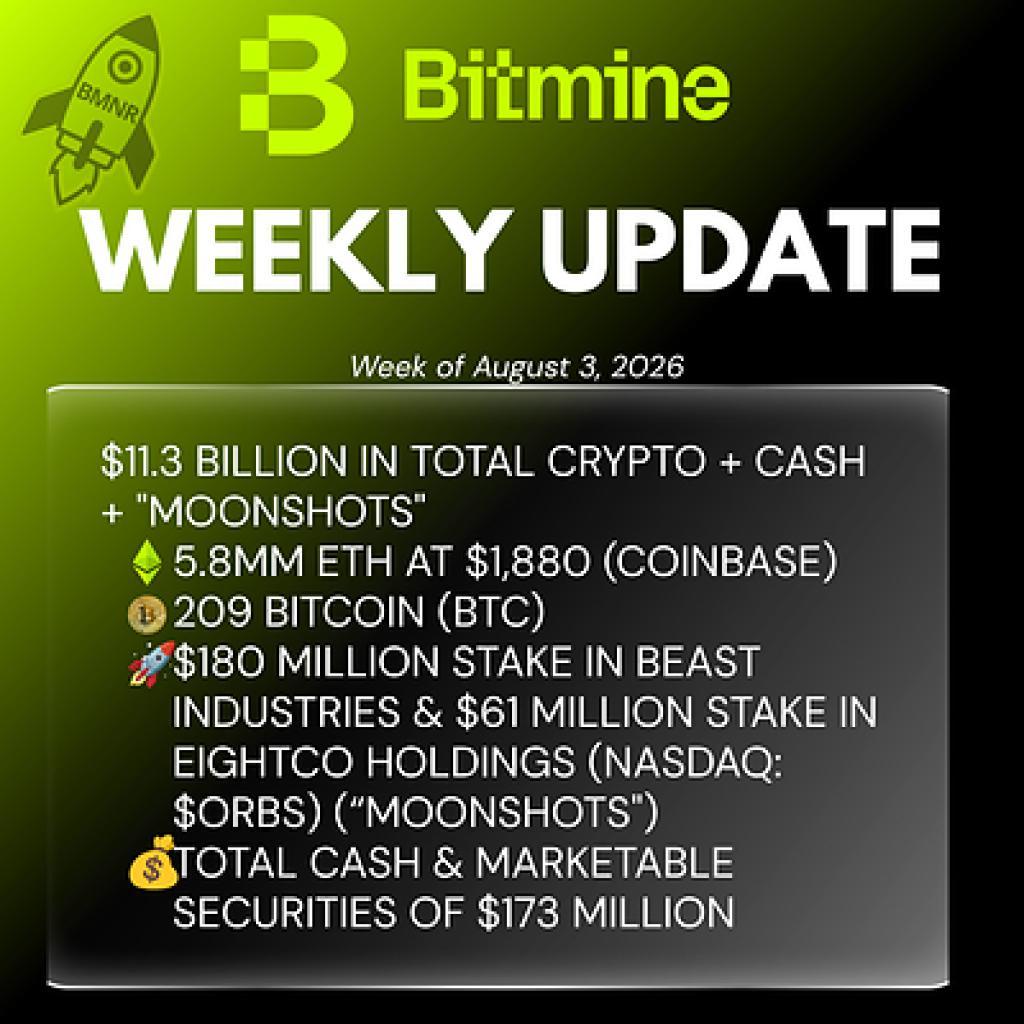
Bitmine Immersion Technologies (BMNR) Announces ETH Holdings Reach 5.8 Million Tokens, and Total Crypto and Total Cash Holdings of $11.3 Billion
Performa Marks One Year Live with Major Upgrade for Digital-Native SMBs