Updated July 9, 2026
Quick Answer
If you want the short version, the Arbitrum apps most worth comparing in 2026 are GMX, Camelot, Radiant, Dolomite, and Treasure.
They matter for different reasons:
- GMX remains one of the clearest Arbitrum-native trading brands
- Camelot is a recognizable DEX and liquidity layer
- Radiant helps represent cross-chain lending and capital routing
- Dolomite gives readers a margin and DeFi-primitives comparison point
- Treasure broadens the page beyond pure trading into Arbitrum-native app identity
That is a much stronger frame than the old “which token might explode” angle.

Why Arbitrum Ecosystem Pages Work Better as App Maps
An Arbitrum ecosystem page is more useful when it helps readers understand what kinds of apps actually define the chain.
That usually means:
- trading venues
- liquidity layers
- lending markets
- ecosystem-native app identities
The goal is orientation, not hype.
Quick Comparison
| Project | Best for | Category | Strongest point | Main caveat |
|---|---|---|---|---|
| GMX | traders | decentralized perps | strong Arbitrum trading identity | not a simple beginner swap app |
| Camelot | DEX users and LPs | DEX / liquidity | recognizable Arbitrum-native exchange brand | more specific than a generic multichain DEX |
| Radiant | users comparing lending and cross-chain capital flow | lending | useful lending-market reference point | users still need to understand protocol risk |
| Dolomite | advanced DeFi users | margin / money market | strong DeFi-primitives angle | more complex than a simple spot app |
| Treasure | users mapping Arbitrum beyond finance only | ecosystem / app layer | widens the ecosystem frame | less directly comparable to pure DeFi venues |
1. GMX
GMX remains one of the strongest Arbitrum-native brand references because it makes the ecosystem’s trading side easy to explain.
Its official app and site still frame the project around decentralized perpetual trading rather than generic token speculation.
2. Camelot
Camelot belongs here because it is one of the more recognizable Arbitrum-native DEX names and still works well as a liquidity-layer comparison point.
3. Radiant
Radiant matters because ecosystem pages get weak when they only talk about swaps. Lending and capital movement are part of what make a chain useful.
4. Dolomite
Dolomite is a good inclusion for readers who want a more advanced DeFi comparison point than a basic DEX app.
Its role helps explain why the Arbitrum ecosystem is not only about trading front ends.
5. Treasure
Treasure broadens the page in a useful way because it shows Arbitrum app identity beyond strictly financial rails.
That makes the ecosystem map more realistic than a page made only of exchanges and lenders.
FAQ
What are the top Arbitrum projects in 2026?
A stronger answer is to think in app roles rather than price narratives. GMX, Camelot, Radiant, Dolomite, and Treasure are useful starting points because they cover different parts of the ecosystem.
Is Arbitrum only about DeFi?
No. DeFi is still a major part of the ecosystem, but ecosystem identity also includes broader app-layer projects.
Further Reading
References


- China, US Conclude Trade Talks with Focus on Cooperation
- Crypto Weekly: NYSE Backs OKX, Kraken Gets Fed Access, BTC Sells
- Court Upholds Fed’s Rejection of Custodia Bank’s Request
- Former CFO Convicted for $35M Fraudulent Crypto Investment
- DeriW Launches Edge Hour Trading Competition Platform for Derivatives Traders
- Michael Saylor Denies Bitcoin Sell-Off Amid Large BTC Transfer
- Buy Dogecoin on eToro: Step-by-Step Guide for Beginners (2024)
- Kazakhstan Explores Crypto Reserves Backed by National Funds
- JPMorgan Increases Holdings in BlackRock’s Bitcoin ETF
- Nordea Bank Introduces Bitcoin ETP Trading for Nordic Customers
- XRP Spot ETF Launches on Nasdaq Amid Market Fluctuations
- Peter Schiff Challenges Michael Saylor on MSTR’s Business Model
- Thailand Orders Worldcoin to Delete 1.2 Million Biometric Records
- UK Proposes New DeFi Tax Framework to Ease User Burden
- WLFI Under Fire: Analyst Warns Hyperliquid Could Be Next
- Ancient Ethereum Whale Moves $1.19 Billion After Decade
- BlackRock Receives Large Crypto Transfers from Coinbase
- SEC Scrutiny on ALT5 Sigma’s Leadership Disclosure Timing
- Yala Injects $5.5 Million Amid Recovery Efforts
- Radiant Capital Faces $50M Loss in Major Security Breach
- China, US Conclude Trade Talks with Focus on Cooperation
- Crypto Weekly: NYSE Backs OKX, Kraken Gets Fed Access, BTC Sells
- Court Upholds Fed’s Rejection of Custodia Bank’s Request
- Former CFO Convicted for $35M Fraudulent Crypto Investment
- DeriW Launches Edge Hour Trading Competition Platform for Derivatives Traders
- Michael Saylor Denies Bitcoin Sell-Off Amid Large BTC Transfer
- Buy Dogecoin on eToro: Step-by-Step Guide for Beginners (2024)
- Kazakhstan Explores Crypto Reserves Backed by National Funds
- JPMorgan Increases Holdings in BlackRock’s Bitcoin ETF
- Nordea Bank Introduces Bitcoin ETP Trading for Nordic Customers
- XRP Spot ETF Launches on Nasdaq Amid Market Fluctuations
- Peter Schiff Challenges Michael Saylor on MSTR’s Business Model
- Thailand Orders Worldcoin to Delete 1.2 Million Biometric Records
- UK Proposes New DeFi Tax Framework to Ease User Burden
- WLFI Under Fire: Analyst Warns Hyperliquid Could Be Next
- Ancient Ethereum Whale Moves $1.19 Billion After Decade
- BlackRock Receives Large Crypto Transfers from Coinbase
- SEC Scrutiny on ALT5 Sigma’s Leadership Disclosure Timing
- Yala Injects $5.5 Million Amid Recovery Efforts
- Radiant Capital Faces $50M Loss in Major Security Breach
- China, US Conclude Trade Talks with Focus on Cooperation
- Crypto Weekly: NYSE Backs OKX, Kraken Gets Fed Access, BTC Sells
- Court Upholds Fed’s Rejection of Custodia Bank’s Request
- Former CFO Convicted for $35M Fraudulent Crypto Investment
- DeriW Launches Edge Hour Trading Competition Platform for Derivatives Traders
- Michael Saylor Denies Bitcoin Sell-Off Amid Large BTC Transfer
- Buy Dogecoin on eToro: Step-by-Step Guide for Beginners (2024)
- Kazakhstan Explores Crypto Reserves Backed by National Funds
- JPMorgan Increases Holdings in BlackRock’s Bitcoin ETF
- Nordea Bank Introduces Bitcoin ETP Trading for Nordic Customers
- XRP Spot ETF Launches on Nasdaq Amid Market Fluctuations
- Peter Schiff Challenges Michael Saylor on MSTR’s Business Model
- Thailand Orders Worldcoin to Delete 1.2 Million Biometric Records
- UK Proposes New DeFi Tax Framework to Ease User Burden
- WLFI Under Fire: Analyst Warns Hyperliquid Could Be Next
- Ancient Ethereum Whale Moves $1.19 Billion After Decade
- BlackRock Receives Large Crypto Transfers from Coinbase
- SEC Scrutiny on ALT5 Sigma’s Leadership Disclosure Timing
- Yala Injects $5.5 Million Amid Recovery Efforts
- Radiant Capital Faces $50M Loss in Major Security Breach

BlackRock Launches Tokenized Money Market Funds on Solana, Ethereum

XRP Holders Can Borrow RLUSD on Ethereum Without Selling Crypto

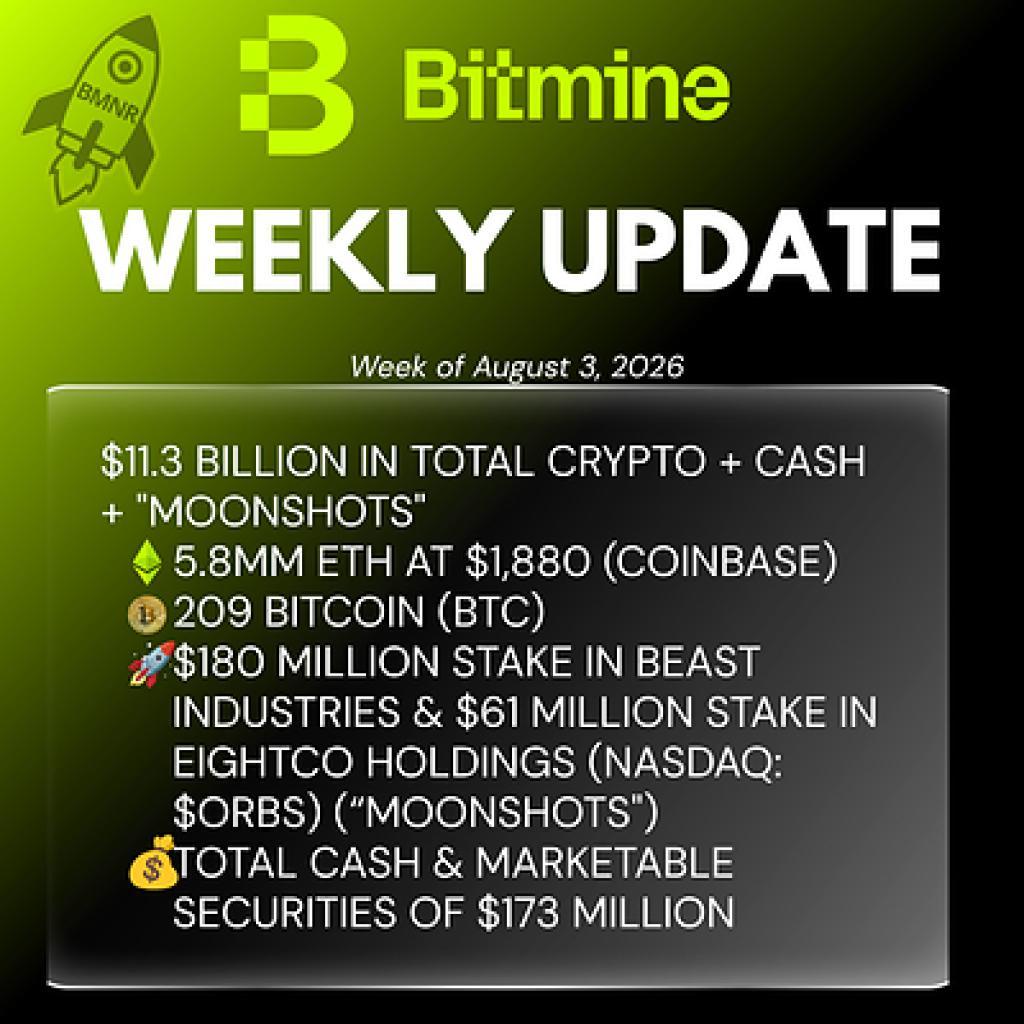
Bitmine Immersion Technologies (BMNR) Announces ETH Holdings Reach 5.8 Million Tokens, and Total Crypto and Total Cash Holdings of $11.3 Billion
Performa Marks One Year Live with Major Upgrade for Digital-Native SMBs