Bitget Web3 Talent Report: 54% of Job Seekers Hit Experience Barrier
Bitget has published a Web3 talent report finding that 54% of job seekers in the sector face an experience barrier when trying to land their first role, highlighting a structural hiring challenge across the blockchain industry.
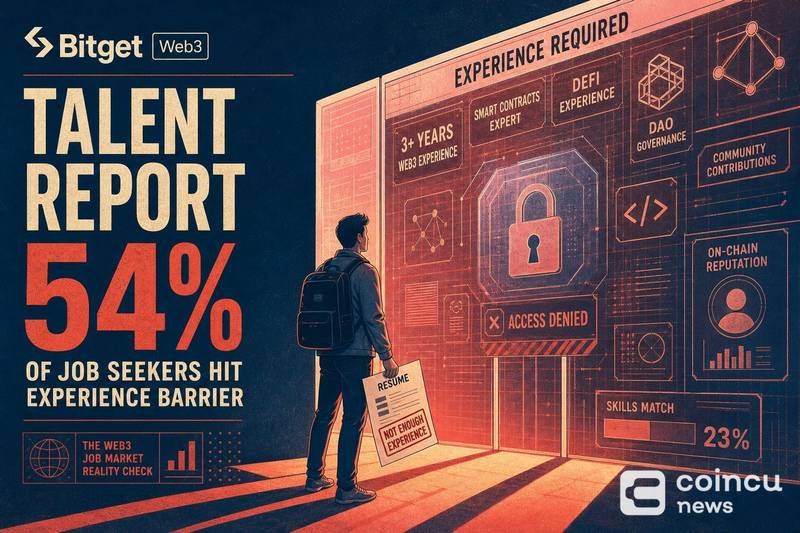
The report, released through Bitget’s research division, positions the experience gap as the single largest obstacle for professionals attempting to enter Web3. The finding suggests that more than half of aspiring candidates are filtered out before they can demonstrate competency in live roles.
The 54% figure points to a mismatch between employer expectations and the available talent pool. Web3 companies frequently require prior blockchain-specific experience, yet the sector is young enough that relatively few candidates have accumulated years of direct work history in decentralized technologies.
What the Experience Barrier Means for Web3 Job Seekers
An experience barrier in Web3 hiring typically means job listings require prior work with smart contracts, decentralized protocols, or token economics, skills that are difficult to acquire outside of an existing Web3 role. This creates a circular problem for candidates transitioning from traditional tech or entering the workforce for the first time.
For professionals moving from Web2 to Web3, transferable skills in software engineering, product management, or cybersecurity may not be recognized when job postings emphasize blockchain-native credentials. The report’s majority figure suggests this is not an edge case but a widespread pattern affecting the sector’s ability to onboard new talent.
First-Time Applicants Face the Steepest Climb
Entry-level candidates without internships or open-source contributions in blockchain projects are disproportionately affected. Unlike mature industries where graduate programs and structured onboarding pipelines exist, Web3 hiring often defaults to screening for prior project involvement.
Bitget has separately invested in educational initiatives such as its Blockchain4Youth learning hub, which aims to bridge the knowledge gap for younger entrants. Programs like these represent one approach to creating pathways that bypass strict experience requirements.
Signals for Web3 Companies and Recruiters
If more than half of job seekers are blocked by experience filters, companies risk shrinking their own candidate pipelines at a time when the sector needs to scale. The report’s findings imply that rigid hiring criteria may be contributing to talent shortages rather than solving for quality.
Skill-based hiring, where candidates demonstrate competency through technical assessments or project portfolios rather than years of tenure, offers one alternative. Some firms have also turned to internship programs and apprenticeships to develop talent internally rather than competing for a limited pool of experienced hires.
For recruiters, the data suggests that broadening candidate evaluation criteria could unlock access to qualified professionals who are currently screened out. This is particularly relevant as competition for Web3 talent intensifies alongside growing institutional interest in blockchain infrastructure, a dynamic also visible in how Web3 startups are raising significant funding to build out their teams.
Where This Fits in the Web3 Jobs Landscape
The experience barrier identified by Bitget is not unique to crypto. Emerging technology sectors routinely face a phase where demand for specialized skills outpaces the supply of experienced workers. What distinguishes Web3 is the speed at which new protocols, chains, and tooling emerge, making even recent experience potentially outdated.
The distinction between a genuine skill shortage and an experience-screening problem matters. A skill shortage means candidates lack the ability to do the work. An experience-screening problem means capable candidates exist but are filtered out by credentialing requirements that may not reflect actual job performance.
Market Readiness and Workforce Development
As Web3 projects mature and seek mainstream adoption, workforce readiness becomes a competitive factor. Projects that solve the talent pipeline problem, whether through training programs, community-driven education, or revised hiring practices, may gain an advantage in execution speed.
The growth of self-custody platforms and privacy-focused trading tools illustrates how the sector continues to diversify, creating demand for specialized roles that did not exist even two years ago. Each new product category generates its own experience gap.
Bitget’s report contributes a data point to a conversation that has largely relied on anecdotal evidence. Whether the industry responds with structural changes to hiring practices or continues to prioritize experience-based screening will shape Web3’s ability to attract and retain the talent needed to support its next phase of growth.
FAQ About Bitget’s Web3 Talent Report
What does the Bitget Web3 talent report say?
The report examines hiring barriers in the Web3 sector and finds that 54% of job seekers face an experience barrier as their primary obstacle to entering the industry.
What does the 54% experience barrier refer to?
It refers to the share of surveyed job seekers who reported that a lack of prior Web3-specific work experience was the main reason they could not secure a position in the sector.
Why does this finding matter for Web3 employers?
When more than half of prospective candidates are blocked by experience requirements, companies may be inadvertently limiting their own hiring pipelines. The finding suggests that alternative evaluation methods, such as skill-based assessments or structured training programs, could help close the talent gap.
Disclaimer: This article is for informational purposes only and does not constitute financial or investment advice. Cryptocurrency and digital asset markets carry significant risk. Always do your own research before making decisions.
No tags available.


Other Posts








- China, US Conclude Trade Talks with Focus on Cooperation
- Court Upholds Fed’s Rejection of Custodia Bank’s Request
- Former CFO Convicted for $35M Fraudulent Crypto Investment
- Crypto Weekly: NYSE Backs OKX, Kraken Gets Fed Access, BTC Sells
- DeriW Launches Edge Hour Trading Competition Platform for Derivatives Traders
- Michael Saylor Denies Bitcoin Sell-Off Amid Large BTC Transfer
- Buy Dogecoin on eToro: Step-by-Step Guide for Beginners (2024)
- Kazakhstan Explores Crypto Reserves Backed by National Funds
- JPMorgan Increases Holdings in BlackRock’s Bitcoin ETF
- Nordea Bank Introduces Bitcoin ETP Trading for Nordic Customers
- XRP Spot ETF Launches on Nasdaq Amid Market Fluctuations
- Peter Schiff Challenges Michael Saylor on MSTR’s Business Model
- Thailand Orders Worldcoin to Delete 1.2 Million Biometric Records
- UK Proposes New DeFi Tax Framework to Ease User Burden
- WLFI Under Fire: Analyst Warns Hyperliquid Could Be Next
- Ancient Ethereum Whale Moves $1.19 Billion After Decade
- BlackRock Receives Large Crypto Transfers from Coinbase
- SEC Scrutiny on ALT5 Sigma’s Leadership Disclosure Timing
- Yala Injects $5.5 Million Amid Recovery Efforts
- Radiant Capital Faces $50M Loss in Major Security Breach
- China, US Conclude Trade Talks with Focus on Cooperation
- Court Upholds Fed’s Rejection of Custodia Bank’s Request
- Former CFO Convicted for $35M Fraudulent Crypto Investment
- Crypto Weekly: NYSE Backs OKX, Kraken Gets Fed Access, BTC Sells
- DeriW Launches Edge Hour Trading Competition Platform for Derivatives Traders
- Michael Saylor Denies Bitcoin Sell-Off Amid Large BTC Transfer
- Buy Dogecoin on eToro: Step-by-Step Guide for Beginners (2024)
- Kazakhstan Explores Crypto Reserves Backed by National Funds
- JPMorgan Increases Holdings in BlackRock’s Bitcoin ETF
- Nordea Bank Introduces Bitcoin ETP Trading for Nordic Customers
- XRP Spot ETF Launches on Nasdaq Amid Market Fluctuations
- Peter Schiff Challenges Michael Saylor on MSTR’s Business Model
- Thailand Orders Worldcoin to Delete 1.2 Million Biometric Records
- UK Proposes New DeFi Tax Framework to Ease User Burden
- WLFI Under Fire: Analyst Warns Hyperliquid Could Be Next
- Ancient Ethereum Whale Moves $1.19 Billion After Decade
- BlackRock Receives Large Crypto Transfers from Coinbase
- SEC Scrutiny on ALT5 Sigma’s Leadership Disclosure Timing
- Yala Injects $5.5 Million Amid Recovery Efforts
- Radiant Capital Faces $50M Loss in Major Security Breach
- China, US Conclude Trade Talks with Focus on Cooperation
- Court Upholds Fed’s Rejection of Custodia Bank’s Request
- Former CFO Convicted for $35M Fraudulent Crypto Investment
- Crypto Weekly: NYSE Backs OKX, Kraken Gets Fed Access, BTC Sells
- DeriW Launches Edge Hour Trading Competition Platform for Derivatives Traders
- Michael Saylor Denies Bitcoin Sell-Off Amid Large BTC Transfer
- Buy Dogecoin on eToro: Step-by-Step Guide for Beginners (2024)
- Kazakhstan Explores Crypto Reserves Backed by National Funds
- JPMorgan Increases Holdings in BlackRock’s Bitcoin ETF
- Nordea Bank Introduces Bitcoin ETP Trading for Nordic Customers
- XRP Spot ETF Launches on Nasdaq Amid Market Fluctuations
- Peter Schiff Challenges Michael Saylor on MSTR’s Business Model
- Thailand Orders Worldcoin to Delete 1.2 Million Biometric Records
- UK Proposes New DeFi Tax Framework to Ease User Burden
- WLFI Under Fire: Analyst Warns Hyperliquid Could Be Next
- Ancient Ethereum Whale Moves $1.19 Billion After Decade
- BlackRock Receives Large Crypto Transfers from Coinbase
- SEC Scrutiny on ALT5 Sigma’s Leadership Disclosure Timing
- Yala Injects $5.5 Million Amid Recovery Efforts
- Radiant Capital Faces $50M Loss in Major Security Breach

Kraken Parent Payward Joins Anthropic Project Glasswing for AI Security


IREN Delivers First AI Cloud Deployment to Microsoft Under $9.7B Deal

Vantage Expands Pre-IPO CFD Offering with Unitree Robotics as Interest in Frontier AI Grows

Bitmine Immersion Technologies (BMNR) Announces ETH Holdings Reach 5.82 Million Tokens, and Total Crypto and Total Cash Holdings of $11.4 Billion