Kraken Institutional Partners With Upshift to Launch Customized Crypto Vault
Kraken Institutional has partnered with Upshift to launch a customized crypto vault, giving eligible institutions a way to route assets into vetted onchain yield strategies directly inside Kraken’s qualified custody workflow. The July 15, 2026 announcement adds permissioned, custom vaults that let clients pursue DeFi returns without opening separate wallets or onboarding additional providers.
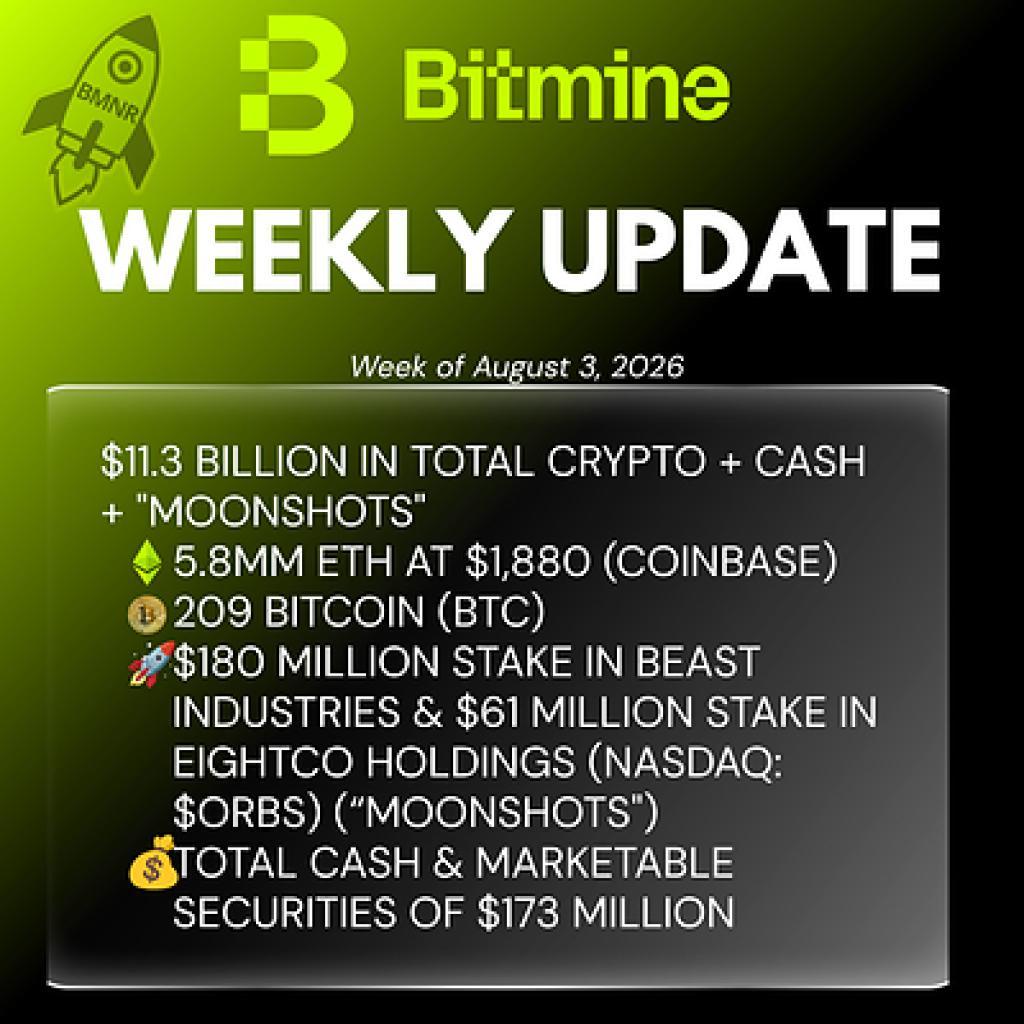
The launch positions Kraken’s institutional arm as a bridge between cold-storage custody and active onchain yield, a combination that has historically forced institutions to choose one or the other. Kraken said the two firms are targeting professional clients holding Bitcoin, Ethereum, and stablecoins, according to the company’s announcement. For related coverage, see Bitmine Immersion Technologies (BMNR) Announces ETH Holdings Reach 5.77 Million Tokens, and Total Crypto and Total Cash Holdings of $11.3 Billion.
Kraken Institutional and Upshift Launch a Customized Crypto Vault
Kraken Institutional, the exchange’s professional-client division, is supplying the custody and account infrastructure, while Upshift contributes the vault architecture and onchain strategy execution. The product is a permissioned, custom institutional vault that sits inside Kraken’s existing custody setup. For related coverage, see Bitmine Immersion Technologies (BMNR) Announces Total Crypto and Cash Holdings Top $11.1 Billion Now.
The news is timely because institutional demand for yield-bearing crypto exposure has grown alongside a cautious spot market. Bitcoin traded near $64,869 at fetch time, with the broader market reflecting a defensive mood that has pushed institutions toward structured, custody-first products rather than direct DeFi participation. This launch follows Kraken’s earlier move to roll out a customizable crypto vault for Bitcoin, Ether and stablecoin yield.
What the Customized Crypto Vault Offers Institutional Clients
The core promise is that eligible clients can deploy assets into vetted onchain yield strategies without opening separate wallets or onboarding additional providers, per Kraken’s institutional overview. That removes the operational friction that usually accompanies moving custodied assets into DeFi.
Customization is the central feature. Kraken said the custom vault program can support DeFi, CeFi, PayFi, and real-world-asset strategies across more than 30 chains, letting institutions tailor exposure to their mandate rather than accept a one-size-fits-all pool.
On the structural side, vault positions are represented by receipt tokens returned to the client’s segregated custody account, valued at redeemable underlying value, and are not pooled or rehypothecated. That segregation is the key safeguard distinguishing this from commingled yield products.
Why Kraken Institutional Chose Upshift for This Vault Initiative
The partnership splits responsibilities cleanly: Kraken handles regulated custody and client accounts, while Upshift provides the vault and strategy layer that turns custodied assets into yield-generating positions. Neither firm has to replicate the other’s core competency.
Kraken framed custody as a foundation rather than a limit. Gregory Barasia said custody should be the starting point for what institutions can do with their assets, not the ending point, in the company’s announcement.
Kraken also leaned on its regulatory credentials to make the case. The company said its qualified custody stack includes SOC 2 Type 2 certification, a Wyoming SPDI license, and $100 million in insurance coverage.
“Institutions have long faced a trade-off between secure custody and putting funds to work.”
— Aya Kantorovich, Kraken Institutional
What This Means for Institutional Crypto Adoption
The custody-to-DeFi bridge is where this launch diverges from prime-brokerage competitors. Coinbase Prime, in a March 6, 2026 update, emphasized integrated regulated futures and unified cross-margin inside a single workflow, according to Coinbase, but did not describe permissioned custom vaults or segregated receipt tokens for onchain yield.
The receipt-token model marked at redeemable value, with no pooling or rehypothecation, targets the risk concerns that have kept treasury and yield-focused institutions on the sidelines. It aims to make onchain yield legible to compliance and risk teams accustomed to segregated custody.
Sentiment context underscores why a conservative structure matters now. The Fear and Greed Index sat at 25, in Extreme Fear territory, signaling a market environment where institutions favor capital preservation and vetted strategies over aggressive risk-taking.
Kraken’s regulatory framing spans multiple jurisdictions, positioning the product for global institutions. The company said custody is provided by Payward Financial or Payward Europe Solutions, with a stack that is MiCA-authorized under the Central Bank of Ireland and FCA-registered in the UK, while cautioning that yield is variable and smart-contract risks remain. The broader push toward institutional-grade onchain infrastructure echoes moves like DTCC’s real-time tokenized asset processing, and Kraken has separately expanded retail-facing tools such as AI agent trading.
FAQ About Kraken Institutional’s Customized Crypto Vault
What is the customized crypto vault? It is a permissioned, custom institutional vault launched by Kraken Institutional and Upshift that lets clients deploy custodied assets into vetted onchain yield strategies inside Kraken’s qualified custody workflow.
Who can use it? Eligible institutional clients of Kraken Institutional, targeting holders of assets such as Bitcoin, Ethereum, and stablecoins who want yield without managing separate wallets or extra providers.
Why did Kraken Institutional partner with Upshift? Kraken supplies regulated custody and client accounts, while Upshift provides the vault and strategy execution across more than 30 chains, letting each firm focus on its specialty.
Why does this launch matter? It connects qualified custody directly to onchain yield through segregated receipt tokens that are not pooled or rehypothecated, addressing a trade-off that has slowed institutional DeFi adoption.
Disclaimer: This article is for informational purposes only and does not constitute financial or investment advice. Cryptocurrency and digital asset markets carry significant risk. Always do your own research before making decisions.
No tags available.


Other Posts








- China, US Conclude Trade Talks with Focus on Cooperation
- Crypto Weekly: NYSE Backs OKX, Kraken Gets Fed Access, BTC Sells
- Court Upholds Fed’s Rejection of Custodia Bank’s Request
- Former CFO Convicted for $35M Fraudulent Crypto Investment
- DeriW Launches Edge Hour Trading Competition Platform for Derivatives Traders
- Michael Saylor Denies Bitcoin Sell-Off Amid Large BTC Transfer
- Buy Dogecoin on eToro: Step-by-Step Guide for Beginners (2024)
- Kazakhstan Explores Crypto Reserves Backed by National Funds
- JPMorgan Increases Holdings in BlackRock’s Bitcoin ETF
- Nordea Bank Introduces Bitcoin ETP Trading for Nordic Customers
- XRP Spot ETF Launches on Nasdaq Amid Market Fluctuations
- Peter Schiff Challenges Michael Saylor on MSTR’s Business Model
- Thailand Orders Worldcoin to Delete 1.2 Million Biometric Records
- UK Proposes New DeFi Tax Framework to Ease User Burden
- WLFI Under Fire: Analyst Warns Hyperliquid Could Be Next
- Ancient Ethereum Whale Moves $1.19 Billion After Decade
- BlackRock Receives Large Crypto Transfers from Coinbase
- SEC Scrutiny on ALT5 Sigma’s Leadership Disclosure Timing
- Yala Injects $5.5 Million Amid Recovery Efforts
- Radiant Capital Faces $50M Loss in Major Security Breach
- China, US Conclude Trade Talks with Focus on Cooperation
- Crypto Weekly: NYSE Backs OKX, Kraken Gets Fed Access, BTC Sells
- Court Upholds Fed’s Rejection of Custodia Bank’s Request
- Former CFO Convicted for $35M Fraudulent Crypto Investment
- DeriW Launches Edge Hour Trading Competition Platform for Derivatives Traders
- Michael Saylor Denies Bitcoin Sell-Off Amid Large BTC Transfer
- Buy Dogecoin on eToro: Step-by-Step Guide for Beginners (2024)
- Kazakhstan Explores Crypto Reserves Backed by National Funds
- JPMorgan Increases Holdings in BlackRock’s Bitcoin ETF
- Nordea Bank Introduces Bitcoin ETP Trading for Nordic Customers
- XRP Spot ETF Launches on Nasdaq Amid Market Fluctuations
- Peter Schiff Challenges Michael Saylor on MSTR’s Business Model
- Thailand Orders Worldcoin to Delete 1.2 Million Biometric Records
- UK Proposes New DeFi Tax Framework to Ease User Burden
- WLFI Under Fire: Analyst Warns Hyperliquid Could Be Next
- Ancient Ethereum Whale Moves $1.19 Billion After Decade
- BlackRock Receives Large Crypto Transfers from Coinbase
- SEC Scrutiny on ALT5 Sigma’s Leadership Disclosure Timing
- Yala Injects $5.5 Million Amid Recovery Efforts
- Radiant Capital Faces $50M Loss in Major Security Breach
- China, US Conclude Trade Talks with Focus on Cooperation
- Crypto Weekly: NYSE Backs OKX, Kraken Gets Fed Access, BTC Sells
- Court Upholds Fed’s Rejection of Custodia Bank’s Request
- Former CFO Convicted for $35M Fraudulent Crypto Investment
- DeriW Launches Edge Hour Trading Competition Platform for Derivatives Traders
- Michael Saylor Denies Bitcoin Sell-Off Amid Large BTC Transfer
- Buy Dogecoin on eToro: Step-by-Step Guide for Beginners (2024)
- Kazakhstan Explores Crypto Reserves Backed by National Funds
- JPMorgan Increases Holdings in BlackRock’s Bitcoin ETF
- Nordea Bank Introduces Bitcoin ETP Trading for Nordic Customers
- XRP Spot ETF Launches on Nasdaq Amid Market Fluctuations
- Peter Schiff Challenges Michael Saylor on MSTR’s Business Model
- Thailand Orders Worldcoin to Delete 1.2 Million Biometric Records
- UK Proposes New DeFi Tax Framework to Ease User Burden
- WLFI Under Fire: Analyst Warns Hyperliquid Could Be Next
- Ancient Ethereum Whale Moves $1.19 Billion After Decade
- BlackRock Receives Large Crypto Transfers from Coinbase
- SEC Scrutiny on ALT5 Sigma’s Leadership Disclosure Timing
- Yala Injects $5.5 Million Amid Recovery Efforts
- Radiant Capital Faces $50M Loss in Major Security Breach


Former FBI Agent Charged With Stealing Nearly $1 Million in Crypto

Coldcard Exploit Raises Questions About Air-Gapped Bitcoin Wallet Security

Bybit.eu Expands European Offering as Bybit Payments GmbH Secures Electronic Money Institution Licence

1win Introduces Seamless Web3 Login and Crypto Deposits via Trust Wallet, MetaMask, and WalletConnect