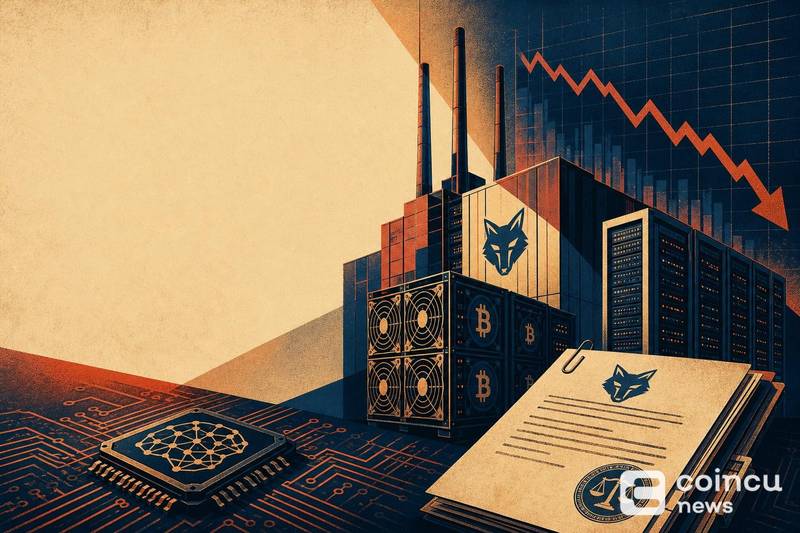

The Bitcoin mining AI infrastructure index has reportedly fallen 16% over the past month, a decline that coincides with SEC filing activity from TeraWulf and growing attention to insider-liquidity dynamics across the sector.
What sparked the reported 16% slide in the Bitcoin mining AI infrastructure index
The reported drop centers on an index that tracks publicly traded companies operating at the intersection of bitcoin mining and AI data center infrastructure. The 16% figure surfaced in market coverage and has become the primary news peg linking corporate filing activity to broader sector sentiment.
While the index aims to capture performance across miners pivoting toward AI workloads, the methodology behind its construction has not been independently verified in available reporting. The decline nonetheless reflects measurable pressure on a basket of stocks that rallied sharply in prior months as companies like TeraWulf repositioned around high-performance computing and AI cloud mining infrastructure.
Importantly, the 16% decline is presented here as a reported claim rather than a fully validated metric. The index’s composition, weighting methodology, and maintainer have not been documented in the sources reviewed for this article.
What the TeraWulf SEC filing adds to the story
The story’s main documentary anchor is an SEC filing associated with TeraWulf, the bitcoin mining and data center operator. The filing, hosted on the SEC’s EDGAR system, is the primary source cited in connection with executive holdings activity at the company.
A separate investor-relations filing on TeraWulf’s site also surfaces in connection with the story. Together, these filings point to some form of insider transaction, though the precise nature of the holdings change, whether an outright sale, a planned disposition under Rule 144, or another mechanism, requires direct reading of the filing details.
It is important to separate what the filing confirms from what market commentary has inferred. The existence of an SEC filing is documented. The interpretation that executives are broadly “reducing holdings” extends beyond what a single filing can prove without corroborating data from peer companies.

Why insider-liquidity narratives matter for bitcoin mining and AI infrastructure stocks
The headline’s framing, connecting an index decline to executive selling, draws on a recognized pattern in equity markets. When insiders at companies in a hot sector begin filing to sell shares, it can shift sentiment even if the sales are routine or pre-planned.
For bitcoin mining companies that have pivoted toward bitcoin-focused operating models, the AI infrastructure narrative has been a key driver of valuation premiums. Any signal that insiders are taking profits can prompt investors to reassess whether those premiums are sustainable.
TheMinerMag reported on the intersection of insider liquidity and the bitcoin miner AI rally, framing executive selling as a sector-level theme rather than a single-company event. This reporting suggests TeraWulf is not the only name drawing attention, though specific peer transactions have not been confirmed in the available evidence.
The dynamic is distinct from bitcoin spot-price pressure. While bitcoin mining difficulty has continued to climb, the index decline appears driven by equity-market sentiment around the AI infrastructure trade rather than cryptocurrency fundamentals alone.
Investors tracking this space have also watched how institutional players like Jane Street have adjusted their bitcoin ETF positions, adding another layer to the broader question of whether smart money is rotating away from bitcoin-adjacent equity exposure.
What the current evidence does not prove
Several important gaps remain in the available reporting. The index methodology, including which companies it tracks, how they are weighted, and who maintains it, has not been independently documented in the sources reviewed.
The SEC filing’s specific contents, including the size, timing, and terms of any insider transaction, have not been extracted into readable form. The filing endpoint returned raw XML that was not successfully parsed during the research process.
No confirmed data exists for peer executive transactions beyond TeraWulf. The headline’s reference to “other executives” reducing holdings is not supported by additional named filings. Market data fields, including bitcoin’s current price and the Fear and Greed Index, were not populated in the available research.
These gaps mean the reported decline figure and the breadth of insider selling both carry verification risk. Readers should treat the index number as a reported claim pending independent confirmation of the underlying data.
Key questions about the index drop and the TeraWulf filing
What is the Bitcoin mining AI infrastructure index?
It appears to be a basket index tracking publicly traded companies that operate both bitcoin mining and AI data center infrastructure. The exact composition and maintainer have not been confirmed in available sources.
What does the TeraWulf filing actually show?
An SEC EDGAR filing exists for TeraWulf, but its specific contents, whether a Form 144 notice of proposed sale or another filing type, require direct review of the document. The filing’s existence is confirmed; its interpretation remains open.
Is the decline about bitcoin price action or miner equity pressure?
The available evidence points to equity-market dynamics rather than bitcoin spot-price moves. The story is centered on publicly traded company performance rather than cryptocurrency price action, though the two are inherently linked for mining operators.
Are other executive holdings changes confirmed?
Not in the current research. Only TeraWulf’s filing is documented as a primary source. The broader insider-liquidity framing comes from sector-level reporting rather than a confirmed list of individual filings from multiple companies.
Disclaimer: This article is for informational purposes only and does not constitute financial or investment advice. Cryptocurrency and digital asset markets carry significant risk. Always do your own research before making decisions.