HSBC Says Crypto Allocation Fell to 6% as 45% of HNW Investors Plan to Increase Holdings
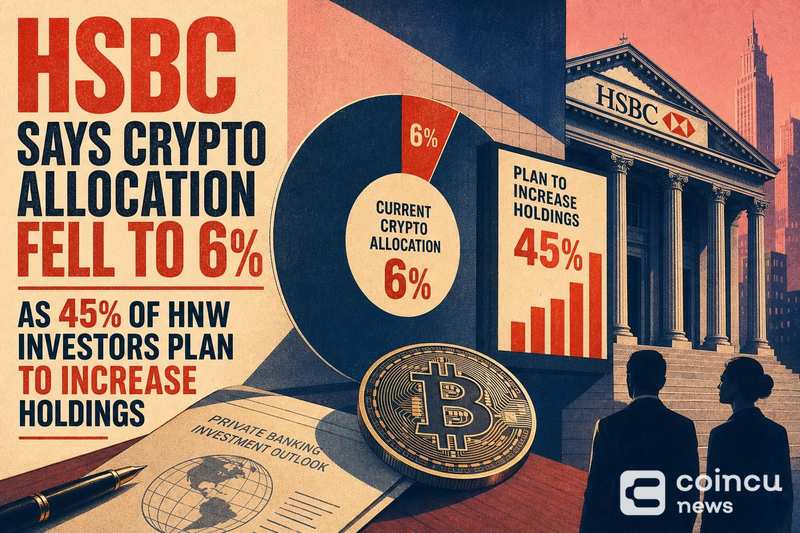
HSBC’s 2026 Global Affluent Investor Snapshot puts the average portfolio allocation to cryptocurrency at just 6%, down one percentage point from a year earlier, even as 45% of the surveyed affluent and high-net-worth investors say they plan to increase their crypto holdings over the next 12 months. The split points to smaller positions today but broader appetite ahead, an HSBC crypto allocation 6% reading that sits somewhere between caution and conviction.
HSBC Reports Average Crypto Allocation Slipped to 6%
The 6% figure is a mean portfolio weight, not a headcount. It describes how much of a typical respondent’s overall investment portfolio is held in cryptocurrency, which HSBC says edged down to 6% in 2026 from 7% the year before across a sample of 9,993 investors in 10 markets surveyed between 6 January and 6 February 2026. For related coverage, see Binance to Launch U/USD Spot Trading Pair on July 30, 2026.
This is an institutional sentiment update, not a price story. HSBC is the source of the allocation claim, and the number reflects portfolio positioning captured in a fixed survey window rather than a real-time market signal. For related coverage, see Binance Wallet Adds Changxin Technology Perpetuals With 20x Leverage.
Crypto remains a minor slice of these portfolios. Cash and cash equivalents were the largest global allocation at 19%, followed by equities at 16% and fixed income at 14%, according to HSBC’s full report. Against those weightings, a 6% crypto position looks like a satellite holding rather than a core allocation.
Why 45% of Wealthy Investors Still Plan to Add Crypto
The forward-looking figure runs against the drop in current exposure. HSBC’s factsheet shows 45% of the sample plans to increase crypto allocation over the next 12 months, while another 40% intend to keep it stable.
Current allocation and future intent are different measures. The 6% describes money already deployed; the intention figures describe what investors say they mean to do next. A stated plan is not an executed trade, and survey intent can soften if volatility or risk controls intervene.
Taken together, roughly 85% of respondents plan to hold or add crypto rather than cut it. That reads as steady risk appetite among wealthy holders, a positioning signal that lines up with continued institutional interest in custody and liquidity services for digital assets.
What the Survey Signals for Crypto Sentiment
The measured takeaway is stability, not a surge. A large share of affluent investors intends to add exposure even after average weights fell, which suggests the allocation compression reflects rebalancing rather than a wholesale retreat from the asset class.
High-net-worth positioning works as one sentiment indicator among many. With 40% planning to hold steady and 45% leaning to add, the combined intent data points to accumulation bias rather than capitulation, tied directly to the same two HSBC figures at the center of this story.
Market backdrop tempers the read. Bitcoin traded near $63,506 at press time, down about 2.8% over 24 hours, while the Crypto Fear & Greed Index sat at 29, in Fear territory. Stated intent to buy is coexisting with a cautious short-term tape.
How to Read the Allocation Drop in Context
Survey findings are a sample snapshot, not a live ledger. HSBC captured responses from a defined pool over a five-week window, so the 6% average reflects that moment rather than a continuous measurement of what wealthy investors hold today.
A falling allocation percentage does not always equal bearish conviction. Weights can shrink because other assets rallied, because prices fell, or because risk limits capped exposure, none of which necessarily reflect a change in belief about crypto’s long-term role.
Exposure size and investor interest are separate things. The data shows a smaller average position paired with wider stated appetite, and how regulators treat the asset still shapes suitability. Debates over whether tokens are payment tools or investment products continue to influence how affluent clients can build positions.
FAQ About HSBC’s Crypto Allocation Findings
Is a falling crypto allocation bearish?
Not on its own. The average weight slipped by one percentage point to 6%, but 85% of respondents plan to hold or add rather than reduce, which points to a rebalancing story rather than a bearish exit.
Why would investors increase holdings after a decline?
Because current allocation and future intent measure different things. Nearly half of the sample signaled plans to add exposure over the next year, a forward-looking appetite that can persist even when present-day weights are modest.
What does the 6% figure mean for crypto adoption?
It frames crypto as an established but small satellite holding for affluent investors, well below cash, equities, and fixed income. Adoption here looks steady and normalized rather than surging, a dynamic that also surfaces in enforcement cases over crypto assets held by individuals as the market matures.
Disclaimer: This article is for informational purposes only and does not constitute financial or investment advice. Cryptocurrency and digital asset markets carry significant risk. Always do your own research before making decisions.
No tags available.


Other Posts








- China, US Conclude Trade Talks with Focus on Cooperation
- Court Upholds Fed’s Rejection of Custodia Bank’s Request
- Crypto Weekly: NYSE Backs OKX, Kraken Gets Fed Access, BTC Sells
- Former CFO Convicted for $35M Fraudulent Crypto Investment
- DeriW Launches Edge Hour Trading Competition Platform for Derivatives Traders
- Michael Saylor Denies Bitcoin Sell-Off Amid Large BTC Transfer
- Buy Dogecoin on eToro: Step-by-Step Guide for Beginners (2024)
- Kazakhstan Explores Crypto Reserves Backed by National Funds
- JPMorgan Increases Holdings in BlackRock’s Bitcoin ETF
- Nordea Bank Introduces Bitcoin ETP Trading for Nordic Customers
- XRP Spot ETF Launches on Nasdaq Amid Market Fluctuations
- Peter Schiff Challenges Michael Saylor on MSTR’s Business Model
- Thailand Orders Worldcoin to Delete 1.2 Million Biometric Records
- UK Proposes New DeFi Tax Framework to Ease User Burden
- WLFI Under Fire: Analyst Warns Hyperliquid Could Be Next
- Ancient Ethereum Whale Moves $1.19 Billion After Decade
- BlackRock Receives Large Crypto Transfers from Coinbase
- SEC Scrutiny on ALT5 Sigma’s Leadership Disclosure Timing
- Yala Injects $5.5 Million Amid Recovery Efforts
- Radiant Capital Faces $50M Loss in Major Security Breach
- China, US Conclude Trade Talks with Focus on Cooperation
- Court Upholds Fed’s Rejection of Custodia Bank’s Request
- Crypto Weekly: NYSE Backs OKX, Kraken Gets Fed Access, BTC Sells
- Former CFO Convicted for $35M Fraudulent Crypto Investment
- DeriW Launches Edge Hour Trading Competition Platform for Derivatives Traders
- Michael Saylor Denies Bitcoin Sell-Off Amid Large BTC Transfer
- Buy Dogecoin on eToro: Step-by-Step Guide for Beginners (2024)
- Kazakhstan Explores Crypto Reserves Backed by National Funds
- JPMorgan Increases Holdings in BlackRock’s Bitcoin ETF
- Nordea Bank Introduces Bitcoin ETP Trading for Nordic Customers
- XRP Spot ETF Launches on Nasdaq Amid Market Fluctuations
- Peter Schiff Challenges Michael Saylor on MSTR’s Business Model
- Thailand Orders Worldcoin to Delete 1.2 Million Biometric Records
- UK Proposes New DeFi Tax Framework to Ease User Burden
- WLFI Under Fire: Analyst Warns Hyperliquid Could Be Next
- Ancient Ethereum Whale Moves $1.19 Billion After Decade
- BlackRock Receives Large Crypto Transfers from Coinbase
- SEC Scrutiny on ALT5 Sigma’s Leadership Disclosure Timing
- Yala Injects $5.5 Million Amid Recovery Efforts
- Radiant Capital Faces $50M Loss in Major Security Breach
- China, US Conclude Trade Talks with Focus on Cooperation
- Court Upholds Fed’s Rejection of Custodia Bank’s Request
- Crypto Weekly: NYSE Backs OKX, Kraken Gets Fed Access, BTC Sells
- Former CFO Convicted for $35M Fraudulent Crypto Investment
- DeriW Launches Edge Hour Trading Competition Platform for Derivatives Traders
- Michael Saylor Denies Bitcoin Sell-Off Amid Large BTC Transfer
- Buy Dogecoin on eToro: Step-by-Step Guide for Beginners (2024)
- Kazakhstan Explores Crypto Reserves Backed by National Funds
- JPMorgan Increases Holdings in BlackRock’s Bitcoin ETF
- Nordea Bank Introduces Bitcoin ETP Trading for Nordic Customers
- XRP Spot ETF Launches on Nasdaq Amid Market Fluctuations
- Peter Schiff Challenges Michael Saylor on MSTR’s Business Model
- Thailand Orders Worldcoin to Delete 1.2 Million Biometric Records
- UK Proposes New DeFi Tax Framework to Ease User Burden
- WLFI Under Fire: Analyst Warns Hyperliquid Could Be Next
- Ancient Ethereum Whale Moves $1.19 Billion After Decade
- BlackRock Receives Large Crypto Transfers from Coinbase
- SEC Scrutiny on ALT5 Sigma’s Leadership Disclosure Timing
- Yala Injects $5.5 Million Amid Recovery Efforts
- Radiant Capital Faces $50M Loss in Major Security Breach


Tom Lee’s Bitmine Owns 4.8% of Ethereum Supply After Latest ETH Purchase

Strategy Raises $334M From MSTR Stock Sale as Bitcoin Holdings Stay Unchanged
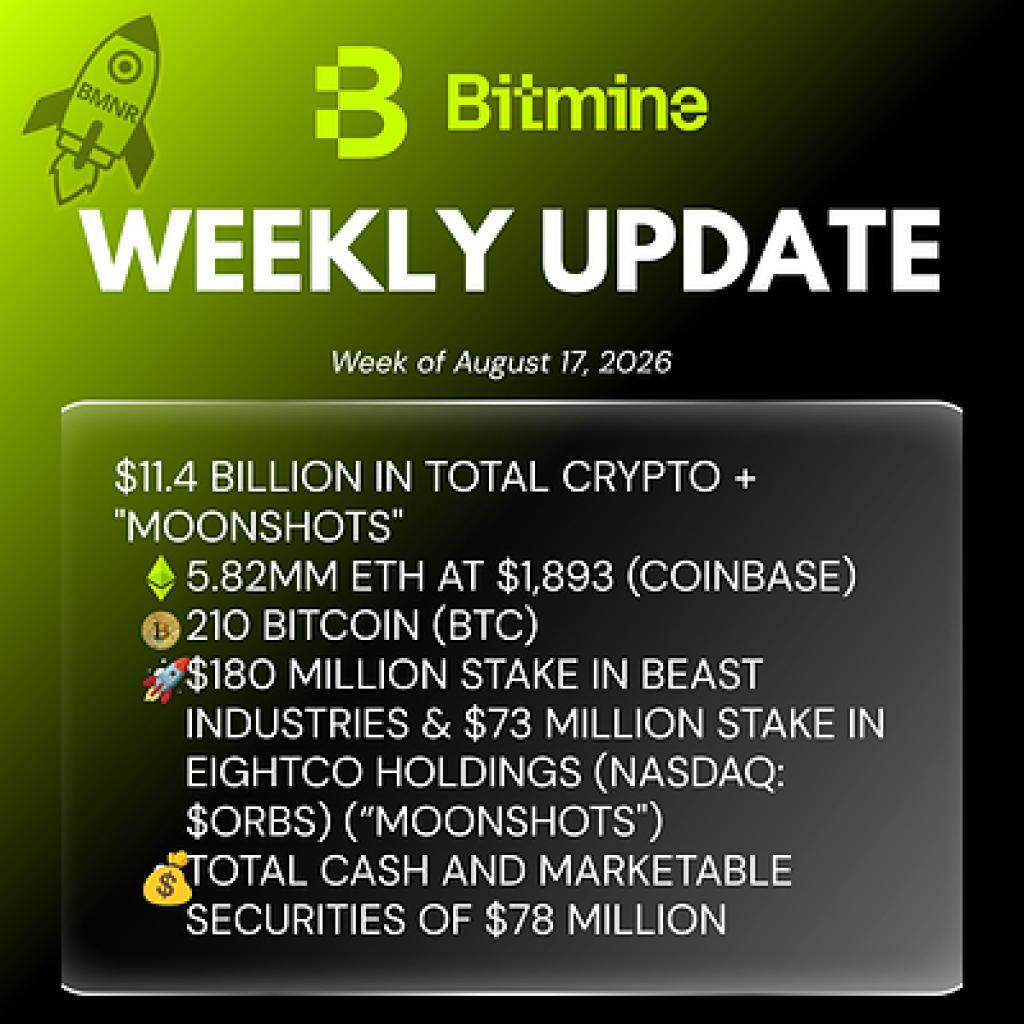
Bitmine Immersion Technologies (BMNR) Announces ETH Holdings Reach 5.82 Million Tokens, and Total Crypto and Total Cash Holdings of $11.4 Billion

BiggerZ: Building a Fairness-First Crypto Casino, Sportsbook and Prediction Markets Platform