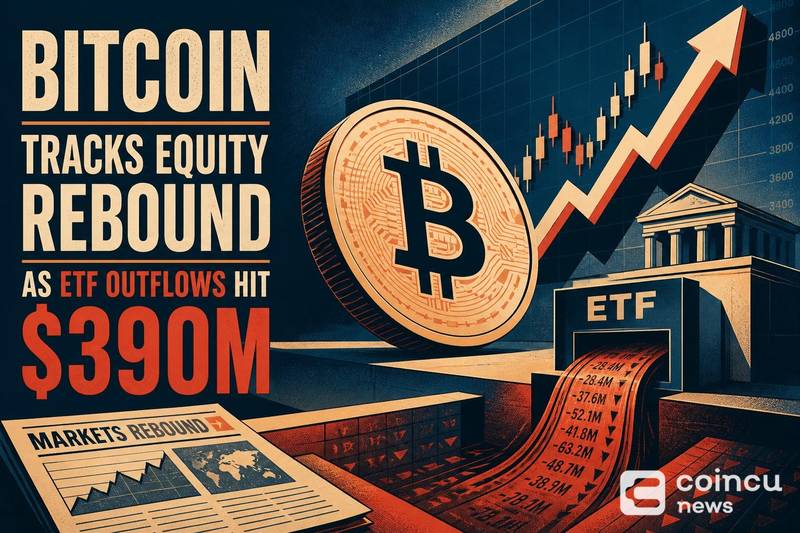
Bitcoin edged higher alongside a rebound in U.S. equity futures on Aug. 17, 2026, but a run of Bitcoin ETF outflows totaling roughly $390 million last week left institutional demand looking soft even as spot prices recovered.
Bitcoin Climbed With Equity Futures Even as ETF Demand Softened
Bitcoin rose 0.77% since midnight UTC while Nasdaq 100 futures gained 0.5% to their highest level since July 2, according to CoinDesk. The move framed the largest cryptocurrency as tracking a broader risk-on bounce in stocks. For related coverage, see Paul Tudor Jones' Firm Rebuys BlackRock Bitcoin ETF After Year of Selling.
Equity strength was not isolated to tech futures. Nasdaq 100 futures rose 0.5% and S&P 500 futures climbed 0.1% on Monday, Barron’s reported, setting a supportive backdrop for the crypto rebound. For related coverage, see Bitcoin Eyes New August Lows as Binance Longs Face Cleanout.
Where Bitcoin Traded
Bitcoin changed hands at $63,590 with a 24-hour gain of about 1.01%, alongside a market capitalization near $1.28 trillion and 24-hour trading volume of roughly $14.7 billion. The recovery echoed a pattern where Bitcoin has tracked its Nasdaq correlation closely in thin, macro-driven sessions.
The $390 Million ETF Withdrawal Week Shows Where Pressure Was Concentrated
U.S. spot bitcoin ETFs recorded four days of outflows last week for a net $390 million withdrawal, the largest weekly pullback in six weeks, CoinDesk reported. That marked a clear cooling in the institutional demand that has underpinned much of Bitcoin’s 2026 price base.
The precise weekly figure came in at a net outflow of $389.71 million between Aug. 10 and Aug. 14, 2026, Incrypted reported, citing SoSoValue data. The direct first-party ETF flow pages at SoSoValue and Farside were not fetchable during research, so the figure is cross-attributed through secondary reporting rather than a directly retrieved provider dashboard.
Which Funds Led the Outflows
Fidelity’s FBTC saw the largest single-fund weekly outflow at $153.23 million, while BlackRock’s IBIT lost $78.96 million over the same period, according to the SoSoValue-cited data. The concentration in two of the largest products shows the withdrawals were driven by flagship funds rather than smaller issuers.
Why the Weekly Total Matters
Framing the $390 million pullback as the heaviest in six weeks positions it as a meaningful break from recent stability, not routine noise. The deterioration follows earlier episodes where Bitcoin slipped as ETFs logged drawdowns around macro data releases.
Why the Price-Flow Divergence Matters for Bitcoin’s Institutional Narrative
A rebound in Bitcoin’s price without matching ETF inflows suggests the bounce was macro-led rather than demand-led. When spot prices rise on equity beta while regulated fund vehicles keep bleeding, the move rests on correlation with risk assets instead of fresh institutional conviction.
Sentiment reinforces that caution. The crypto Fear & Greed Index sat at 31, a reading classified as Fear, even as prices recovered, signaling that positioning remained defensive.
The roughly $14.7 billion in 24-hour volume against a $1.28 trillion market cap gives the rebound scale, but volume alone does not confirm net accumulation when the clearest regulated-demand gauge, ETF flows, points the other way. Persistent institutional buyers such as Paul Tudor Jones’ firm have previously rotated back into BlackRock’s Bitcoin ETF, underscoring how flow direction, not price, tracks conviction.
Tactical Bounce or Durable Turn
The setup looks tactical rather than durable until ETF flows stabilize. Some long-term holders have kept exposure steady, including Harvard, which held its Bitcoin ETF stake unchanged in Q2, but steady holdings differ from the net new inflows needed to validate a demand-led rally.
What Could Change the Setup Next
Immediate Market Triggers
Daily ETF flow direction is the most immediate institutional signal to watch. A return to consistent net inflows would confirm the rebound has regulated-demand sponsorship, while continued outflows would keep bulls on the back foot despite firm equity futures.
Equity risk appetite is the secondary trigger. With Nasdaq 100 futures at their highest since early July, sustained strength in index futures would keep the cross-asset tailwind intact, though a reversal could quickly pull Bitcoin lower given the tight correlation.
Policy and Macro Watchpoints
On policy, CoinDesk reported that Galaxy Research head Alex Thorn cut his odds of the Clarity Act becoming law in 2026 to roughly 10%, with a Senate cloture vote scheduled for Sept. 15 when lawmakers return from recess. That vote is a peripheral but datable catalyst for market structure sentiment.
Bitcoin ETF Outflow FAQ
Why did Bitcoin rise if spot ETFs lost $390 million last week?
Bitcoin rose 0.77% since midnight UTC on Aug. 17, 2026, tracking a 0.5% gain in Nasdaq 100 futures. The rebound was driven by risk-on equity momentum rather than fresh ETF demand, which stayed negative over Aug. 10-14.
Which spot bitcoin ETFs saw the biggest outflows on Aug. 10-14, 2026?
Fidelity’s FBTC led with a $153.23 million weekly outflow, followed by BlackRock’s IBIT at $78.96 million, contributing to the net $389.71 million withdrawal attributed to SoSoValue data.
What should traders watch after a week of ETF withdrawals?
The first signal is daily ETF flow direction, followed by equity futures strength and the Sept. 15 Senate cloture vote on the Clarity Act. A Fear & Greed reading of 31 shows sentiment remains cautious in the meantime.
Disclaimer: This article is for informational purposes only and does not constitute financial or investment advice. Cryptocurrency and digital asset markets carry significant risk. Always do your own research before making decisions.
No tags available.


Other Posts








- China, US Conclude Trade Talks with Focus on Cooperation
- Court Upholds Fed’s Rejection of Custodia Bank’s Request
- Crypto Weekly: NYSE Backs OKX, Kraken Gets Fed Access, BTC Sells
- Former CFO Convicted for $35M Fraudulent Crypto Investment
- DeriW Launches Edge Hour Trading Competition Platform for Derivatives Traders
- Michael Saylor Denies Bitcoin Sell-Off Amid Large BTC Transfer
- Buy Dogecoin on eToro: Step-by-Step Guide for Beginners (2024)
- Kazakhstan Explores Crypto Reserves Backed by National Funds
- JPMorgan Increases Holdings in BlackRock’s Bitcoin ETF
- Nordea Bank Introduces Bitcoin ETP Trading for Nordic Customers
- XRP Spot ETF Launches on Nasdaq Amid Market Fluctuations
- Peter Schiff Challenges Michael Saylor on MSTR’s Business Model
- Thailand Orders Worldcoin to Delete 1.2 Million Biometric Records
- UK Proposes New DeFi Tax Framework to Ease User Burden
- WLFI Under Fire: Analyst Warns Hyperliquid Could Be Next
- Ancient Ethereum Whale Moves $1.19 Billion After Decade
- BlackRock Receives Large Crypto Transfers from Coinbase
- SEC Scrutiny on ALT5 Sigma’s Leadership Disclosure Timing
- Yala Injects $5.5 Million Amid Recovery Efforts
- Radiant Capital Faces $50M Loss in Major Security Breach
- China, US Conclude Trade Talks with Focus on Cooperation
- Court Upholds Fed’s Rejection of Custodia Bank’s Request
- Crypto Weekly: NYSE Backs OKX, Kraken Gets Fed Access, BTC Sells
- Former CFO Convicted for $35M Fraudulent Crypto Investment
- DeriW Launches Edge Hour Trading Competition Platform for Derivatives Traders
- Michael Saylor Denies Bitcoin Sell-Off Amid Large BTC Transfer
- Buy Dogecoin on eToro: Step-by-Step Guide for Beginners (2024)
- Kazakhstan Explores Crypto Reserves Backed by National Funds
- JPMorgan Increases Holdings in BlackRock’s Bitcoin ETF
- Nordea Bank Introduces Bitcoin ETP Trading for Nordic Customers
- XRP Spot ETF Launches on Nasdaq Amid Market Fluctuations
- Peter Schiff Challenges Michael Saylor on MSTR’s Business Model
- Thailand Orders Worldcoin to Delete 1.2 Million Biometric Records
- UK Proposes New DeFi Tax Framework to Ease User Burden
- WLFI Under Fire: Analyst Warns Hyperliquid Could Be Next
- Ancient Ethereum Whale Moves $1.19 Billion After Decade
- BlackRock Receives Large Crypto Transfers from Coinbase
- SEC Scrutiny on ALT5 Sigma’s Leadership Disclosure Timing
- Yala Injects $5.5 Million Amid Recovery Efforts
- Radiant Capital Faces $50M Loss in Major Security Breach
- China, US Conclude Trade Talks with Focus on Cooperation
- Court Upholds Fed’s Rejection of Custodia Bank’s Request
- Crypto Weekly: NYSE Backs OKX, Kraken Gets Fed Access, BTC Sells
- Former CFO Convicted for $35M Fraudulent Crypto Investment
- DeriW Launches Edge Hour Trading Competition Platform for Derivatives Traders
- Michael Saylor Denies Bitcoin Sell-Off Amid Large BTC Transfer
- Buy Dogecoin on eToro: Step-by-Step Guide for Beginners (2024)
- Kazakhstan Explores Crypto Reserves Backed by National Funds
- JPMorgan Increases Holdings in BlackRock’s Bitcoin ETF
- Nordea Bank Introduces Bitcoin ETP Trading for Nordic Customers
- XRP Spot ETF Launches on Nasdaq Amid Market Fluctuations
- Peter Schiff Challenges Michael Saylor on MSTR’s Business Model
- Thailand Orders Worldcoin to Delete 1.2 Million Biometric Records
- UK Proposes New DeFi Tax Framework to Ease User Burden
- WLFI Under Fire: Analyst Warns Hyperliquid Could Be Next
- Ancient Ethereum Whale Moves $1.19 Billion After Decade
- BlackRock Receives Large Crypto Transfers from Coinbase
- SEC Scrutiny on ALT5 Sigma’s Leadership Disclosure Timing
- Yala Injects $5.5 Million Amid Recovery Efforts
- Radiant Capital Faces $50M Loss in Major Security Breach


Paul Tudor Jones’ Firm Rebuys BlackRock Bitcoin ETF After Year of Selling

Binance Handed User Data to Russia in Case Tied to Ukrainian Donor Arrest

BiggerZ: Building a Fairness-First Crypto Casino, Sportsbook and Prediction Markets Platform
Bitmine Immersion Technologies Announces Record and Payment Dates for Cash Dividends on 9.50% Series A Perpetual Preferred Stock