Bitcoin Slips After U.S. Inflation Data as ETFs See Drawdown
Bitcoin slipped after the latest U.S. inflation reading failed to spark gains, while spot Bitcoin ETFs recorded August’s first back-to-back day of outflows, underscoring a cautious tone across the market.
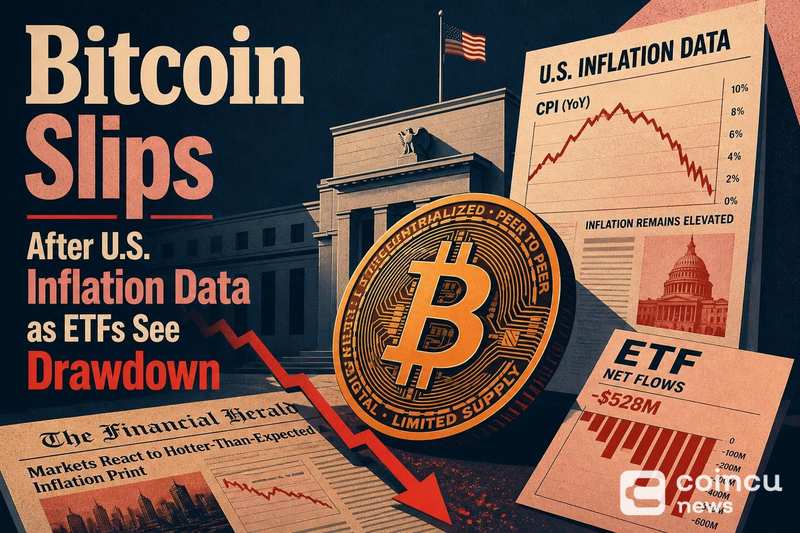
Bitcoin falls after inflation data fails to lift the market
Bitcoin moved lower even though the fresh U.S. inflation print carried the potential to act as a bullish catalyst. Rather than rallying, the largest cryptocurrency edged down as traders declined to add risk on the back of the release. For related coverage, see Bitcoin Falls Below $77,000: Key Levels and Market Impact. For related coverage, see Bitcoin Falls Below $77,000: Key Levels and Market Impact.
Expectation versus reaction
Markets had positioned the inflation data as a possible trigger for renewed upside. The muted follow-through, tracked across the live Bitcoin spot market, showed the expected catalyst did not translate into gains for BTC.
Why the inflation print was not enough to trigger a rebound
A widely watched event that lands in line with, rather than ahead of, expectations can leave markets drifting lower as positioning unwinds. The absence of an upside response is itself a signal of weak near-term momentum.
Sentiment and positioning
The reaction pointed to buyers lacking conviction, an echo of prior sessions when Bitcoin slipped as strong jobs data trimmed Fed cut odds. When a catalyst is exhausted without follow-through, traders tend to step back rather than chase the move.
Catalyst exhaustion
Bitcoin has repeatedly traded around macro data points, including when it slipped ahead of a Wednesday inflation test. This latest episode fits that pattern, with the data failing to shift the balance toward risk-on.
Spot Bitcoin ETFs record August’s first two-day drawdown
Alongside the price weakness, U.S. spot Bitcoin ETFs posted their first two consecutive days of outflows in August. Two negative sessions in a row mark a meaningful short-term shift after a steadier stretch of flows.
Why the flow trend matters
ETF flows serve as a proxy for institutional demand, so a back-to-back drawdown suggests that appetite softened in step with the spot decline. The move mirrors earlier stretches when Bitcoin slipped as risk-off conditions hit crypto.
What combined price weakness and ETF outflows signal for the near term
Together, the spot decline and the ETF drawdown point to weaker immediate demand. The failed inflation catalyst reinforces the read that buyers held back rather than committing capital.
What to watch next
The near-term tone reads as cautious and fragile rather than decisively bearish, in line with a market still eyeing Fed cuts as jobless claims stay in focus. Broader crypto market conditions will help clarify whether flows stabilize or the drawdown extends.
FAQ
Why did Bitcoin fall after the inflation data? The print failed to act as a bullish catalyst, and Bitcoin drifted lower as traders declined to add risk.
What does a two-day ETF drawdown mean? It refers to two consecutive sessions of net outflows from U.S. spot Bitcoin ETFs, the first such streak in August, signaling softer institutional demand.
Does inflation data usually help crypto? Not automatically. A reading in line with expectations can leave markets flat or lower, as happened here.
Disclaimer: This article is for informational purposes only and does not constitute financial or investment advice. Cryptocurrency and digital asset markets carry significant risk. Always do your own research before making decisions.
No tags available.


Other Posts








- China, US Conclude Trade Talks with Focus on Cooperation
- Court Upholds Fed’s Rejection of Custodia Bank’s Request
- Crypto Weekly: NYSE Backs OKX, Kraken Gets Fed Access, BTC Sells
- Former CFO Convicted for $35M Fraudulent Crypto Investment
- DeriW Launches Edge Hour Trading Competition Platform for Derivatives Traders
- Michael Saylor Denies Bitcoin Sell-Off Amid Large BTC Transfer
- Buy Dogecoin on eToro: Step-by-Step Guide for Beginners (2024)
- Kazakhstan Explores Crypto Reserves Backed by National Funds
- JPMorgan Increases Holdings in BlackRock’s Bitcoin ETF
- Nordea Bank Introduces Bitcoin ETP Trading for Nordic Customers
- XRP Spot ETF Launches on Nasdaq Amid Market Fluctuations
- Peter Schiff Challenges Michael Saylor on MSTR’s Business Model
- Thailand Orders Worldcoin to Delete 1.2 Million Biometric Records
- UK Proposes New DeFi Tax Framework to Ease User Burden
- WLFI Under Fire: Analyst Warns Hyperliquid Could Be Next
- Ancient Ethereum Whale Moves $1.19 Billion After Decade
- BlackRock Receives Large Crypto Transfers from Coinbase
- SEC Scrutiny on ALT5 Sigma’s Leadership Disclosure Timing
- Yala Injects $5.5 Million Amid Recovery Efforts
- Radiant Capital Faces $50M Loss in Major Security Breach
- China, US Conclude Trade Talks with Focus on Cooperation
- Court Upholds Fed’s Rejection of Custodia Bank’s Request
- Crypto Weekly: NYSE Backs OKX, Kraken Gets Fed Access, BTC Sells
- Former CFO Convicted for $35M Fraudulent Crypto Investment
- DeriW Launches Edge Hour Trading Competition Platform for Derivatives Traders
- Michael Saylor Denies Bitcoin Sell-Off Amid Large BTC Transfer
- Buy Dogecoin on eToro: Step-by-Step Guide for Beginners (2024)
- Kazakhstan Explores Crypto Reserves Backed by National Funds
- JPMorgan Increases Holdings in BlackRock’s Bitcoin ETF
- Nordea Bank Introduces Bitcoin ETP Trading for Nordic Customers
- XRP Spot ETF Launches on Nasdaq Amid Market Fluctuations
- Peter Schiff Challenges Michael Saylor on MSTR’s Business Model
- Thailand Orders Worldcoin to Delete 1.2 Million Biometric Records
- UK Proposes New DeFi Tax Framework to Ease User Burden
- WLFI Under Fire: Analyst Warns Hyperliquid Could Be Next
- Ancient Ethereum Whale Moves $1.19 Billion After Decade
- BlackRock Receives Large Crypto Transfers from Coinbase
- SEC Scrutiny on ALT5 Sigma’s Leadership Disclosure Timing
- Yala Injects $5.5 Million Amid Recovery Efforts
- Radiant Capital Faces $50M Loss in Major Security Breach
- China, US Conclude Trade Talks with Focus on Cooperation
- Court Upholds Fed’s Rejection of Custodia Bank’s Request
- Crypto Weekly: NYSE Backs OKX, Kraken Gets Fed Access, BTC Sells
- Former CFO Convicted for $35M Fraudulent Crypto Investment
- DeriW Launches Edge Hour Trading Competition Platform for Derivatives Traders
- Michael Saylor Denies Bitcoin Sell-Off Amid Large BTC Transfer
- Buy Dogecoin on eToro: Step-by-Step Guide for Beginners (2024)
- Kazakhstan Explores Crypto Reserves Backed by National Funds
- JPMorgan Increases Holdings in BlackRock’s Bitcoin ETF
- Nordea Bank Introduces Bitcoin ETP Trading for Nordic Customers
- XRP Spot ETF Launches on Nasdaq Amid Market Fluctuations
- Peter Schiff Challenges Michael Saylor on MSTR’s Business Model
- Thailand Orders Worldcoin to Delete 1.2 Million Biometric Records
- UK Proposes New DeFi Tax Framework to Ease User Burden
- WLFI Under Fire: Analyst Warns Hyperliquid Could Be Next
- Ancient Ethereum Whale Moves $1.19 Billion After Decade
- BlackRock Receives Large Crypto Transfers from Coinbase
- SEC Scrutiny on ALT5 Sigma’s Leadership Disclosure Timing
- Yala Injects $5.5 Million Amid Recovery Efforts
- Radiant Capital Faces $50M Loss in Major Security Breach



Bitcoin’s $116M Self-Custody Wake-Up Call Raises ETF Questions

BiggerZ: Building a Fairness-First Crypto Casino, Sportsbook and Prediction Markets Platform
Bitmine Immersion Technologies Announces Record and Payment Dates for Cash Dividends on 9.50% Series A Perpetual Preferred Stock