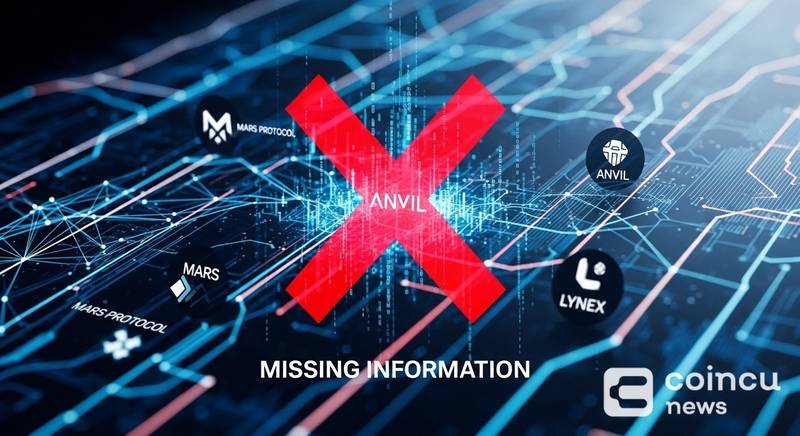

RootData has flagged missing core information for three crypto projects, Mars Protocol, Anvil, and Lynex, signaling gaps in the baseline data typically expected for listed protocols on the platform.
The flag indicates that certain foundational project details are absent or incomplete on RootData’s directory. This type of notice does not imply fraud, insolvency, or technical failure. It signals that the information profile for each project falls short of the platform’s standard disclosure expectations.
The specific fields or data points that triggered the flag have not been publicly detailed. What is confirmed is that the notice applies to project information completeness, not to token price performance or on-chain activity.

What RootData’s missing core information flag means
RootData functions as a crypto project directory that aggregates baseline details such as team backgrounds, funding rounds, token metrics, and technical documentation. A “missing core information” flag means one or more of these standard fields is absent or incomplete for a given project listing.
This flag is an information-gap signal, not a verdict on project legitimacy. It tells researchers that the profile does not meet the platform’s minimum disclosure threshold, which may affect comparability with other listed protocols.
The notice described in the headline does not specify which exact data points are missing for each project. Readers should treat the flag as a prompt for further verification rather than an indication of wrongdoing.
Mars Protocol, Anvil, and Lynex are the projects named in the notice
Mars Protocol
Mars Protocol was explicitly named in the RootData notice. The protocol operates in the decentralized finance space. Beyond its inclusion in the flag, the specific missing information for Mars Protocol has not been confirmed.

The brief confirms Mars Protocol’s presence in the notice but provides no detail on which core fields triggered the flag. Readers evaluating DeFi protocols, including those researching top crypto projects with long-term potential, should verify Mars Protocol’s disclosures directly through its official channels.
Anvil
Anvil was also identified in the notice. The project maintains an official website where users can review its current documentation and product offerings. As with the other named projects, the exact gaps in its RootData profile remain unspecified.
Anvil has previously undergone a security audit by OpenZeppelin, which suggests some level of third-party review. However, passing an audit does not address whether the project’s directory profile contains complete team, funding, or governance information.
Lynex
Lynex rounds out the three projects flagged for missing core information. Like Mars Protocol and Anvil, the nature of the incomplete data on RootData has not been disclosed publicly. The flag confirms inclusion in the notice but nothing more.
Why incomplete core information matters for crypto research
Crypto research platforms serve as aggregators of project fundamentals. When core fields are missing, researchers lose the ability to make direct comparisons between protocols on standardized criteria such as team size, funding history, and audit status.
Incomplete profiles create friction in due diligence workflows. Investors and analysts who rely on standardized data to evaluate credibility may need to conduct additional manual verification when baseline information is absent from aggregator platforms.
The issue connects directly to transparency and disclosure standards across the crypto industry. Projects that maintain complete, up-to-date profiles on major directories make it easier for the community to assess their legitimacy and track record. Analysts tracking on-chain data patterns for emerging tokens rely on this same infrastructure of standardized project information.
Missing information does not automatically indicate a problem with the project itself. Some protocols may have incomplete profiles due to delayed updates, platform migration issues, or simply not having submitted the required data.
What readers should verify next before drawing conclusions
Readers interested in Mars Protocol, Anvil, or Lynex should start by checking each project’s official website and documentation for the most current disclosures. Team information, audit reports, and governance structures are typically published directly by the project.
It is worth confirming whether the RootData profiles for these projects have been updated since the flag was issued. Platforms frequently update listings as projects submit new information, and the gaps noted at the time of the flag may have already been addressed.
Cross-referencing multiple data sources is standard practice in crypto research. Reviewing third-party audit reports where available and monitoring official project channels for announcements can help fill information gaps that directory platforms have not yet resolved.
Missing core information should prompt additional review rather than automatic conclusions about project quality. Readers following major institutional crypto developments should apply the same verification standards when evaluating smaller, less-documented protocols.
FAQ
Does the RootData flag mean these projects are fraudulent?
No. A missing core information flag indicates incomplete data on the platform’s directory. It does not constitute an accusation of fraud, a security warning, or a judgment on the project’s technical integrity.
Which projects were named?
The three projects flagged are Mars Protocol, Anvil, and Lynex.
What specific information is missing?
The exact fields or data points that are incomplete have not been publicly specified. The flag applies broadly to core project information rather than any single metric.
What should readers monitor next?
Watch for profile updates on RootData, official announcements from the three projects, and any new disclosures related to team composition, funding, or technical documentation.
Disclaimer: This article is for informational purposes only and does not constitute financial or investment advice. Cryptocurrency and digital asset markets carry significant risk. Always do your own research before making decisions.