Best P2P Crypto Exchanges in 2026: 5 Platforms Compared by Payment Flow and Region Fit
Updated July 9, 2026
Quick Answer
If you want the short version, the major P2P crypto platforms most worth comparing in 2026 are Binance P2P, Bybit P2P, OKX P2P, KuCoin P2P, and Bitget P2P.
But the right choice depends less on brand size than on:
- whether the service is available in your region
- which payment methods are actually supported for your market
- how comfortable you are with escrow-based peer trading
This article is informational only. P2P availability, payment rails, compliance limits, and supported fiat markets can change quickly.
What Makes a P2P Crypto Exchange Different
A P2P crypto exchange matches users with other users instead of only routing them through a standard order book.
That usually means the user cares about:
- local payment methods
- fiat on-ramp flexibility
- escrow flow
- merchant selection
The downside is that platform quality alone is not enough. The user also needs to evaluate counterparties, payment confirmation habits, and regional availability.
Quick Comparison
| Platform | Best for | Strongest point | Main caveat |
|---|---|---|---|
| Binance P2P | users who want a large P2P marketplace | broad market recognition | availability and market conditions vary by region |
| Bybit P2P | users comparing a clean major-exchange P2P flow | direct P2P product positioning | region and payment-method support still vary |
| OKX P2P | users who want a well-known exchange brand with local-fiat routes | clear P2P market structure | regional restrictions matter |
| KuCoin P2P | users comparing another large-exchange marketplace | familiar exchange ecosystem | user must still evaluate merchants carefully |
| Bitget P2P | users wanting another major exchange option | straightforward P2P product page | not every local market is equally deep |
1. Binance P2P
Binance P2P remains one of the first names many users check because of its scale and brand recognition.
That does not automatically make it best for every reader, but it does make it a natural comparison point.
2. Bybit P2P
Bybit’s official P2P page clearly positions the product around buying crypto with local currency through the platform’s peer marketplace.
That direct framing makes it one of the easier official P2P pages to compare.
3. OKX P2P
OKX belongs here because its official P2P market pages are explicit about fiat-market pairing and regional flow. That helps readers understand that P2P comparison is usually a local-market question, not only a global brand question.
4. KuCoin P2P
KuCoin remains relevant because many users already know the exchange brand and want to compare whether its P2P experience fits their local payment situation.
5. Bitget P2P
Bitget belongs in the comparison because it gives readers another major-exchange P2P route to compare on payment flow and merchant-market depth rather than on hype alone.
What to Check Before Using Any P2P Crypto Exchange
Before using any P2P platform, check:
- whether the service is available in your country
- which payment methods actually work in your market
- merchant rating and completion history
- whether you understand the platform’s escrow and release flow
- whether local compliance or identity checks apply
FAQ
What is the best P2P crypto exchange in 2026?
There is no one answer for every user. Binance P2P, Bybit P2P, OKX P2P, KuCoin P2P, and Bitget P2P all depend heavily on local market availability and payment support.
Are P2P crypto exchanges safe?
They can be safer than informal off-platform deals because the platform can provide escrow flow, but they still require careful counterparty and payment-process discipline.
Why does region matter so much in P2P trading?
Because the real experience depends on local fiat rails, payment habits, merchant depth, and platform availability in your jurisdiction.
Further Reading
References


- China, US Conclude Trade Talks with Focus on Cooperation
- Crypto Weekly: NYSE Backs OKX, Kraken Gets Fed Access, BTC Sells
- Court Upholds Fed’s Rejection of Custodia Bank’s Request
- Former CFO Convicted for $35M Fraudulent Crypto Investment
- DeriW Launches Edge Hour Trading Competition Platform for Derivatives Traders
- Michael Saylor Denies Bitcoin Sell-Off Amid Large BTC Transfer
- Buy Dogecoin on eToro: Step-by-Step Guide for Beginners (2024)
- Kazakhstan Explores Crypto Reserves Backed by National Funds
- JPMorgan Increases Holdings in BlackRock’s Bitcoin ETF
- Nordea Bank Introduces Bitcoin ETP Trading for Nordic Customers
- XRP Spot ETF Launches on Nasdaq Amid Market Fluctuations
- Peter Schiff Challenges Michael Saylor on MSTR’s Business Model
- Thailand Orders Worldcoin to Delete 1.2 Million Biometric Records
- UK Proposes New DeFi Tax Framework to Ease User Burden
- WLFI Under Fire: Analyst Warns Hyperliquid Could Be Next
- Ancient Ethereum Whale Moves $1.19 Billion After Decade
- BlackRock Receives Large Crypto Transfers from Coinbase
- SEC Scrutiny on ALT5 Sigma’s Leadership Disclosure Timing
- Yala Injects $5.5 Million Amid Recovery Efforts
- Radiant Capital Faces $50M Loss in Major Security Breach
- China, US Conclude Trade Talks with Focus on Cooperation
- Crypto Weekly: NYSE Backs OKX, Kraken Gets Fed Access, BTC Sells
- Court Upholds Fed’s Rejection of Custodia Bank’s Request
- Former CFO Convicted for $35M Fraudulent Crypto Investment
- DeriW Launches Edge Hour Trading Competition Platform for Derivatives Traders
- Michael Saylor Denies Bitcoin Sell-Off Amid Large BTC Transfer
- Buy Dogecoin on eToro: Step-by-Step Guide for Beginners (2024)
- Kazakhstan Explores Crypto Reserves Backed by National Funds
- JPMorgan Increases Holdings in BlackRock’s Bitcoin ETF
- Nordea Bank Introduces Bitcoin ETP Trading for Nordic Customers
- XRP Spot ETF Launches on Nasdaq Amid Market Fluctuations
- Peter Schiff Challenges Michael Saylor on MSTR’s Business Model
- Thailand Orders Worldcoin to Delete 1.2 Million Biometric Records
- UK Proposes New DeFi Tax Framework to Ease User Burden
- WLFI Under Fire: Analyst Warns Hyperliquid Could Be Next
- Ancient Ethereum Whale Moves $1.19 Billion After Decade
- BlackRock Receives Large Crypto Transfers from Coinbase
- SEC Scrutiny on ALT5 Sigma’s Leadership Disclosure Timing
- Yala Injects $5.5 Million Amid Recovery Efforts
- Radiant Capital Faces $50M Loss in Major Security Breach
- China, US Conclude Trade Talks with Focus on Cooperation
- Crypto Weekly: NYSE Backs OKX, Kraken Gets Fed Access, BTC Sells
- Court Upholds Fed’s Rejection of Custodia Bank’s Request
- Former CFO Convicted for $35M Fraudulent Crypto Investment
- DeriW Launches Edge Hour Trading Competition Platform for Derivatives Traders
- Michael Saylor Denies Bitcoin Sell-Off Amid Large BTC Transfer
- Buy Dogecoin on eToro: Step-by-Step Guide for Beginners (2024)
- Kazakhstan Explores Crypto Reserves Backed by National Funds
- JPMorgan Increases Holdings in BlackRock’s Bitcoin ETF
- Nordea Bank Introduces Bitcoin ETP Trading for Nordic Customers
- XRP Spot ETF Launches on Nasdaq Amid Market Fluctuations
- Peter Schiff Challenges Michael Saylor on MSTR’s Business Model
- Thailand Orders Worldcoin to Delete 1.2 Million Biometric Records
- UK Proposes New DeFi Tax Framework to Ease User Burden
- WLFI Under Fire: Analyst Warns Hyperliquid Could Be Next
- Ancient Ethereum Whale Moves $1.19 Billion After Decade
- BlackRock Receives Large Crypto Transfers from Coinbase
- SEC Scrutiny on ALT5 Sigma’s Leadership Disclosure Timing
- Yala Injects $5.5 Million Amid Recovery Efforts
- Radiant Capital Faces $50M Loss in Major Security Breach

BlackRock Launches Tokenized Money Market Funds on Solana, Ethereum

XRP Holders Can Borrow RLUSD on Ethereum Without Selling Crypto

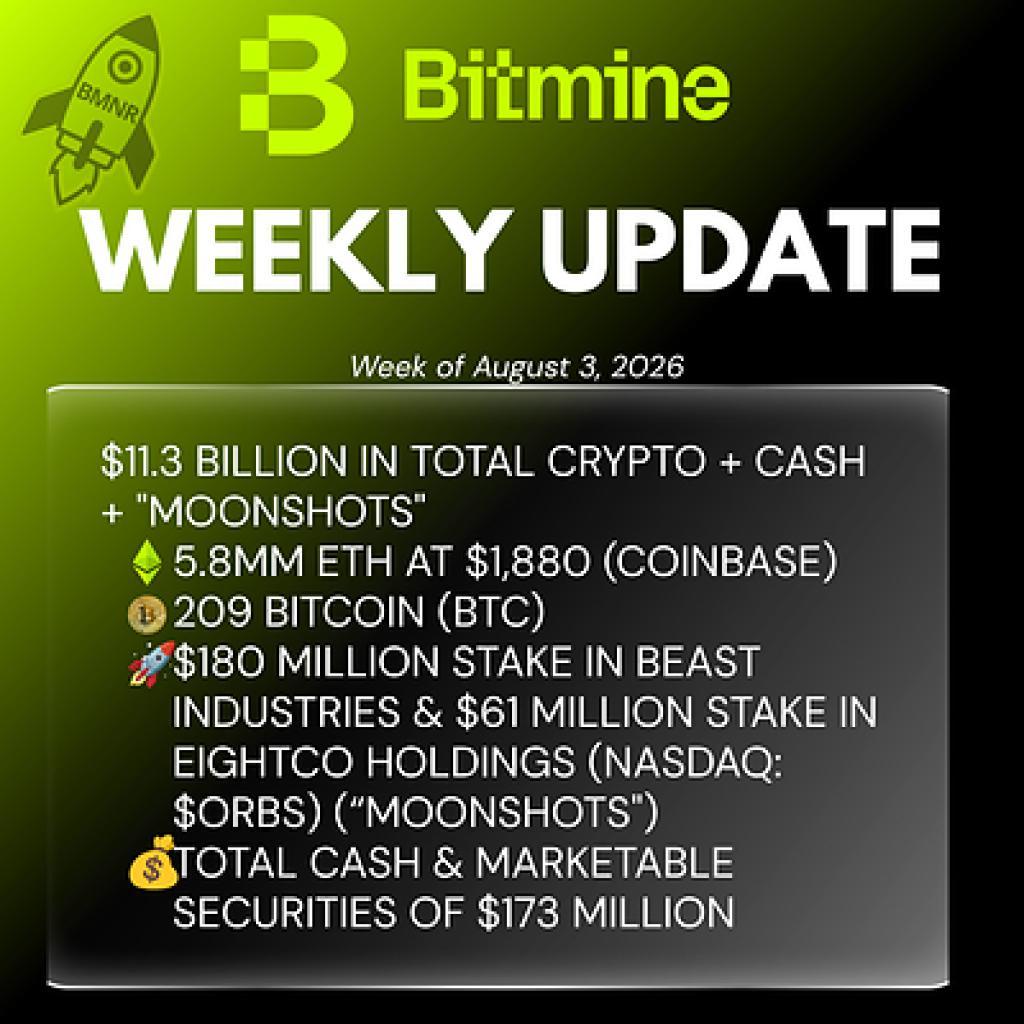
Bitmine Immersion Technologies (BMNR) Announces ETH Holdings Reach 5.8 Million Tokens, and Total Crypto and Total Cash Holdings of $11.3 Billion
Performa Marks One Year Live with Major Upgrade for Digital-Native SMBs