The UK House of Lords Financial Services Regulation Committee has called on the Bank of England to reconsider its proposed stablecoin holding limits, arguing that overly restrictive caps could undermine the country’s ambitions to become a leader in digital asset regulation.
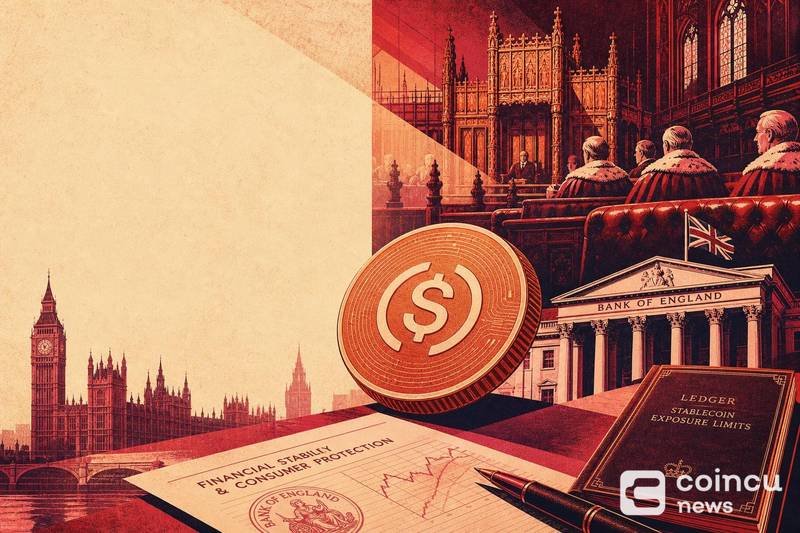
The committee, which oversees financial services regulation in the upper chamber of Parliament, published a report challenging the central bank’s approach to payment stablecoins. The intervention marks a notable policy clash between lawmakers and the Bank of England over how tightly digital currency holdings should be controlled.
At the center of the dispute is the Bank of England’s plan to impose limits on how much value individual users or institutions can hold in regulated stablecoins. The central bank has framed these caps as necessary safeguards against systemic risk, particularly the danger that large-scale stablecoin redemptions could destabilize traditional financial markets.
Why the Committee Wants the Policy Revisited
The Financial Services Regulation Committee has positioned its challenge as a call for reconsideration, not an outright rejection. The committee’s concern is that the Bank of England’s proposed thresholds may be set too low to allow stablecoins to function as practical payment instruments in the UK.
The request sits within the UK’s broader regulatory framework for payment stablecoins, which the government has been developing as part of its strategy to bring crypto assets under formal financial oversight. The committee wants the central bank to demonstrate more clearly why specific holding limits are necessary and proportionate.
This is a regulatory reconsideration process, not a finalized rule change. The Bank of England retains the authority to set prudential standards, but parliamentary committees can exert significant pressure through public reports and formal correspondence, as evidenced by a letter from the Bank’s Sarah Breeden to Baroness Noakes responding to the committee’s concerns.
What Stablecoin Holding Limits Are Designed to Do
Holding limits cap the maximum value of stablecoins that a single user, wallet, or entity can hold at any given time. They function similarly to deposit insurance ceilings or concentration limits in traditional banking.
The Bank of England’s rationale centers on three concerns: preventing a sudden rush of redemptions that could strain reserve assets, limiting consumer exposure to operational failures by stablecoin issuers, and reducing the risk that stablecoins could become large enough to act as shadow banking instruments outside the regulated perimeter.
For everyday retail users, these limits may have little practical effect. The tension arises with institutional holders, payment processors, and businesses that would need to hold larger stablecoin balances to settle transactions or manage treasury operations efficiently.
Why Critics Say the Limits Could Slow UK Stablecoin Adoption
The committee’s intervention reflects a growing concern that strict caps could make the UK less attractive for stablecoin issuers and payment firms compared to jurisdictions with lighter regulatory frameworks. If businesses cannot hold sufficient stablecoin balances to operate effectively, they may choose to base operations elsewhere.
This tension between financial stability and innovation is not unique to stablecoins. The UK has faced similar debates around sanctions enforcement on crypto platforms and how regulation can protect consumers without stifling legitimate use cases.
The committee appears to argue that the Bank of England has not sufficiently justified the specific thresholds it has proposed. Without clear evidence that particular holding levels pose systemic risk, the caps may appear arbitrary, potentially deterring firms that are evaluating the UK as a base for regulated crypto and trading operations.
The UK government has repeatedly stated its goal of becoming a global hub for crypto asset activity. Overly cautious stablecoin rules could undermine that ambition, particularly as the European Union’s MiCA framework and evolving US stablecoin legislation create competing regulatory environments.
What This Means for the Bank of England and Future UK Crypto Rules
Reconsideration does not guarantee immediate policy reversal. The Bank of England may respond by adjusting proposed thresholds, introducing phased implementation timelines, or launching further public consultation before finalizing rules.
The oral evidence sessions held by the committee suggest that lawmakers are seeking detailed justification from the central bank, not simply opposing regulation. The committee wants to understand the data and risk models underpinning the proposed limits.
Stablecoin issuers, payment firms, and crypto investors will watch the Bank of England’s formal response closely. Any signal that the central bank is willing to raise holding thresholds or differentiate between retail and institutional limits could influence where companies choose to seek licensing, similar to how regulatory clarity has driven decisions in markets where crypto and telecom businesses are converging.
The outcome will also set a precedent for how UK regulators handle future crypto policy disputes. If the committee’s challenge leads to meaningful engagement, it could establish parliamentary scrutiny as an effective check on overly conservative regulatory approaches to digital assets.
FAQ: Key Questions About the UK Stablecoin Holding Limit Debate
Who is challenging the Bank of England’s stablecoin holding limits?
The House of Lords Financial Services Regulation Committee, a parliamentary body that scrutinizes financial regulation in the UK. The committee has formally called on the Bank of England to reconsider its proposed caps.
Why do stablecoin holding limits matter?
Holding limits determine how much stablecoin value individuals and businesses can hold. If set too low, they could make stablecoins impractical for commercial use and push issuers to operate in other jurisdictions. If set too high, the Bank of England argues they could pose risks to financial stability.
Have the stablecoin holding rules changed yet?
No. The committee’s report is a recommendation, not a binding order. The Bank of England retains authority over prudential regulation and has not announced any changes to its proposed approach. Further consultation and formal responses are expected before final rules are set.
Disclaimer: This article is for informational purposes only and does not constitute financial or investment advice. Cryptocurrency and digital asset markets carry significant risk. Always do your own research before making decisions.
No tags available.


Other Posts








- China, US Conclude Trade Talks with Focus on Cooperation
- Crypto Weekly: NYSE Backs OKX, Kraken Gets Fed Access, BTC Sells
- DeriW Launches Edge Hour Trading Competition Platform for Derivatives Traders
- Court Upholds Fed’s Rejection of Custodia Bank’s Request
- Former CFO Convicted for $35M Fraudulent Crypto Investment
- Michael Saylor Denies Bitcoin Sell-Off Amid Large BTC Transfer
- Buy Dogecoin on eToro: Step-by-Step Guide for Beginners (2024)
- Kazakhstan Explores Crypto Reserves Backed by National Funds
- JPMorgan Increases Holdings in BlackRock’s Bitcoin ETF
- Nordea Bank Introduces Bitcoin ETP Trading for Nordic Customers
- XRP Spot ETF Launches on Nasdaq Amid Market Fluctuations
- Crypto Leaders Address Macro Volatility Amid Market Shifts
- Peter Schiff Challenges Michael Saylor on MSTR’s Business Model
- Thailand Orders Worldcoin to Delete 1.2 Million Biometric Records
- UK Proposes New DeFi Tax Framework to Ease User Burden
- WLFI Under Fire: Analyst Warns Hyperliquid Could Be Next
- Ancient Ethereum Whale Moves $1.19 Billion After Decade
- BlackRock Receives Large Crypto Transfers from Coinbase
- SEC Scrutiny on ALT5 Sigma’s Leadership Disclosure Timing
- MoonPay Gains Trust License for Crypto Operations in New York
- China, US Conclude Trade Talks with Focus on Cooperation
- Crypto Weekly: NYSE Backs OKX, Kraken Gets Fed Access, BTC Sells
- DeriW Launches Edge Hour Trading Competition Platform for Derivatives Traders
- Court Upholds Fed’s Rejection of Custodia Bank’s Request
- Former CFO Convicted for $35M Fraudulent Crypto Investment
- Michael Saylor Denies Bitcoin Sell-Off Amid Large BTC Transfer
- Buy Dogecoin on eToro: Step-by-Step Guide for Beginners (2024)
- Kazakhstan Explores Crypto Reserves Backed by National Funds
- JPMorgan Increases Holdings in BlackRock’s Bitcoin ETF
- Nordea Bank Introduces Bitcoin ETP Trading for Nordic Customers
- XRP Spot ETF Launches on Nasdaq Amid Market Fluctuations
- Crypto Leaders Address Macro Volatility Amid Market Shifts
- Peter Schiff Challenges Michael Saylor on MSTR’s Business Model
- Thailand Orders Worldcoin to Delete 1.2 Million Biometric Records
- UK Proposes New DeFi Tax Framework to Ease User Burden
- WLFI Under Fire: Analyst Warns Hyperliquid Could Be Next
- Ancient Ethereum Whale Moves $1.19 Billion After Decade
- BlackRock Receives Large Crypto Transfers from Coinbase
- SEC Scrutiny on ALT5 Sigma’s Leadership Disclosure Timing
- MoonPay Gains Trust License for Crypto Operations in New York
- China, US Conclude Trade Talks with Focus on Cooperation
- Crypto Weekly: NYSE Backs OKX, Kraken Gets Fed Access, BTC Sells
- DeriW Launches Edge Hour Trading Competition Platform for Derivatives Traders
- Court Upholds Fed’s Rejection of Custodia Bank’s Request
- Former CFO Convicted for $35M Fraudulent Crypto Investment
- Michael Saylor Denies Bitcoin Sell-Off Amid Large BTC Transfer
- Buy Dogecoin on eToro: Step-by-Step Guide for Beginners (2024)
- Kazakhstan Explores Crypto Reserves Backed by National Funds
- JPMorgan Increases Holdings in BlackRock’s Bitcoin ETF
- Nordea Bank Introduces Bitcoin ETP Trading for Nordic Customers
- XRP Spot ETF Launches on Nasdaq Amid Market Fluctuations
- Crypto Leaders Address Macro Volatility Amid Market Shifts
- Peter Schiff Challenges Michael Saylor on MSTR’s Business Model
- Thailand Orders Worldcoin to Delete 1.2 Million Biometric Records
- UK Proposes New DeFi Tax Framework to Ease User Burden
- WLFI Under Fire: Analyst Warns Hyperliquid Could Be Next
- Ancient Ethereum Whale Moves $1.19 Billion After Decade
- BlackRock Receives Large Crypto Transfers from Coinbase
- SEC Scrutiny on ALT5 Sigma’s Leadership Disclosure Timing
- MoonPay Gains Trust License for Crypto Operations in New York

Nakamoto Shuts Down Medical Business to Become a Bitcoin Operating Company

Solmate’s Largest Outside Shareholder Sues the Board: What to Know

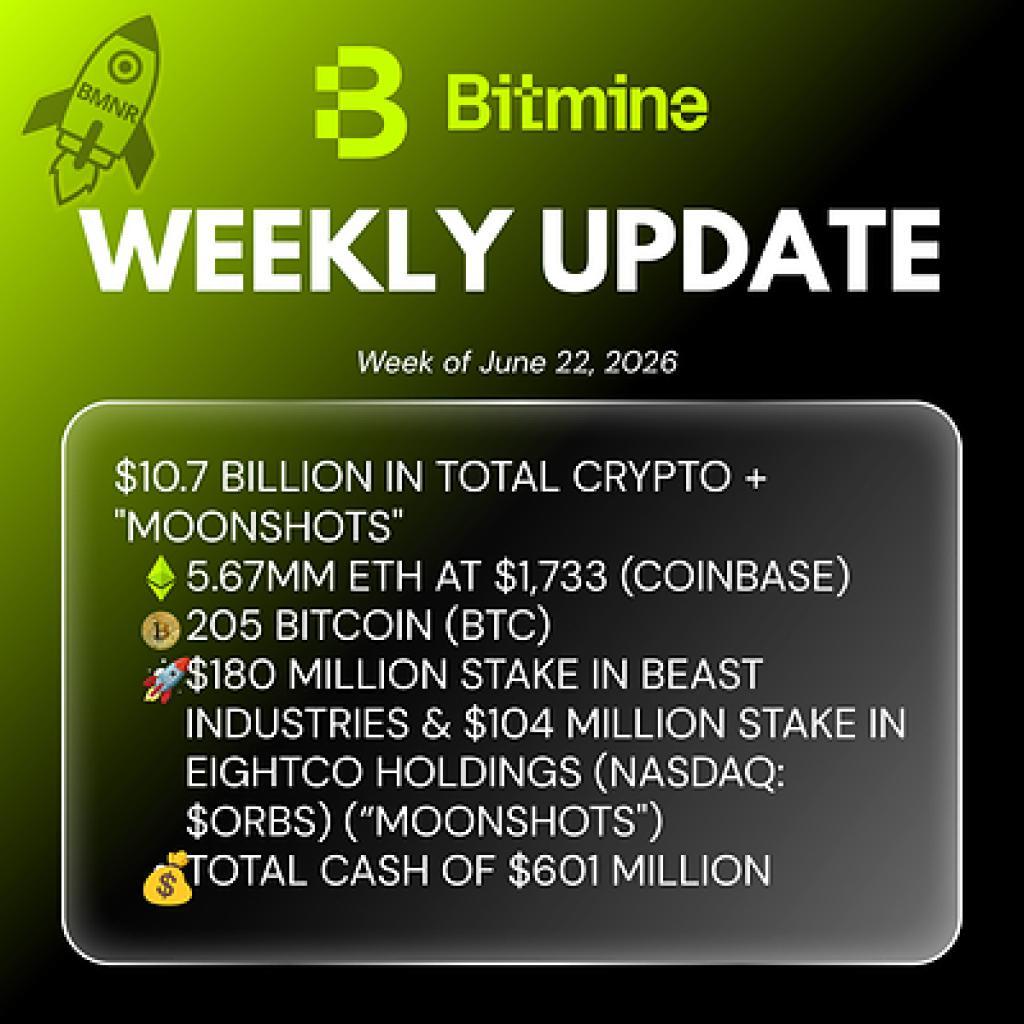
Bitmine Reports 5.67M ETH Holdings, Total Assets Reach $10.7B