Best Crypto Staking Exchanges in 2026: 8 Criteria That Actually Matter
Updated July 9, 2026
Quick Answer
If you want the short version, the best crypto staking exchanges in 2026 are not defined by the highest advertised APR alone.
The better way to compare staking exchanges is to look at:
- whether the staking product is custodial, bonded, flexible, or liquid
- what the unstaking rules actually are
- which fees are taken before rewards reach you
- what risks and region limits the platform discloses
For many users, the most practical comparison set starts with Coinbase, Kraken, Binance, OKX, and Crypto.com because each has clear staking product documentation and a different mix of liquidity, product breadth, and risk disclosure.
What Is Staking?
At a basic level, staking means locking or delegating supported Proof-of-Stake assets so they help secure a blockchain and earn rewards in return.
On an exchange, that usually means the platform handles validator operations or routing on your behalf. That makes staking easier, but it also adds an exchange layer between you and the underlying protocol.
That distinction matters. “What is staking?” is the beginner question. “What kind of staking product am I actually using?” is the question that helps readers choose a platform correctly.
Why “Best Staking Exchange” Is a Bad One-Number Ranking
Weak listicles turn staking into one fake leaderboard.
That is the wrong frame because these platforms often differ on:
- custody model
- reward payout structure
- fees or commission
- liquidity during unstaking
- liquid staking token support
- asset availability by country
- operational and regulatory constraints
A higher headline reward can still be a worse product if the exchange is opaque about fees, lockups, or regional access.
Quick Comparison
| Exchange | Best for | Notable staking model | What stands out | Main caveat |
|---|---|---|---|---|
| Coinbase | users who want a simple mainstream interface | custodial staking with standard or instant unstake on some assets | strong user clarity on unstaking and rewards history | fees and instant-unstake cost matter |
| Kraken | users who want a broad staking product with clearer product segmentation | staking with estimated rates before commission, plus bonded variants on some assets | strong product explanations and weekly rewards language | availability and bonding rules vary by asset and geography |
| Binance | users comparing flexible, locked, and liquid-staking-style products | Simple Earn, Soft Staking, ETH staking via WBETH, SOL staking via BNSOL | broad product menu and liquid staking token support | product complexity can be higher than it first appears |
| OKX | users comparing exchange staking with on-chain-earn style products | On-chain Earn combines PoS staking and DeFi products | clear disclosure that APY shown includes fees | not every product applies in every region |
| Crypto.com | users who want app-first staking with visible reward mechanics | app staking with protocol-specific activation and unbonding periods | unusually detailed help documentation on unbonding and slashing | product access depends on jurisdiction and supported chains |
8 Criteria That Actually Matter
1. Understand the Product Type First
The first question is not “what APR do I get?” It is “what am I buying?”
On exchanges, staking may mean:
- direct custodial staking
- flexible earn products that happen to route into staking
- locked staking
- liquid staking where you receive a derivative token
- on-chain earn products mixed with DeFi
Binance is a good example of why this matters. Its official guide separates Simple Earn from liquid staking products like WBETH and BNSOL. OKX is another example: its On-chain Earn documentation explicitly says the section includes both PoS staking and DeFi protocols.
If you do not identify the product type first, you will compare unlike-with-unlike.
2. Check Custody and Control
Exchange staking is convenient, but it is still custodial by default unless the platform says otherwise.
That means the exchange usually:
- holds the assets
- routes them into staking
- calculates or relays reward payouts
- controls the unstaking interface
This is not automatically bad, but it changes the risk profile. If self-custody is your priority, the “best staking exchange” may not actually be the best staking route for you.
3. Compare Unstaking Rules, Not Just Staking Entry
Many readers focus on how easy it is to start staking and ignore how hard it may be to exit.
Coinbase’s help page is one of the clearest official examples here. It says users can unstake instantly for a 1% fee or wait the network’s standard unstaking period, and that unstaking periods include both network wait time and Coinbase processing time. It also says assets cannot be traded or transferred until unstaking completes.
Crypto.com makes a different kind of disclosure. Its staking documentation says supported blockchains may impose their own activation, bonding, and unbonding periods, and it publishes estimated unbonding periods per asset inside the help center.
This criterion matters more than marketing. A platform can look attractive until you need liquidity.
4. Look at Fee and Commission Transparency
Advertised reward rates are not enough.
You want to know:
- whether the displayed rate is estimated or fixed
- whether the exchange takes a commission before rewards reach you
- whether unstaking carries its own fee
- whether the published yield already includes fees
Coinbase says it takes a commission on staking rewards and separately charges 1% for instant unstaking. Kraken says the rates shown are estimates before its commission. OKX says its On-chain Earn service fee is charged on rewards earned and that the APY shown already includes fees.
That is the level of clarity readers should look for.
5. Treat Reward Flexibility as a Product Feature
Some users care less about raw yield and more about whether the staked position remains usable.
Binance is a good example of this trade-off. Its official guide says ETH staking returns WBETH and SOL staking returns BNSOL, and that both remain transferable and usable while still accruing staking rewards.
That is useful if you want optionality. But it also adds another layer of product risk, because liquid staking tokens can trade differently from the underlying asset and may carry extra smart-contract or platform exposure.
Higher flexibility is not free. It usually comes with a more complex product wrapper.
6. Read the Risk Section, Not Just the Reward Section
The best staking exchanges usually have stronger risk disclosure, not just bigger reward banners.
Crypto.com is explicit here: its help center says staked assets are delegated through third-party validators and warns about slashing risk if a validator incorrectly validates or fails to validate transactions.
Kraken’s legal staking materials also highlight bonding, unbonding, and liquid staking token de-peg risk. Binance’s WBETH explainers similarly note counterparty risk, smart-contract risk, and price deviation risk.
If the staking page reads like pure upside and hides protocol risk, that is a warning sign.
7. Check Regional Availability and Eligibility
Staking availability is not universal.
This is one of the most practical filters and one that listicles often skip.
OKX explicitly says its On-chain Earn information may not apply to all customers. Crypto.com lists excluded or restricted jurisdictions for app staking. Kraken’s staking availability has long varied by geography and product type, especially after U.S. regulatory changes.
So one of the best criteria is simple:
- can you actually use the product in your country
- for the asset you care about
- under the terms currently published by the platform
8. Prioritize Reporting and Payout Clarity
A staking product is easier to trust when the exchange clearly explains:
- when rewards are credited
- where they appear
- whether they continue during unstaking
- whether payouts compound automatically
- how taxes or statements are handled
Coinbase says rewards appear as transactions in history and continue during the unstaking period. Crypto.com says rewards may be credited up to three times a week depending on protocol and explains where rewards are sent. Kraken says rewards begin after the bonding process and that displayed rates are estimates before commission.
That kind of reporting clarity is not a cosmetic detail. It is part of product quality.
Which Staking Exchange Fits Different Users?
If you only want a practical chooser:
- choose Coinbase if you want a simpler mainstream experience and clearer unstaking language
- choose Kraken if you want a stronger product-explainer style interface and are comfortable checking asset-specific terms
- choose Binance if you specifically want to compare flexible, locked, and liquid staking formats like WBETH or BNSOL
- choose OKX if you want a hybrid exchange-plus-on-chain-earn menu and are comfortable separating PoS from DeFi products
- choose Crypto.com if you want an app-first staking flow and detailed help-center documentation on activation, unbonding, and reward handling
What Most Readers Get Wrong About Staking Exchanges
The biggest mistake is thinking staking yield is the product.
It is not.
The real product is a bundle of:
- custody
- validator routing
- payout handling
- fee extraction
- unstaking rules
- region eligibility
- risk disclosure
That is why two exchanges with similar headline rewards can still be very different products.
FAQ
What is the safest way to compare crypto staking exchanges?
Start with product type, custody model, unstaking rules, and fee disclosure. Those usually matter more than the headline APR.
Is the exchange with the highest staking APR always the best?
No. Reward rates are often estimates, can change with network conditions, and may be reduced by commissions, unbonding delays, or extra product risk.
Are liquid staking products on exchanges better than regular staking?
Not automatically. They can be more flexible, but they also add extra counterparty, token-wrapper, and de-peg considerations.
Should beginners use an exchange for staking?
Many beginners do because the interface is easier. But they should still read the terms for unbonding, fees, and regional eligibility before staking.
Final Takeaway
The best crypto staking exchanges in 2026 are the ones that make the trade-offs easiest to understand, not the ones with the flashiest reward banners.
Coinbase, Kraken, Binance, OKX, and Crypto.com are useful comparison points because each exposes a different mix of custody, liquidity, fee structure, and staking-product design.
If readers remember only one thing, it should be this: the best staking exchange is usually the one whose product rules you actually understand before you click stake.
References
- Coinbase Help, staking rewards and unstaking: https://help.coinbase.com/en/coinbase/coinbase-staking/rewards/earn-rewards-with-staking
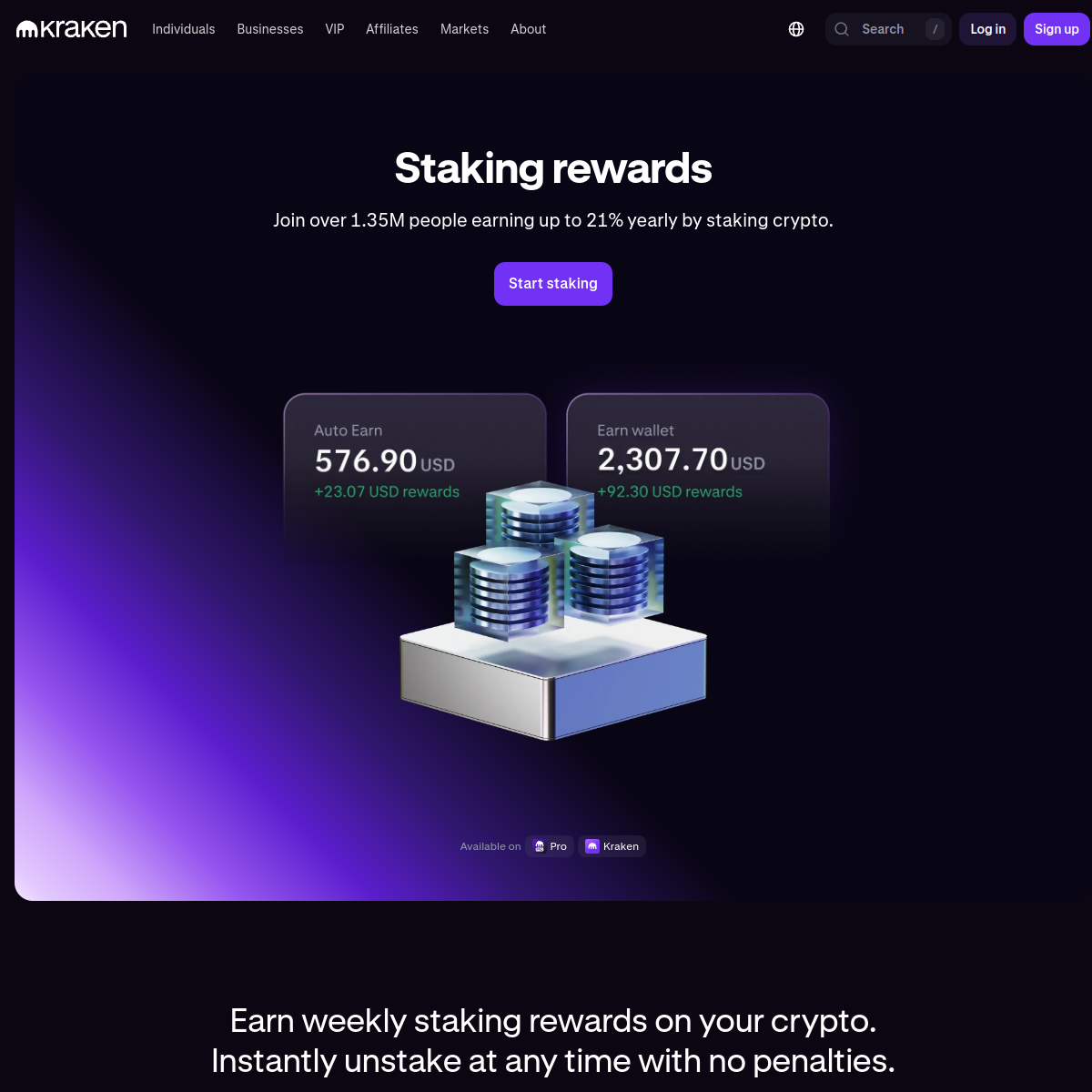
- Kraken staking page: https://www.kraken.com/features/staking
- Kraken global terms, staking annex: https://www.kraken.com/en-gb/legal/global-terms
- Binance guide to Earn and liquid staking: https://www.binance.com/en/academy/articles/a-beginner-s-guide-to-binance-earn
- Binance BETH explainer: https://academy.binance.com/en/articles/what-is-beth-and-how-to-use-it
- OKX On-chain Earn help: https://www.okx.com/en-gb/help/how-do-i-use-onchain-earn
- Crypto.com app staking help: https://help.crypto.com/en/articles/7886980-staking-crypto-on-crypto-com-app
Internal Link Opportunities
- TON staking comparison: https://coincu.com/best-ton-staking-protocols-you-should-know/
- Sui wallets page: https://coincu.com/top-sui-wallets/
- hot wallets guide: https://coincu.com/top-5-best-hot-wallets-for-crypto-storage/
- crypto custody explainer: https://coincu.com/what-is-crypto-custody/
Media Plan
Featured image:
- comparison visual showing APR estimate, unstaking wait, liquid staking token, and custody icons
Suggested inline media:
- Coinbase staking help capture
- Kraken staking page capture
- Binance Earn staking screen capture
Caption direction:
- emphasize product mechanics and liquidity trade-offs, not passive-income hype
Disclosure
This article is for informational purposes only and does not constitute investment advice. Staking product availability, reward rates, fees, and regional eligibility can change, so readers should verify the latest official terms before staking assets on any exchange.


- China, US Conclude Trade Talks with Focus on Cooperation
- Crypto Weekly: NYSE Backs OKX, Kraken Gets Fed Access, BTC Sells
- Court Upholds Fed’s Rejection of Custodia Bank’s Request
- Former CFO Convicted for $35M Fraudulent Crypto Investment
- DeriW Launches Edge Hour Trading Competition Platform for Derivatives Traders
- Michael Saylor Denies Bitcoin Sell-Off Amid Large BTC Transfer
- Buy Dogecoin on eToro: Step-by-Step Guide for Beginners (2024)
- Kazakhstan Explores Crypto Reserves Backed by National Funds
- JPMorgan Increases Holdings in BlackRock’s Bitcoin ETF
- Nordea Bank Introduces Bitcoin ETP Trading for Nordic Customers
- XRP Spot ETF Launches on Nasdaq Amid Market Fluctuations
- Peter Schiff Challenges Michael Saylor on MSTR’s Business Model
- Thailand Orders Worldcoin to Delete 1.2 Million Biometric Records
- UK Proposes New DeFi Tax Framework to Ease User Burden
- WLFI Under Fire: Analyst Warns Hyperliquid Could Be Next
- Ancient Ethereum Whale Moves $1.19 Billion After Decade
- BlackRock Receives Large Crypto Transfers from Coinbase
- SEC Scrutiny on ALT5 Sigma’s Leadership Disclosure Timing
- Yala Injects $5.5 Million Amid Recovery Efforts
- Radiant Capital Faces $50M Loss in Major Security Breach
- China, US Conclude Trade Talks with Focus on Cooperation
- Crypto Weekly: NYSE Backs OKX, Kraken Gets Fed Access, BTC Sells
- Court Upholds Fed’s Rejection of Custodia Bank’s Request
- Former CFO Convicted for $35M Fraudulent Crypto Investment
- DeriW Launches Edge Hour Trading Competition Platform for Derivatives Traders
- Michael Saylor Denies Bitcoin Sell-Off Amid Large BTC Transfer
- Buy Dogecoin on eToro: Step-by-Step Guide for Beginners (2024)
- Kazakhstan Explores Crypto Reserves Backed by National Funds
- JPMorgan Increases Holdings in BlackRock’s Bitcoin ETF
- Nordea Bank Introduces Bitcoin ETP Trading for Nordic Customers
- XRP Spot ETF Launches on Nasdaq Amid Market Fluctuations
- Peter Schiff Challenges Michael Saylor on MSTR’s Business Model
- Thailand Orders Worldcoin to Delete 1.2 Million Biometric Records
- UK Proposes New DeFi Tax Framework to Ease User Burden
- WLFI Under Fire: Analyst Warns Hyperliquid Could Be Next
- Ancient Ethereum Whale Moves $1.19 Billion After Decade
- BlackRock Receives Large Crypto Transfers from Coinbase
- SEC Scrutiny on ALT5 Sigma’s Leadership Disclosure Timing
- Yala Injects $5.5 Million Amid Recovery Efforts
- Radiant Capital Faces $50M Loss in Major Security Breach
- China, US Conclude Trade Talks with Focus on Cooperation
- Crypto Weekly: NYSE Backs OKX, Kraken Gets Fed Access, BTC Sells
- Court Upholds Fed’s Rejection of Custodia Bank’s Request
- Former CFO Convicted for $35M Fraudulent Crypto Investment
- DeriW Launches Edge Hour Trading Competition Platform for Derivatives Traders
- Michael Saylor Denies Bitcoin Sell-Off Amid Large BTC Transfer
- Buy Dogecoin on eToro: Step-by-Step Guide for Beginners (2024)
- Kazakhstan Explores Crypto Reserves Backed by National Funds
- JPMorgan Increases Holdings in BlackRock’s Bitcoin ETF
- Nordea Bank Introduces Bitcoin ETP Trading for Nordic Customers
- XRP Spot ETF Launches on Nasdaq Amid Market Fluctuations
- Peter Schiff Challenges Michael Saylor on MSTR’s Business Model
- Thailand Orders Worldcoin to Delete 1.2 Million Biometric Records
- UK Proposes New DeFi Tax Framework to Ease User Burden
- WLFI Under Fire: Analyst Warns Hyperliquid Could Be Next
- Ancient Ethereum Whale Moves $1.19 Billion After Decade
- BlackRock Receives Large Crypto Transfers from Coinbase
- SEC Scrutiny on ALT5 Sigma’s Leadership Disclosure Timing
- Yala Injects $5.5 Million Amid Recovery Efforts
- Radiant Capital Faces $50M Loss in Major Security Breach


Hyperscale Data Sells 100 Bitcoin, Opens Bitcoin-Backed Credit Line

Performa Marks One Year Live with Major Upgrade for Digital-Native SMBs

Zoomex to Attend Coinfest Asia 2026 as Gold Sponsor and Host Summer Bay Party in Bali