Vitalik Buterin on Ethereum Layer 2: Why the Rollup-Centric Roadmap No Longer Makes Sense
Vitalik Buterin on Ethereum Layer 2 marks a departure from the rollup-centric roadmap that shaped Ethereum’s scaling since 2020. In February 2026, Vitalik said the model no longer fits as Ethereum Layer 1 scales faster, with lower fees and higher capacity reducing dependence on L2s.

Vitalik Buterin on Ethereum Layer 2 also points to slow decentralization across most Layer 2 networks. Many still rely on centralized sequencers and multisig control, pushing L2s to redefine their role beyond acting as Ethereum extensions.
What Changed in Vitalik Buterin’s Ethereum Roadmap and What It Means for L2s
Vitalik Buterin on Ethereum Layer 2 marks a clear break from the rollup-centric roadmap that shaped Ethereum scaling for much of the past decade. In early 2026, Vitalik acknowledged that the core assumptions behind Layer 2 scaling no longer match Ethereum’s current technical reality.
The rollup-centric roadmap assumed Ethereum Layer 1 would remain expensive and capacity-limited, pushing most activity to Layer 2s. Under this model, L2s were framed as “branded shards” that inherited Ethereum’s security while handling execution off-chain.
Vitalik Buterin on Ethereum Layer 2 highlights two developments that undermine this premise. Ethereum Layer 1 has scaled faster than expected, supported by improved consensus efficiency and expanded data availability.
At the same time, most Layer 2 networks have decentralized far more slowly than anticipated. Reliance on centralized sequencers, security councils, and upgrade keys has weakened the case for treating rollups as default Ethereum extensions.
Rollup Stages 0/1/2: Fraud Proofs, Validity Proofs, Decentralization
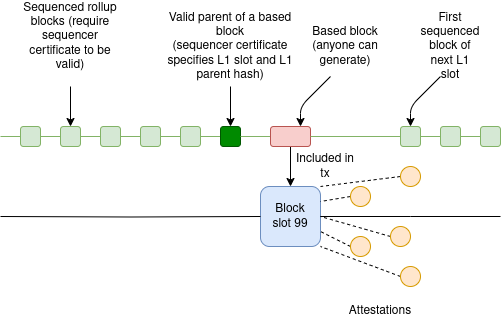
Vitalik Buterin on Ethereum Layer 2 now explicitly links legitimacy to decentralization maturity through the Rollup Stages framework. This framework, originally proposed by Vitalik and operationalized by L2BEAT, has shifted from an analytical tool to a normative standard.
| Stage | Training Wheels | Proof System Status | Governance and Control | What It Means for Users |
|---|---|---|---|---|
| Stage 0 | Full | Proofs may exist but are not permissionless | Security Council or operators can override proofs and upgrade contracts | Users rely primarily on social trust rather than cryptographic enforcement |
| Stage 1 | Limited | Fully functional and permissionless fraud proofs or validity proofs | Governance overrides require supermajority thresholds and external participation | Minimum acceptable trust level under Vitalik Buterin on Ethereum Layer 2 |
| Stage 2 | None | Fully permissionless and uncontestable proof systems | Governance enforced entirely by code, human intervention limited to provable bugs | Security and trust minimization approach Ethereum Layer 1 |
The distinction between fraud proofs and validity proofs is central to this framework. Fraud proofs introduce delayed finality through challenge periods, while validity proofs provide faster and stronger guarantees. However, Vitalik Buterin on Ethereum Layer 2 stresses that proofs alone are insufficient if discretionary control remains embedded in governance structures.
Rollups that fail to reach Stage 1 are no longer framed as Ethereum extensions. Instead, they are better understood as independent chains connected to Ethereum by bridges, with corresponding implications for security assumptions and market valuation.
L1 vs L2: Finality, Throughput, and Network Security Now
Vitalik Buterin on Ethereum Layer 2 challenges the long-standing assumption that Layer 2s are inherently superior to Ethereum Layer 1 across performance and security. As Ethereum scales at the base layer, the differences between L1 and L2 are now best understood through specific trade-offs rather than blanket claims.
Throughput
- Ethereum Layer 1
- Prioritizes decentralization and validator participation
- Lower raw transaction throughput
- Improved data availability through EIP-4844 significantly reduces congestion pressure
- Layer 2 Rollups
- Execute transactions off-chain
- Achieve significantly higher transactions per second
- Depend on Ethereum for settlement and data availability
Under Vitalik Buterin on Ethereum Layer 2, throughput alone is no longer a sufficient justification for L2 dominance.
Finality
- Ethereum Layer 1
- Achieves economic finality after a small number of epochs
- Reorgs become prohibitively expensive
- Finality guarantees are native and protocol-enforced
- Layer 2 Rollups
- Provide instant soft finality through sequencers
- Hard finality depends on proof submission to Ethereum
- ZK rollups finalize faster than Optimistic rollups, which rely on challenge periods
This distinction highlights why fast confirmations do not automatically equal strong finality guarantees.
Network Security
- Ethereum Layer 1
- Secured by a large validator set and substantial staked ETH
- Minimal governance discretion once transactions are finalized
- Layer 2 Rollups
- Borrow security by posting data to Ethereum
- Actual security depends on rollup stage and governance design
- Stage 0 systems remain exposed to censorship and upgrade risks
Vitalik Buterin on Ethereum Layer 2 makes it clear that only highly decentralized rollups can approach Ethereum-level security, and even then, trade-offs remain.
Costs and Market Sentiment: Gas, Data Availability, and User Pricing
EIP-4844 (Proto-Danksharding) Lowers Blob Costs; DA Choices Shift Fees
Vitalik Buterin on Ethereum Layer 2 identifies EIP-4844 as a structural turning point for rollup economics. Blob-based data availability has reduced the cost of posting transaction data by orders of magnitude. In early 2026, blob utilization remains low, resulting in near-zero marginal costs for many rollups.
However, lower costs also compress differentiation. As Ethereum Layer 1 and Layer 2 fees converge, data availability choices become strategic rather than purely technical.
Ethereum blobs provide deep security integration, while alternatives such as Celestia and EigenDA offer lower costs or higher bandwidth at the expense of different trust assumptions.
Under Vitalik Buterin on Ethereum Layer 2, the choice of data availability layer directly influences pricing models, security guarantees, and long-term sustainability.
Launch Now or Wait? Builder Decisions and the “L2s Are Dead” Myth
Vitalik Buterin on Ethereum Layer 2 rejects the claim that Layer 2 networks are obsolete, while simultaneously rejecting the idea that all L2s are equally viable. Low data costs make launching a rollup technically straightforward, but market saturation has made differentiation increasingly difficult.
Builders must choose between launching early to capture ecosystem incentives or delaying to align with interoperability standards, sequencer decentralization, and native ZK-EVM integration on Layer 1.
When Vitalik Buterin on Ethereum Layer 2 emphasizes Stage 1 as a minimum requirement, this is not a condemnation of L2s but a filtering mechanism. Networks that fail to meet this bar may still function, but they will be perceived as sidechains rather than core Ethereum infrastructure.
2026 Watchlist: Proofs, Data Availability, and Sequencer Decentralization Milestones
Proof Maturity Across Arbitrum, Optimism, zkSync, Starknet, Scroll, Polygon zkEVM, Linea
Proof system maturity is a central theme in Vitalik Buterin on Ethereum Layer 2 going into 2026.
| Project | Stage | Proof & Security System |
|---|---|---|
| Erbitrum | Stage 1+ | Fraud Proofs have been fully implemented. We are now moving towards Stage 2. |
| Optimism | Stage 1 | The “Cannon” system has been operating stably, enabling fraud verification, and is integrating additional ZK proofs into the Superchain. |
| Starknet | Stage 1 | Utilizing the next-generation Stwo Prover; currently in “Phase 2 of the authorization roadmap” to automate administration. |
| zkSync English | Stage 1 | The Validity Proof system is complete; we are now transitioning to a “Prividium” infrastructure for enterprises. |
| Linea | Stage 0.5 | Aiming to achieve Type-1 zkEVM by Q1 2026, making it fully equivalent to Ethereum; implementing a fallback withdrawal mechanism. |
| Remove | Stage 1 | Focus on reducing proof-generation costs through accelerated hardware and EIP-4844. |
| Polygon zkEVM | Declared dead | Important information: Polygon has officially announced that it will cease supporting zkEVM in 2026 to focus resources on AggLayer and PoS chains. |
Optimistic rollups are prioritizing fully permissionless fraud proofs, while ZK rollups are improving prover efficiency, auditability, and latency. Several networks have reached Stage 1, but very few are close to full Stage 2 decentralization.
The withdrawal of support for certain zkEVM implementations highlights the rising cost and complexity of maintaining production-grade proof systems. Under Vitalik Buterin on Ethereum Layer 2, proof maturity is increasingly a long-term commitment rather than a short-term milestone.
Sequencer Decentralization and OP Stack/Base (Coinbase) Timelines Under EIP-4844
Sequencer decentralization remains the most significant unresolved challenge identified by Vitalik Buterin on Ethereum Layer 2.
Most rollups still rely on single-operator sequencers, creating censorship and liveness risks. Shared and decentralized sequencer models are now being tested, supported by reduced synchronization costs enabled by EIP-4844.
| Stage | The main objective of the Base/OP Stack | Status (T2/2026) |
| Phase 1 | Deploy Fault Proofs on the Mainnet to reach Stage 1 | Completed. Users can now challenge the false states. |
| Phase 2 | Reduce the powers of the Security Council | In progress. Voting percentages of entities outside of Coinbase have been reached |
| Phase 3 | Decentralized Sequencer Set | Testing. Base began allowing strategic partners (such as professional node operators) to join the Sequencer group |
The OP Stack and Base roadmap illustrates this transition. Fault proofs are live, security council authority is being reduced, and decentralized sequencer sets are entering testing phases.
Quick Fact: BingX exchange is offering exclusive perks for new users and VIP traders.
Under Vitalik Buterin on Ethereum Layer 2, progress in this area is a key signal of whether a Layer 2 network is evolving toward public infrastructure or remaining a managed platform.
| DISCLAIMER: The information on this website is provided as general market commentary and does not constitute investment advice. We encourage you to do your own research before investing. |
No tags available.


- China, US Conclude Trade Talks with Focus on Cooperation
- Crypto Weekly: NYSE Backs OKX, Kraken Gets Fed Access, BTC Sells
- Court Upholds Fed’s Rejection of Custodia Bank’s Request
- Former CFO Convicted for $35M Fraudulent Crypto Investment
- DeriW Launches Edge Hour Trading Competition Platform for Derivatives Traders
- Michael Saylor Denies Bitcoin Sell-Off Amid Large BTC Transfer
- Buy Dogecoin on eToro: Step-by-Step Guide for Beginners (2024)
- Kazakhstan Explores Crypto Reserves Backed by National Funds
- JPMorgan Increases Holdings in BlackRock’s Bitcoin ETF
- Nordea Bank Introduces Bitcoin ETP Trading for Nordic Customers
- XRP Spot ETF Launches on Nasdaq Amid Market Fluctuations
- Peter Schiff Challenges Michael Saylor on MSTR’s Business Model
- Thailand Orders Worldcoin to Delete 1.2 Million Biometric Records
- UK Proposes New DeFi Tax Framework to Ease User Burden
- WLFI Under Fire: Analyst Warns Hyperliquid Could Be Next
- Ancient Ethereum Whale Moves $1.19 Billion After Decade
- BlackRock Receives Large Crypto Transfers from Coinbase
- SEC Scrutiny on ALT5 Sigma’s Leadership Disclosure Timing
- Yala Injects $5.5 Million Amid Recovery Efforts
- Radiant Capital Faces $50M Loss in Major Security Breach
- China, US Conclude Trade Talks with Focus on Cooperation
- Crypto Weekly: NYSE Backs OKX, Kraken Gets Fed Access, BTC Sells
- Court Upholds Fed’s Rejection of Custodia Bank’s Request
- Former CFO Convicted for $35M Fraudulent Crypto Investment
- DeriW Launches Edge Hour Trading Competition Platform for Derivatives Traders
- Michael Saylor Denies Bitcoin Sell-Off Amid Large BTC Transfer
- Buy Dogecoin on eToro: Step-by-Step Guide for Beginners (2024)
- Kazakhstan Explores Crypto Reserves Backed by National Funds
- JPMorgan Increases Holdings in BlackRock’s Bitcoin ETF
- Nordea Bank Introduces Bitcoin ETP Trading for Nordic Customers
- XRP Spot ETF Launches on Nasdaq Amid Market Fluctuations
- Peter Schiff Challenges Michael Saylor on MSTR’s Business Model
- Thailand Orders Worldcoin to Delete 1.2 Million Biometric Records
- UK Proposes New DeFi Tax Framework to Ease User Burden
- WLFI Under Fire: Analyst Warns Hyperliquid Could Be Next
- Ancient Ethereum Whale Moves $1.19 Billion After Decade
- BlackRock Receives Large Crypto Transfers from Coinbase
- SEC Scrutiny on ALT5 Sigma’s Leadership Disclosure Timing
- Yala Injects $5.5 Million Amid Recovery Efforts
- Radiant Capital Faces $50M Loss in Major Security Breach
- China, US Conclude Trade Talks with Focus on Cooperation
- Crypto Weekly: NYSE Backs OKX, Kraken Gets Fed Access, BTC Sells
- Court Upholds Fed’s Rejection of Custodia Bank’s Request
- Former CFO Convicted for $35M Fraudulent Crypto Investment
- DeriW Launches Edge Hour Trading Competition Platform for Derivatives Traders
- Michael Saylor Denies Bitcoin Sell-Off Amid Large BTC Transfer
- Buy Dogecoin on eToro: Step-by-Step Guide for Beginners (2024)
- Kazakhstan Explores Crypto Reserves Backed by National Funds
- JPMorgan Increases Holdings in BlackRock’s Bitcoin ETF
- Nordea Bank Introduces Bitcoin ETP Trading for Nordic Customers
- XRP Spot ETF Launches on Nasdaq Amid Market Fluctuations
- Peter Schiff Challenges Michael Saylor on MSTR’s Business Model
- Thailand Orders Worldcoin to Delete 1.2 Million Biometric Records
- UK Proposes New DeFi Tax Framework to Ease User Burden
- WLFI Under Fire: Analyst Warns Hyperliquid Could Be Next
- Ancient Ethereum Whale Moves $1.19 Billion After Decade
- BlackRock Receives Large Crypto Transfers from Coinbase
- SEC Scrutiny on ALT5 Sigma’s Leadership Disclosure Timing
- Yala Injects $5.5 Million Amid Recovery Efforts
- Radiant Capital Faces $50M Loss in Major Security Breach

Vitalik Buterin’s Ethereum Roadmap Prioritizes Privacy and Quantum Resistance

Trump Media Bitcoin Holdings Shrink as Crypto Losses Hit $361M

BTCPay Server Supporters Offer 3 BTC Recovery Bounty After Critical Exploit
Syntetika Launches Tokenization Hub Bringing Regulated Investment Strategies Onchain
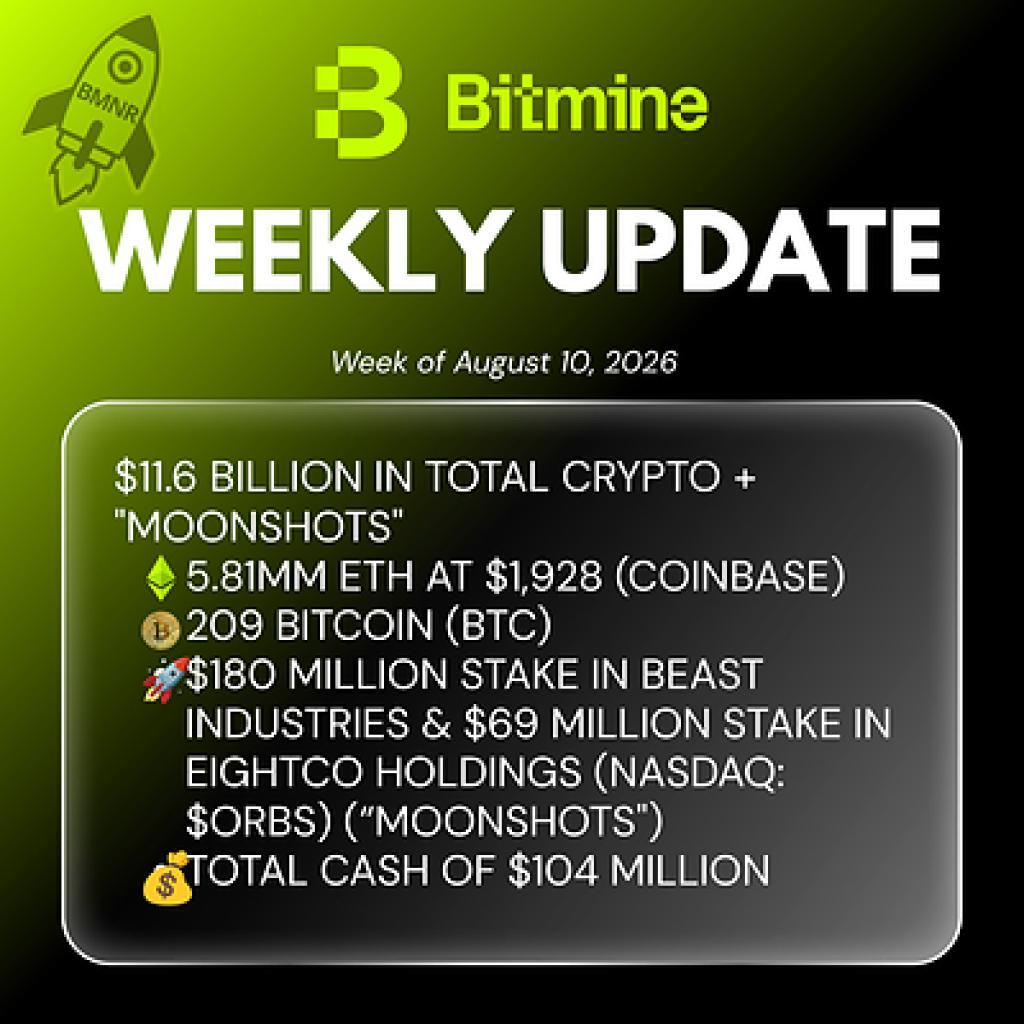
Bitmine Immersion Technologies (BMNR) Announces ETH Holdings Reach 5.81 Million Tokens, and Total Crypto and Total Cash Holdings of $11.6 Billion