U.S. Treasury Sanctions Drug Trafficker Over Crypto Money Laundering
The U.S. Treasury Department has sanctioned individuals linked to a drug trafficking network that allegedly used cryptocurrency across multiple blockchains to launder millions of dollars, marking another enforcement action at the intersection of digital assets and organized crime.
The Treasury’s Office of Foreign Assets Control (OFAC) announced the designation targeting financial facilitators connected to a cocaine trafficking operation. The case centers on Ryan Wedding, a former Canadian Olympic snowboarder turned alleged drug kingpin, whose network is accused of using crypto to move illicit proceeds.
A federal indictment unsealed by the FBI charged 10 individuals in connection with the operation, alleging that Wedding ordered the murder of a witness while running a large-scale cocaine trafficking enterprise.
How the Network Allegedly Used Crypto to Move Funds
According to blockchain security firm BlockSec, the network tapped multiple blockchains to obscure the flow of drug proceeds. The operation did not rely on a single chain or token, instead spreading transactions across several networks to complicate tracing efforts.
Reporting from DL News indicated that the trafficking organization used five separate blockchains to launder millions, exploiting the cross-chain complexity that makes unified monitoring difficult for compliance teams. The multi-chain approach reflects a growing pattern in illicit finance where bad actors deliberately fragment transaction trails.
OFAC published the specific wallet addresses and identifiers tied to the sanctioned parties, adding them to its Specially Designated Nationals list. U.S. persons and entities are now prohibited from transacting with these addresses.
What This Means for Crypto Exchanges and Compliance Teams
The designation requires all U.S.-based exchanges, custodians, and financial institutions to screen for and block transactions involving the listed addresses. Any assets held by sanctioned individuals at U.S. platforms must be frozen and reported to OFAC.
For crypto businesses, this case reinforces the importance of robust sanctions screening tools that work across multiple chains. A network that operates on five blockchains simultaneously creates compliance blind spots for platforms that only monitor a single chain. Firms offering cross-chain infrastructure and custody services face particular pressure to ensure their screening capabilities keep pace.
The action also signals that Treasury is willing to pursue sanctions designations, not just criminal charges, against crypto-linked laundering networks. Sanctions carry immediate financial consequences for any counterparty, making them a powerful tool for disrupting illicit flows even before criminal proceedings conclude.
As institutions increasingly adopt digital assets for treasury management, with moves like corporate Bitcoin treasury disclosures becoming more common, the regulatory expectation for clean transaction histories grows stronger. The same blockchain transparency that enables tokenized asset platforms to demonstrate compliance also gives investigators tools to trace illicit activity.
Sanctions vs. Criminal Charges: Different Tools, Different Timelines
It is important to distinguish between the OFAC sanctions designation and the separate criminal prosecution. The sanctions are an administrative action that takes immediate effect, freezing assets and prohibiting transactions. The criminal case, including the federal indictment, follows a longer judicial process with different evidentiary standards.
Wedding’s case drew additional public attention due to his background as a 2006 Winter Olympics competitor. ABC News documented the timeline of how a former Olympic athlete allegedly became a drug trafficking figure, adding a high-profile dimension to what is otherwise a standard narcotics and money laundering enforcement action.
The combination of OFAC designation and FBI indictment represents a coordinated enforcement approach, using financial sanctions to immediately cut off access to the crypto-based financial infrastructure while the criminal case proceeds through the courts.
FAQ
What did the U.S. Treasury sanction?
OFAC designated individuals and their associated cryptocurrency wallet addresses connected to a drug trafficking and money laundering network. The sanctions prohibit U.S. persons and entities from transacting with the listed parties or addresses.
Why is cryptocurrency relevant to this case?
The trafficking network allegedly used five separate blockchains to launder drug proceeds, exploiting cross-chain complexity to obscure fund flows. Treasury and blockchain investigators traced these transactions to identify the financial facilitators.
Does this affect the broader crypto market?
The sanctions target specific wallet addresses and individuals, not any cryptocurrency protocol or token. The direct market impact is limited to the frozen assets. However, enforcement actions like this contribute to the regulatory narrative around crypto compliance obligations for exchanges and financial institutions.
Disclaimer: This article is for informational purposes only and does not constitute financial or investment advice. Cryptocurrency and digital asset markets carry significant risk. Always do your own research before making decisions.
No tags available.


Other Posts








- China, US Conclude Trade Talks with Focus on Cooperation
- Crypto Weekly: NYSE Backs OKX, Kraken Gets Fed Access, BTC Sells
- Court Upholds Fed’s Rejection of Custodia Bank’s Request
- Former CFO Convicted for $35M Fraudulent Crypto Investment
- DeriW Launches Edge Hour Trading Competition Platform for Derivatives Traders
- Michael Saylor Denies Bitcoin Sell-Off Amid Large BTC Transfer
- Buy Dogecoin on eToro: Step-by-Step Guide for Beginners (2024)
- Kazakhstan Explores Crypto Reserves Backed by National Funds
- JPMorgan Increases Holdings in BlackRock’s Bitcoin ETF
- Nordea Bank Introduces Bitcoin ETP Trading for Nordic Customers
- XRP Spot ETF Launches on Nasdaq Amid Market Fluctuations
- Peter Schiff Challenges Michael Saylor on MSTR’s Business Model
- Thailand Orders Worldcoin to Delete 1.2 Million Biometric Records
- UK Proposes New DeFi Tax Framework to Ease User Burden
- WLFI Under Fire: Analyst Warns Hyperliquid Could Be Next
- Ancient Ethereum Whale Moves $1.19 Billion After Decade
- BlackRock Receives Large Crypto Transfers from Coinbase
- SEC Scrutiny on ALT5 Sigma’s Leadership Disclosure Timing
- Yala Injects $5.5 Million Amid Recovery Efforts
- Radiant Capital Faces $50M Loss in Major Security Breach
- China, US Conclude Trade Talks with Focus on Cooperation
- Crypto Weekly: NYSE Backs OKX, Kraken Gets Fed Access, BTC Sells
- Court Upholds Fed’s Rejection of Custodia Bank’s Request
- Former CFO Convicted for $35M Fraudulent Crypto Investment
- DeriW Launches Edge Hour Trading Competition Platform for Derivatives Traders
- Michael Saylor Denies Bitcoin Sell-Off Amid Large BTC Transfer
- Buy Dogecoin on eToro: Step-by-Step Guide for Beginners (2024)
- Kazakhstan Explores Crypto Reserves Backed by National Funds
- JPMorgan Increases Holdings in BlackRock’s Bitcoin ETF
- Nordea Bank Introduces Bitcoin ETP Trading for Nordic Customers
- XRP Spot ETF Launches on Nasdaq Amid Market Fluctuations
- Peter Schiff Challenges Michael Saylor on MSTR’s Business Model
- Thailand Orders Worldcoin to Delete 1.2 Million Biometric Records
- UK Proposes New DeFi Tax Framework to Ease User Burden
- WLFI Under Fire: Analyst Warns Hyperliquid Could Be Next
- Ancient Ethereum Whale Moves $1.19 Billion After Decade
- BlackRock Receives Large Crypto Transfers from Coinbase
- SEC Scrutiny on ALT5 Sigma’s Leadership Disclosure Timing
- Yala Injects $5.5 Million Amid Recovery Efforts
- Radiant Capital Faces $50M Loss in Major Security Breach
- China, US Conclude Trade Talks with Focus on Cooperation
- Crypto Weekly: NYSE Backs OKX, Kraken Gets Fed Access, BTC Sells
- Court Upholds Fed’s Rejection of Custodia Bank’s Request
- Former CFO Convicted for $35M Fraudulent Crypto Investment
- DeriW Launches Edge Hour Trading Competition Platform for Derivatives Traders
- Michael Saylor Denies Bitcoin Sell-Off Amid Large BTC Transfer
- Buy Dogecoin on eToro: Step-by-Step Guide for Beginners (2024)
- Kazakhstan Explores Crypto Reserves Backed by National Funds
- JPMorgan Increases Holdings in BlackRock’s Bitcoin ETF
- Nordea Bank Introduces Bitcoin ETP Trading for Nordic Customers
- XRP Spot ETF Launches on Nasdaq Amid Market Fluctuations
- Peter Schiff Challenges Michael Saylor on MSTR’s Business Model
- Thailand Orders Worldcoin to Delete 1.2 Million Biometric Records
- UK Proposes New DeFi Tax Framework to Ease User Burden
- WLFI Under Fire: Analyst Warns Hyperliquid Could Be Next
- Ancient Ethereum Whale Moves $1.19 Billion After Decade
- BlackRock Receives Large Crypto Transfers from Coinbase
- SEC Scrutiny on ALT5 Sigma’s Leadership Disclosure Timing
- Yala Injects $5.5 Million Amid Recovery Efforts
- Radiant Capital Faces $50M Loss in Major Security Breach

Binance Launches 10 bStocks Tokenized Securities Trading Pairs

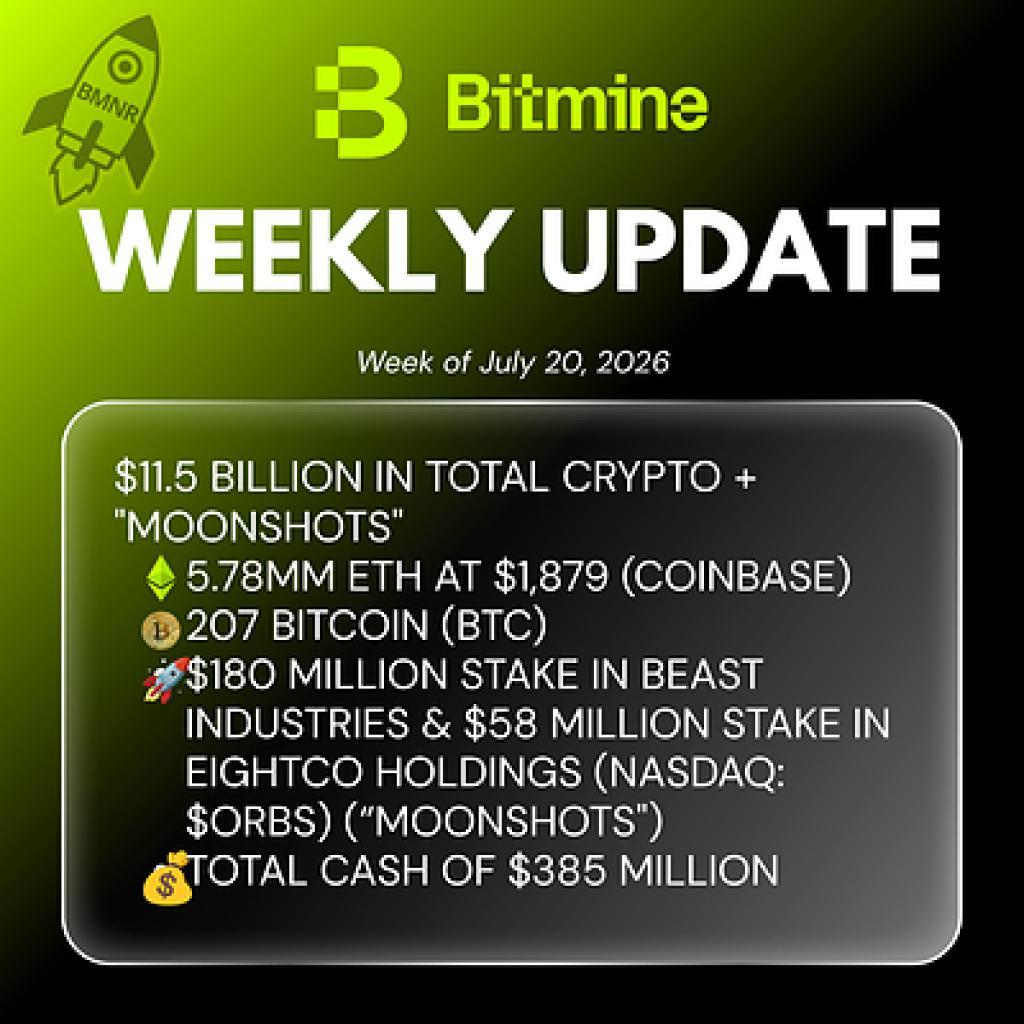
Bitmine Immersion Technologies (BMNR) Announces ETH Holdings Reach 5.78 Million Tokens, and Total Crypto and Total Cash Holdings of $11.5 Billion

GLOBAL MEDIA PROCUREMENT: THE 500-YEAR YIXING ZISHA TEAPOTS PARADIGM