Ondo is reportedly bringing tokenized U.S. stock exposure to Hyperliquid’s HyperEVM, a move that would place traditional equity access directly within one of the fastest-growing on-chain trading environments in crypto.
The integration, if confirmed in full, would allow traders to access tokenized versions of U.S. equities through Hyperliquid’s EVM-compatible execution layer. Details on supported stocks, rollout timeline, and eligibility remain limited at this stage.
What Is Being Bridged to HyperEVM
The core of the announcement centers on Ondo deploying tokenized U.S. stock products onto HyperEVM, Hyperliquid’s Ethereum Virtual Machine-compatible environment. This would combine Ondo’s tokenized asset infrastructure with Hyperliquid’s trading rails.
Tokenized stocks are blockchain-based representations of traditional equities. Holders gain price exposure to underlying stocks without directly holding shares through a conventional brokerage. The mechanism typically involves a custodian or issuer backing each token with the corresponding asset or equivalent collateral.
The move fits a broader pattern of protocols seeking to bring real-world asset (RWA) exposure on-chain. Felix Protocol has also signaled plans to launch spot equities on HyperEVM, suggesting Hyperliquid is becoming a destination for tokenized equity experiments.
Why HyperEVM as the Venue
Hyperliquid built its reputation on perpetual futures trading with an order-book model rather than the automated market maker design common in DeFi. HyperEVM extends that infrastructure to support general smart contract deployment, opening the door to products like tokenized stocks.
The platform’s protocol activity on DeFiLlama reflects growing usage across its ecosystem. For Ondo, deploying on HyperEVM means tapping into an active trading community already accustomed to sophisticated order types and low-latency execution.
This matters because tokenized equities need liquid, responsive trading venues to function effectively. A venue where traders already operate with leverage and structured products is a more natural fit than a standard DEX primarily used for token swaps.
Who This Targets
The primary audience is crypto-native traders who want equity exposure without leaving on-chain infrastructure. Rather than bridging funds to a traditional brokerage, these users could hold and trade tokenized stock positions alongside their existing DeFi portfolios.
This also matters for users in jurisdictions where direct U.S. stock access is limited. Tokenized representations could, in theory, lower barriers to entry, though regulatory constraints around securities exposure remain a significant variable. Similar dynamics have played out in other asset classes, including recent moves by firms like Ripple Prime to secure institutional financing that bridges traditional and crypto capital markets.
RWA Context
Tokenized real-world assets have gained traction across multiple chains in 2025 and 2026, with treasuries, bonds, and now equities entering the on-chain landscape. Ondo has been among the more visible players in the RWA space, focusing on making regulated financial products accessible through DeFi rails.
The push to tokenize equities specifically represents a higher-stakes category than stablecoins or treasury products. U.S. stocks carry securities classification complexities that simpler instruments avoid. How Ondo navigates compliance on a decentralized trading platform like Hyperliquid remains an open question, much like the evolving regulatory considerations facing firms such as Bitmine Immersion Technologies and LM Funding America as they manage digital asset holdings within traditional corporate structures.
What Remains Unclear
Several critical details are not yet confirmed. The specific U.S. stocks available for tokenization have not been disclosed publicly. User eligibility requirements, including potential geographic restrictions or KYC mandates, remain undefined.
Fee structures for minting, trading, and redeeming tokenized stock positions have not been detailed. Custody arrangements, specifically who holds the underlying equities and under what regulatory framework, are also unaddressed in available documentation.
The dStock documentation provides some technical framework, but gaps remain around operational specifics. Traders should treat this as an early-stage development rather than a ready-to-use product until further confirmations emerge.
Disclaimer: This article is for informational purposes only and does not constitute financial or investment advice. Cryptocurrency and digital asset markets carry significant risk. Always do your own research before making decisions.
No tags available.


Other Posts








- China, US Conclude Trade Talks with Focus on Cooperation
- Crypto Weekly: NYSE Backs OKX, Kraken Gets Fed Access, BTC Sells
- DeriW Launches Edge Hour Trading Competition Platform for Derivatives Traders
- Court Upholds Fed’s Rejection of Custodia Bank’s Request
- Former CFO Convicted for $35M Fraudulent Crypto Investment
- Michael Saylor Denies Bitcoin Sell-Off Amid Large BTC Transfer
- Buy Dogecoin on eToro: Step-by-Step Guide for Beginners (2024)
- Kazakhstan Explores Crypto Reserves Backed by National Funds
- JPMorgan Increases Holdings in BlackRock’s Bitcoin ETF
- Nordea Bank Introduces Bitcoin ETP Trading for Nordic Customers
- XRP Spot ETF Launches on Nasdaq Amid Market Fluctuations
- Crypto Leaders Address Macro Volatility Amid Market Shifts
- Peter Schiff Challenges Michael Saylor on MSTR’s Business Model
- Thailand Orders Worldcoin to Delete 1.2 Million Biometric Records
- UK Proposes New DeFi Tax Framework to Ease User Burden
- WLFI Under Fire: Analyst Warns Hyperliquid Could Be Next
- Ancient Ethereum Whale Moves $1.19 Billion After Decade
- BlackRock Receives Large Crypto Transfers from Coinbase
- SEC Scrutiny on ALT5 Sigma’s Leadership Disclosure Timing
- MoonPay Gains Trust License for Crypto Operations in New York
- China, US Conclude Trade Talks with Focus on Cooperation
- Crypto Weekly: NYSE Backs OKX, Kraken Gets Fed Access, BTC Sells
- DeriW Launches Edge Hour Trading Competition Platform for Derivatives Traders
- Court Upholds Fed’s Rejection of Custodia Bank’s Request
- Former CFO Convicted for $35M Fraudulent Crypto Investment
- Michael Saylor Denies Bitcoin Sell-Off Amid Large BTC Transfer
- Buy Dogecoin on eToro: Step-by-Step Guide for Beginners (2024)
- Kazakhstan Explores Crypto Reserves Backed by National Funds
- JPMorgan Increases Holdings in BlackRock’s Bitcoin ETF
- Nordea Bank Introduces Bitcoin ETP Trading for Nordic Customers
- XRP Spot ETF Launches on Nasdaq Amid Market Fluctuations
- Crypto Leaders Address Macro Volatility Amid Market Shifts
- Peter Schiff Challenges Michael Saylor on MSTR’s Business Model
- Thailand Orders Worldcoin to Delete 1.2 Million Biometric Records
- UK Proposes New DeFi Tax Framework to Ease User Burden
- WLFI Under Fire: Analyst Warns Hyperliquid Could Be Next
- Ancient Ethereum Whale Moves $1.19 Billion After Decade
- BlackRock Receives Large Crypto Transfers from Coinbase
- SEC Scrutiny on ALT5 Sigma’s Leadership Disclosure Timing
- MoonPay Gains Trust License for Crypto Operations in New York
- China, US Conclude Trade Talks with Focus on Cooperation
- Crypto Weekly: NYSE Backs OKX, Kraken Gets Fed Access, BTC Sells
- DeriW Launches Edge Hour Trading Competition Platform for Derivatives Traders
- Court Upholds Fed’s Rejection of Custodia Bank’s Request
- Former CFO Convicted for $35M Fraudulent Crypto Investment
- Michael Saylor Denies Bitcoin Sell-Off Amid Large BTC Transfer
- Buy Dogecoin on eToro: Step-by-Step Guide for Beginners (2024)
- Kazakhstan Explores Crypto Reserves Backed by National Funds
- JPMorgan Increases Holdings in BlackRock’s Bitcoin ETF
- Nordea Bank Introduces Bitcoin ETP Trading for Nordic Customers
- XRP Spot ETF Launches on Nasdaq Amid Market Fluctuations
- Crypto Leaders Address Macro Volatility Amid Market Shifts
- Peter Schiff Challenges Michael Saylor on MSTR’s Business Model
- Thailand Orders Worldcoin to Delete 1.2 Million Biometric Records
- UK Proposes New DeFi Tax Framework to Ease User Burden
- WLFI Under Fire: Analyst Warns Hyperliquid Could Be Next
- Ancient Ethereum Whale Moves $1.19 Billion After Decade
- BlackRock Receives Large Crypto Transfers from Coinbase
- SEC Scrutiny on ALT5 Sigma’s Leadership Disclosure Timing
- MoonPay Gains Trust License for Crypto Operations in New York

Tether Upgrades Bitcoin Mining Development Kit to v0.2.0 as Fully Open Source Release


Japanese Police Uncover Stablecoin-Linked Money Laundering Case
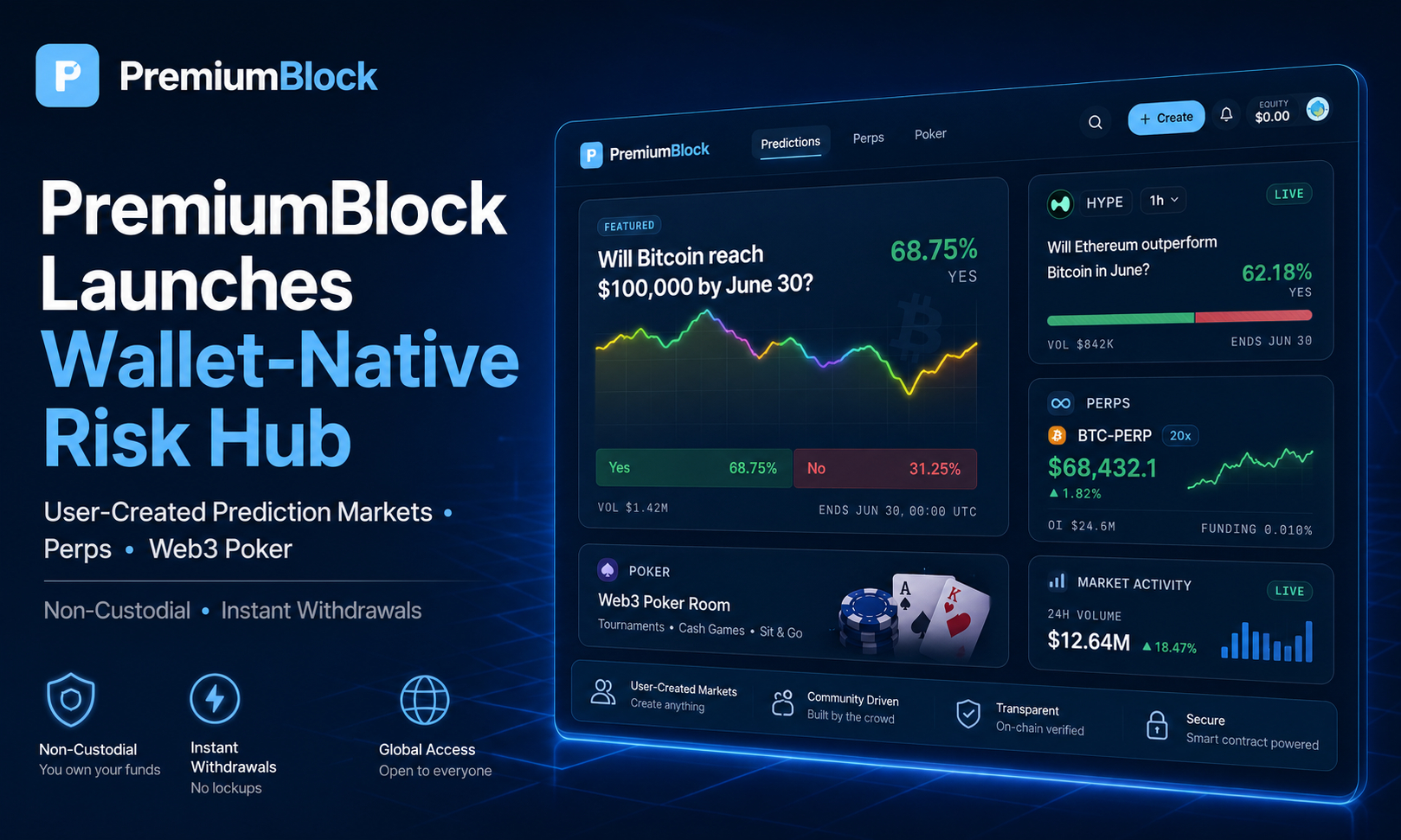
PremiumBlock Launches Non-Custodial Risk Hub for User-Created Prediction Markets, Perps and Web3 Poker