Moody’s Stablecoin Rating Methodology Moves From Proposal to 2026 Framework
Moody’s stablecoin rating methodology has moved from a December 2025 proposal to a formal 2026 framework for assessing fiat-backed stablecoins. The methodology focuses on reserve quality, liquidity, redemption risk, reserve segregation, market value risk, operational controls, and technology resilience.

The framework matters as stablecoin supply has grown to more than $317 billion in 2026, with USDT and USDC dominating market liquidity. For investors and institutions, Moody’s approach offers a clearer way to compare stablecoins beyond market cap or whether a token trades near $1.
Coincu has also covered related developments, including U.S. Senate GENIUS Act progress, Treasury’s proposed AML and sanctions rules for stablecoin issuers, and Circle’s institutional stablecoin payment service.
Stablecoin Market Data Shows Why Moody’s Framework Matters
The stablecoin market has grown large enough to become a financial stability topic. The Federal Reserve said aggregate stablecoin market capitalization reached about $317 billion as of April 6, 2026, representing more than 50% growth since early 2025.
Live market trackers also show heavy concentration. CoinMarketCap recently listed USDT at about $189.6 billion in market capitalization and USDC at about $78.4 billion. DeFillama showed a similar picture, with USDT near $189.7 billion and USDC near $77.1 billion.
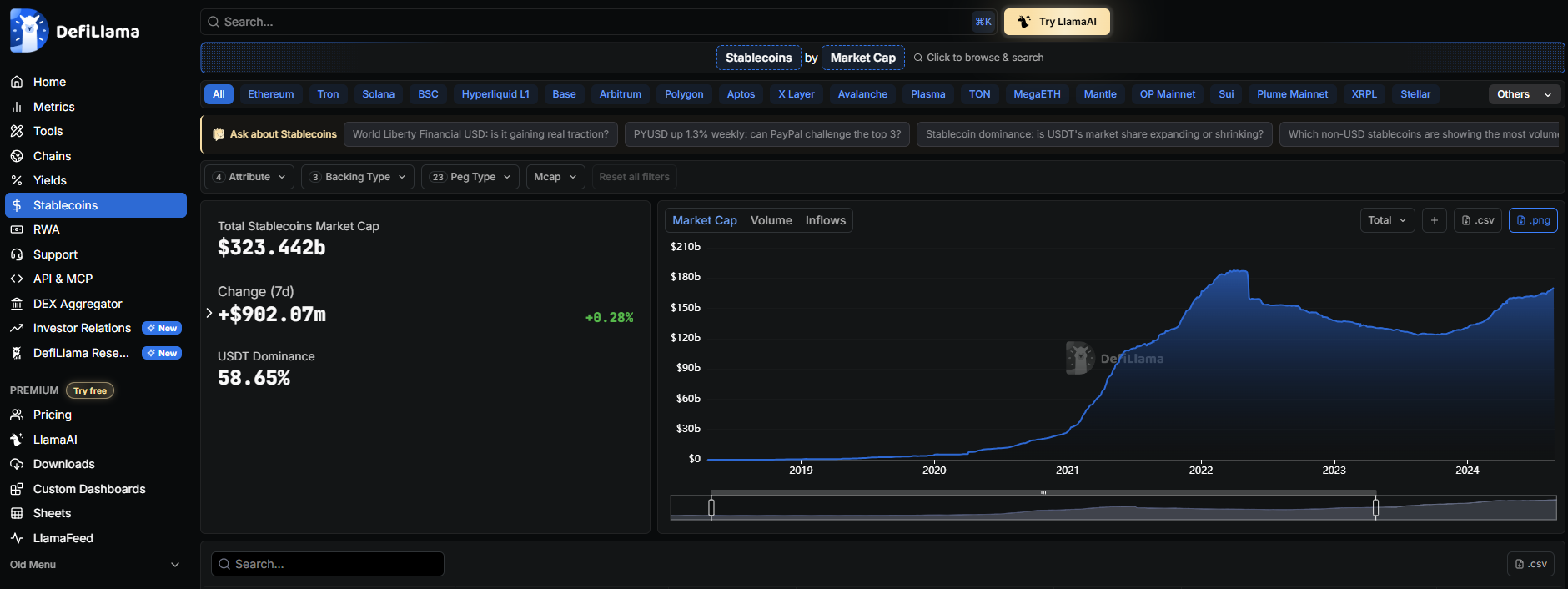
That means USDT and USDC together account for roughly $267 billion of stablecoin supply. The top two issuers therefore represent most of the sector’s liquidity, making reserve quality and redemption strength important not only for crypto traders but also for broader digital asset infrastructure.
This concentration explains why Moody’s stablecoin rating methodology matters in 2026. If a major stablecoin faces redemption pressure, the impact can move beyond one issuer and affect exchanges, DeFi protocols, market makers, payment companies, and institutional treasury flows.
Moody’s Stablecoin Methodology Focuses on Issuer Redemption Strength
The central issue in Moody’s stablecoin rating methodology is whether an issuer can meet redemption obligations fully and on time.
A stablecoin may trade near $1 during normal market conditions, but that does not prove its reserves are strong enough for a market-wide redemption cycle. Moody’s methodology looks deeper into the assets backing the stablecoin, the liquidity of those assets, the issuer’s redemption process, and the legal structure protecting holders.
This is important because two dollar-pegged stablecoins can look similar on exchanges while carrying very different risks. One issuer may hold highly liquid short-term assets, while another may have more complex reserve exposure, longer-duration instruments, weaker disclosures, or higher counterparty concentration.
The framework therefore shifts the market conversation from “does the token trade at $1?” to “can the issuer return $1 per token during stress?”
Method: How Moody’s Evaluates Stablecoin Risk
| Moody’s Review Area | Method Used in the Framework | Why It Matters for Stablecoins |
|---|---|---|
| Reserve pool quality | Moody’s reviews the assets backing a stablecoin, including credit quality, maturity profile, liquidity, and counterparty exposure. | Stronger reserves can improve redemption confidence and reduce the risk of losses during market stress. |
| Market value risk | The framework considers whether reserve assets could lose value if they must be sold quickly. | This matters when market liquidity weakens and issuers need to raise cash for redemptions. |
| Liquidity and redemption mechanics | Moody’s evaluates whether an issuer has enough cash or near-cash assets to process redemptions. | Weak liquidity can create pressure on the reserve pool and increase run risk. |
| Reserve segregation | The methodology considers whether backing assets are legally separated from the issuer’s own balance sheet. | Clear segregation may improve holder protection during insolvency or legal disputes. |
| Operational and technology risk | Moody’s assesses banks, custodians, compliance systems, blockchain infrastructure, cybersecurity, and redemption processes. | Operational failures can interrupt redemptions, settlement, or market confidence even when reserves appear strong. |
This method gives investors a structured way to compare fiat-backed stablecoins. It does not treat every dollar-pegged token as the same type of risk.

Moody’s broader digital finance strategy also supports this direction. The firm has expanded its digital economy coverage and launched its Token Integration Engine on the Canton Network, bringing credit analysis closer to blockchain-based financial infrastructure.
Why Reserve Segregation Matters
Reserve segregation is one of the most important issues for stablecoin holders.
If reserve assets are clearly separated from the issuer’s own balance sheet, holders may have stronger protection if the issuer faces insolvency or legal claims. If reserves are not properly segregated, token holders could face more uncertainty over whether backing assets are available for redemption.
This issue has become more important in 2026 as regulators focus on stablecoin reserve transparency and redemption rights. The Federal Reserve’s May 2026 Financial Stability Report noted stablecoin growth, market concentration, and the importance of monitoring run risk as stablecoins become more connected to the traditional financial system.
Regulators have also been developing rules under the GENIUS Act, including requirements tied to reserve transparency and redemption rights. Coincu has tracked related developments in Federal Reserve stablecoin interest restrictions, GENIUS Act debate coverage, and stablecoin oversight updates.
Impact on USDT, USDC, and Institutional Stablecoin Use
USDT and USDC remain the two most important stablecoins by market capitalization, but Moody’s methodology shifts the conversation away from size alone. USDT’s market cap is around $189 billion, while USDC is around $77 billion to $78 billion, depending on the tracker used. Together, they represent the core of global stablecoin liquidity.
For USDT, Moody’s framework highlights the importance of reserve transparency, liquidity depth, counterparty exposure, and redemption reliability. Because USDT is widely used across exchanges and offshore liquidity venues, any rating-style analysis would likely focus on whether its reserve structure can support large redemption demand during market stress.
For USDC, the methodology is relevant in a different way. USDC is often positioned as a more institution-facing stablecoin, so Moody’s framework helps investors evaluate whether its disclosures, reserve composition, custody arrangements, and regulatory posture support that institutional role.
The bigger point is that Moody’s gives institutions a credit-risk lens for comparing stablecoins. Instead of treating all dollar-pegged tokens as interchangeable cash equivalents, banks, funds, exchanges, and payment companies can assess each issuer based on reserve quality, redemption access, legal protection, operational controls, and blockchain settlement risk.
That matters for custody policy, exchange exposure, treasury allocation, payment rails, and counterparty limits. As stablecoins move deeper into institutional finance, the market will likely care less about whether a token simply holds its peg on a normal trading day and more about whether it can survive a stressed redemption cycle.
Coincu has also tracked related stablecoin developments, including Safe and Circle’s USDC institutional DeFi partnership, Circle’s StableFX on Arc blockchain, Circle’s USDC supply growth, and Circle’s U.S. trust bank charter application.
Why Moody’s Framework Matters in 2026
Stablecoins are becoming part of mainstream financial infrastructure. They are used in crypto trading, cross-border payments, tokenized assets, DeFi liquidity, treasury management, and institutional settlement.
That growth makes independent credit analysis more important. Moody’s methodology brings a traditional ratings lens to a market that has often relied on issuer disclosures, attestations, exchange liquidity, and market confidence.
The framework also arrives as the U.S. regulatory environment becomes more defined. The GENIUS Act created a federal framework for payment stablecoins, while agencies including the FDIC, OCC, Treasury, and Federal Reserve have been working on implementation rules.
For institutions, this creates a more mature environment for stablecoin due diligence. Stablecoins can no longer be evaluated only as crypto assets. They increasingly need to be reviewed through payment, credit, custody, liquidity, compliance, and operational risk frameworks.
This is why Moody’s methodology is important for institutional adoption, financial stability, reserve transparency, and credit risk. It gives banks, asset managers, payment companies, and crypto platforms a clearer way to evaluate stablecoins before using them at scale.
Bottom Line
Moody’s stablecoin rating methodology marks a shift from basic peg monitoring to deeper credit-style analysis.
The main takeaway is simple: a stablecoin trading at $1 is not automatically low risk. Investors need to understand what backs the token, how liquid those reserves are, whether holders can redeem during stress, and whether reserve assets are legally protected.
In 2026, stablecoin quality depends on reserve strength, redemption mechanics, legal structure, operational resilience, and technology reliability. Moody’s methodology gives the market a more disciplined way to measure those risks.
FAQs
What is Moody’s stablecoin rating methodology?
Moody’s stablecoin rating methodology is a 2026 framework for assessing fiat-backed stablecoins based on reserve quality, liquidity, redemption strength, market value risk, reserve segregation, operational controls, and technology risk.
Why does Moody’s framework matter for USDT and USDC?
USDT and USDC dominate stablecoin liquidity, with a combined market cap of roughly $267 billion. Moody’s framework helps investors compare them beyond market cap by looking at reserves, liquidity, transparency, redemption access, and operational resilience.
Is Moody’s stablecoin framework still only a proposal?
No. The December 2025 version was a proposal open for feedback. In 2026, Moody’s lists stablecoin methodology under its official methodology materials, so the article should refer to it as a stablecoin rating methodology rather than only a proposed framework.
Does a Moody’s stablecoin rating guarantee safety?
No. A rating methodology helps assess relative credit and liquidity risk, but it does not remove market, operational, regulatory, blockchain, or redemption risk.
| DISCLAIMER: The information on this website is provided as general market commentary and does not constitute investment advice. We encourage you to do your own research before investing. |
No tags available.


Other Posts








- China, US Conclude Trade Talks with Focus on Cooperation
- Crypto Weekly: NYSE Backs OKX, Kraken Gets Fed Access, BTC Sells
- Court Upholds Fed’s Rejection of Custodia Bank’s Request
- Former CFO Convicted for $35M Fraudulent Crypto Investment
- DeriW Launches Edge Hour Trading Competition Platform for Derivatives Traders
- Michael Saylor Denies Bitcoin Sell-Off Amid Large BTC Transfer
- Buy Dogecoin on eToro: Step-by-Step Guide for Beginners (2024)
- Kazakhstan Explores Crypto Reserves Backed by National Funds
- JPMorgan Increases Holdings in BlackRock’s Bitcoin ETF
- Nordea Bank Introduces Bitcoin ETP Trading for Nordic Customers
- XRP Spot ETF Launches on Nasdaq Amid Market Fluctuations
- Peter Schiff Challenges Michael Saylor on MSTR’s Business Model
- Thailand Orders Worldcoin to Delete 1.2 Million Biometric Records
- UK Proposes New DeFi Tax Framework to Ease User Burden
- WLFI Under Fire: Analyst Warns Hyperliquid Could Be Next
- Ancient Ethereum Whale Moves $1.19 Billion After Decade
- BlackRock Receives Large Crypto Transfers from Coinbase
- SEC Scrutiny on ALT5 Sigma’s Leadership Disclosure Timing
- Yala Injects $5.5 Million Amid Recovery Efforts
- Radiant Capital Faces $50M Loss in Major Security Breach
- China, US Conclude Trade Talks with Focus on Cooperation
- Crypto Weekly: NYSE Backs OKX, Kraken Gets Fed Access, BTC Sells
- Court Upholds Fed’s Rejection of Custodia Bank’s Request
- Former CFO Convicted for $35M Fraudulent Crypto Investment
- DeriW Launches Edge Hour Trading Competition Platform for Derivatives Traders
- Michael Saylor Denies Bitcoin Sell-Off Amid Large BTC Transfer
- Buy Dogecoin on eToro: Step-by-Step Guide for Beginners (2024)
- Kazakhstan Explores Crypto Reserves Backed by National Funds
- JPMorgan Increases Holdings in BlackRock’s Bitcoin ETF
- Nordea Bank Introduces Bitcoin ETP Trading for Nordic Customers
- XRP Spot ETF Launches on Nasdaq Amid Market Fluctuations
- Peter Schiff Challenges Michael Saylor on MSTR’s Business Model
- Thailand Orders Worldcoin to Delete 1.2 Million Biometric Records
- UK Proposes New DeFi Tax Framework to Ease User Burden
- WLFI Under Fire: Analyst Warns Hyperliquid Could Be Next
- Ancient Ethereum Whale Moves $1.19 Billion After Decade
- BlackRock Receives Large Crypto Transfers from Coinbase
- SEC Scrutiny on ALT5 Sigma’s Leadership Disclosure Timing
- Yala Injects $5.5 Million Amid Recovery Efforts
- Radiant Capital Faces $50M Loss in Major Security Breach
- China, US Conclude Trade Talks with Focus on Cooperation
- Crypto Weekly: NYSE Backs OKX, Kraken Gets Fed Access, BTC Sells
- Court Upholds Fed’s Rejection of Custodia Bank’s Request
- Former CFO Convicted for $35M Fraudulent Crypto Investment
- DeriW Launches Edge Hour Trading Competition Platform for Derivatives Traders
- Michael Saylor Denies Bitcoin Sell-Off Amid Large BTC Transfer
- Buy Dogecoin on eToro: Step-by-Step Guide for Beginners (2024)
- Kazakhstan Explores Crypto Reserves Backed by National Funds
- JPMorgan Increases Holdings in BlackRock’s Bitcoin ETF
- Nordea Bank Introduces Bitcoin ETP Trading for Nordic Customers
- XRP Spot ETF Launches on Nasdaq Amid Market Fluctuations
- Peter Schiff Challenges Michael Saylor on MSTR’s Business Model
- Thailand Orders Worldcoin to Delete 1.2 Million Biometric Records
- UK Proposes New DeFi Tax Framework to Ease User Burden
- WLFI Under Fire: Analyst Warns Hyperliquid Could Be Next
- Ancient Ethereum Whale Moves $1.19 Billion After Decade
- BlackRock Receives Large Crypto Transfers from Coinbase
- SEC Scrutiny on ALT5 Sigma’s Leadership Disclosure Timing
- Yala Injects $5.5 Million Amid Recovery Efforts
- Radiant Capital Faces $50M Loss in Major Security Breach


U.S. Congress Debates Crypto Ethics as DeFi Provisions Stay Under Negotiation


Bitmine Immersion Technologies (BMNR) Announces ETH Holdings Reach 5.78 Million Tokens, and Total Crypto and Total Cash Holdings of $11.5 Billion

GLOBAL MEDIA PROCUREMENT: THE 500-YEAR YIXING ZISHA TEAPOTS PARADIGM