DOJ, Tech Firms Freeze $3.8M Crypto Tied to Southeast Asia Fraud
The U.S. Department of Justice and several major technology companies have frozen $3.8 million in cryptocurrency linked to fraud operations targeting victims in Southeast Asia, marking a coordinated public-private enforcement action against scam center networks in the region.
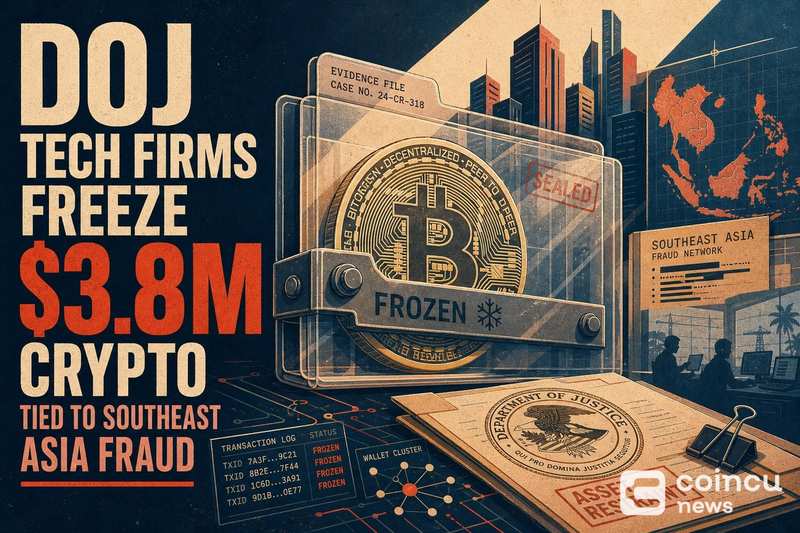
DOJ says $3.8 million in crypto was frozen in a Southeast Asia fraud crackdown
The DOJ’s Scam Center Strike Force announced the results of a U.S.-private industry disruption week that resulted in the freezing of crypto assets tied to fraud schemes targeting Southeast Asia. The action involved coordination between federal law enforcement and technology companies to disrupt criminal networks operating scam centers in the region.
The announcement follows a broader pattern of DOJ enforcement activity targeting these operations. The Strike Force has previously taken major actions against Southeast Asian scam centers that target U.S. victims through online fraud schemes, including romance scams and fraudulent investment platforms.
How the DOJ and tech companies coordinated the disruption
The enforcement action was notable for its public-private structure. Rather than a traditional law enforcement seizure alone, the disruption week brought together federal agencies and technology companies to attack scam infrastructure from multiple angles simultaneously.
Law enforcement actions
The DOJ’s Scam Center Strike Force led the federal side of the operation, focusing on freezing cryptocurrency wallets and financial accounts connected to the fraud networks. The freeze represents funds identified as proceeds of, or instruments used in, scam operations targeting victims.
Freezing crypto assets is distinct from permanent forfeiture. Frozen funds are held pending further legal proceedings, and whether victims will ultimately recover any portion remains subject to ongoing case developments.
Company-side actions
On the private sector side, Meta disclosed its participation in the effort. The company detailed how leading tech companies worked with law enforcement to disrupt criminal scam networks operating in Southeast Asia. This included removing scam-related accounts and infrastructure from platforms used to recruit victims.
Coinbase also played a role in the disruption effort. The exchange has publicly outlined its approach to fighting scams at the source, including proactive detection and freezing of accounts linked to fraud operations. As the crypto industry faces growing pressure to demonstrate responsible practices and institutional credibility, exchange-level cooperation with federal agencies has become increasingly common.
This coordinated disruption model, where platforms simultaneously remove scam infrastructure while law enforcement freezes financial proceeds, represents an approach that enforcement agencies have increasingly favored in combating cross-border crypto fraud.
Why Southeast Asia-linked scam centers remain a major enforcement target
The DOJ’s focus on Southeast Asia reflects the scale of scam center operations concentrated in the region. These operations typically involve large compounds where workers, often coerced or trafficked, conduct online fraud schemes targeting victims in the United States and other countries.
The scam center model relies heavily on cryptocurrency for moving proceeds quickly across borders, making crypto freezes a key disruption tool. Victims are frequently lured through social media platforms and messaging apps into fraudulent investment schemes, with funds ultimately converted to crypto and moved through multiple wallets. As markets increasingly shift toward trust and utility, this kind of illicit activity draws heightened regulatory scrutiny.
The DOJ Strike Force’s repeated actions in this area signal that Southeast Asian scam centers remain a top enforcement priority for U.S. authorities. The public-private disruption model used in this latest action suggests agencies are expanding beyond traditional prosecution to target the operational infrastructure that enables these schemes.
What is confirmed so far and what remains unclear
Confirmed
- The DOJ announced that $3.8 million in crypto was frozen during a public-private disruption week targeting Southeast Asia-linked fraud.
- The action was conducted under the Scam Center Strike Force framework.
- Multiple technology companies, including Meta and Coinbase, participated in the disruption effort.
- The enforcement push included both financial freezes and platform-level removal of scam infrastructure.
Still unclear
- The specific number of victims affected by the targeted fraud networks has not been publicly detailed in available sources.
- Whether the frozen funds will ultimately be returned to victims or subject to government forfeiture proceedings remains to be determined.
- The full list of participating technology companies beyond Meta and Coinbase has not been confirmed.
- Which blockchains or tokens were involved in the frozen assets has not been disclosed in the reviewed materials.
FAQ
Was the crypto frozen or permanently seized?
Based on the DOJ announcement, the $3.8 million in crypto was frozen, not permanently seized. Freezing is typically a preliminary step that prevents funds from being moved while investigations and legal proceedings continue. Permanent forfeiture would require additional court action.
Which tech companies were involved?
Meta and Coinbase have publicly acknowledged participation in the disruption effort. Meta described its role in removing scam-related accounts and infrastructure, while Coinbase highlighted its work in detecting and freezing accounts linked to fraud. Additional companies may have participated but have not been publicly confirmed. The growing trend of crypto platforms engaging with real-world regulatory frameworks suggests this type of cooperation will continue to expand.
Could this action lead to victim recovery or further crackdowns?
The frozen funds could potentially be returned to victims through restitution proceedings, but this depends on the outcome of ongoing legal cases. The DOJ’s use of a structured disruption week format, combined with its repeated Strike Force actions targeting Southeast Asian scam centers, suggests further coordinated crackdowns are likely.
Disclaimer: This article is for informational purposes only and does not constitute financial or investment advice. Cryptocurrency and digital asset markets carry significant risk. Always do your own research before making decisions.
No tags available.


Other Posts








- Amplify 2024: Ohio’s Premier Blockchain Summit
- China, US Conclude Trade Talks with Focus on Cooperation
- Crypto Weekly: NYSE Backs OKX, Kraken Gets Fed Access, BTC Sells
- DeriW Launches Edge Hour Trading Competition Platform for Derivatives Traders
- Court Upholds Fed’s Rejection of Custodia Bank’s Request
- Michael Saylor Denies Bitcoin Sell-Off Amid Large BTC Transfer
- Former CFO Convicted for $35M Fraudulent Crypto Investment
- EU Opens Antitrust Probe Into Deutsche Boerse and Nasdaq Derivatives Dealings
- Kazakhstan Explores Crypto Reserves Backed by National Funds
- JPMorgan Increases Holdings in BlackRock’s Bitcoin ETF
- Nordea Bank Introduces Bitcoin ETP Trading for Nordic Customers
- XRP Spot ETF Launches on Nasdaq Amid Market Fluctuations
- JPMorgan Chase Launches 24/7 Digital Deposit Token for Clients
- Crypto Leaders Address Macro Volatility Amid Market Shifts
- Buy Dogecoin on eToro: Step-by-Step Guide for Beginners (2024)
- Peter Schiff Challenges Michael Saylor on MSTR’s Business Model
- Thailand Orders Worldcoin to Delete 1.2 Million Biometric Records
- UK Proposes New DeFi Tax Framework to Ease User Burden
- U.S. Treasury Proposes New Tax Relief Regulations
- Uniswap’s UNIfication Proposal Gains Massive Preliminary Support
- Amplify 2024: Ohio’s Premier Blockchain Summit
- China, US Conclude Trade Talks with Focus on Cooperation
- Crypto Weekly: NYSE Backs OKX, Kraken Gets Fed Access, BTC Sells
- DeriW Launches Edge Hour Trading Competition Platform for Derivatives Traders
- Court Upholds Fed’s Rejection of Custodia Bank’s Request
- Michael Saylor Denies Bitcoin Sell-Off Amid Large BTC Transfer
- Former CFO Convicted for $35M Fraudulent Crypto Investment
- EU Opens Antitrust Probe Into Deutsche Boerse and Nasdaq Derivatives Dealings
- Kazakhstan Explores Crypto Reserves Backed by National Funds
- JPMorgan Increases Holdings in BlackRock’s Bitcoin ETF
- Nordea Bank Introduces Bitcoin ETP Trading for Nordic Customers
- XRP Spot ETF Launches on Nasdaq Amid Market Fluctuations
- JPMorgan Chase Launches 24/7 Digital Deposit Token for Clients
- Crypto Leaders Address Macro Volatility Amid Market Shifts
- Buy Dogecoin on eToro: Step-by-Step Guide for Beginners (2024)
- Peter Schiff Challenges Michael Saylor on MSTR’s Business Model
- Thailand Orders Worldcoin to Delete 1.2 Million Biometric Records
- UK Proposes New DeFi Tax Framework to Ease User Burden
- U.S. Treasury Proposes New Tax Relief Regulations
- Uniswap’s UNIfication Proposal Gains Massive Preliminary Support
- Amplify 2024: Ohio’s Premier Blockchain Summit
- China, US Conclude Trade Talks with Focus on Cooperation
- Crypto Weekly: NYSE Backs OKX, Kraken Gets Fed Access, BTC Sells
- DeriW Launches Edge Hour Trading Competition Platform for Derivatives Traders
- Court Upholds Fed’s Rejection of Custodia Bank’s Request
- Michael Saylor Denies Bitcoin Sell-Off Amid Large BTC Transfer
- Former CFO Convicted for $35M Fraudulent Crypto Investment
- EU Opens Antitrust Probe Into Deutsche Boerse and Nasdaq Derivatives Dealings
- Kazakhstan Explores Crypto Reserves Backed by National Funds
- JPMorgan Increases Holdings in BlackRock’s Bitcoin ETF
- Nordea Bank Introduces Bitcoin ETP Trading for Nordic Customers
- XRP Spot ETF Launches on Nasdaq Amid Market Fluctuations
- JPMorgan Chase Launches 24/7 Digital Deposit Token for Clients
- Crypto Leaders Address Macro Volatility Amid Market Shifts
- Buy Dogecoin on eToro: Step-by-Step Guide for Beginners (2024)
- Peter Schiff Challenges Michael Saylor on MSTR’s Business Model
- Thailand Orders Worldcoin to Delete 1.2 Million Biometric Records
- UK Proposes New DeFi Tax Framework to Ease User Burden
- U.S. Treasury Proposes New Tax Relief Regulations
- Uniswap’s UNIfication Proposal Gains Massive Preliminary Support
Latest

Polymarket Odds of Trump Attending the 2026 NBA Finals Rise to 86%


Press Release

ChangeNOW Wins Best Digital Assets Fintech at the BeInCrypto Institutional 100 Awards 2026

Premu Opens User-Created, Leveraged Prediction Markets Ahead of the 2026 World Cup