Chainalysis: Gray-Market Peptide Suppliers Turn to Bitcoin and Stablecoins
Blockchain analytics firm Chainalysis has identified a growing trend among gray-market peptide drug suppliers turning to Bitcoin and stablecoins as preferred payment methods. The shift highlights new challenges for crypto compliance teams and law enforcement agencies tracking transactions that fall into regulatory gray areas.

Chainalysis Flags a Payment Shift Among Peptide Vendors
Chainalysis, one of the largest blockchain intelligence providers used by governments and exchanges worldwide, published findings indicating that suppliers of gray-market peptide drugs are increasingly accepting cryptocurrency payments. The report focuses specifically on Bitcoin and stablecoins as the two asset classes gaining traction among these vendors.
Gray-market peptide suppliers operate in a legal gray zone. These businesses typically sell research peptides, sometimes including compounds like semaglutide or other pharmaceutical-adjacent substances, without the regulatory approvals required for prescription drug sales. They are distinct from darknet drug markets, operating openly on clearnet websites while skirting pharmaceutical licensing requirements.
Reporting from The Block corroborated that top-tier vendors in this space have been integrating crypto payment options. The trend appears concentrated among established suppliers rather than smaller or newer operations.
Why Bitcoin and Stablecoins Fit This Market
Gray-market peptide suppliers face persistent difficulties with traditional banking. Payment processors and banks frequently terminate accounts associated with unregulated pharmaceutical sales, making conventional card processing unreliable for these businesses.
Bitcoin offers these vendors a payment rail that does not depend on banking relationships. Transactions settle without intermediary approval, and suppliers can receive payments from international customers without navigating cross-border banking restrictions. As Bitcoin has continued to gain mainstream payment traction, its familiarity among buyers makes it a natural first option for vendors expanding into crypto.
Stablecoins address a different problem. Suppliers pricing products in US dollars face volatility risk when accepting Bitcoin. Stablecoins pegged to the dollar allow vendors to quote prices and receive payments in a consistent unit of account. This reduces the friction of converting between crypto and fiat pricing, a practical concern for businesses managing inventory costs denominated in dollars.
The combination of both options, Bitcoin for customers who already hold it and stablecoins for those who want dollar-equivalent settlement, gives suppliers flexibility similar to offering multiple traditional payment methods.
On-Chain Transparency Cuts Both Ways
Chainalysis built its business on the principle that blockchain transactions are traceable. Every Bitcoin or stablecoin payment to a peptide vendor creates a permanent, auditable record on a public ledger. This stands in contrast to cash-based gray markets where transaction histories are difficult to reconstruct.
For exchanges and payment processors, the trend creates new compliance screening obligations. Transactions flowing to or from wallets associated with gray-market peptide sales may trigger anti-money laundering alerts. Exchange compliance teams must determine whether these transactions represent sanctionable activity or fall into a legal gray area that does not warrant account restrictions. The expanding crypto trading infrastructure, including futures platforms and stablecoin on-ramps, faces indirect exposure to these compliance questions.
Law enforcement agencies also benefit from on-chain visibility. Unlike cash transactions, cryptocurrency payments to peptide vendors can be traced backward and forward through the blockchain. Chainalysis and similar analytics firms provide tools that cluster wallet addresses, identify exchange deposit points, and map transaction flows, capabilities that make crypto payments paradoxically more traceable than traditional gray-market payment methods.
The tension is clear: vendors adopt crypto to avoid banking gatekeepers, but in doing so they create a permanent evidence trail that banking transactions, once closed, would not provide.
Regulatory and Reputational Implications for Crypto
Reports linking cryptocurrency to gray-market drug sales feed a recurring narrative that digital assets facilitate illicit commerce. This narrative has historically influenced regulatory discussions, from US Senate hearings to international Financial Action Task Force guidance on virtual asset service providers.
For the stablecoin sector specifically, the finding arrives at a sensitive moment. Stablecoin issuers are actively lobbying for favorable regulatory frameworks in multiple jurisdictions. Evidence that stablecoins are gaining adoption among gray-market pharmaceutical vendors complicates the argument that these tokens primarily serve legitimate commerce and remittance use cases.
The Chainalysis report does not suggest that gray-market peptide sales represent a large share of overall crypto transaction volume. The significance lies in the pattern: a specific category of semi-legal commerce migrating toward crypto payments as traditional financial rails become unavailable. Similar patterns have previously emerged in online gambling and adult content industries, and the broader digital asset market continues to navigate these reputational crosscurrents.
FAQ
What are gray-market peptide suppliers?
Gray-market peptide suppliers sell research chemicals and pharmaceutical-adjacent compounds, often including weight-loss or performance-enhancing peptides, without the regulatory approvals required for prescription drug distribution. They typically operate on publicly accessible websites rather than darknet markets.
Are Bitcoin and stablecoin payments to these vendors traceable?
Yes. Both Bitcoin and stablecoin transactions are recorded on public blockchains. Blockchain analytics firms like Chainalysis specialize in tracing these payment flows, clustering associated wallets, and identifying exchange touchpoints. Crypto payments are generally more traceable than cash.
Why does this matter for crypto investors and exchanges?
Exchanges may face increased compliance scrutiny around transactions linked to gray-market pharmaceutical sales. The trend also contributes to regulatory narratives about crypto’s role in facilitating commerce that traditional finance has declined to serve, which can influence policy decisions affecting the broader market.
Disclaimer: This article is for informational purposes only and does not constitute financial or investment advice. Cryptocurrency and digital asset markets carry significant risk. Always do your own research before making decisions.
No tags available.


Other Posts








- China, US Conclude Trade Talks with Focus on Cooperation
- Crypto Weekly: NYSE Backs OKX, Kraken Gets Fed Access, BTC Sells
- Court Upholds Fed’s Rejection of Custodia Bank’s Request
- Former CFO Convicted for $35M Fraudulent Crypto Investment
- DeriW Launches Edge Hour Trading Competition Platform for Derivatives Traders
- Michael Saylor Denies Bitcoin Sell-Off Amid Large BTC Transfer
- Buy Dogecoin on eToro: Step-by-Step Guide for Beginners (2024)
- Kazakhstan Explores Crypto Reserves Backed by National Funds
- JPMorgan Increases Holdings in BlackRock’s Bitcoin ETF
- Nordea Bank Introduces Bitcoin ETP Trading for Nordic Customers
- XRP Spot ETF Launches on Nasdaq Amid Market Fluctuations
- Peter Schiff Challenges Michael Saylor on MSTR’s Business Model
- Thailand Orders Worldcoin to Delete 1.2 Million Biometric Records
- UK Proposes New DeFi Tax Framework to Ease User Burden
- WLFI Under Fire: Analyst Warns Hyperliquid Could Be Next
- Ancient Ethereum Whale Moves $1.19 Billion After Decade
- BlackRock Receives Large Crypto Transfers from Coinbase
- SEC Scrutiny on ALT5 Sigma’s Leadership Disclosure Timing
- Yala Injects $5.5 Million Amid Recovery Efforts
- Radiant Capital Faces $50M Loss in Major Security Breach
- China, US Conclude Trade Talks with Focus on Cooperation
- Crypto Weekly: NYSE Backs OKX, Kraken Gets Fed Access, BTC Sells
- Court Upholds Fed’s Rejection of Custodia Bank’s Request
- Former CFO Convicted for $35M Fraudulent Crypto Investment
- DeriW Launches Edge Hour Trading Competition Platform for Derivatives Traders
- Michael Saylor Denies Bitcoin Sell-Off Amid Large BTC Transfer
- Buy Dogecoin on eToro: Step-by-Step Guide for Beginners (2024)
- Kazakhstan Explores Crypto Reserves Backed by National Funds
- JPMorgan Increases Holdings in BlackRock’s Bitcoin ETF
- Nordea Bank Introduces Bitcoin ETP Trading for Nordic Customers
- XRP Spot ETF Launches on Nasdaq Amid Market Fluctuations
- Peter Schiff Challenges Michael Saylor on MSTR’s Business Model
- Thailand Orders Worldcoin to Delete 1.2 Million Biometric Records
- UK Proposes New DeFi Tax Framework to Ease User Burden
- WLFI Under Fire: Analyst Warns Hyperliquid Could Be Next
- Ancient Ethereum Whale Moves $1.19 Billion After Decade
- BlackRock Receives Large Crypto Transfers from Coinbase
- SEC Scrutiny on ALT5 Sigma’s Leadership Disclosure Timing
- Yala Injects $5.5 Million Amid Recovery Efforts
- Radiant Capital Faces $50M Loss in Major Security Breach
- China, US Conclude Trade Talks with Focus on Cooperation
- Crypto Weekly: NYSE Backs OKX, Kraken Gets Fed Access, BTC Sells
- Court Upholds Fed’s Rejection of Custodia Bank’s Request
- Former CFO Convicted for $35M Fraudulent Crypto Investment
- DeriW Launches Edge Hour Trading Competition Platform for Derivatives Traders
- Michael Saylor Denies Bitcoin Sell-Off Amid Large BTC Transfer
- Buy Dogecoin on eToro: Step-by-Step Guide for Beginners (2024)
- Kazakhstan Explores Crypto Reserves Backed by National Funds
- JPMorgan Increases Holdings in BlackRock’s Bitcoin ETF
- Nordea Bank Introduces Bitcoin ETP Trading for Nordic Customers
- XRP Spot ETF Launches on Nasdaq Amid Market Fluctuations
- Peter Schiff Challenges Michael Saylor on MSTR’s Business Model
- Thailand Orders Worldcoin to Delete 1.2 Million Biometric Records
- UK Proposes New DeFi Tax Framework to Ease User Burden
- WLFI Under Fire: Analyst Warns Hyperliquid Could Be Next
- Ancient Ethereum Whale Moves $1.19 Billion After Decade
- BlackRock Receives Large Crypto Transfers from Coinbase
- SEC Scrutiny on ALT5 Sigma’s Leadership Disclosure Timing
- Yala Injects $5.5 Million Amid Recovery Efforts
- Radiant Capital Faces $50M Loss in Major Security Breach


Minnesota Prediction Market Ban Paused for Kalshi and Polymarket


Bitmine Immersion Technologies (BMNR) Announces ETH Holdings Reach 5.79 Million Tokens, and Total Crypto and Total Cash Holdings of $11.8 Billion
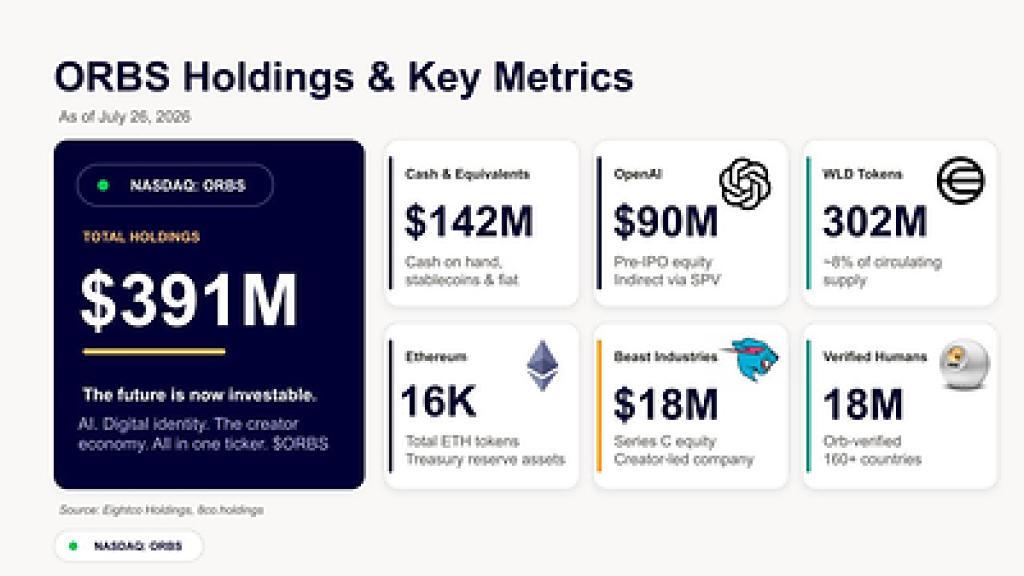
Eightco Holdings (NASDAQ: ORBS) Announces its Participation in World Foundation’s $52.5M funding round as World Shifts From Building the Network to Scaling Utility