A trader deposited $16.6 million in USDC into Hyperliquid and opened a long position on SPCX, a tokenized asset tracking the S&P 500, according to on-chain intelligence flagged by blockchain analytics firm Arkham.
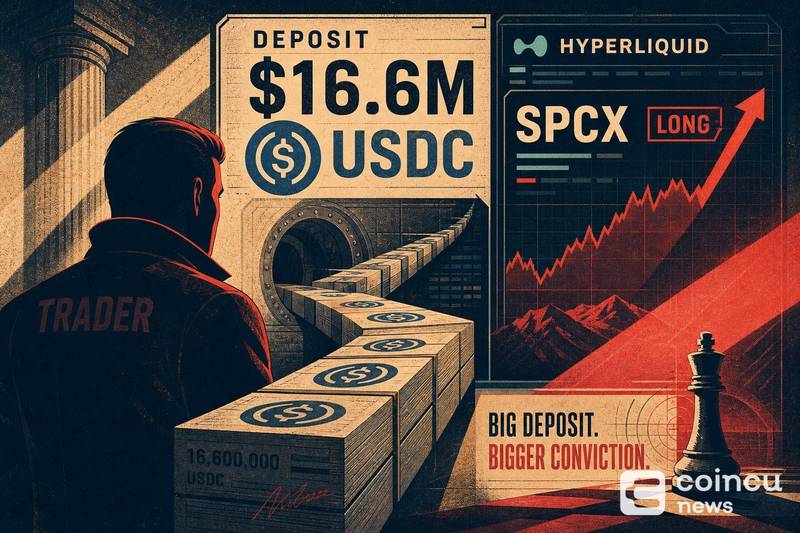
The deposit was identified through Arkham’s on-chain tracking, which monitors large wallet movements across decentralized platforms. The size of the transfer, $16.6 million in a single stablecoin deposit, places it among notable individual trades on the platform.
A $16.6 Million Bet on Tokenized Equities via Hyperliquid
Hyperliquid operates as a decentralized perpetual futures exchange, allowing traders to take leveraged long or short positions without intermediaries. The platform has attracted significant volume from traders seeking on-chain derivatives exposure.
After depositing the USDC, the trader opened a long position on SPCX. Going long means the trader profits if the price of the asset rises, reflecting a bullish directional bet on the tokenized S&P 500 instrument.
SPCX is one of several tokenized equity products that have emerged as decentralized exchanges expand beyond pure crypto assets. The choice to use Hyperliquid for this trade, rather than a centralized exchange or traditional brokerage, suggests a preference for on-chain execution and the transparency that comes with it. This mirrors a broader trend where platforms are beginning to support tokenized U.S. stocks and other traditional financial instruments on blockchain rails.
Why a Single Trade Is Drawing Market Attention
A $16.6 million stablecoin deposit from a single wallet is large enough to register as a whale-sized move. In decentralized derivatives markets, where liquidity can be thinner than on centralized venues, trades of this scale can influence short-term price action and funding rates.
The deposit also signals confidence in Hyperliquid as an execution venue. The platform has grown its total value locked substantially as traders migrate to decentralized alternatives. Large deposits like this one serve as a proxy for institutional or sophisticated trader interest in the protocol.
Whale tracking has become a core part of crypto market analysis. On-chain intelligence firms like Arkham surface these moves in near real-time, giving retail traders visibility into positioning that would be invisible in traditional markets. The growing interest in on-chain trading transparency also connects to developments like new cashback incentive programs designed to attract volume to crypto trading platforms.
What Traders Should Watch Next
The immediate question is whether the trader adds to the SPCX long, reduces the position, or closes it entirely. Position management after entry often reveals more about conviction than the initial trade itself.
Liquidation risk is another factor. Without confirmed leverage details, the exact liquidation price is unknown, but large leveraged longs on any asset carry the risk of forced closure if the price moves against the position. Traders monitoring this wallet will want to watch for margin adjustments or additional USDC deposits.
Market reaction on Hyperliquid’s SPCX order book could also provide signals. If other traders follow the whale into a long position, it may create a short-term momentum effect. Conversely, if counterparties pile into the short side, funding rates could shift, increasing the cost of holding the long.
The trade also fits within a larger narrative around tokenized traditional assets gaining traction in crypto markets. As more platforms list equity-linked instruments, large directional bets like this one may become more common, particularly from traders who see tokenized products as a way to access traditional markets with on-chain settlement. Firms like Metaplanet have been acquiring securities firms to bridge the gap between traditional finance and crypto infrastructure.
FAQ
What is Hyperliquid?
Hyperliquid is a decentralized perpetual futures exchange that allows traders to open leveraged long and short positions on various assets. It operates on-chain, meaning trades and deposits are publicly verifiable through blockchain data.
What does going long mean?
Going long means a trader is betting that the price of an asset will increase. If the price rises, the trader profits; if it falls, the trader loses money. In leveraged markets, both gains and losses are amplified.
Why does a large USDC deposit matter?
A $16.6 million single-wallet deposit stands out because it indicates a high-conviction trade from a well-capitalized participant. In decentralized markets, deposits of this size can affect liquidity conditions and signal broader sentiment shifts.
Why do traders monitor whale-sized positions?
Large trades from individual wallets often precede or coincide with notable price moves. On-chain analytics firms track these movements to give the broader market early visibility into how major participants are positioning themselves.
Disclaimer: This article is for informational purposes only and does not constitute financial or investment advice. Cryptocurrency and digital asset markets carry significant risk. Always do your own research before making decisions.
No tags available.


Other Posts








- China, US Conclude Trade Talks with Focus on Cooperation
- Crypto Weekly: NYSE Backs OKX, Kraken Gets Fed Access, BTC Sells
- Court Upholds Fed’s Rejection of Custodia Bank’s Request
- Former CFO Convicted for $35M Fraudulent Crypto Investment
- DeriW Launches Edge Hour Trading Competition Platform for Derivatives Traders
- Michael Saylor Denies Bitcoin Sell-Off Amid Large BTC Transfer
- Buy Dogecoin on eToro: Step-by-Step Guide for Beginners (2024)
- Kazakhstan Explores Crypto Reserves Backed by National Funds
- JPMorgan Increases Holdings in BlackRock’s Bitcoin ETF
- Nordea Bank Introduces Bitcoin ETP Trading for Nordic Customers
- XRP Spot ETF Launches on Nasdaq Amid Market Fluctuations
- Peter Schiff Challenges Michael Saylor on MSTR’s Business Model
- Thailand Orders Worldcoin to Delete 1.2 Million Biometric Records
- UK Proposes New DeFi Tax Framework to Ease User Burden
- WLFI Under Fire: Analyst Warns Hyperliquid Could Be Next
- Ancient Ethereum Whale Moves $1.19 Billion After Decade
- BlackRock Receives Large Crypto Transfers from Coinbase
- SEC Scrutiny on ALT5 Sigma’s Leadership Disclosure Timing
- Yala Injects $5.5 Million Amid Recovery Efforts
- Radiant Capital Faces $50M Loss in Major Security Breach
- China, US Conclude Trade Talks with Focus on Cooperation
- Crypto Weekly: NYSE Backs OKX, Kraken Gets Fed Access, BTC Sells
- Court Upholds Fed’s Rejection of Custodia Bank’s Request
- Former CFO Convicted for $35M Fraudulent Crypto Investment
- DeriW Launches Edge Hour Trading Competition Platform for Derivatives Traders
- Michael Saylor Denies Bitcoin Sell-Off Amid Large BTC Transfer
- Buy Dogecoin on eToro: Step-by-Step Guide for Beginners (2024)
- Kazakhstan Explores Crypto Reserves Backed by National Funds
- JPMorgan Increases Holdings in BlackRock’s Bitcoin ETF
- Nordea Bank Introduces Bitcoin ETP Trading for Nordic Customers
- XRP Spot ETF Launches on Nasdaq Amid Market Fluctuations
- Peter Schiff Challenges Michael Saylor on MSTR’s Business Model
- Thailand Orders Worldcoin to Delete 1.2 Million Biometric Records
- UK Proposes New DeFi Tax Framework to Ease User Burden
- WLFI Under Fire: Analyst Warns Hyperliquid Could Be Next
- Ancient Ethereum Whale Moves $1.19 Billion After Decade
- BlackRock Receives Large Crypto Transfers from Coinbase
- SEC Scrutiny on ALT5 Sigma’s Leadership Disclosure Timing
- Yala Injects $5.5 Million Amid Recovery Efforts
- Radiant Capital Faces $50M Loss in Major Security Breach
- China, US Conclude Trade Talks with Focus on Cooperation
- Crypto Weekly: NYSE Backs OKX, Kraken Gets Fed Access, BTC Sells
- Court Upholds Fed’s Rejection of Custodia Bank’s Request
- Former CFO Convicted for $35M Fraudulent Crypto Investment
- DeriW Launches Edge Hour Trading Competition Platform for Derivatives Traders
- Michael Saylor Denies Bitcoin Sell-Off Amid Large BTC Transfer
- Buy Dogecoin on eToro: Step-by-Step Guide for Beginners (2024)
- Kazakhstan Explores Crypto Reserves Backed by National Funds
- JPMorgan Increases Holdings in BlackRock’s Bitcoin ETF
- Nordea Bank Introduces Bitcoin ETP Trading for Nordic Customers
- XRP Spot ETF Launches on Nasdaq Amid Market Fluctuations
- Peter Schiff Challenges Michael Saylor on MSTR’s Business Model
- Thailand Orders Worldcoin to Delete 1.2 Million Biometric Records
- UK Proposes New DeFi Tax Framework to Ease User Burden
- WLFI Under Fire: Analyst Warns Hyperliquid Could Be Next
- Ancient Ethereum Whale Moves $1.19 Billion After Decade
- BlackRock Receives Large Crypto Transfers from Coinbase
- SEC Scrutiny on ALT5 Sigma’s Leadership Disclosure Timing
- Yala Injects $5.5 Million Amid Recovery Efforts
- Radiant Capital Faces $50M Loss in Major Security Breach


BlackRock ETF Wallet Moves $271M in BTC and ETH to Coinbase Prime

Whale Withdraws 30,244 ETH Worth $57.8M From Binance in One Week
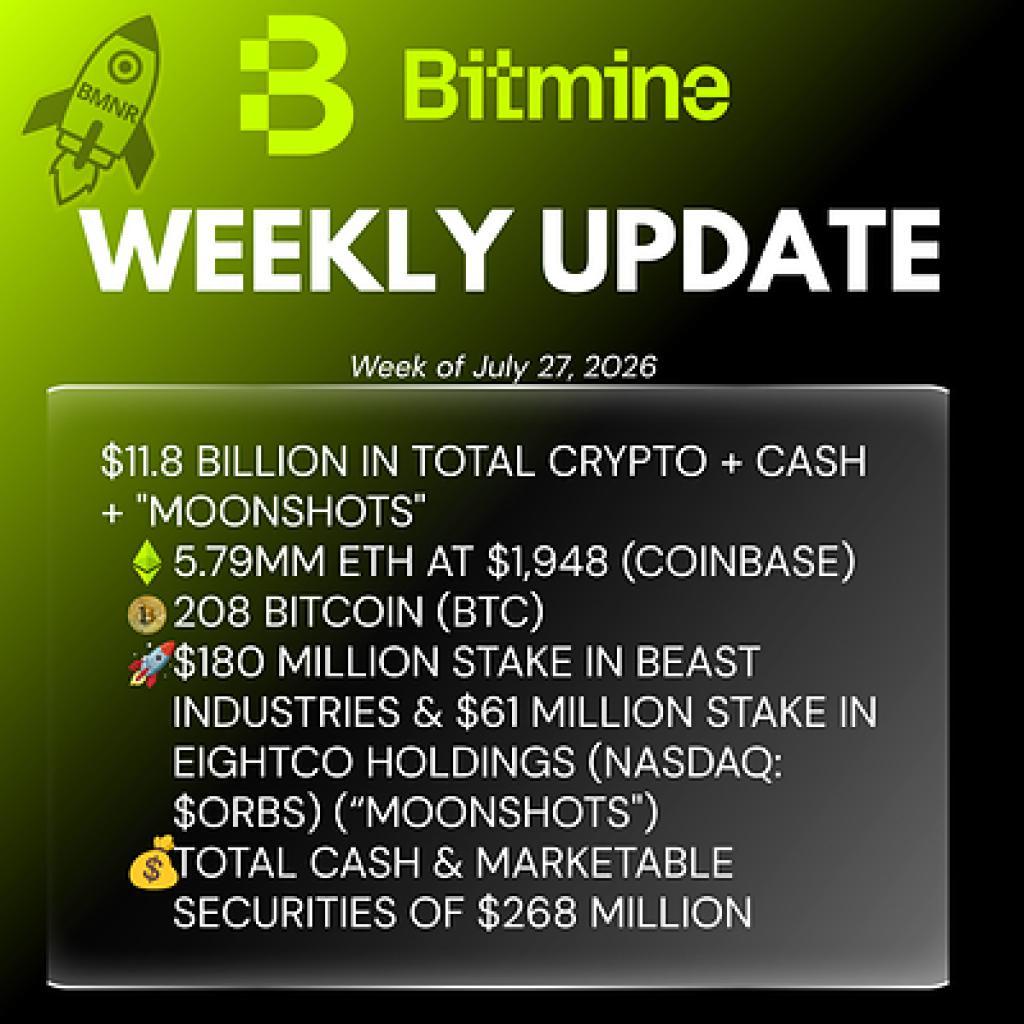
Bitmine Immersion Technologies (BMNR) Announces ETH Holdings Reach 5.79 Million Tokens, and Total Crypto and Total Cash Holdings of $11.8 Billion