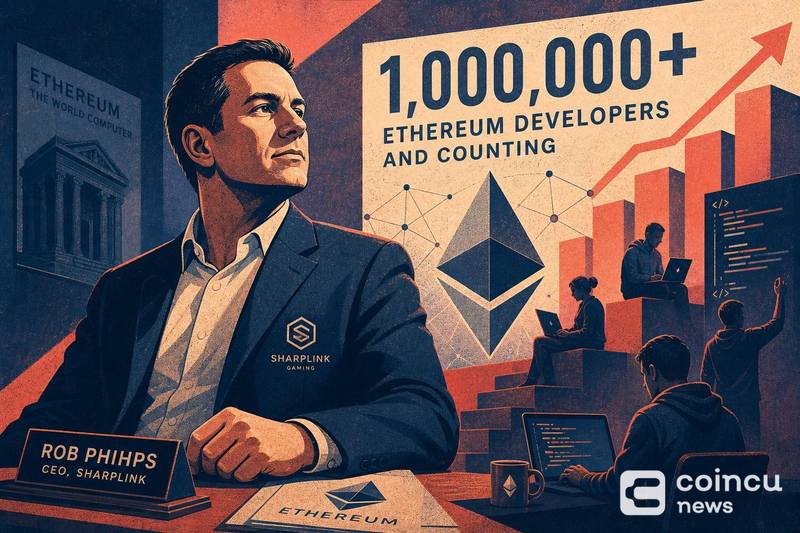
SharpLink Gaming CEO Joe Chalom recently drew attention to a claim that Ethereum’s developer count has surpassed 1 million, raising questions about what the milestone actually means and how the crypto community should interpret it.
What Did the SharpLink CEO Say About Ethereum Developers?
Chalom shared his perspective on the Ethereum developer milestone in a post on X, responding to a broader discussion about the significance of Ethereum’s growing builder base.
The conversation was prompted by a related post from @ethereumJoseph highlighting the 1 million developer figure. The framing centered not on the raw number itself, but on how to properly understand what it signals for the Ethereum ecosystem.
The claim appears to reference data from Developer Report’s Ethereum ecosystem page, which tracks developer activity across blockchain networks. However, the precise methodology behind the figure, whether it counts cumulative contributors, monthly active developers, or some other metric, remains a critical distinction that changes the weight of the milestone entirely.
Why the 1 Million Developer Milestone Matters for Ethereum
Developer activity is widely considered one of the strongest leading indicators of blockchain ecosystem health. More builders typically translate into more applications, more tooling, and deeper infrastructure, all of which reinforce network effects over time.
For Ethereum specifically, a large developer base supports the chain’s position as the primary smart contract platform. Projects tracking cross-chain developer metrics have consistently shown Ethereum leading other Layer 1 networks in total contributor counts.
A deep developer ecosystem also underpins the DeFi and token infrastructure that institutional players increasingly rely on. Broader institutional interest in Ethereum-based assets, including developments like projections for Ethereum-native tokens such as UNI, reflects confidence that the network’s builder base can sustain long-term protocol innovation.
That said, a symbolic milestone like 1 million developers should not be confused with a direct catalyst for price action. The relationship between developer growth and short-term market moves is indirect at best, something investors watching metrics like Ethereum open interest shifts would already understand.
How Should Investors and Crypto Readers Interpret This Signal?
The 1 million figure, if accurate, suggests sustained developer confidence in Ethereum as a building platform. This is structurally meaningful for long-term ecosystem resilience, particularly as competition from alternative Layer 1 and Layer 2 networks intensifies.
However, the signal requires context that is not yet fully available. Whether these are active monthly contributors or all-time unique GitHub accounts changes the interpretation dramatically. A cumulative count includes developers who may have written a single commit years ago and never returned.
Investors and observers should treat this as a directional indicator rather than an actionable trading trigger. Developer ecosystem strength has historically correlated with protocol longevity and adoption, but the causal chain to token valuation runs through application usage, fee revenue, and network demand, none of which are guaranteed by headcount alone.
The question of self-custody and infrastructure ownership also intersects with developer growth. As industry voices have warned about ETF-driven custody centralization, a thriving developer community building open-source wallets and tools serves as a counterweight to institutional consolidation.
What Verification Is Still Needed?
Several questions remain unanswered before drawing broader conclusions from this milestone. The data source behind the claim needs independent verification, including clarity on the methodology used by Developer Report to count and categorize developers.
Readers should ask whether the metric covers only Ethereum mainnet or includes Layer 2 ecosystems built on top of it. The inclusion of Arbitrum, Optimism, Base, and other rollup developers would significantly inflate the number compared to a mainnet-only count.
Comparing this figure against prior benchmarks would also add perspective. Earlier developer reports from organizations like Electric Capital have tracked Ethereum’s builder growth over multiple years, and placing the number in that trajectory would clarify whether this represents accelerating growth or a natural continuation of existing trends.
The SharpLink CEO’s framing, asking how to understand the number rather than simply celebrating it, is the right instinct. A milestone without methodological transparency is a headline, not a conclusion.
Disclaimer: This article is for informational purposes only and does not constitute financial or investment advice. Cryptocurrency and digital asset markets carry significant risk. Always do your own research before making decisions.
No tags available.


Other Posts








- China, US Conclude Trade Talks with Focus on Cooperation
- Crypto Weekly: NYSE Backs OKX, Kraken Gets Fed Access, BTC Sells
- DeriW Launches Edge Hour Trading Competition Platform for Derivatives Traders
- Court Upholds Fed’s Rejection of Custodia Bank’s Request
- Former CFO Convicted for $35M Fraudulent Crypto Investment
- Michael Saylor Denies Bitcoin Sell-Off Amid Large BTC Transfer
- Kazakhstan Explores Crypto Reserves Backed by National Funds
- JPMorgan Increases Holdings in BlackRock’s Bitcoin ETF
- Nordea Bank Introduces Bitcoin ETP Trading for Nordic Customers
- Buy Dogecoin on eToro: Step-by-Step Guide for Beginners (2024)
- XRP Spot ETF Launches on Nasdaq Amid Market Fluctuations
- Crypto Leaders Address Macro Volatility Amid Market Shifts
- Peter Schiff Challenges Michael Saylor on MSTR’s Business Model
- Thailand Orders Worldcoin to Delete 1.2 Million Biometric Records
- UK Proposes New DeFi Tax Framework to Ease User Burden
- WLFI Under Fire: Analyst Warns Hyperliquid Could Be Next
- Ancient Ethereum Whale Moves $1.19 Billion After Decade
- BlackRock Receives Large Crypto Transfers from Coinbase
- SEC Scrutiny on ALT5 Sigma’s Leadership Disclosure Timing
- MoonPay Gains Trust License for Crypto Operations in New York
- China, US Conclude Trade Talks with Focus on Cooperation
- Crypto Weekly: NYSE Backs OKX, Kraken Gets Fed Access, BTC Sells
- DeriW Launches Edge Hour Trading Competition Platform for Derivatives Traders
- Court Upholds Fed’s Rejection of Custodia Bank’s Request
- Former CFO Convicted for $35M Fraudulent Crypto Investment
- Michael Saylor Denies Bitcoin Sell-Off Amid Large BTC Transfer
- Kazakhstan Explores Crypto Reserves Backed by National Funds
- JPMorgan Increases Holdings in BlackRock’s Bitcoin ETF
- Nordea Bank Introduces Bitcoin ETP Trading for Nordic Customers
- Buy Dogecoin on eToro: Step-by-Step Guide for Beginners (2024)
- XRP Spot ETF Launches on Nasdaq Amid Market Fluctuations
- Crypto Leaders Address Macro Volatility Amid Market Shifts
- Peter Schiff Challenges Michael Saylor on MSTR’s Business Model
- Thailand Orders Worldcoin to Delete 1.2 Million Biometric Records
- UK Proposes New DeFi Tax Framework to Ease User Burden
- WLFI Under Fire: Analyst Warns Hyperliquid Could Be Next
- Ancient Ethereum Whale Moves $1.19 Billion After Decade
- BlackRock Receives Large Crypto Transfers from Coinbase
- SEC Scrutiny on ALT5 Sigma’s Leadership Disclosure Timing
- MoonPay Gains Trust License for Crypto Operations in New York
- China, US Conclude Trade Talks with Focus on Cooperation
- Crypto Weekly: NYSE Backs OKX, Kraken Gets Fed Access, BTC Sells
- DeriW Launches Edge Hour Trading Competition Platform for Derivatives Traders
- Court Upholds Fed’s Rejection of Custodia Bank’s Request
- Former CFO Convicted for $35M Fraudulent Crypto Investment
- Michael Saylor Denies Bitcoin Sell-Off Amid Large BTC Transfer
- Kazakhstan Explores Crypto Reserves Backed by National Funds
- JPMorgan Increases Holdings in BlackRock’s Bitcoin ETF
- Nordea Bank Introduces Bitcoin ETP Trading for Nordic Customers
- Buy Dogecoin on eToro: Step-by-Step Guide for Beginners (2024)
- XRP Spot ETF Launches on Nasdaq Amid Market Fluctuations
- Crypto Leaders Address Macro Volatility Amid Market Shifts
- Peter Schiff Challenges Michael Saylor on MSTR’s Business Model
- Thailand Orders Worldcoin to Delete 1.2 Million Biometric Records
- UK Proposes New DeFi Tax Framework to Ease User Burden
- WLFI Under Fire: Analyst Warns Hyperliquid Could Be Next
- Ancient Ethereum Whale Moves $1.19 Billion After Decade
- BlackRock Receives Large Crypto Transfers from Coinbase
- SEC Scrutiny on ALT5 Sigma’s Leadership Disclosure Timing
- MoonPay Gains Trust License for Crypto Operations in New York


Standard Chartered Says Uniswap’s UNI Could Reach $100 by 2030

Trezor Executive Warns Bitcoin ETFs Could Undermine Self-Custody

Wallet V Launches Public Performance Benchmark for AI Trading Agents on Hyperliquid and Aster

NyesteCasino.com Reports: iGaming Industry Navigates Dual Pressures of Regulation and Growth