ETH 8-Hour Average Funding Rate Falls to -0.0048% Across the Market
ETH’s 8-hour average funding rate across the market has fallen to -0.0048%, pointing to a mild bearish tilt in perpetual futures positioning for Ethereum.
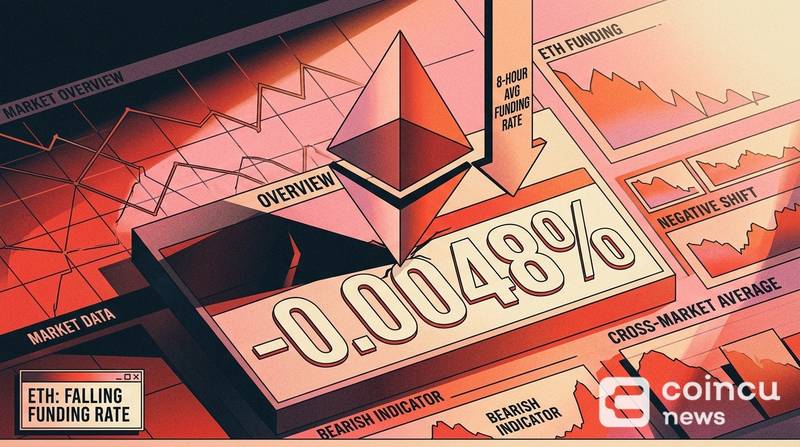
The reading, tracked as a market-wide average across major exchanges rather than a single-venue figure, reflects the cost perpetual futures traders pay to hold positions. A negative funding rate means short sellers are paying longs, which typically signals that bearish or hedging demand is outpacing bullish leverage in the derivatives market.
What ETH’s -0.0048% 8-Hour Funding Rate Means
Perpetual futures contracts have no expiry date, so exchanges use a funding rate mechanism to keep contract prices anchored to the spot price. Every eight hours, one side of the trade pays the other. When funding is positive, longs pay shorts. When it turns negative, shorts pay longs.
At -0.0048% per 8-hour period, the magnitude is small, but the direction matters more than the size for sentiment reading. The figure represents an average across multiple exchanges, not a single-platform anomaly.
Because an isolated imbalance on one exchange’s order book would not drag the cross-market average into negative territory, the breadth of this reading gives it added weight as a positioning signal.
Why Negative Funding Can Signal Bearish ETH Positioning
A negative ETH funding rate generally indicates that traders holding short positions outnumber or outsize those holding longs. Shorts are dominant enough to be paying a premium to maintain their exposure, which reflects cautious or bearish sentiment in the derivatives layer.
The across-market nature of the average suggests the pressure is broad-based. This distinguishes it from exchange-specific quirks that occasionally produce outlier prints on a single venue.
That said, funding rate readings are sentiment indicators, not directional guarantees. A mildly negative rate can persist for days without translating into a spot price decline, and it can reverse within a single funding interval if new long demand enters the market. Derivatives positioning shapes short-term volatility, but spot flows and macro catalysts often override it.
What May Be Driving ETH Funding Lower Across Exchanges
Without a confirmed external catalyst, several mechanics could explain the shift. Increased short exposure is the most direct explanation: traders opening new short positions or adding to existing ones would push funding negative as exchanges incentivize the other side of the trade.
Alternatively, long unwinding can produce the same effect. If leveraged longs close positions and reduce demand for upside exposure, the balance tilts toward shorts even without aggressive new bearish bets. This scenario often accompanies periods of reduced risk appetite across crypto derivatives.
The development comes as exchanges continue expanding their perpetual contract offerings. OKX recently announced plans to launch new stock perpetual contracts, reflecting the broader growth of derivatives infrastructure that makes funding rate signals increasingly relevant across asset classes.
Because the reading is a market-wide average, it is unlikely to stem from a single exchange’s matching engine quirk or a localized liquidation event. The pressure appears distributed across the Ethereum derivatives market.
Key Signals Traders Should Watch After the -0.0048% Reading
The most immediate question is whether the negative funding persists, deepens, or reverts. A single 8-hour print at the current level is notable but not extreme. If subsequent intervals show the rate moving further negative, it would reinforce the bearish positioning thesis.
A quick flip back to positive territory would suggest the short-side pressure was temporary, possibly tied to hedging activity rather than a sustained directional bet. Traders can look for confirmation or divergence between derivatives signals and spot price action.
Open interest is a useful companion metric. Rising open interest alongside deepening negative funding would indicate new short positions are being opened. Flat or declining open interest with negative funding points more toward long liquidation or position reduction.
Liquidation data adds another layer. If funding stays negative but spot price rises, crowded shorts face mounting unrealized losses. That setup can trigger a short squeeze, where forced buybacks accelerate the move higher. Events like circuit breakers on traditional exchanges illustrate how crowded positioning can amplify volatility when it unwinds.
Broader ecosystem developments on Ethereum, from gaming expansions building on the network to DeFi protocol activity, can also shift derivatives sentiment if they alter expectations around network demand and ETH utility.
FAQ About ETH Funding Rate and Market Sentiment
What is an ETH funding rate?
It is a periodic payment exchanged between long and short holders of ETH perpetual futures contracts. The rate keeps the perpetual contract price close to the spot price by incentivizing the less popular side of the trade.
Is a negative funding rate bullish or bearish?
A negative rate reflects bearish or cautious positioning in derivatives markets, since shorts are dominant enough to pay longs. However, it is a sentiment snapshot, not a price forecast. Negative funding has historically preceded both continued declines and sharp short squeezes.
Why does an 8-hour average matter?
Most major exchanges settle funding every eight hours. An 8-hour average smooths out intra-period noise and gives a cleaner read on whether the positioning bias is sustained across a full settlement cycle rather than a momentary blip.
Can negative funding lead to a short squeeze?
Yes. When funding is negative and a large share of open interest sits on the short side, a spot price increase can force short sellers to close positions by buying back. That buying pressure can accelerate the price move, creating a feedback loop known as a short squeeze.
Disclaimer: This article is for informational purposes only and does not constitute financial or investment advice. Cryptocurrency and digital asset markets carry significant risk. Always do your own research before making decisions.
No tags available.


Other Posts








- China, US Conclude Trade Talks with Focus on Cooperation
- Crypto Weekly: NYSE Backs OKX, Kraken Gets Fed Access, BTC Sells
- Court Upholds Fed’s Rejection of Custodia Bank’s Request
- Former CFO Convicted for $35M Fraudulent Crypto Investment
- DeriW Launches Edge Hour Trading Competition Platform for Derivatives Traders
- Michael Saylor Denies Bitcoin Sell-Off Amid Large BTC Transfer
- Buy Dogecoin on eToro: Step-by-Step Guide for Beginners (2024)
- Kazakhstan Explores Crypto Reserves Backed by National Funds
- JPMorgan Increases Holdings in BlackRock’s Bitcoin ETF
- Nordea Bank Introduces Bitcoin ETP Trading for Nordic Customers
- XRP Spot ETF Launches on Nasdaq Amid Market Fluctuations
- Peter Schiff Challenges Michael Saylor on MSTR’s Business Model
- Thailand Orders Worldcoin to Delete 1.2 Million Biometric Records
- UK Proposes New DeFi Tax Framework to Ease User Burden
- WLFI Under Fire: Analyst Warns Hyperliquid Could Be Next
- Ancient Ethereum Whale Moves $1.19 Billion After Decade
- BlackRock Receives Large Crypto Transfers from Coinbase
- SEC Scrutiny on ALT5 Sigma’s Leadership Disclosure Timing
- Yala Injects $5.5 Million Amid Recovery Efforts
- Radiant Capital Faces $50M Loss in Major Security Breach
- China, US Conclude Trade Talks with Focus on Cooperation
- Crypto Weekly: NYSE Backs OKX, Kraken Gets Fed Access, BTC Sells
- Court Upholds Fed’s Rejection of Custodia Bank’s Request
- Former CFO Convicted for $35M Fraudulent Crypto Investment
- DeriW Launches Edge Hour Trading Competition Platform for Derivatives Traders
- Michael Saylor Denies Bitcoin Sell-Off Amid Large BTC Transfer
- Buy Dogecoin on eToro: Step-by-Step Guide for Beginners (2024)
- Kazakhstan Explores Crypto Reserves Backed by National Funds
- JPMorgan Increases Holdings in BlackRock’s Bitcoin ETF
- Nordea Bank Introduces Bitcoin ETP Trading for Nordic Customers
- XRP Spot ETF Launches on Nasdaq Amid Market Fluctuations
- Peter Schiff Challenges Michael Saylor on MSTR’s Business Model
- Thailand Orders Worldcoin to Delete 1.2 Million Biometric Records
- UK Proposes New DeFi Tax Framework to Ease User Burden
- WLFI Under Fire: Analyst Warns Hyperliquid Could Be Next
- Ancient Ethereum Whale Moves $1.19 Billion After Decade
- BlackRock Receives Large Crypto Transfers from Coinbase
- SEC Scrutiny on ALT5 Sigma’s Leadership Disclosure Timing
- Yala Injects $5.5 Million Amid Recovery Efforts
- Radiant Capital Faces $50M Loss in Major Security Breach
- China, US Conclude Trade Talks with Focus on Cooperation
- Crypto Weekly: NYSE Backs OKX, Kraken Gets Fed Access, BTC Sells
- Court Upholds Fed’s Rejection of Custodia Bank’s Request
- Former CFO Convicted for $35M Fraudulent Crypto Investment
- DeriW Launches Edge Hour Trading Competition Platform for Derivatives Traders
- Michael Saylor Denies Bitcoin Sell-Off Amid Large BTC Transfer
- Buy Dogecoin on eToro: Step-by-Step Guide for Beginners (2024)
- Kazakhstan Explores Crypto Reserves Backed by National Funds
- JPMorgan Increases Holdings in BlackRock’s Bitcoin ETF
- Nordea Bank Introduces Bitcoin ETP Trading for Nordic Customers
- XRP Spot ETF Launches on Nasdaq Amid Market Fluctuations
- Peter Schiff Challenges Michael Saylor on MSTR’s Business Model
- Thailand Orders Worldcoin to Delete 1.2 Million Biometric Records
- UK Proposes New DeFi Tax Framework to Ease User Burden
- WLFI Under Fire: Analyst Warns Hyperliquid Could Be Next
- Ancient Ethereum Whale Moves $1.19 Billion After Decade
- BlackRock Receives Large Crypto Transfers from Coinbase
- SEC Scrutiny on ALT5 Sigma’s Leadership Disclosure Timing
- Yala Injects $5.5 Million Amid Recovery Efforts
- Radiant Capital Faces $50M Loss in Major Security Breach


BTC Price at $61,359 Could Trigger $667M in Long Liquidations: CEX Data

DOG Mode Relaxes Bitcoin Forwarding Policy Without Changing Consensus Rules

Numerai Completes Third Strategic NMR Buyback, Bringing Total Repurchases to $3.2 Million
ether.fi Partners with Nexus Mutual to Protect Against ETH Slashing at Institutional Scale