Binance recorded $43.79 million in net USDT outflows within a single hour, drawing immediate attention to short-term stablecoin movement on the world’s largest cryptocurrency exchange by trading volume.
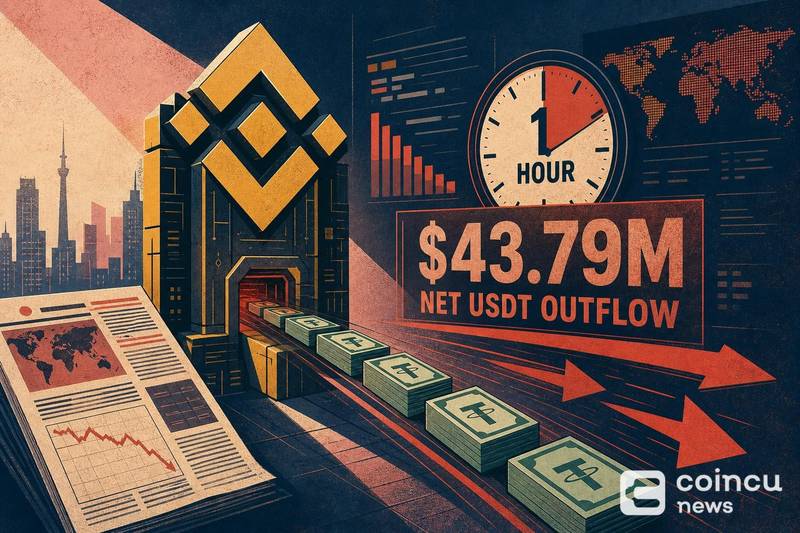
The figure, tracked via Coinglass spot inflow and outflow data, represents the net difference between USDT deposits and withdrawals on Binance during the observed window. Net outflows of this size in a compressed timeframe tend to attract scrutiny from traders monitoring exchange-level stablecoin balances.
Key Takeaways
- Binance logged $43.79 million in net USDT outflows in a single one-hour window.
- The metric reflects the balance between deposits and withdrawals, not total transfer volume.
- A single hourly reading does not confirm motive or market direction on its own.
What Net USDT Outflows Mean on a Major Crypto Exchange
Net outflows occur when more USDT leaves an exchange than enters it over a given period. The metric captures the directional balance between deposits and withdrawals, not the gross volume of transfers in either direction.
Stablecoin balances on major exchanges are closely watched because they can reflect changes in trading activity or user positioning. A decline in USDT held on an exchange may suggest users are moving funds to self-custody wallets, transferring to other platforms, or converting into other assets.
However, a single net outflow reading does not confirm any particular motive. Exchange wallets regularly process large internal transfers, settlement movements, and institutional rebalancing that can produce temporary spikes in outflow data without signaling broader market shifts. Traders tracking metrics like funding rate averages across exchanges often combine multiple data points before drawing conclusions.
Why Stablecoin Balances Matter to Market Watchers
USDT is the most widely used stablecoin for trading pairs on centralized exchanges. When large volumes of USDT leave an exchange, it can reduce the available liquidity for spot and derivatives trading on that platform.
That said, stablecoin outflows are only one signal among many. Exchange reserves, order book depth, and funding rates all contribute to a fuller picture of market conditions. No single metric alone explains market direction.
Why the One-Hour Window Matters for Trader Sentiment
The one-hour timeframe is what makes the outflow figure stand out. A similar net movement spread across a full trading day would attract far less notice. Concentration in a short window suggests either a small number of large transactions or a coordinated cluster of withdrawals.
Speed changes interpretation. The same dollar amount distributed over 24 hours would barely register on most exchange flow dashboards. Compressed into 60 minutes, it becomes a headline, even if the underlying cause is routine.
Short-Term Flow Events vs. Longer Trends
Short-duration flow events frequently appear and reverse within the same session. A single hourly reading can reflect scheduled transfers, over-the-counter settlement activity, or routine treasury management by large holders. Without follow-through in subsequent hours, the signal often fades.
Exchange flow patterns gain analytical weight when they persist across multiple sessions. Traders evaluating whether large capital movements signal broader repositioning typically wait for confirmation across several data windows before adjusting their outlook.
The Headline Does Not Confirm Motive
The data shows what moved, not why. The outflow could stem from a single institutional withdrawal, a batch of retail transfers, or an internal wallet restructuring by Binance itself. Attributing intent to a flow metric without additional context is speculative.
How to Read Binance Flow Data Without Overstating the Signal
This data point covers one exchange, one stablecoin, and one hour. That narrow scope supports observation, not broad conclusions about market direction or trader sentiment.
Binance processes the largest share of global crypto trading volume, which means its flow data naturally produces larger absolute numbers than smaller exchanges. The net outflow may represent a smaller percentage of Binance’s total stablecoin reserves than a much smaller outflow would on a mid-tier platform.
The Coinglass inflow and outflow dashboard provides a snapshot of exchange-level movement but does not reveal the identity, intent, or destination of the funds involved. Readers should distinguish between observing a data point and explaining it.
What to Watch Next
What matters now is whether subsequent hourly and daily readings confirm a trend or whether this reading reverts. Sustained outflows over multiple sessions carry more analytical weight than a single spike.
Traders watching Binance stablecoin reserves will be looking at follow-up data in the hours and days ahead. Events across the broader market, including developments like high-profile activity on crypto-adjacent platforms, can shift attention quickly, making timely follow-up on flow data essential for accurate interpretation.
FAQ About Binance Net USDT Outflows
What do net USDT outflows mean?
Net USDT outflows indicate that more Tether left an exchange than was deposited during the measured period. It is a directional metric, not a measure of total activity.
Why are Binance flows closely watched?
Binance handles the largest share of global crypto spot trading volume. Stablecoin movements on the platform can reflect shifts in positioning across a significant portion of the market.
Does one hour of outflows automatically signal bearish pressure?
No. A single hourly outflow reading can result from routine treasury operations, internal wallet transfers, or institutional settlements. One data point does not establish a trend, and outflow spikes frequently reverse in following sessions.
Disclaimer: This article is for informational purposes only and does not constitute financial or investment advice. Cryptocurrency and digital asset markets carry significant risk. Always do your own research before making decisions.
No tags available.


Other Posts








- China, US Conclude Trade Talks with Focus on Cooperation
- Crypto Weekly: NYSE Backs OKX, Kraken Gets Fed Access, BTC Sells
- DeriW Launches Edge Hour Trading Competition Platform for Derivatives Traders
- Court Upholds Fed’s Rejection of Custodia Bank’s Request
- Former CFO Convicted for $35M Fraudulent Crypto Investment
- Michael Saylor Denies Bitcoin Sell-Off Amid Large BTC Transfer
- Kazakhstan Explores Crypto Reserves Backed by National Funds
- Buy Dogecoin on eToro: Step-by-Step Guide for Beginners (2024)
- JPMorgan Increases Holdings in BlackRock’s Bitcoin ETF
- Nordea Bank Introduces Bitcoin ETP Trading for Nordic Customers
- XRP Spot ETF Launches on Nasdaq Amid Market Fluctuations
- Crypto Leaders Address Macro Volatility Amid Market Shifts
- Peter Schiff Challenges Michael Saylor on MSTR’s Business Model
- Thailand Orders Worldcoin to Delete 1.2 Million Biometric Records
- UK Proposes New DeFi Tax Framework to Ease User Burden
- WLFI Under Fire: Analyst Warns Hyperliquid Could Be Next
- Ancient Ethereum Whale Moves $1.19 Billion After Decade
- BlackRock Receives Large Crypto Transfers from Coinbase
- SEC Scrutiny on ALT5 Sigma’s Leadership Disclosure Timing
- MoonPay Gains Trust License for Crypto Operations in New York
- China, US Conclude Trade Talks with Focus on Cooperation
- Crypto Weekly: NYSE Backs OKX, Kraken Gets Fed Access, BTC Sells
- DeriW Launches Edge Hour Trading Competition Platform for Derivatives Traders
- Court Upholds Fed’s Rejection of Custodia Bank’s Request
- Former CFO Convicted for $35M Fraudulent Crypto Investment
- Michael Saylor Denies Bitcoin Sell-Off Amid Large BTC Transfer
- Kazakhstan Explores Crypto Reserves Backed by National Funds
- Buy Dogecoin on eToro: Step-by-Step Guide for Beginners (2024)
- JPMorgan Increases Holdings in BlackRock’s Bitcoin ETF
- Nordea Bank Introduces Bitcoin ETP Trading for Nordic Customers
- XRP Spot ETF Launches on Nasdaq Amid Market Fluctuations
- Crypto Leaders Address Macro Volatility Amid Market Shifts
- Peter Schiff Challenges Michael Saylor on MSTR’s Business Model
- Thailand Orders Worldcoin to Delete 1.2 Million Biometric Records
- UK Proposes New DeFi Tax Framework to Ease User Burden
- WLFI Under Fire: Analyst Warns Hyperliquid Could Be Next
- Ancient Ethereum Whale Moves $1.19 Billion After Decade
- BlackRock Receives Large Crypto Transfers from Coinbase
- SEC Scrutiny on ALT5 Sigma’s Leadership Disclosure Timing
- MoonPay Gains Trust License for Crypto Operations in New York
- China, US Conclude Trade Talks with Focus on Cooperation
- Crypto Weekly: NYSE Backs OKX, Kraken Gets Fed Access, BTC Sells
- DeriW Launches Edge Hour Trading Competition Platform for Derivatives Traders
- Court Upholds Fed’s Rejection of Custodia Bank’s Request
- Former CFO Convicted for $35M Fraudulent Crypto Investment
- Michael Saylor Denies Bitcoin Sell-Off Amid Large BTC Transfer
- Kazakhstan Explores Crypto Reserves Backed by National Funds
- Buy Dogecoin on eToro: Step-by-Step Guide for Beginners (2024)
- JPMorgan Increases Holdings in BlackRock’s Bitcoin ETF
- Nordea Bank Introduces Bitcoin ETP Trading for Nordic Customers
- XRP Spot ETF Launches on Nasdaq Amid Market Fluctuations
- Crypto Leaders Address Macro Volatility Amid Market Shifts
- Peter Schiff Challenges Michael Saylor on MSTR’s Business Model
- Thailand Orders Worldcoin to Delete 1.2 Million Biometric Records
- UK Proposes New DeFi Tax Framework to Ease User Burden
- WLFI Under Fire: Analyst Warns Hyperliquid Could Be Next
- Ancient Ethereum Whale Moves $1.19 Billion After Decade
- BlackRock Receives Large Crypto Transfers from Coinbase
- SEC Scrutiny on ALT5 Sigma’s Leadership Disclosure Timing
- MoonPay Gains Trust License for Crypto Operations in New York

Trace Finance Raises $32 Million in Series A Round Led by CoinFund

Ionic Digital May Bitcoin Production Up 21.1%, Holdings Hit 2,861 BTC


First Block, Onpharma Company, and Crito Capital Announce First Solana Sto for U.S. Medical Device Business

Arman Tsarukyan Turns $1 Million Into $5.7 Million on Jack.com After One of the Biggest UFC Upsets of the Year