Bitcoin fell below $59,000 after declining 2.82% over a 24-hour period, breaking a key psychological price level that had served as near-term support for traders watching the largest cryptocurrency by market capitalization.
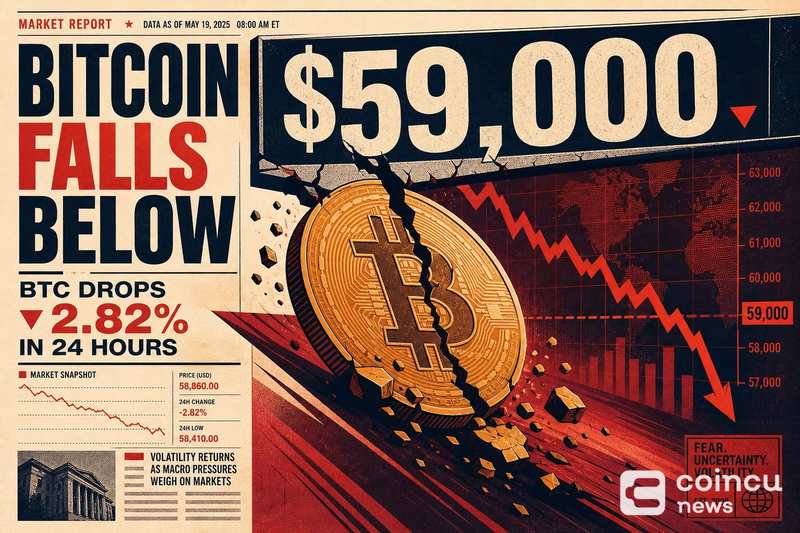
Bitcoin Breaks Below $59,000 on a 2.82% Daily Decline
BTC slipped under the $59,000 mark during a broad sell-off that pushed the price down 2.82% in 24 hours. The drop brought Bitcoin to its lowest level in recent sessions, putting short-term holders under pressure. For related coverage, see Strategy mNAV Falls Below 1 as Bitcoin Reserve Value Overtakes Market Cap.
The $59,000 level carries weight as a round-number threshold. When Bitcoin trades below such levels, it often triggers additional sell orders from traders using stop-losses clustered near psychologically significant prices.
The decline comes as the broader crypto market showed signs of risk-off positioning. Bitcoin’s move below this level follows a pattern familiar to traders, where previous drops below $60,000 similarly tested market conviction.
Possible Drivers Behind BTC’s Latest Pullback
No single confirmed catalyst explains the sell-off. However, several factors likely contributed to the downside pressure.
Profit-taking after failed attempts to break higher resistance levels is a common trigger for short-term pullbacks. When BTC stalls near resistance, traders who entered at lower levels often lock in gains, creating selling pressure that cascades through order books.
Liquidation events can amplify intraday moves. When leveraged long positions get liquidated during a downturn, forced selling deepens the decline beyond what organic spot selling alone would produce.
Broader risk sentiment across financial markets may have also weighed on crypto. Bitcoin has increasingly correlated with risk assets during periods of macro uncertainty, and any shift toward caution in traditional markets can spill into digital assets.
Market Reaction and Sentiment Impact
Sharp BTC declines tend to drag sentiment across the entire crypto market. Altcoins typically suffer amplified losses when Bitcoin breaks below major support levels, as traders reduce exposure across the board.
Volatility tends to increase when round-number supports are challenged. Traders watching the $59,000 level are now likely recalibrating positions, with some viewing the breakdown as a signal to reduce risk while others look for discounted entry points.
The move adds to a period of uncertainty for Bitcoin holders. Institutional activity around BTC has remained a focus, with events like BlackRock’s recent $344 million transfer of Bitcoin and Ether to Coinbase Prime drawing attention to how large players are positioning.
Meanwhile, questions about potential forced selling from major holders continue to hover over the market. Analysis from firms like Grayscale suggesting Strategy may need to sell up to $3 billion in Bitcoin to meet cash obligations has added a layer of caution.
Key Support and Resistance Levels to Watch
With BTC now trading below $59,000, that former support level becomes the first resistance to reclaim. A sustained move back above $59,000 would signal that the breakdown was a temporary flush rather than the start of a deeper correction.
If selling continues, traders will monitor lower support zones for signs of stabilization. The next area of interest sits near prior consolidation ranges below $59,000, where buying activity could emerge.
On the bullish side, reclaiming $59,000 quickly and holding above it on a daily close would suggest the sell-off was driven by short-term liquidation rather than a fundamental shift in market structure.
On the bearish side, failure to recover this level could invite further downside, particularly if rising mining difficulty continues to squeeze miner margins and increase selling pressure from that cohort.
FAQ About Bitcoin Falling Below $59,000
Is Bitcoin below $59,000 a bearish signal?
A break below $59,000 is a short-term bearish signal, but it does not necessarily confirm a longer-term trend reversal. The significance depends on whether BTC can reclaim this level quickly or continues to lose ground over subsequent sessions.
What could happen if BTC fails to recover $59,000?
If Bitcoin cannot reclaim $59,000 as support, sellers may push the price toward lower consolidation zones. Extended time below this level would likely increase bearish positioning and could trigger additional liquidations among leveraged traders.
Why do round-number price levels matter in crypto?
Round numbers like $59,000 or $60,000 act as psychological anchors where traders cluster stop-loss orders, take-profit targets, and limit orders. This concentration of orders around these levels makes them more likely to produce sharp reactions when breached.
Additional source references: source document 1.
Disclaimer: This article is for informational purposes only and does not constitute financial or investment advice. Cryptocurrency and digital asset markets carry significant risk. Always do your own research before making decisions.
No tags available.


Other Posts








- China, US Conclude Trade Talks with Focus on Cooperation
- Crypto Weekly: NYSE Backs OKX, Kraken Gets Fed Access, BTC Sells
- DeriW Launches Edge Hour Trading Competition Platform for Derivatives Traders
- Court Upholds Fed’s Rejection of Custodia Bank’s Request
- Former CFO Convicted for $35M Fraudulent Crypto Investment
- Michael Saylor Denies Bitcoin Sell-Off Amid Large BTC Transfer
- Buy Dogecoin on eToro: Step-by-Step Guide for Beginners (2024)
- Kazakhstan Explores Crypto Reserves Backed by National Funds
- JPMorgan Increases Holdings in BlackRock’s Bitcoin ETF
- Nordea Bank Introduces Bitcoin ETP Trading for Nordic Customers
- XRP Spot ETF Launches on Nasdaq Amid Market Fluctuations
- Crypto Leaders Address Macro Volatility Amid Market Shifts
- Peter Schiff Challenges Michael Saylor on MSTR’s Business Model
- Thailand Orders Worldcoin to Delete 1.2 Million Biometric Records
- UK Proposes New DeFi Tax Framework to Ease User Burden
- WLFI Under Fire: Analyst Warns Hyperliquid Could Be Next
- Ancient Ethereum Whale Moves $1.19 Billion After Decade
- BlackRock Receives Large Crypto Transfers from Coinbase
- SEC Scrutiny on ALT5 Sigma’s Leadership Disclosure Timing
- MoonPay Gains Trust License for Crypto Operations in New York
- China, US Conclude Trade Talks with Focus on Cooperation
- Crypto Weekly: NYSE Backs OKX, Kraken Gets Fed Access, BTC Sells
- DeriW Launches Edge Hour Trading Competition Platform for Derivatives Traders
- Court Upholds Fed’s Rejection of Custodia Bank’s Request
- Former CFO Convicted for $35M Fraudulent Crypto Investment
- Michael Saylor Denies Bitcoin Sell-Off Amid Large BTC Transfer
- Buy Dogecoin on eToro: Step-by-Step Guide for Beginners (2024)
- Kazakhstan Explores Crypto Reserves Backed by National Funds
- JPMorgan Increases Holdings in BlackRock’s Bitcoin ETF
- Nordea Bank Introduces Bitcoin ETP Trading for Nordic Customers
- XRP Spot ETF Launches on Nasdaq Amid Market Fluctuations
- Crypto Leaders Address Macro Volatility Amid Market Shifts
- Peter Schiff Challenges Michael Saylor on MSTR’s Business Model
- Thailand Orders Worldcoin to Delete 1.2 Million Biometric Records
- UK Proposes New DeFi Tax Framework to Ease User Burden
- WLFI Under Fire: Analyst Warns Hyperliquid Could Be Next
- Ancient Ethereum Whale Moves $1.19 Billion After Decade
- BlackRock Receives Large Crypto Transfers from Coinbase
- SEC Scrutiny on ALT5 Sigma’s Leadership Disclosure Timing
- MoonPay Gains Trust License for Crypto Operations in New York
- China, US Conclude Trade Talks with Focus on Cooperation
- Crypto Weekly: NYSE Backs OKX, Kraken Gets Fed Access, BTC Sells
- DeriW Launches Edge Hour Trading Competition Platform for Derivatives Traders
- Court Upholds Fed’s Rejection of Custodia Bank’s Request
- Former CFO Convicted for $35M Fraudulent Crypto Investment
- Michael Saylor Denies Bitcoin Sell-Off Amid Large BTC Transfer
- Buy Dogecoin on eToro: Step-by-Step Guide for Beginners (2024)
- Kazakhstan Explores Crypto Reserves Backed by National Funds
- JPMorgan Increases Holdings in BlackRock’s Bitcoin ETF
- Nordea Bank Introduces Bitcoin ETP Trading for Nordic Customers
- XRP Spot ETF Launches on Nasdaq Amid Market Fluctuations
- Crypto Leaders Address Macro Volatility Amid Market Shifts
- Peter Schiff Challenges Michael Saylor on MSTR’s Business Model
- Thailand Orders Worldcoin to Delete 1.2 Million Biometric Records
- UK Proposes New DeFi Tax Framework to Ease User Burden
- WLFI Under Fire: Analyst Warns Hyperliquid Could Be Next
- Ancient Ethereum Whale Moves $1.19 Billion After Decade
- BlackRock Receives Large Crypto Transfers from Coinbase
- SEC Scrutiny on ALT5 Sigma’s Leadership Disclosure Timing
- MoonPay Gains Trust License for Crypto Operations in New York


BlackRock Transfers About $344M in Bitcoin and Ether to Coinbase Prime

I Applied Hegel’s Dialectics to Crypto Markets. Here Is the 2027 Framework I Ended Up With

Autheo Introduces the Internet Operating System: A Decentralized Coordination Layer for Web, Blockchain, & AI
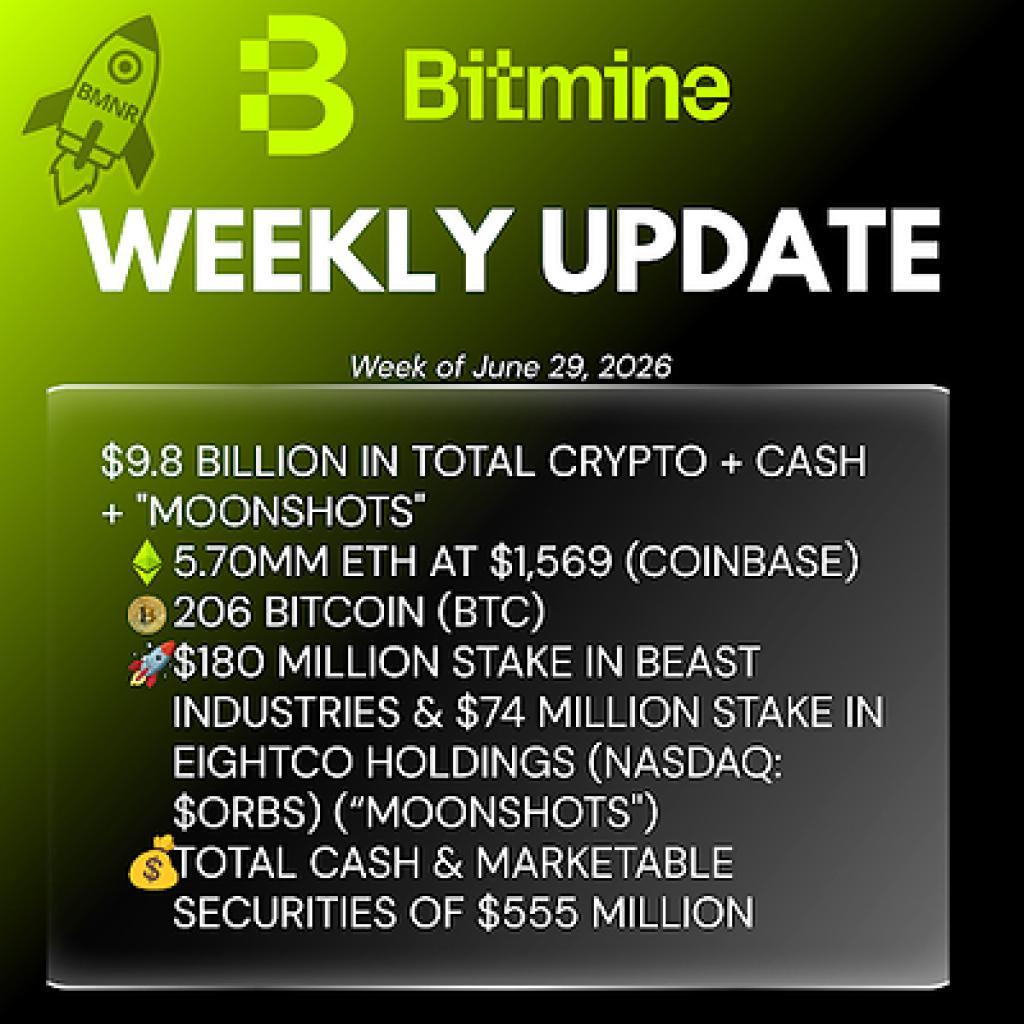
Bitmine Immersion Technologies (BMNR) Announces ETH Holdings Reach 5.70 Million Tokens, and Total Crypto and Total Cash Holdings of $9.8 Billion