Bolivia is reportedly considering integrating USDT, the dollar-pegged stablecoin issued by Tether, into its national payment system as the country grapples with a persistent shortage of physical U.S. dollars. The move, still at an exploratory stage rather than a confirmed policy, would mark a significant step for stablecoin adoption in Latin America if it advances.
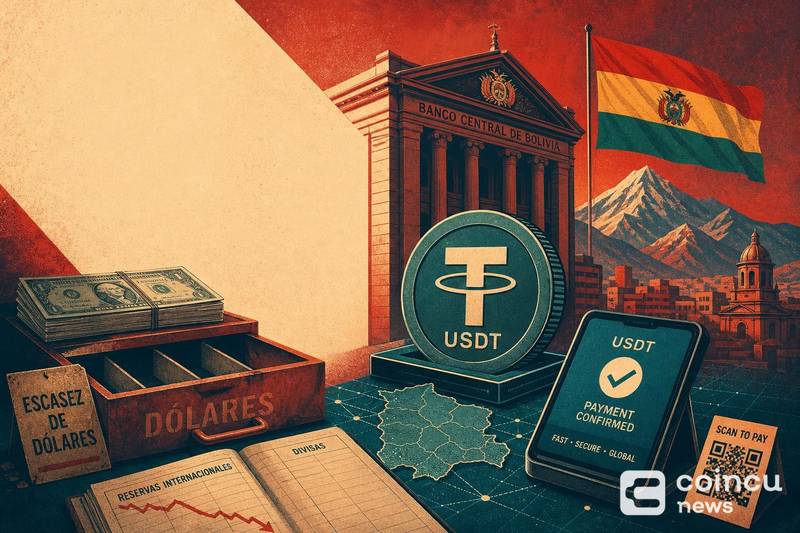
What Bolivia is weighing for USDT in its payment infrastructure
The proposal under discussion involves incorporating USDT into Bolivia’s existing payment rails, potentially allowing the stablecoin to serve as a settlement or transfer mechanism within the formal financial system. USDT is a stablecoin pegged 1:1 to the U.S. dollar, making it function as a digital proxy for dollar liquidity. For related coverage, see 52.16 Million USDT Transferred to Binance: What It May Signal.
Bolivia’s financial regulator, ASFI, has already taken steps to update the regulatory framework for financial technology companies, signaling a broader openness to digital financial instruments. The consideration remains preliminary, with no confirmed timeline or implementation details publicly available.
The scope of “national payment system” integration could range from enabling bank-level USDT transfers to allowing merchant settlement in the stablecoin. Banco BISA, one of Bolivia’s major banks, has already launched a USDT-related product called CriptoBISA, suggesting that institutional infrastructure for stablecoin handling is developing within the country.
This is not the first time Bolivia has appeared in crypto-related headlines. Previous reports about Russia and Bolivia allegedly using Bitcoin for oil trades were ultimately debunked, underscoring the importance of distinguishing confirmed policy from speculation.
Why Bolivia’s dollar shortage is driving stablecoin interest
The headline development is tied directly to Bolivia’s ongoing difficulty accessing physical U.S. dollars. Dollar shortages constrain importers, limit cross-border payments, and create parallel exchange rate pressures that affect everyday commerce.
When physical dollars become scarce, a dollar-pegged digital asset like USDT offers a potential workaround for maintaining dollar-denominated transactions without requiring access to physical currency. This does not solve underlying macroeconomic imbalances, but it can ease transactional friction for businesses and individuals who need dollar exposure.
Bolivia has been exploring broader crypto integration into its financial system, with the dollar shortage serving as a primary catalyst. The urgency differs from countries adopting crypto for innovation purposes; Bolivia’s interest appears driven by practical necessity.
Stablecoin demand in Latin America has been rising more broadly, with platforms like Bitget Wallet expanding QR-code payments to Argentina, Colombia, and Bolivia, reflecting regional appetite for dollar-linked digital payment tools.
What integration could mean for payments and adoption
If Bolivia moves forward, the most immediate effect would be on cross-border payments. Remittances and import payments currently bottlenecked by dollar scarcity could flow through USDT rails, reducing settlement times and potentially lowering costs compared to traditional correspondent banking.
For domestic merchants, USDT acceptance would depend entirely on implementation details: whether the central bank provides conversion mechanisms, whether banks offer on-and-off ramps, and whether merchants can settle back into bolivianos seamlessly.
It is important to distinguish between payment-system integration and legal tender status. Even under the most aggressive scenario being discussed, USDT would serve as a payment rail, not a replacement for the boliviano as Bolivia’s official currency.
A national-level stablecoin integration would carry significance beyond Bolivia. As demand for crypto payments and stablecoins gains momentum across Latin America, Bolivia’s decision could influence how other countries in the region approach similar dollar-access challenges.
The move also fits a broader global pattern where stablecoin payment integration is being explored by governments facing currency pressures, distinct from crypto adoption driven by speculative trading interest. Japan, for instance, is testing yen stablecoin payments through different channels.
Regulatory and implementation hurdles ahead
Any integration of USDT into a national payment system raises substantial regulatory questions. Consumer protection, anti-money laundering compliance, and oversight of Tether’s reserves are concerns that Bolivian regulators would need to address before proceeding.
Bolivia’s financial authority ASFI has issued circulars related to digital financial services, but the existing regulatory framework was not designed for stablecoin-based payment settlement at a national scale. Significant regulatory development would be required.
Convertibility presents a core operational challenge. For USDT to function within the payment system, reliable on-and-off ramps between bolivianos and USDT must exist with sufficient liquidity. Without deep conversion markets, the stablecoin could trade at premiums or discounts that undermine its utility as a dollar substitute.
Custody and settlement infrastructure are additional open questions. Who holds the USDT? Which wallets are approved? How are disputes resolved? These operational details would determine whether integration is practical or merely symbolic.
The timeline, specific agencies responsible for implementation, and the technical architecture for connecting USDT rails to existing payment networks remain unconfirmed. Until these details emerge, the proposal stays firmly in the consideration phase rather than active deployment.
FAQ
Has Bolivia officially adopted USDT?
No. Bolivia is considering USDT integration into its payment system, but no official adoption has been confirmed. The proposal remains at an exploratory stage with no announced timeline.
Why is USDT being discussed instead of physical dollars?
Bolivia faces a shortage of physical U.S. dollars, which constrains trade and payments. USDT, as a dollar-pegged digital asset, could provide dollar-denominated transaction capability without requiring physical currency access.
What could this mean for stablecoin adoption in Latin America?
A national-level USDT payment integration in Bolivia would be among the most significant stablecoin policy moves in the region. It could set a precedent for other Latin American countries facing similar dollar-access challenges, though outcomes would depend heavily on implementation quality and regulatory frameworks.
Disclaimer: This article is for informational purposes only and does not constitute financial or investment advice. Cryptocurrency and digital asset markets carry significant risk. Always do your own research before making decisions.
No tags available.


Other Posts








- China, US Conclude Trade Talks with Focus on Cooperation
- Crypto Weekly: NYSE Backs OKX, Kraken Gets Fed Access, BTC Sells
- Court Upholds Fed’s Rejection of Custodia Bank’s Request
- Former CFO Convicted for $35M Fraudulent Crypto Investment
- DeriW Launches Edge Hour Trading Competition Platform for Derivatives Traders
- Michael Saylor Denies Bitcoin Sell-Off Amid Large BTC Transfer
- Buy Dogecoin on eToro: Step-by-Step Guide for Beginners (2024)
- Kazakhstan Explores Crypto Reserves Backed by National Funds
- JPMorgan Increases Holdings in BlackRock’s Bitcoin ETF
- Nordea Bank Introduces Bitcoin ETP Trading for Nordic Customers
- XRP Spot ETF Launches on Nasdaq Amid Market Fluctuations
- Peter Schiff Challenges Michael Saylor on MSTR’s Business Model
- Thailand Orders Worldcoin to Delete 1.2 Million Biometric Records
- UK Proposes New DeFi Tax Framework to Ease User Burden
- WLFI Under Fire: Analyst Warns Hyperliquid Could Be Next
- Ancient Ethereum Whale Moves $1.19 Billion After Decade
- BlackRock Receives Large Crypto Transfers from Coinbase
- SEC Scrutiny on ALT5 Sigma’s Leadership Disclosure Timing
- Yala Injects $5.5 Million Amid Recovery Efforts
- Radiant Capital Faces $50M Loss in Major Security Breach
- China, US Conclude Trade Talks with Focus on Cooperation
- Crypto Weekly: NYSE Backs OKX, Kraken Gets Fed Access, BTC Sells
- Court Upholds Fed’s Rejection of Custodia Bank’s Request
- Former CFO Convicted for $35M Fraudulent Crypto Investment
- DeriW Launches Edge Hour Trading Competition Platform for Derivatives Traders
- Michael Saylor Denies Bitcoin Sell-Off Amid Large BTC Transfer
- Buy Dogecoin on eToro: Step-by-Step Guide for Beginners (2024)
- Kazakhstan Explores Crypto Reserves Backed by National Funds
- JPMorgan Increases Holdings in BlackRock’s Bitcoin ETF
- Nordea Bank Introduces Bitcoin ETP Trading for Nordic Customers
- XRP Spot ETF Launches on Nasdaq Amid Market Fluctuations
- Peter Schiff Challenges Michael Saylor on MSTR’s Business Model
- Thailand Orders Worldcoin to Delete 1.2 Million Biometric Records
- UK Proposes New DeFi Tax Framework to Ease User Burden
- WLFI Under Fire: Analyst Warns Hyperliquid Could Be Next
- Ancient Ethereum Whale Moves $1.19 Billion After Decade
- BlackRock Receives Large Crypto Transfers from Coinbase
- SEC Scrutiny on ALT5 Sigma’s Leadership Disclosure Timing
- Yala Injects $5.5 Million Amid Recovery Efforts
- Radiant Capital Faces $50M Loss in Major Security Breach
- China, US Conclude Trade Talks with Focus on Cooperation
- Crypto Weekly: NYSE Backs OKX, Kraken Gets Fed Access, BTC Sells
- Court Upholds Fed’s Rejection of Custodia Bank’s Request
- Former CFO Convicted for $35M Fraudulent Crypto Investment
- DeriW Launches Edge Hour Trading Competition Platform for Derivatives Traders
- Michael Saylor Denies Bitcoin Sell-Off Amid Large BTC Transfer
- Buy Dogecoin on eToro: Step-by-Step Guide for Beginners (2024)
- Kazakhstan Explores Crypto Reserves Backed by National Funds
- JPMorgan Increases Holdings in BlackRock’s Bitcoin ETF
- Nordea Bank Introduces Bitcoin ETP Trading for Nordic Customers
- XRP Spot ETF Launches on Nasdaq Amid Market Fluctuations
- Peter Schiff Challenges Michael Saylor on MSTR’s Business Model
- Thailand Orders Worldcoin to Delete 1.2 Million Biometric Records
- UK Proposes New DeFi Tax Framework to Ease User Burden
- WLFI Under Fire: Analyst Warns Hyperliquid Could Be Next
- Ancient Ethereum Whale Moves $1.19 Billion After Decade
- BlackRock Receives Large Crypto Transfers from Coinbase
- SEC Scrutiny on ALT5 Sigma’s Leadership Disclosure Timing
- Yala Injects $5.5 Million Amid Recovery Efforts
- Radiant Capital Faces $50M Loss in Major Security Breach

Hyperscale Data Adds About 100 BTC, Treasury Surpasses 1,000 BTC

Qian Zhimin 60,000 Bitcoin Case May Enter Evidence and Trial Stage After October

Bitmine Immersion Technologies (BMNR) Announces ETH Holdings Reach 5.77 Million Tokens, and Total Crypto and Total Cash Holdings of $11.3 Billion

Aurra Markets Strengthens MENA Presence Following Money Expo Abu Dhabi 2026