The U.S. Office of Foreign Assets Control has sanctioned 134 new cryptocurrency wallet addresses in a single enforcement action, marking one of the larger batch designations targeting digital asset infrastructure tied to sanctioned entities.
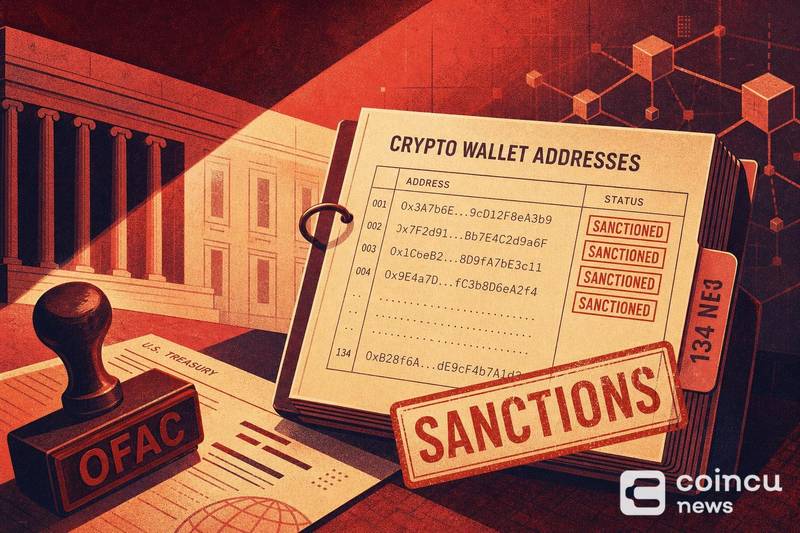
OFAC published the designations on July 1, 2026, as part of a broader action targeting financial networks associated with ISIS, according to a Treasury Department press release. The wallet addresses were added to the Specially Designated Nationals (SDN) list, making it illegal for U.S. persons to transact with them.
Blockchain analytics firm Chainalysis published a detailed breakdown of the designated addresses, noting that the wallets were linked to fundraising and money movement operations on behalf of ISIS, according to the firm’s analysis. The designation covers addresses across multiple blockchain networks.
What the 134-Address Designation Means in Practice
When OFAC adds crypto wallet addresses to the SDN list, all U.S. persons and entities are prohibited from engaging in transactions involving those addresses. This includes exchanges, custodians, payment processors, and individual traders operating under U.S. jurisdiction.
The full list of designated addresses is available through OFAC’s recent actions page. Regulated platforms are expected to update their screening systems promptly to block any interaction with flagged wallets.
For exchanges and custodians, the compliance obligation is immediate. Any funds held in or transiting through a sanctioned address must be blocked and reported to OFAC. Platforms that fail to screen for newly designated addresses risk significant civil and criminal penalties.
This action follows a pattern of increasing Treasury enforcement against crypto-facilitated terrorism financing, similar to recent U.S. sanctions targeting Iranian crypto trading platforms and individuals involved in illicit financial networks.
Who Faces Exposure From the New Designations
Centralized exchanges bear the most direct compliance burden. They must cross-reference the 134 newly listed addresses against their transaction histories and current holdings, flagging any matches for blocking and reporting.
Custodians and over-the-counter desks face similar obligations. Any business that touches U.S. financial infrastructure, even indirectly, must ensure it is not processing transactions linked to sanctioned wallets.
Retail users are not exempt. While enforcement typically focuses on institutional actors, any U.S. person who knowingly or unknowingly sends funds to a sanctioned address could face legal consequences. Wallet screening tools available through compliance providers can help users verify addresses before transacting.
The scale of this designation, 134 addresses in a single action, suggests a coordinated intelligence effort rather than an isolated enforcement step. Treasury has previously sanctioned individual crypto addresses linked to drug trafficking and money laundering, but batch designations of this size targeting terrorism financing networks represent an escalation.
Broader Regulatory Signal for the Crypto Industry
Large-scale OFAC designations reinforce the message that crypto infrastructure is subject to the same sanctions compliance standards as traditional finance. Exchanges and service providers operating globally must treat SDN list updates as critical operational events.
Compliance costs for crypto businesses continue to rise as the frequency and scope of sanctions actions expand. Platforms must invest in real-time screening, transaction monitoring, and staff training to maintain compliance with evolving requirements.
The action also underscores the growing role of blockchain analytics in sanctions enforcement. Firms like Chainalysis work directly with government agencies to trace illicit fund flows, and their findings increasingly form the basis for OFAC designations. This dynamic has implications for privacy-focused protocols and mixing services that may come under additional scrutiny.
Regulatory bodies beyond OFAC are also tightening crypto compliance frameworks. The FDIC has proposed BSA and sanctions compliance rules specifically for stablecoin issuers, reflecting a broader push to close regulatory gaps in digital asset infrastructure.
What Happens Next for Exchanges and Blockchain Investigators
Compliance teams at regulated exchanges will begin tracing transaction histories associated with the 134 designated addresses. This process involves identifying counterparties, mapping fund flows, and filing Suspicious Activity Reports where required.
Blockchain investigators will likely expand the analysis beyond the initially designated addresses. Sanctioned entities often use clusters of wallets, and forensic tools can identify related addresses through transaction pattern analysis and common spending behaviors.
Exchanges that discover historical exposure to the newly sanctioned addresses must file blocking reports with OFAC within 10 business days. Ongoing monitoring obligations apply indefinitely, as sanctioned addresses remain on the SDN list until explicitly removed.
The Treasury Department’s sanctions search tool allows compliance officers and individual users to verify whether specific addresses appear on the SDN list. Regular checks against this database are a baseline compliance requirement.
State-sponsored and terrorist-affiliated cyber operations have increasingly turned to cryptocurrency for fundraising and money movement. North Korean hackers alone have stolen over $6 billion in crypto since 2017, and OFAC’s expanding designation activity reflects Treasury’s intent to make the blockchain environment hostile to sanctioned actors.
FAQ About OFAC’s Latest Crypto Wallet Sanctions
What does it mean when OFAC sanctions a crypto wallet address?
When OFAC adds a wallet address to the SDN list, it becomes illegal for any U.S. person or entity to transact with that address. Funds held in sanctioned wallets must be blocked, and any attempted transactions must be reported to OFAC.
Who is required to comply with these sanctions?
All U.S. persons and entities must comply, including exchanges, custodians, payment processors, DeFi protocol operators with U.S. nexus, and individual users. Foreign entities that touch U.S. financial infrastructure may also face secondary sanctions risk.
Can users still transact with flagged wallet addresses?
No. Transacting with a sanctioned address is a violation of U.S. law regardless of whether the user knew the address was on the SDN list. Penalties can include civil fines and criminal prosecution. Users should verify addresses through OFAC’s sanctions search tool before sending funds.
How do exchanges respond to new OFAC designations?
Exchanges update their screening databases to flag the newly designated addresses, review historical transaction data for exposure, block any matching funds, and file required reports with OFAC. Most major exchanges use automated compliance tools that integrate SDN list updates in near real-time.
The U.S. freeze of $344 million in crypto assets linked to Iran demonstrated the practical consequences of sanctions enforcement, with significant funds blocked across multiple platforms following OFAC action.
Disclaimer: This article is for informational purposes only and does not constitute financial or investment advice. Cryptocurrency and digital asset markets carry significant risk. Always do your own research before making decisions.
No tags available.


Other Posts








- China, US Conclude Trade Talks with Focus on Cooperation
- Crypto Weekly: NYSE Backs OKX, Kraken Gets Fed Access, BTC Sells
- Court Upholds Fed’s Rejection of Custodia Bank’s Request
- Former CFO Convicted for $35M Fraudulent Crypto Investment
- DeriW Launches Edge Hour Trading Competition Platform for Derivatives Traders
- Michael Saylor Denies Bitcoin Sell-Off Amid Large BTC Transfer
- Buy Dogecoin on eToro: Step-by-Step Guide for Beginners (2024)
- Kazakhstan Explores Crypto Reserves Backed by National Funds
- JPMorgan Increases Holdings in BlackRock’s Bitcoin ETF
- Nordea Bank Introduces Bitcoin ETP Trading for Nordic Customers
- XRP Spot ETF Launches on Nasdaq Amid Market Fluctuations
- Peter Schiff Challenges Michael Saylor on MSTR’s Business Model
- Thailand Orders Worldcoin to Delete 1.2 Million Biometric Records
- UK Proposes New DeFi Tax Framework to Ease User Burden
- WLFI Under Fire: Analyst Warns Hyperliquid Could Be Next
- Ancient Ethereum Whale Moves $1.19 Billion After Decade
- BlackRock Receives Large Crypto Transfers from Coinbase
- SEC Scrutiny on ALT5 Sigma’s Leadership Disclosure Timing
- Yala Injects $5.5 Million Amid Recovery Efforts
- Radiant Capital Faces $50M Loss in Major Security Breach
- China, US Conclude Trade Talks with Focus on Cooperation
- Crypto Weekly: NYSE Backs OKX, Kraken Gets Fed Access, BTC Sells
- Court Upholds Fed’s Rejection of Custodia Bank’s Request
- Former CFO Convicted for $35M Fraudulent Crypto Investment
- DeriW Launches Edge Hour Trading Competition Platform for Derivatives Traders
- Michael Saylor Denies Bitcoin Sell-Off Amid Large BTC Transfer
- Buy Dogecoin on eToro: Step-by-Step Guide for Beginners (2024)
- Kazakhstan Explores Crypto Reserves Backed by National Funds
- JPMorgan Increases Holdings in BlackRock’s Bitcoin ETF
- Nordea Bank Introduces Bitcoin ETP Trading for Nordic Customers
- XRP Spot ETF Launches on Nasdaq Amid Market Fluctuations
- Peter Schiff Challenges Michael Saylor on MSTR’s Business Model
- Thailand Orders Worldcoin to Delete 1.2 Million Biometric Records
- UK Proposes New DeFi Tax Framework to Ease User Burden
- WLFI Under Fire: Analyst Warns Hyperliquid Could Be Next
- Ancient Ethereum Whale Moves $1.19 Billion After Decade
- BlackRock Receives Large Crypto Transfers from Coinbase
- SEC Scrutiny on ALT5 Sigma’s Leadership Disclosure Timing
- Yala Injects $5.5 Million Amid Recovery Efforts
- Radiant Capital Faces $50M Loss in Major Security Breach
- China, US Conclude Trade Talks with Focus on Cooperation
- Crypto Weekly: NYSE Backs OKX, Kraken Gets Fed Access, BTC Sells
- Court Upholds Fed’s Rejection of Custodia Bank’s Request
- Former CFO Convicted for $35M Fraudulent Crypto Investment
- DeriW Launches Edge Hour Trading Competition Platform for Derivatives Traders
- Michael Saylor Denies Bitcoin Sell-Off Amid Large BTC Transfer
- Buy Dogecoin on eToro: Step-by-Step Guide for Beginners (2024)
- Kazakhstan Explores Crypto Reserves Backed by National Funds
- JPMorgan Increases Holdings in BlackRock’s Bitcoin ETF
- Nordea Bank Introduces Bitcoin ETP Trading for Nordic Customers
- XRP Spot ETF Launches on Nasdaq Amid Market Fluctuations
- Peter Schiff Challenges Michael Saylor on MSTR’s Business Model
- Thailand Orders Worldcoin to Delete 1.2 Million Biometric Records
- UK Proposes New DeFi Tax Framework to Ease User Burden
- WLFI Under Fire: Analyst Warns Hyperliquid Could Be Next
- Ancient Ethereum Whale Moves $1.19 Billion After Decade
- BlackRock Receives Large Crypto Transfers from Coinbase
- SEC Scrutiny on ALT5 Sigma’s Leadership Disclosure Timing
- Yala Injects $5.5 Million Amid Recovery Efforts
- Radiant Capital Faces $50M Loss in Major Security Breach

Strategy Builds $4.75B Cash Cushion as Investors Seek More Than Bitcoin Exposure

Vitalik Buterin’s Ethereum Roadmap Prioritizes Privacy and Quantum Resistance

Trump Media Bitcoin Holdings Shrink as Crypto Losses Hit $361M
CT3 Begins Preparing Its Ecosystem for the Launch of the CT3GB Economy
Syntetika Launches Tokenization Hub Bringing Regulated Investment Strategies Onchain