Chinese Police Reveal Crypto Evidence Collection Process for Tracking and Freezing Funds
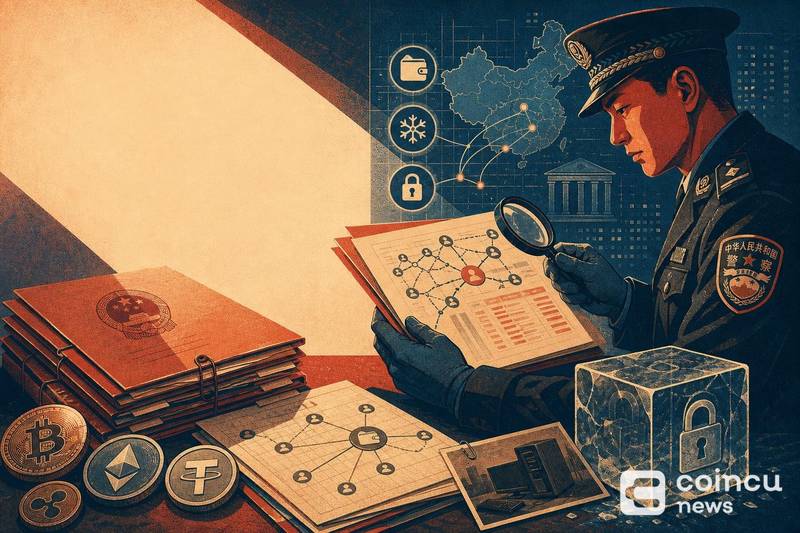
Chinese police have disclosed details of their evidence collection process for tracking and freezing cryptocurrency linked to suspected criminal activity, offering a rare look at how law enforcement in China builds digital forensic cases involving blockchain-based assets.
What Chinese Police Actually Disclosed
A rare paper reviewed by the South China Morning Post revealed the forensic tools and procedures Chinese investigators use to trace cryptocurrency transactions and seize digital assets. The disclosure is notable because Chinese authorities have historically kept enforcement methodologies confidential. For related coverage, see DOJ Extradites Alleged Scattered Spider Members in $100M Crypto Extortion Case.
The published process covers the full chain from identifying suspect wallet addresses to documenting transaction flows in a format suitable for criminal prosecution. Formal disclosure of these methods signals that Chinese law enforcement views crypto-related crime as a mature enforcement priority, not a fringe concern.
China has maintained a broad ban on cryptocurrency trading since 2021, but criminal cases involving digital assets continue to surface. Incidents like a Chinese man killed in Cambodia after a $2 million crypto extortion attempt underscore the ongoing intersection of crypto and crime in the region.
How Investigators Trace Cryptocurrency Transactions
The disclosed process centers on wallet address identification as the starting point. Investigators map transaction histories from suspect wallets, following fund flows across multiple addresses to build a picture of how assets moved.
Digital evidence collection requires linking on-chain activity to real-world identities. This typically involves connecting wallet addresses to accounts on centralized exchanges, where know-your-customer records can tie transactions to specific individuals.
Documentation quality is critical at every stage. Evidence must meet criminal court standards, meaning investigators need to preserve complete records of how wallet addresses were identified, how transaction paths were traced, and how the connection between on-chain activity and suspects was established.
The process also accounts for counterparty analysis. When funds move between wallets, investigators document relationships between senders and receivers to establish networks of activity rather than isolated transactions.
How the Freezing Process Works in Practice
Asset freezing follows a sequential process: evidence collection, verification of asset ownership, and then a formal freezing action. The disclosed procedure suggests that Chinese authorities treat this as a structured workflow rather than an ad hoc response.
Centralized exchanges and custodial platforms play a key role. When investigators identify suspect funds held on a platform operating within Chinese jurisdiction or cooperating with Chinese authorities, they can request account freezes. This mirrors how Thai police recovered funds in a crypto exchange robbery case through platform cooperation.
Friction points emerge when assets move to self-custodied wallets or cross into services outside Chinese regulatory reach. The disclosed process acknowledges practical limits, particularly when suspects use decentralized protocols or foreign platforms with no obligation to comply with Chinese law enforcement requests.
Timing is another constraint. Cryptocurrency can be moved in minutes, so the gap between evidence collection and freezing action determines whether assets remain recoverable.
What This Means for Exchanges, Users, and Compliance Teams
A formalized evidence collection process creates predictable expectations for exchanges operating in or near Chinese jurisdiction. Platforms may face standardized requests for transaction records, account information, and asset freezes, requiring compliance teams to maintain responsive internal processes.
China’s regulatory framework around digital assets continues to evolve. The Han Kun Law Offices have published analysis of how Chinese legal standards apply to cryptocurrency cases, reflecting growing attention from the legal profession.
For users, the disclosure reinforces that blockchain transparency works in both directions. The same public ledger that allows anyone to verify transactions also gives law enforcement a permanent, searchable record of fund movements. Users holding assets on centralized platforms face the highest exposure to freezing actions.
The formalization also matters beyond China. As countries develop their own crypto enforcement frameworks, including Russia’s upcoming crypto regulatory law, the procedural details disclosed by Chinese police could influence how other jurisdictions structure their own investigative workflows.
Scam operations targeting Chinese users, such as fraud rings operating through Douyin, are likely among the case types driving the need for standardized evidence collection.
FAQ About China’s Crypto Tracking and Freezing Process
Can all cryptocurrency transactions be traced?
Most transactions on public blockchains like Bitcoin and Ethereum are traceable because every transfer is recorded on a permanent, publicly accessible ledger. However, privacy-focused cryptocurrencies and mixing services can make tracing significantly harder, though not impossible with advanced forensic tools.
Can decentralized wallets still face tracking attempts?
Yes. Self-custodied wallets do not require identity verification to create, but transactions to and from those wallets are still visible on-chain. If any wallet in a transaction chain has been linked to a known identity, investigators can potentially trace the flow back to a decentralized wallet holder.
What kind of evidence is needed before assets are frozen?
The disclosed process indicates that investigators must document the connection between suspect criminal activity and specific wallet addresses or exchange accounts before requesting a freeze. This includes transaction records, identity verification data, and evidence linking the assets to the alleged crime.
Does this affect users outside China?
Directly, the process applies within Chinese jurisdiction. However, if funds pass through exchanges or services that cooperate with Chinese authorities, users in other countries could be indirectly affected if their transactions intersect with a Chinese investigation.
Disclaimer: This article is for informational purposes only and does not constitute financial or investment advice. Cryptocurrency and digital asset markets carry significant risk. Always do your own research before making decisions.
No tags available.


Other Posts







- China, US Conclude Trade Talks with Focus on Cooperation
- Crypto Weekly: NYSE Backs OKX, Kraken Gets Fed Access, BTC Sells
- Court Upholds Fed’s Rejection of Custodia Bank’s Request
- Former CFO Convicted for $35M Fraudulent Crypto Investment
- DeriW Launches Edge Hour Trading Competition Platform for Derivatives Traders
- Michael Saylor Denies Bitcoin Sell-Off Amid Large BTC Transfer
- Buy Dogecoin on eToro: Step-by-Step Guide for Beginners (2024)
- Kazakhstan Explores Crypto Reserves Backed by National Funds
- JPMorgan Increases Holdings in BlackRock’s Bitcoin ETF
- Nordea Bank Introduces Bitcoin ETP Trading for Nordic Customers
- XRP Spot ETF Launches on Nasdaq Amid Market Fluctuations
- Peter Schiff Challenges Michael Saylor on MSTR’s Business Model
- Thailand Orders Worldcoin to Delete 1.2 Million Biometric Records
- UK Proposes New DeFi Tax Framework to Ease User Burden
- WLFI Under Fire: Analyst Warns Hyperliquid Could Be Next
- Ancient Ethereum Whale Moves $1.19 Billion After Decade
- BlackRock Receives Large Crypto Transfers from Coinbase
- SEC Scrutiny on ALT5 Sigma’s Leadership Disclosure Timing
- Yala Injects $5.5 Million Amid Recovery Efforts
- Radiant Capital Faces $50M Loss in Major Security Breach
- China, US Conclude Trade Talks with Focus on Cooperation
- Crypto Weekly: NYSE Backs OKX, Kraken Gets Fed Access, BTC Sells
- Court Upholds Fed’s Rejection of Custodia Bank’s Request
- Former CFO Convicted for $35M Fraudulent Crypto Investment
- DeriW Launches Edge Hour Trading Competition Platform for Derivatives Traders
- Michael Saylor Denies Bitcoin Sell-Off Amid Large BTC Transfer
- Buy Dogecoin on eToro: Step-by-Step Guide for Beginners (2024)
- Kazakhstan Explores Crypto Reserves Backed by National Funds
- JPMorgan Increases Holdings in BlackRock’s Bitcoin ETF
- Nordea Bank Introduces Bitcoin ETP Trading for Nordic Customers
- XRP Spot ETF Launches on Nasdaq Amid Market Fluctuations
- Peter Schiff Challenges Michael Saylor on MSTR’s Business Model
- Thailand Orders Worldcoin to Delete 1.2 Million Biometric Records
- UK Proposes New DeFi Tax Framework to Ease User Burden
- WLFI Under Fire: Analyst Warns Hyperliquid Could Be Next
- Ancient Ethereum Whale Moves $1.19 Billion After Decade
- BlackRock Receives Large Crypto Transfers from Coinbase
- SEC Scrutiny on ALT5 Sigma’s Leadership Disclosure Timing
- Yala Injects $5.5 Million Amid Recovery Efforts
- Radiant Capital Faces $50M Loss in Major Security Breach
- China, US Conclude Trade Talks with Focus on Cooperation
- Crypto Weekly: NYSE Backs OKX, Kraken Gets Fed Access, BTC Sells
- Court Upholds Fed’s Rejection of Custodia Bank’s Request
- Former CFO Convicted for $35M Fraudulent Crypto Investment
- DeriW Launches Edge Hour Trading Competition Platform for Derivatives Traders
- Michael Saylor Denies Bitcoin Sell-Off Amid Large BTC Transfer
- Buy Dogecoin on eToro: Step-by-Step Guide for Beginners (2024)
- Kazakhstan Explores Crypto Reserves Backed by National Funds
- JPMorgan Increases Holdings in BlackRock’s Bitcoin ETF
- Nordea Bank Introduces Bitcoin ETP Trading for Nordic Customers
- XRP Spot ETF Launches on Nasdaq Amid Market Fluctuations
- Peter Schiff Challenges Michael Saylor on MSTR’s Business Model
- Thailand Orders Worldcoin to Delete 1.2 Million Biometric Records
- UK Proposes New DeFi Tax Framework to Ease User Burden
- WLFI Under Fire: Analyst Warns Hyperliquid Could Be Next
- Ancient Ethereum Whale Moves $1.19 Billion After Decade
- BlackRock Receives Large Crypto Transfers from Coinbase
- SEC Scrutiny on ALT5 Sigma’s Leadership Disclosure Timing
- Yala Injects $5.5 Million Amid Recovery Efforts
- Radiant Capital Faces $50M Loss in Major Security Breach

Bitcoin Slips Toward $64,000 Ahead of Wednesday Inflation Test

Bitcoin Holds Steady as ETF Inflows Offset Selling Ahead of U.S. Inflation Data


ForumPay Expands Payment Infrastructure with New Card and Bank Transfer Acceptance Solution

Newest Assets, Improved User Promotions & Much Greater Crypto Experience_ Xxkk Trade Exchange Reinforces Its Trade Environment