Blockchain Regulatory Certainty Act Keeps Non-Custodial Developer Protections in Senate Version
The original Senate version of the Blockchain Regulatory Certainty Act retains its core protections for non-custodial developers, keeping intact language that shields software builders who do not hold or control customer funds. The retention keeps the developer-protection provisions central to the broader digital asset market structure effort moving through the Senate.
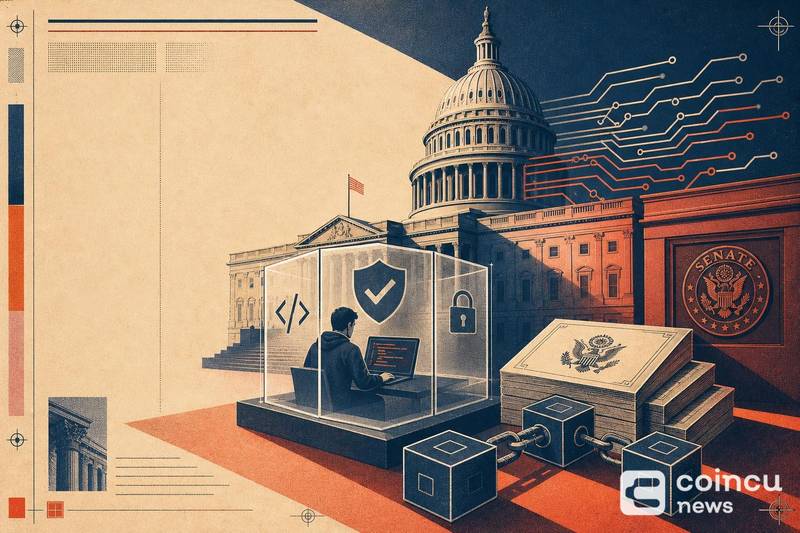
What the original Senate version says about non-custodial developers
The Blockchain Regulatory Certainty Act, as reflected in the Senate Banking Committee’s digital asset market structure discussion draft, preserves protections for non-custodial developers rather than stripping them out. The word “retains” signals continuity: the language carries forward rather than introducing a new carve-out. For related coverage, see Top Bitcoin ETFs by AUM in 2026: Structure, Fee Posture, and Category Role Compared.
Coin Center, a policy group tracking the measure, has argued the Blockchain Regulatory Certainty Act is ready to become law. That framing places the retained developer language at the center of the bill’s identity as a regulatory-clarity vehicle. For related coverage, see Top Stablecoin Issuers in 2026: Reserve Model, Distribution, and Market Role Compared.
Why non-custodial protections matter for crypto developers
The provisions target non-custodial actors specifically, meaning software builders and developers who write and publish code but do not control customer funds. The distinction separates them from custodial intermediaries that hold user assets and take on the accompanying regulatory obligations.
For teams building protocols and open-source software, the practical stakes turn on whether writing code alone can trigger money-transmission or custody-style liability. The debate mirrors the arguments in other venues, including the push by Hyperliquid and Phantom for updated CFTC DeFi rules, where non-custodial builders have sought clearer boundaries.
How the Senate language shapes the regulatory certainty debate
The bill’s title foregrounds regulatory certainty, and retaining the developer-protection text keeps the question of developer liability inside the broader policy conversation. Preserving it in the original Senate version suggests the provision remains a defining feature of how the measure frames blockchain software.
The developer language has drawn direct advocacy. The Block reported that Senator Ron Wyden urged Senate leaders to preserve the contested developer protections within the wider crypto bill, underscoring that the provisions are actively contested rather than settled.
The measure sits alongside other Senate activity on digital assets, including a separate Senate bill to bar the president and federal officials from issuing digital assets. It also parallels state-level frameworks such as the Maharashtra DELTA Act on real estate tokenization, reflecting the range of jurisdictions writing blockchain rules.
What has not changed in this version
Because the story centers on protections being retained, it describes continuity rather than a newly introduced safeguard. The available evidence confirms the retention but does not establish vote counts, amendment history, or enactment status.
CoinDesk reported that a newer version of the broader clarity legislation could be released soon, meaning the language reviewed here reflects the original Senate version and may differ from subsequent drafts. Readers should treat downstream legal effects as unconfirmed until later text and any votes are public.
FAQ: Blockchain Regulatory Certainty Act and non-custodial developers
What is the Blockchain Regulatory Certainty Act?
It is legislation aimed at providing regulatory certainty for blockchain activity, reflected in the Senate Banking Committee’s digital asset market structure discussion draft. Its original Senate version retains protections for non-custodial developers.
Who counts as a non-custodial developer?
Based on the bill’s framing, non-custodial developers are software builders who write and publish blockchain code but do not hold or control customer funds, distinguishing them from custodial intermediaries.
Why do these protections matter?
They bear on whether developers can face custody-style or money-transmission liability simply for building software. Retaining the language keeps developer liability at the center of the regulatory-certainty debate, though later drafts and votes remain to be seen.
Disclaimer: This article is for informational purposes only and does not constitute financial or investment advice. Cryptocurrency and digital asset markets carry significant risk. Always do your own research before making decisions.
No tags available.


Other Posts








- China, US Conclude Trade Talks with Focus on Cooperation
- Crypto Weekly: NYSE Backs OKX, Kraken Gets Fed Access, BTC Sells
- Court Upholds Fed’s Rejection of Custodia Bank’s Request
- Former CFO Convicted for $35M Fraudulent Crypto Investment
- DeriW Launches Edge Hour Trading Competition Platform for Derivatives Traders
- Michael Saylor Denies Bitcoin Sell-Off Amid Large BTC Transfer
- Buy Dogecoin on eToro: Step-by-Step Guide for Beginners (2024)
- Kazakhstan Explores Crypto Reserves Backed by National Funds
- JPMorgan Increases Holdings in BlackRock’s Bitcoin ETF
- Nordea Bank Introduces Bitcoin ETP Trading for Nordic Customers
- XRP Spot ETF Launches on Nasdaq Amid Market Fluctuations
- Peter Schiff Challenges Michael Saylor on MSTR’s Business Model
- Thailand Orders Worldcoin to Delete 1.2 Million Biometric Records
- UK Proposes New DeFi Tax Framework to Ease User Burden
- WLFI Under Fire: Analyst Warns Hyperliquid Could Be Next
- Ancient Ethereum Whale Moves $1.19 Billion After Decade
- BlackRock Receives Large Crypto Transfers from Coinbase
- SEC Scrutiny on ALT5 Sigma’s Leadership Disclosure Timing
- Yala Injects $5.5 Million Amid Recovery Efforts
- Radiant Capital Faces $50M Loss in Major Security Breach
- China, US Conclude Trade Talks with Focus on Cooperation
- Crypto Weekly: NYSE Backs OKX, Kraken Gets Fed Access, BTC Sells
- Court Upholds Fed’s Rejection of Custodia Bank’s Request
- Former CFO Convicted for $35M Fraudulent Crypto Investment
- DeriW Launches Edge Hour Trading Competition Platform for Derivatives Traders
- Michael Saylor Denies Bitcoin Sell-Off Amid Large BTC Transfer
- Buy Dogecoin on eToro: Step-by-Step Guide for Beginners (2024)
- Kazakhstan Explores Crypto Reserves Backed by National Funds
- JPMorgan Increases Holdings in BlackRock’s Bitcoin ETF
- Nordea Bank Introduces Bitcoin ETP Trading for Nordic Customers
- XRP Spot ETF Launches on Nasdaq Amid Market Fluctuations
- Peter Schiff Challenges Michael Saylor on MSTR’s Business Model
- Thailand Orders Worldcoin to Delete 1.2 Million Biometric Records
- UK Proposes New DeFi Tax Framework to Ease User Burden
- WLFI Under Fire: Analyst Warns Hyperliquid Could Be Next
- Ancient Ethereum Whale Moves $1.19 Billion After Decade
- BlackRock Receives Large Crypto Transfers from Coinbase
- SEC Scrutiny on ALT5 Sigma’s Leadership Disclosure Timing
- Yala Injects $5.5 Million Amid Recovery Efforts
- Radiant Capital Faces $50M Loss in Major Security Breach
- China, US Conclude Trade Talks with Focus on Cooperation
- Crypto Weekly: NYSE Backs OKX, Kraken Gets Fed Access, BTC Sells
- Court Upholds Fed’s Rejection of Custodia Bank’s Request
- Former CFO Convicted for $35M Fraudulent Crypto Investment
- DeriW Launches Edge Hour Trading Competition Platform for Derivatives Traders
- Michael Saylor Denies Bitcoin Sell-Off Amid Large BTC Transfer
- Buy Dogecoin on eToro: Step-by-Step Guide for Beginners (2024)
- Kazakhstan Explores Crypto Reserves Backed by National Funds
- JPMorgan Increases Holdings in BlackRock’s Bitcoin ETF
- Nordea Bank Introduces Bitcoin ETP Trading for Nordic Customers
- XRP Spot ETF Launches on Nasdaq Amid Market Fluctuations
- Peter Schiff Challenges Michael Saylor on MSTR’s Business Model
- Thailand Orders Worldcoin to Delete 1.2 Million Biometric Records
- UK Proposes New DeFi Tax Framework to Ease User Burden
- WLFI Under Fire: Analyst Warns Hyperliquid Could Be Next
- Ancient Ethereum Whale Moves $1.19 Billion After Decade
- BlackRock Receives Large Crypto Transfers from Coinbase
- SEC Scrutiny on ALT5 Sigma’s Leadership Disclosure Timing
- Yala Injects $5.5 Million Amid Recovery Efforts
- Radiant Capital Faces $50M Loss in Major Security Breach

Blockchain Regulatory Certainty Act Keeps Non-Custodial Developer Protections in Senate Version

U.S. Senate Bill Would Bar President, Federal Officials From Issuing Digital Assets

FATF Says DeFi With Identifiable Controllers Should Be Regulated as VASPs
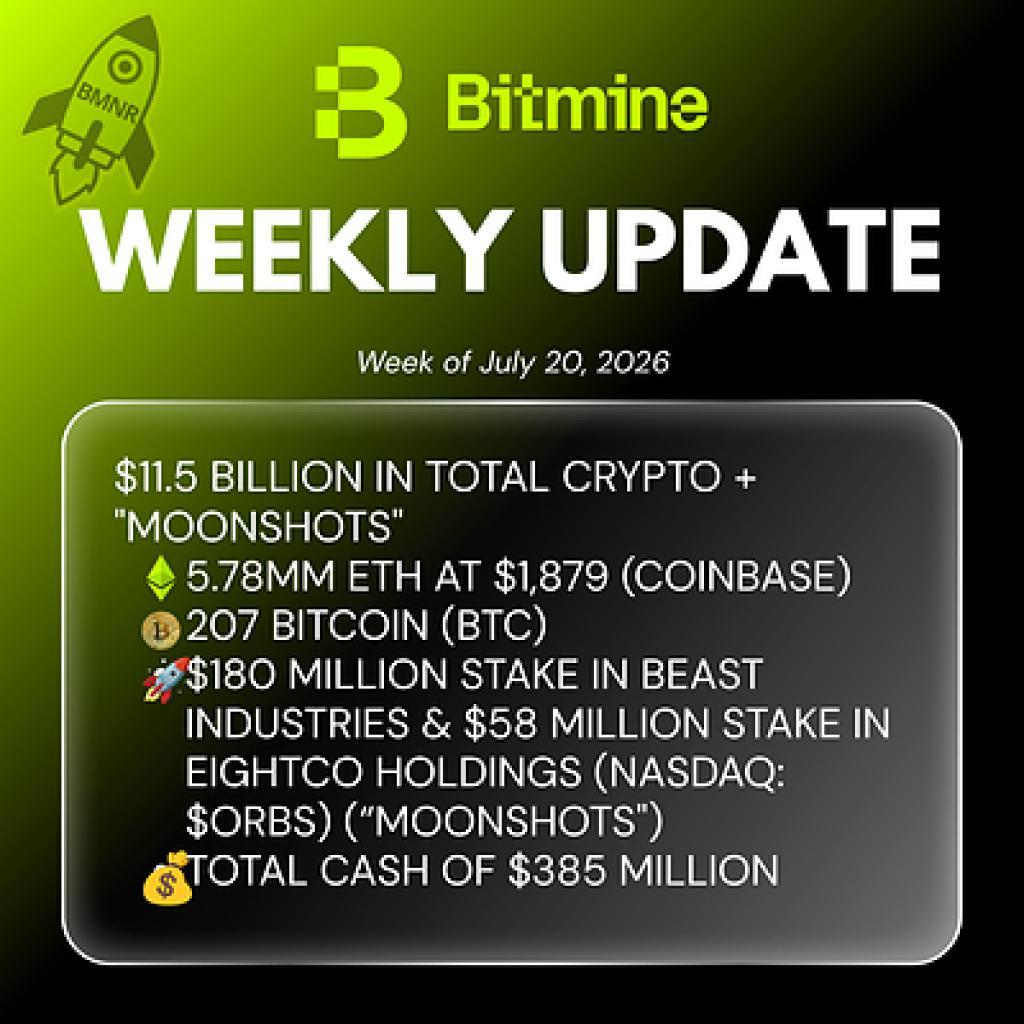
Bitmine Immersion Technologies (BMNR) Announces ETH Holdings Reach 5.78 Million Tokens, and Total Crypto and Total Cash Holdings of $11.5 Billion

GLOBAL MEDIA PROCUREMENT: THE 500-YEAR YIXING ZISHA TEAPOTS PARADIGM