Crystal Foresight Report on Stablecoin Supply Decline in Q2 2026
A new Crystal Foresight report examines what drove the stablecoin supply decline in Q2 2026, focusing on the forces that pulled circulating supply lower during the quarter rather than on short-term price swings.
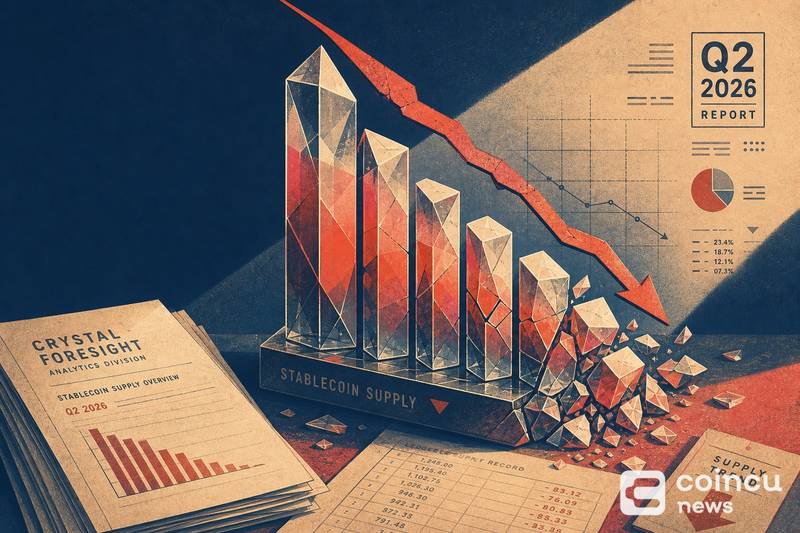
What the Crystal Foresight Report Says About Q2 2026 Stablecoin Supply
Stablecoin supply refers to the total amount of dollar-pegged tokens in circulation, a figure that expands when issuers mint new tokens and contracts when holders redeem them for cash. The Crystal Foresight report frames Q2 2026 as a quarter in which that circulating supply moved lower, according to Crystal Intelligence’s analysis. For related coverage, see Tech giants flagged on $662B leases after Moody’s report.
The report’s central question is causal: it looks at what pushed supply down over the period rather than treating the drop as a routine market update. Because supply data is tracked continuously across dollar-pegged assets, the aggregate figure can be observed directly through stablecoin supply dashboards. For related coverage, see 10 Listed Companies Hold Over 1M BTC Combined.
Which Factors Likely Drove the Stablecoin Supply Decline
A decline in circulating supply typically reflects net redemptions, where more tokens are burned for cash than are newly minted. The report attributes the Q2 2026 contraction to this redemption-driven mechanism, per Crystal Intelligence’s examination of the quarter. For related coverage, see Forma to Shut Down Forma Chain and Migrate NFTs to Ethereum L1.
Demand-side pressure works alongside redemptions. When trading appetite cools, holders have less reason to keep capital parked in stablecoins, which can accelerate the drawdown in supply. The report groups these immediate catalysts separately from broader structural pressure on stablecoin demand. For related coverage, see AFX Trade Hackers Converted 12,467 ETH to BTC: On-Chain Data.
What the Supply Drop Signals for Crypto Market Liquidity
Stablecoin supply is widely read as a proxy for deployable liquidity, since these tokens are the primary medium traders use to move in and out of positions. A contraction in supply therefore signals less dry powder available across exchanges and decentralized venues.
The distinction the report draws is between short-term pressure and longer-term market structure. A quarter of net redemptions does not, on its own, indicate a permanent shift, but it can tighten trading conditions and dampen risk appetite while it persists.
What Analysts and Traders Should Watch After Q2 2026
The most direct signals to monitor are issuance and redemption trends: sustained net minting would point to renewed demand, while continued redemptions would extend the decline. Exchange and DeFi liquidity indicators offer a parallel read on whether capital is returning.
Macro and policy conditions round out the watchlist, since interest-rate expectations shape how attractive it is to hold dollar-pegged tokens versus cash. With rate-cut bets for 2026 being priced out, the policy backdrop remains a variable that could weigh on stablecoin demand.
FAQ About the Q2 2026 Stablecoin Supply Decline
Why did stablecoin supply fall in Q2 2026? The Crystal Foresight report attributes the decline to net redemptions and softer demand for dollar-pegged tokens during the quarter.
Does lower stablecoin supply mean lower crypto liquidity? A shrinking supply generally means less deployable liquidity, though the report treats it as short-term pressure rather than a structural break.
What metrics should investors watch next? Issuance and redemption trends, exchange and DeFi liquidity indicators, and macro or policy developments affecting stablecoin demand.
Disclaimer: This article is for informational purposes only and does not constitute financial or investment advice. Cryptocurrency and digital asset markets carry significant risk. Always do your own research before making decisions.
No tags available.






- China, US Conclude Trade Talks with Focus on Cooperation
- Crypto Weekly: NYSE Backs OKX, Kraken Gets Fed Access, BTC Sells
- Court Upholds Fed’s Rejection of Custodia Bank’s Request
- Former CFO Convicted for $35M Fraudulent Crypto Investment
- DeriW Launches Edge Hour Trading Competition Platform for Derivatives Traders
- Michael Saylor Denies Bitcoin Sell-Off Amid Large BTC Transfer
- Buy Dogecoin on eToro: Step-by-Step Guide for Beginners (2024)
- Kazakhstan Explores Crypto Reserves Backed by National Funds
- JPMorgan Increases Holdings in BlackRock’s Bitcoin ETF
- Nordea Bank Introduces Bitcoin ETP Trading for Nordic Customers
- XRP Spot ETF Launches on Nasdaq Amid Market Fluctuations
- Peter Schiff Challenges Michael Saylor on MSTR’s Business Model
- Thailand Orders Worldcoin to Delete 1.2 Million Biometric Records
- UK Proposes New DeFi Tax Framework to Ease User Burden
- WLFI Under Fire: Analyst Warns Hyperliquid Could Be Next
- Ancient Ethereum Whale Moves $1.19 Billion After Decade
- BlackRock Receives Large Crypto Transfers from Coinbase
- SEC Scrutiny on ALT5 Sigma’s Leadership Disclosure Timing
- Yala Injects $5.5 Million Amid Recovery Efforts
- Radiant Capital Faces $50M Loss in Major Security Breach
- China, US Conclude Trade Talks with Focus on Cooperation
- Crypto Weekly: NYSE Backs OKX, Kraken Gets Fed Access, BTC Sells
- Court Upholds Fed’s Rejection of Custodia Bank’s Request
- Former CFO Convicted for $35M Fraudulent Crypto Investment
- DeriW Launches Edge Hour Trading Competition Platform for Derivatives Traders
- Michael Saylor Denies Bitcoin Sell-Off Amid Large BTC Transfer
- Buy Dogecoin on eToro: Step-by-Step Guide for Beginners (2024)
- Kazakhstan Explores Crypto Reserves Backed by National Funds
- JPMorgan Increases Holdings in BlackRock’s Bitcoin ETF
- Nordea Bank Introduces Bitcoin ETP Trading for Nordic Customers
- XRP Spot ETF Launches on Nasdaq Amid Market Fluctuations
- Peter Schiff Challenges Michael Saylor on MSTR’s Business Model
- Thailand Orders Worldcoin to Delete 1.2 Million Biometric Records
- UK Proposes New DeFi Tax Framework to Ease User Burden
- WLFI Under Fire: Analyst Warns Hyperliquid Could Be Next
- Ancient Ethereum Whale Moves $1.19 Billion After Decade
- BlackRock Receives Large Crypto Transfers from Coinbase
- SEC Scrutiny on ALT5 Sigma’s Leadership Disclosure Timing
- Yala Injects $5.5 Million Amid Recovery Efforts
- Radiant Capital Faces $50M Loss in Major Security Breach
- China, US Conclude Trade Talks with Focus on Cooperation
- Crypto Weekly: NYSE Backs OKX, Kraken Gets Fed Access, BTC Sells
- Court Upholds Fed’s Rejection of Custodia Bank’s Request
- Former CFO Convicted for $35M Fraudulent Crypto Investment
- DeriW Launches Edge Hour Trading Competition Platform for Derivatives Traders
- Michael Saylor Denies Bitcoin Sell-Off Amid Large BTC Transfer
- Buy Dogecoin on eToro: Step-by-Step Guide for Beginners (2024)
- Kazakhstan Explores Crypto Reserves Backed by National Funds
- JPMorgan Increases Holdings in BlackRock’s Bitcoin ETF
- Nordea Bank Introduces Bitcoin ETP Trading for Nordic Customers
- XRP Spot ETF Launches on Nasdaq Amid Market Fluctuations
- Peter Schiff Challenges Michael Saylor on MSTR’s Business Model
- Thailand Orders Worldcoin to Delete 1.2 Million Biometric Records
- UK Proposes New DeFi Tax Framework to Ease User Burden
- WLFI Under Fire: Analyst Warns Hyperliquid Could Be Next
- Ancient Ethereum Whale Moves $1.19 Billion After Decade
- BlackRock Receives Large Crypto Transfers from Coinbase
- SEC Scrutiny on ALT5 Sigma’s Leadership Disclosure Timing
- Yala Injects $5.5 Million Amid Recovery Efforts
- Radiant Capital Faces $50M Loss in Major Security Breach

Crystal Foresight Report on Stablecoin Supply Decline in Q2 2026


RISEx Launches ‘Ignite’ Season 1 Points Program, Following $3B in Volume During the Early Access Phase

Zoomex X Space Recap With Fernando Llorente and the World Cup Final Panel