Coldcard Bitcoin Exploit Losses Reach $88 Million Amid Security Fallout
Losses from a security exploit affecting Coldcard Bitcoin hardware wallets have reached $88 million, with attackers actively draining funds from affected devices in one of the year’s most significant Bitcoin wallet security incidents.
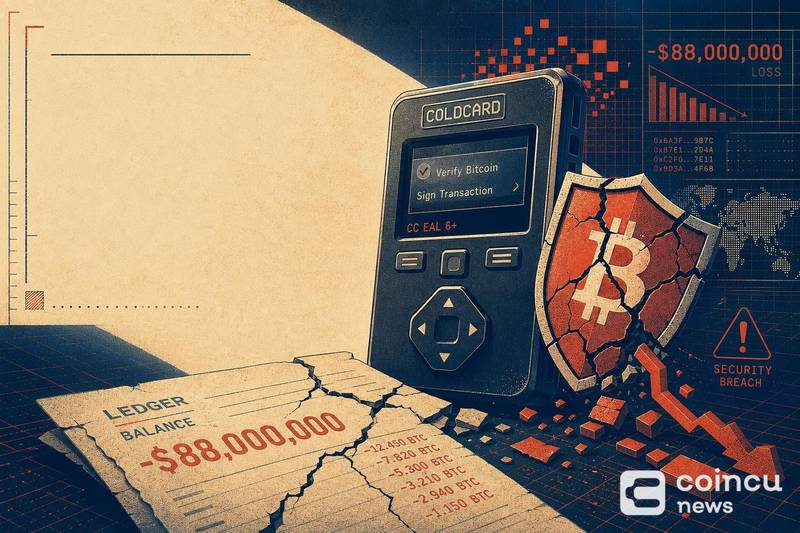
The exploit centers on Coldcard, the hardware wallet built by Coinkite, and has seen attackers systematically emptying user wallets, according to reporting from Decrypt. The scale of the losses places the event well beyond a routine firmware advisory, striking at the self-custody segment that Bitcoin holders often treat as the safest option. For related coverage, see Coinbase Bitcoin Premium Index Negative for 75 Days, Record Streak.
Coinkite has tied the risk to seed generation on specific hardware, publishing a warning covering the Coldcard Mk3 and how affected seeds were produced. We previously detailed how the Coldcard Mk3 seed risk warning was linked to a large BTC transfer, an early signal of the exposure now being counted in the broader total.
How the Damage Estimate Reached $88 Million
The reported figure reflects funds drained from wallets exposed by the vulnerability rather than a single transaction. Coinkite has published a technical backgrounder on the vulnerability, framing the issue around how affected seeds were generated on the device. For related coverage, see Sygnum Brings BTC, ETH Trading to BancaStato Online Banking.
Because the flaw sits at the seed-generation layer, the assets being counted are those held in wallets created under the vulnerable conditions. That distinction matters: the total tracks compromised seeds rather than a breach of a single exchange or custodian. For related coverage, see Analyst Says Binance Stablecoin Net Outflows Hit $7 Billion This Year.
Who Is Exposed
The most exposed users are holders whose Coldcard seeds were generated under the flagged conditions described in Coinkite’s advisory. Because these are self-custodied Bitcoin wallets, funds move directly from user-controlled addresses once a seed is compromised, leaving little intermediary recourse. For related coverage, see Binance Clarifies TST Token Deployment Incident.
The incident cuts against the assumption that hardware wallets remove trust concerns entirely. It reframes the risk from where keys are stored to how they were created, a distinction most holders rarely scrutinize.
Bitcoin Holders Are Moving Funds Back to Exchanges
One measurable market response has been a shift in custody behavior. Unlike the FTX collapse, the exploit has prompted some investors to send Bitcoin back to exchanges, CoinDesk reported, reversing the self-custody flight typically seen after a trust shock.
That inversion is notable because prior custody crises pushed holders off exchanges and onto hardware wallets. Here, the hardware layer is the point of failure, so exchange custody is being treated by some as the safer near-term option. Related exchange-flow dynamics have been visible elsewhere, including a record streak in the Coinbase Bitcoin premium index.
What to Watch Next
Coinkite’s public advisories remain the primary confirmed response, with the seed-generation warning and technical backgrounder outlining the affected scope. No further mitigation timeline has been established in the available reporting.
The open questions are whether the loss tally rises as more affected seeds are identified and how exchange inflows evolve if holders continue moving funds off hardware wallets.
FAQ
What is the Coldcard exploit? A security vulnerability affecting Coldcard Bitcoin hardware wallets, tied by Coinkite to how seeds were generated on certain devices, that has allowed attackers to drain funds.
How large are the losses? Reported losses from drained wallets have reached the tens of millions, with the running total cited at the level noted above.
Are Bitcoin users still at risk? Holders whose seeds were generated under the flagged conditions remain the most exposed; Coinkite’s advisories describe the affected scope.
What is the market impact? Some investors have responded by sending Bitcoin back to exchanges, an unusual reversal of the self-custody trend seen after past trust shocks.
Disclaimer: This article is for informational purposes only and does not constitute financial or investment advice. Cryptocurrency and digital asset markets carry significant risk. Always do your own research before making decisions.
No tags available.


Other Posts








- China, US Conclude Trade Talks with Focus on Cooperation
- Crypto Weekly: NYSE Backs OKX, Kraken Gets Fed Access, BTC Sells
- Court Upholds Fed’s Rejection of Custodia Bank’s Request
- Former CFO Convicted for $35M Fraudulent Crypto Investment
- DeriW Launches Edge Hour Trading Competition Platform for Derivatives Traders
- Michael Saylor Denies Bitcoin Sell-Off Amid Large BTC Transfer
- Buy Dogecoin on eToro: Step-by-Step Guide for Beginners (2024)
- Kazakhstan Explores Crypto Reserves Backed by National Funds
- JPMorgan Increases Holdings in BlackRock’s Bitcoin ETF
- Nordea Bank Introduces Bitcoin ETP Trading for Nordic Customers
- XRP Spot ETF Launches on Nasdaq Amid Market Fluctuations
- Peter Schiff Challenges Michael Saylor on MSTR’s Business Model
- Thailand Orders Worldcoin to Delete 1.2 Million Biometric Records
- UK Proposes New DeFi Tax Framework to Ease User Burden
- WLFI Under Fire: Analyst Warns Hyperliquid Could Be Next
- Ancient Ethereum Whale Moves $1.19 Billion After Decade
- BlackRock Receives Large Crypto Transfers from Coinbase
- SEC Scrutiny on ALT5 Sigma’s Leadership Disclosure Timing
- Yala Injects $5.5 Million Amid Recovery Efforts
- Radiant Capital Faces $50M Loss in Major Security Breach
- China, US Conclude Trade Talks with Focus on Cooperation
- Crypto Weekly: NYSE Backs OKX, Kraken Gets Fed Access, BTC Sells
- Court Upholds Fed’s Rejection of Custodia Bank’s Request
- Former CFO Convicted for $35M Fraudulent Crypto Investment
- DeriW Launches Edge Hour Trading Competition Platform for Derivatives Traders
- Michael Saylor Denies Bitcoin Sell-Off Amid Large BTC Transfer
- Buy Dogecoin on eToro: Step-by-Step Guide for Beginners (2024)
- Kazakhstan Explores Crypto Reserves Backed by National Funds
- JPMorgan Increases Holdings in BlackRock’s Bitcoin ETF
- Nordea Bank Introduces Bitcoin ETP Trading for Nordic Customers
- XRP Spot ETF Launches on Nasdaq Amid Market Fluctuations
- Peter Schiff Challenges Michael Saylor on MSTR’s Business Model
- Thailand Orders Worldcoin to Delete 1.2 Million Biometric Records
- UK Proposes New DeFi Tax Framework to Ease User Burden
- WLFI Under Fire: Analyst Warns Hyperliquid Could Be Next
- Ancient Ethereum Whale Moves $1.19 Billion After Decade
- BlackRock Receives Large Crypto Transfers from Coinbase
- SEC Scrutiny on ALT5 Sigma’s Leadership Disclosure Timing
- Yala Injects $5.5 Million Amid Recovery Efforts
- Radiant Capital Faces $50M Loss in Major Security Breach
- China, US Conclude Trade Talks with Focus on Cooperation
- Crypto Weekly: NYSE Backs OKX, Kraken Gets Fed Access, BTC Sells
- Court Upholds Fed’s Rejection of Custodia Bank’s Request
- Former CFO Convicted for $35M Fraudulent Crypto Investment
- DeriW Launches Edge Hour Trading Competition Platform for Derivatives Traders
- Michael Saylor Denies Bitcoin Sell-Off Amid Large BTC Transfer
- Buy Dogecoin on eToro: Step-by-Step Guide for Beginners (2024)
- Kazakhstan Explores Crypto Reserves Backed by National Funds
- JPMorgan Increases Holdings in BlackRock’s Bitcoin ETF
- Nordea Bank Introduces Bitcoin ETP Trading for Nordic Customers
- XRP Spot ETF Launches on Nasdaq Amid Market Fluctuations
- Peter Schiff Challenges Michael Saylor on MSTR’s Business Model
- Thailand Orders Worldcoin to Delete 1.2 Million Biometric Records
- UK Proposes New DeFi Tax Framework to Ease User Burden
- WLFI Under Fire: Analyst Warns Hyperliquid Could Be Next
- Ancient Ethereum Whale Moves $1.19 Billion After Decade
- BlackRock Receives Large Crypto Transfers from Coinbase
- SEC Scrutiny on ALT5 Sigma’s Leadership Disclosure Timing
- Yala Injects $5.5 Million Amid Recovery Efforts
- Radiant Capital Faces $50M Loss in Major Security Breach


Coldcard Bitcoin Exploit Losses Reach $88 Million Amid Security Fallout

Lightning vs Spark vs Liquid: Bitcoin Settlement Compared in 2026

Performa Marks One Year Live with Major Upgrade for Digital-Native SMBs

Zoomex to Attend Coinfest Asia 2026 as Gold Sponsor and Host Summer Bay Party in Bali