Aave V3 has been deployed on Monad, marking the leading DeFi lending protocol’s expansion to a high-performance EVM-compatible blockchain that has been positioning itself as a next-generation execution layer for decentralized finance.
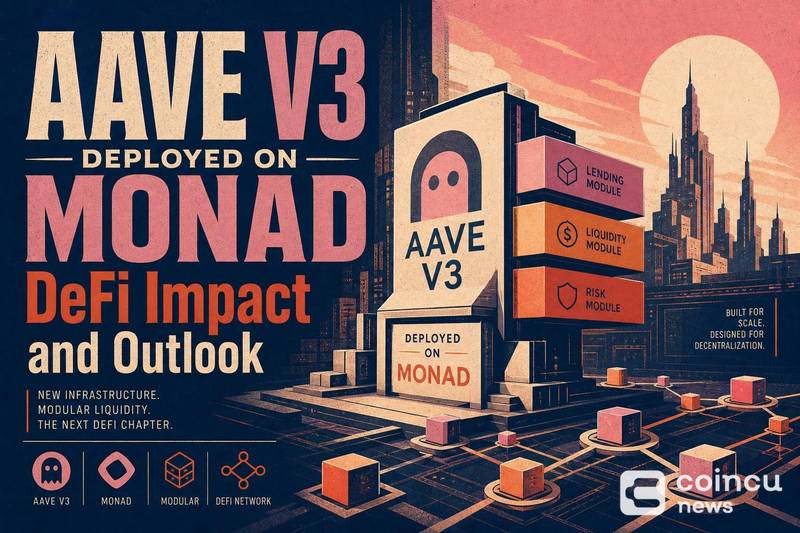
The deployment was confirmed through an official announcement on the Monad blog, which detailed Aave V3 going live on the network. The move followed an Aave governance proposal that outlined the rationale for deploying version 3.7 of the protocol on the chain.
Why This Deployment Matters Beyond Routine Expansion
Aave is the largest decentralized lending protocol by total value locked, and its arrival on a new chain typically serves as a credibility signal for that ecosystem. For Monad, having Aave as core lending infrastructure validates the network’s readiness for serious DeFi activity. For related coverage, see Top Bitcoin Treasury Companies in 2026: 5 Public Firms With the Biggest BTC Reserves.
This is not Aave’s first multichain expansion. The protocol already operates across Ethereum, Arbitrum, Polygon, Optimism, Base, and several other networks. Each deployment has historically helped bootstrap lending and borrowing activity on the target chain, drawing users and liquidity that benefit the broader ecosystem. For related coverage, see Address Linked to Clifton Collins Deposits 500 BTC to Coinbase.
The move also comes as Aave has signaled plans to expand into traditional assets and securities lending, suggesting the protocol is pursuing growth on multiple fronts simultaneously.
Why Monad Is a Strategic Fit for a Lending Protocol
Monad is an EVM-compatible Layer 1 blockchain designed for high-throughput execution. Its architecture focuses on parallel transaction processing, which is particularly relevant for lending markets where liquidations, collateral updates, and interest rate recalculations need to execute reliably under load.
EVM compatibility reduces friction for Aave’s deployment. The protocol’s existing Solidity smart contracts can be ported without a full rewrite, and users familiar with Ethereum-based tooling can interact with the Monad deployment using the same wallets and interfaces they already know.
For Aave, expanding to emerging ecosystems is a user acquisition strategy. Monad’s growing developer community and early DeFi ecosystem represent a user base that currently lacks deep lending infrastructure. Being the first major money market on a chain creates a first-mover advantage that is difficult for competitors to displace once liquidity accumulates.
Potential Effects on Monad’s Liquidity and DeFi Composability
Lending markets serve as foundational infrastructure in any DeFi ecosystem. Once users can borrow against their assets, capital efficiency increases across the entire chain. Tokens that were previously idle can be used as collateral, and borrowed assets can flow into other protocols.
Aave V3’s deployment could enable several immediate use cases on Monad: leveraged yield strategies, collateralized borrowing for trading, and liquidity provision funded through borrowed stablecoins. The deployment also reportedly includes support for GHO, Aave’s native stablecoin, according to a report from Crypto Briefing.
Other Monad-native applications stand to benefit from Aave’s presence. DEXs gain deeper liquidity when borrowed assets are traded. Yield aggregators gain new strategies to offer. The composability effects of a major lending market tend to compound over time as integrations multiply.
Aave’s recent experience navigating an $8.45 billion deposit run demonstrated both the protocol’s resilience and the scale of capital it manages, context that matters as it takes on a new deployment environment.
Risks and Open Questions Worth Watching
Liquidity fragmentation is the most immediate concern. Every new chain deployment splits Aave’s total liquidity across an additional venue. If Monad fails to attract sufficient deposits, the lending markets there could suffer from thin liquidity, wide spreads, and elevated liquidation risk.
Monad is a relatively new ecosystem, and adoption remains uncertain. The presence of Aave alone does not guarantee users will migrate capital to the chain. Network effects, token incentives, and the broader application landscape will all influence whether the deployment gains meaningful traction.
Risk management on a newly deployed lending market also deserves scrutiny. Aave V3 includes features like isolation mode, efficiency mode, and supply caps that help manage risk on new deployments. However, oracle reliability, liquidation bot coverage, and smart contract interactions on a new chain all need to prove themselves under real market conditions. The recent Venus liquidation incident that involved Aave loan repayments illustrates how cross-protocol risk can surface unexpectedly.
Usage data in the weeks following launch will be the clearest indicator of whether this deployment gains real traction or remains a low-activity outpost.
FAQ About Aave V3 on Monad
What is Aave V3?
Aave V3 is the latest major version of the Aave decentralized lending and borrowing protocol. It introduced features like cross-chain portals, high-efficiency mode for correlated assets, isolation mode for newly listed tokens, and improved capital efficiency compared to earlier versions.
What is Monad?
Monad is an EVM-compatible Layer 1 blockchain built for high-performance execution. It uses parallel transaction processing to achieve higher throughput than traditional sequential-execution chains while maintaining compatibility with Ethereum’s developer tooling and smart contract ecosystem.
Why does this deployment matter for DeFi?
Aave’s deployment on a new chain acts as a credibility signal and provides essential lending infrastructure. Lending markets enable capital efficiency, unlock composability for other DeFi protocols, and attract liquidity that benefits the entire ecosystem.
What should users and investors watch next?
Early TVL growth, borrowing utilization rates, and the number of unique depositors on Aave’s Monad deployment will indicate whether adoption is materializing. Integration announcements from other Monad-native protocols and any incentive programs will also shape the trajectory of this deployment.
Disclaimer: This article is for informational purposes only and does not constitute financial or investment advice. Cryptocurrency and digital asset markets carry significant risk. Always do your own research before making decisions.
No tags available.


Other Posts








- China, US Conclude Trade Talks with Focus on Cooperation
- Crypto Weekly: NYSE Backs OKX, Kraken Gets Fed Access, BTC Sells
- Court Upholds Fed’s Rejection of Custodia Bank’s Request
- Former CFO Convicted for $35M Fraudulent Crypto Investment
- DeriW Launches Edge Hour Trading Competition Platform for Derivatives Traders
- Michael Saylor Denies Bitcoin Sell-Off Amid Large BTC Transfer
- Buy Dogecoin on eToro: Step-by-Step Guide for Beginners (2024)
- Kazakhstan Explores Crypto Reserves Backed by National Funds
- JPMorgan Increases Holdings in BlackRock’s Bitcoin ETF
- Nordea Bank Introduces Bitcoin ETP Trading for Nordic Customers
- XRP Spot ETF Launches on Nasdaq Amid Market Fluctuations
- Peter Schiff Challenges Michael Saylor on MSTR’s Business Model
- Thailand Orders Worldcoin to Delete 1.2 Million Biometric Records
- UK Proposes New DeFi Tax Framework to Ease User Burden
- WLFI Under Fire: Analyst Warns Hyperliquid Could Be Next
- Ancient Ethereum Whale Moves $1.19 Billion After Decade
- BlackRock Receives Large Crypto Transfers from Coinbase
- SEC Scrutiny on ALT5 Sigma’s Leadership Disclosure Timing
- Yala Injects $5.5 Million Amid Recovery Efforts
- Radiant Capital Faces $50M Loss in Major Security Breach
- China, US Conclude Trade Talks with Focus on Cooperation
- Crypto Weekly: NYSE Backs OKX, Kraken Gets Fed Access, BTC Sells
- Court Upholds Fed’s Rejection of Custodia Bank’s Request
- Former CFO Convicted for $35M Fraudulent Crypto Investment
- DeriW Launches Edge Hour Trading Competition Platform for Derivatives Traders
- Michael Saylor Denies Bitcoin Sell-Off Amid Large BTC Transfer
- Buy Dogecoin on eToro: Step-by-Step Guide for Beginners (2024)
- Kazakhstan Explores Crypto Reserves Backed by National Funds
- JPMorgan Increases Holdings in BlackRock’s Bitcoin ETF
- Nordea Bank Introduces Bitcoin ETP Trading for Nordic Customers
- XRP Spot ETF Launches on Nasdaq Amid Market Fluctuations
- Peter Schiff Challenges Michael Saylor on MSTR’s Business Model
- Thailand Orders Worldcoin to Delete 1.2 Million Biometric Records
- UK Proposes New DeFi Tax Framework to Ease User Burden
- WLFI Under Fire: Analyst Warns Hyperliquid Could Be Next
- Ancient Ethereum Whale Moves $1.19 Billion After Decade
- BlackRock Receives Large Crypto Transfers from Coinbase
- SEC Scrutiny on ALT5 Sigma’s Leadership Disclosure Timing
- Yala Injects $5.5 Million Amid Recovery Efforts
- Radiant Capital Faces $50M Loss in Major Security Breach
- China, US Conclude Trade Talks with Focus on Cooperation
- Crypto Weekly: NYSE Backs OKX, Kraken Gets Fed Access, BTC Sells
- Court Upholds Fed’s Rejection of Custodia Bank’s Request
- Former CFO Convicted for $35M Fraudulent Crypto Investment
- DeriW Launches Edge Hour Trading Competition Platform for Derivatives Traders
- Michael Saylor Denies Bitcoin Sell-Off Amid Large BTC Transfer
- Buy Dogecoin on eToro: Step-by-Step Guide for Beginners (2024)
- Kazakhstan Explores Crypto Reserves Backed by National Funds
- JPMorgan Increases Holdings in BlackRock’s Bitcoin ETF
- Nordea Bank Introduces Bitcoin ETP Trading for Nordic Customers
- XRP Spot ETF Launches on Nasdaq Amid Market Fluctuations
- Peter Schiff Challenges Michael Saylor on MSTR’s Business Model
- Thailand Orders Worldcoin to Delete 1.2 Million Biometric Records
- UK Proposes New DeFi Tax Framework to Ease User Burden
- WLFI Under Fire: Analyst Warns Hyperliquid Could Be Next
- Ancient Ethereum Whale Moves $1.19 Billion After Decade
- BlackRock Receives Large Crypto Transfers from Coinbase
- SEC Scrutiny on ALT5 Sigma’s Leadership Disclosure Timing
- Yala Injects $5.5 Million Amid Recovery Efforts
- Radiant Capital Faces $50M Loss in Major Security Breach

Bitcoin Slips Toward $64,000 Ahead of Wednesday Inflation Test

Bitcoin Holds Steady as ETF Inflows Offset Selling Ahead of U.S. Inflation Data

ForumPay Expands Payment Infrastructure with New Card and Bank Transfer Acceptance Solution

Newest Assets, Improved User Promotions & Much Greater Crypto Experience_ Xxkk Trade Exchange Reinforces Its Trade Environment