Circle Names Visa, Mastercard, and BlackRock as Validators for Arc Launch
Circle has named Visa, Mastercard, and BlackRock among the founding validator cohort for Arc, its upcoming blockchain, ahead of a September 16 mainnet launch. The selection of three of the most recognizable names in global payments and asset management makes the Circle Arc validators announcement a marker of institutional ambition.
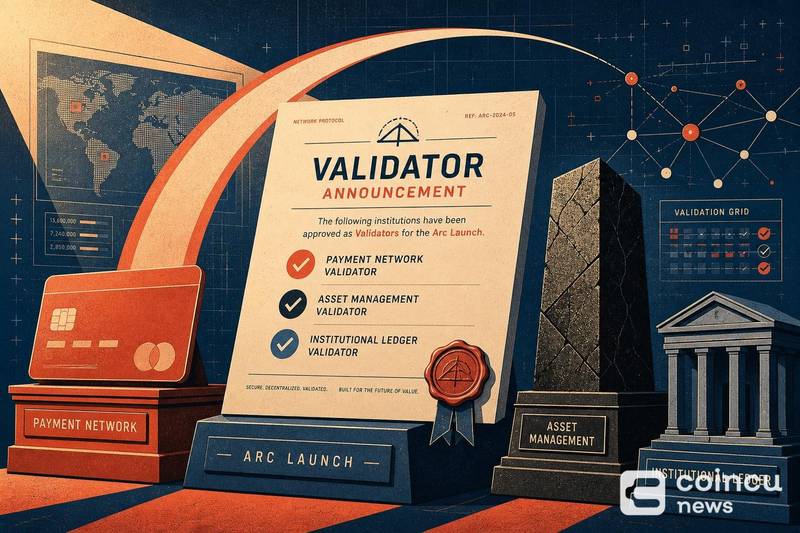
The company confirmed the validator lineup and a set of integrations in an official announcement tied to the mainnet date, published in Circle’s pressroom. Validators are the entities responsible for confirming transactions and securing a network, so the identity of that founding group directly shapes how much trust the network can claim at launch. For related coverage, see Circle Mints 250M USDC on Solana: What It Means.
Circle is the issuer of USDC, the second-largest stablecoin, and has repeatedly leaned on regulated infrastructure as it expands, including its New York limited purpose trust license and the acquisition of blockchain patents. Arc extends that pattern by placing established financial institutions at the base of a new chain.
Why These Validator Names Matter for Arc’s Positioning
Visa and Mastercard are among the largest global payment networks, and their participation ties Arc’s launch narrative directly to payments infrastructure rather than purely speculative trading. That crossover, legacy card rails helping validate a blockchain, is what makes the cohort notable. For related coverage, see Will Worldcoin Return to $1 Price Zone Thanks to World Network's Visa Partnership?.
BlackRock, the world’s largest asset manager, is closely associated with institutional tokenization efforts. Its inclusion signals that Circle is aiming Arc at institutional finance and tokenized real-world assets, not just retail crypto users, reframing who the intended audience is from day one.
Circle shares rose alongside the Arc news, with CoinDesk reporting the stock jumped as an earnings beat offset a revenue miss and the Arc blockchain gained Wall Street backing.
What the September Launch Could Mean for Onchain Finance
A validator set anchored by payment networks strengthens the case that Arc will emphasize reliability and compliance-focused adoption over experimental use. That framing points toward payments settlement and institutional onchain finance as the network’s early focus.
Institutional validator participation can also influence adoption discussions across tokenized finance, given BlackRock’s role in that sector. These are conditional implications tied to the September launch context, not confirmed outcomes, and depend on how the network performs once live.
Open Questions Ahead of the Arc Rollout
The validator names alone do not explain Arc’s decentralization model. It remains unclear what specific responsibilities each validator will hold, how governance will be structured, and whether concentrating early validation among a few large institutions introduces centralization risk.
With the launch dated September 16, pre-launch clarity on validator roles, network design, and governance are the details most worth tracking. Circle has an active USDC operation, including recent large USDC mints on Solana, but Arc’s technical specifics beyond the founding cohort were not detailed in the announcement.
FAQ About Circle Arc Validators and the September Launch
What is Arc? Arc is Circle’s blockchain scheduled for a September 16 mainnet launch, according to Decrypt’s report on the founding cohort.
Who are the announced validators? Circle named Visa, Mastercard, and BlackRock among the founding validator cohort for the network.
Why does the September launch matter for Circle? It brings globally recognized payments and asset management brands into Arc’s validation layer, supporting Circle’s broader push toward regulated, institution-facing infrastructure around USDC.
Disclaimer: This article is for informational purposes only and does not constitute financial or investment advice. Cryptocurrency and digital asset markets carry significant risk. Always do your own research before making decisions.
No tags available.


Other Posts








- China, US Conclude Trade Talks with Focus on Cooperation
- Crypto Weekly: NYSE Backs OKX, Kraken Gets Fed Access, BTC Sells
- Court Upholds Fed’s Rejection of Custodia Bank’s Request
- Former CFO Convicted for $35M Fraudulent Crypto Investment
- DeriW Launches Edge Hour Trading Competition Platform for Derivatives Traders
- Michael Saylor Denies Bitcoin Sell-Off Amid Large BTC Transfer
- Buy Dogecoin on eToro: Step-by-Step Guide for Beginners (2024)
- Kazakhstan Explores Crypto Reserves Backed by National Funds
- JPMorgan Increases Holdings in BlackRock’s Bitcoin ETF
- Nordea Bank Introduces Bitcoin ETP Trading for Nordic Customers
- XRP Spot ETF Launches on Nasdaq Amid Market Fluctuations
- Peter Schiff Challenges Michael Saylor on MSTR’s Business Model
- Thailand Orders Worldcoin to Delete 1.2 Million Biometric Records
- UK Proposes New DeFi Tax Framework to Ease User Burden
- WLFI Under Fire: Analyst Warns Hyperliquid Could Be Next
- Ancient Ethereum Whale Moves $1.19 Billion After Decade
- BlackRock Receives Large Crypto Transfers from Coinbase
- SEC Scrutiny on ALT5 Sigma’s Leadership Disclosure Timing
- Yala Injects $5.5 Million Amid Recovery Efforts
- Radiant Capital Faces $50M Loss in Major Security Breach
- China, US Conclude Trade Talks with Focus on Cooperation
- Crypto Weekly: NYSE Backs OKX, Kraken Gets Fed Access, BTC Sells
- Court Upholds Fed’s Rejection of Custodia Bank’s Request
- Former CFO Convicted for $35M Fraudulent Crypto Investment
- DeriW Launches Edge Hour Trading Competition Platform for Derivatives Traders
- Michael Saylor Denies Bitcoin Sell-Off Amid Large BTC Transfer
- Buy Dogecoin on eToro: Step-by-Step Guide for Beginners (2024)
- Kazakhstan Explores Crypto Reserves Backed by National Funds
- JPMorgan Increases Holdings in BlackRock’s Bitcoin ETF
- Nordea Bank Introduces Bitcoin ETP Trading for Nordic Customers
- XRP Spot ETF Launches on Nasdaq Amid Market Fluctuations
- Peter Schiff Challenges Michael Saylor on MSTR’s Business Model
- Thailand Orders Worldcoin to Delete 1.2 Million Biometric Records
- UK Proposes New DeFi Tax Framework to Ease User Burden
- WLFI Under Fire: Analyst Warns Hyperliquid Could Be Next
- Ancient Ethereum Whale Moves $1.19 Billion After Decade
- BlackRock Receives Large Crypto Transfers from Coinbase
- SEC Scrutiny on ALT5 Sigma’s Leadership Disclosure Timing
- Yala Injects $5.5 Million Amid Recovery Efforts
- Radiant Capital Faces $50M Loss in Major Security Breach
- China, US Conclude Trade Talks with Focus on Cooperation
- Crypto Weekly: NYSE Backs OKX, Kraken Gets Fed Access, BTC Sells
- Court Upholds Fed’s Rejection of Custodia Bank’s Request
- Former CFO Convicted for $35M Fraudulent Crypto Investment
- DeriW Launches Edge Hour Trading Competition Platform for Derivatives Traders
- Michael Saylor Denies Bitcoin Sell-Off Amid Large BTC Transfer
- Buy Dogecoin on eToro: Step-by-Step Guide for Beginners (2024)
- Kazakhstan Explores Crypto Reserves Backed by National Funds
- JPMorgan Increases Holdings in BlackRock’s Bitcoin ETF
- Nordea Bank Introduces Bitcoin ETP Trading for Nordic Customers
- XRP Spot ETF Launches on Nasdaq Amid Market Fluctuations
- Peter Schiff Challenges Michael Saylor on MSTR’s Business Model
- Thailand Orders Worldcoin to Delete 1.2 Million Biometric Records
- UK Proposes New DeFi Tax Framework to Ease User Burden
- WLFI Under Fire: Analyst Warns Hyperliquid Could Be Next
- Ancient Ethereum Whale Moves $1.19 Billion After Decade
- BlackRock Receives Large Crypto Transfers from Coinbase
- SEC Scrutiny on ALT5 Sigma’s Leadership Disclosure Timing
- Yala Injects $5.5 Million Amid Recovery Efforts
- Radiant Capital Faces $50M Loss in Major Security Breach

Circle Names Visa, Mastercard, and BlackRock as Validators for Arc Launch

Eliza founder says AI token is ‘dead’ and shuts down foundation after lawsuit settlement

Ethereum Proposal Weighs Zero Staking Rewards at 50% ETH Staked


Bybit.eu Expands European Offering as Bybit Payments GmbH Secures Electronic Money Institution Licence