70% of U.S. Crypto Traders Would Let AI Manage Portfolios: Survey
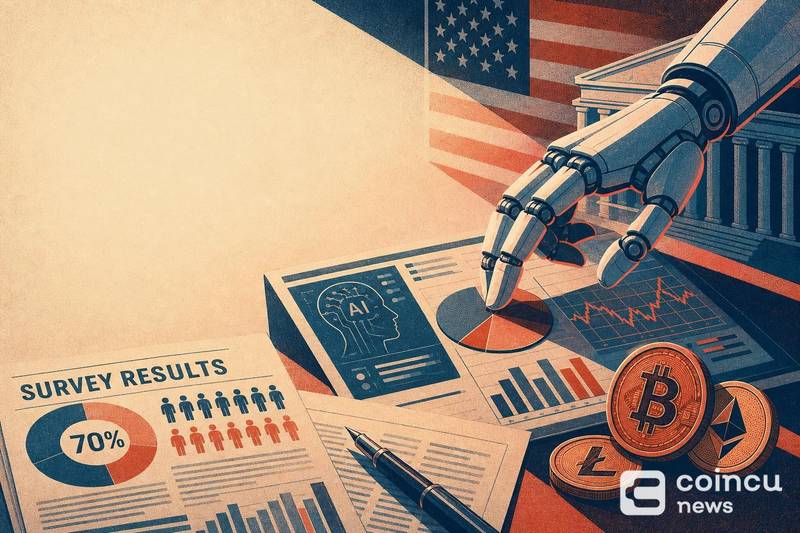
About 70% of U.S. crypto traders would be willing to let AI manage their portfolios, according to survey findings that point to growing openness toward AI-managed crypto portfolios rather than confirmed adoption of the technology.
What the Survey Says About AI-Managed Crypto Portfolios
The reported figure, close to 70%, reflects willingness or trust among U.S. crypto traders, not evidence that these traders are already using AI tools to run their holdings, based on the survey framing. For related coverage, see The Digital Chamber Sues Illinois Over Upcoming Crypto Transaction Tax.
The distinction matters. “Would let” describes stated openness to handing decision-making to an automated system, which is a sentiment signal rather than a measure of real usage or performance. For related coverage, see DOJ Seizes $25M in Crypto Tied to Transnational Fraud Network.
The finding is also specific to U.S. crypto traders. It does not extend to global markets or to the broader population of retail investors who do not actively trade digital assets. For related coverage, see DOJ Seizes $25M Crypto From Global Investment Fraud Network.
Why U.S. Crypto Traders May Be More Open to AI Tools
A majority answering this way suggests that convenience, speed, and efficiency may be shaping trader attitudes toward automation, an interpretation consistent with the reported sentiment. For related coverage, see U.S. Congress Debates Crypto Ethics as DeFi Provisions Stay Under Negotiation.
Plausible drivers include the appeal of 24/7 market monitoring, faster reaction to price moves, and the removal of some emotional decision-making. These are possible motivations rather than confirmed reasons, since the survey establishes willingness, not the specific rationale behind each response.
Trader sentiment shifts alongside broader market mood, which is often tracked through gauges such as the Crypto Fear and Greed Index. Openness to automation can rise when traders seek tools to navigate uncertainty more systematically.
What Letting AI Manage a Crypto Portfolio Could Mean
In plain terms, AI portfolio management refers to software that helps decide how assets are allocated and adjusted over time, rather than a human making each call manually.
In practice, that can cover tasks such as continuous portfolio monitoring, rebalancing between assets, and strategy assistance that flags opportunities or risks. These functions vary widely in how much control the user retains.
There is an important line between automated support and fully autonomous control. A tool that suggests trades or rebalances within limits set by the user is different from one granted authority to execute decisions independently.
Risks and Limits of Handing Crypto Portfolios to AI
Willingness to use AI does not guarantee favorable outcomes. The survey measures openness, not proof that such tools reduce losses or outperform manual management.
Crypto markets are volatile, and automated systems can act on bad signals or amplify mistakes at speed. Traders relying on opaque, black-box models may also struggle to understand why a given decision was made.
User oversight remains central. Delegating portfolio tasks to AI does not remove the need to review performance, understand the tool’s limits, and retain the ability to intervene when conditions change.
FAQ About the Survey and AI-Managed Crypto Portfolios
Does the 70% figure mean traders are already using AI tools? No. The reported figure reflects willingness to let AI manage a portfolio, not current usage or adoption.
What counts as AI managing a crypto portfolio? It generally means software assisting with allocation, rebalancing, and monitoring, ranging from suggestion-based support to more autonomous control depending on the tool.
Does this suggest broader demand for automated crypto investing? The finding points to notable openness among U.S. crypto traders, but as a sentiment signal it stops short of confirming sustained demand or proven results.
Disclaimer: This article is for informational purposes only and does not constitute financial or investment advice. Cryptocurrency and digital asset markets carry significant risk. Always do your own research before making decisions.
No tags available.


Other Posts








- China, US Conclude Trade Talks with Focus on Cooperation
- Crypto Weekly: NYSE Backs OKX, Kraken Gets Fed Access, BTC Sells
- Court Upholds Fed’s Rejection of Custodia Bank’s Request
- Former CFO Convicted for $35M Fraudulent Crypto Investment
- DeriW Launches Edge Hour Trading Competition Platform for Derivatives Traders
- Michael Saylor Denies Bitcoin Sell-Off Amid Large BTC Transfer
- Buy Dogecoin on eToro: Step-by-Step Guide for Beginners (2024)
- Kazakhstan Explores Crypto Reserves Backed by National Funds
- JPMorgan Increases Holdings in BlackRock’s Bitcoin ETF
- Nordea Bank Introduces Bitcoin ETP Trading for Nordic Customers
- XRP Spot ETF Launches on Nasdaq Amid Market Fluctuations
- Peter Schiff Challenges Michael Saylor on MSTR’s Business Model
- Thailand Orders Worldcoin to Delete 1.2 Million Biometric Records
- UK Proposes New DeFi Tax Framework to Ease User Burden
- WLFI Under Fire: Analyst Warns Hyperliquid Could Be Next
- Ancient Ethereum Whale Moves $1.19 Billion After Decade
- BlackRock Receives Large Crypto Transfers from Coinbase
- SEC Scrutiny on ALT5 Sigma’s Leadership Disclosure Timing
- Yala Injects $5.5 Million Amid Recovery Efforts
- Radiant Capital Faces $50M Loss in Major Security Breach
- China, US Conclude Trade Talks with Focus on Cooperation
- Crypto Weekly: NYSE Backs OKX, Kraken Gets Fed Access, BTC Sells
- Court Upholds Fed’s Rejection of Custodia Bank’s Request
- Former CFO Convicted for $35M Fraudulent Crypto Investment
- DeriW Launches Edge Hour Trading Competition Platform for Derivatives Traders
- Michael Saylor Denies Bitcoin Sell-Off Amid Large BTC Transfer
- Buy Dogecoin on eToro: Step-by-Step Guide for Beginners (2024)
- Kazakhstan Explores Crypto Reserves Backed by National Funds
- JPMorgan Increases Holdings in BlackRock’s Bitcoin ETF
- Nordea Bank Introduces Bitcoin ETP Trading for Nordic Customers
- XRP Spot ETF Launches on Nasdaq Amid Market Fluctuations
- Peter Schiff Challenges Michael Saylor on MSTR’s Business Model
- Thailand Orders Worldcoin to Delete 1.2 Million Biometric Records
- UK Proposes New DeFi Tax Framework to Ease User Burden
- WLFI Under Fire: Analyst Warns Hyperliquid Could Be Next
- Ancient Ethereum Whale Moves $1.19 Billion After Decade
- BlackRock Receives Large Crypto Transfers from Coinbase
- SEC Scrutiny on ALT5 Sigma’s Leadership Disclosure Timing
- Yala Injects $5.5 Million Amid Recovery Efforts
- Radiant Capital Faces $50M Loss in Major Security Breach
- China, US Conclude Trade Talks with Focus on Cooperation
- Crypto Weekly: NYSE Backs OKX, Kraken Gets Fed Access, BTC Sells
- Court Upholds Fed’s Rejection of Custodia Bank’s Request
- Former CFO Convicted for $35M Fraudulent Crypto Investment
- DeriW Launches Edge Hour Trading Competition Platform for Derivatives Traders
- Michael Saylor Denies Bitcoin Sell-Off Amid Large BTC Transfer
- Buy Dogecoin on eToro: Step-by-Step Guide for Beginners (2024)
- Kazakhstan Explores Crypto Reserves Backed by National Funds
- JPMorgan Increases Holdings in BlackRock’s Bitcoin ETF
- Nordea Bank Introduces Bitcoin ETP Trading for Nordic Customers
- XRP Spot ETF Launches on Nasdaq Amid Market Fluctuations
- Peter Schiff Challenges Michael Saylor on MSTR’s Business Model
- Thailand Orders Worldcoin to Delete 1.2 Million Biometric Records
- UK Proposes New DeFi Tax Framework to Ease User Burden
- WLFI Under Fire: Analyst Warns Hyperliquid Could Be Next
- Ancient Ethereum Whale Moves $1.19 Billion After Decade
- BlackRock Receives Large Crypto Transfers from Coinbase
- SEC Scrutiny on ALT5 Sigma’s Leadership Disclosure Timing
- Yala Injects $5.5 Million Amid Recovery Efforts
- Radiant Capital Faces $50M Loss in Major Security Breach

Strategy Builds $4.75B Cash Cushion as Investors Seek More Than Bitcoin Exposure

Vitalik Buterin’s Ethereum Roadmap Prioritizes Privacy and Quantum Resistance

Trump Media Bitcoin Holdings Shrink as Crypto Losses Hit $361M

CT3 Begins Preparing Its Ecosystem for the Launch of the CT3GB Economy
Syntetika Launches Tokenization Hub Bringing Regulated Investment Strategies Onchain