Circle has issued an additional $1 billion in USDC stablecoin on the Solana blockchain within a 24-hour window, expanding dollar-denominated liquidity across one of the most active networks in crypto.
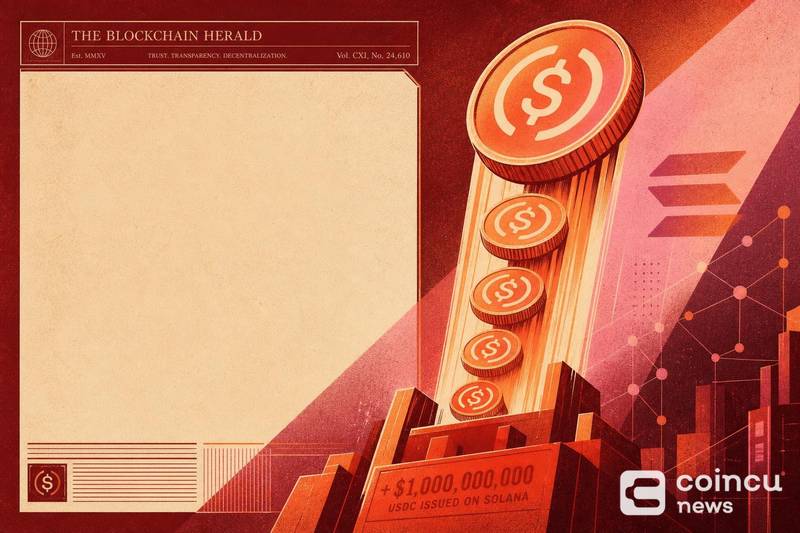
Circle adds another $1 billion USDC to Solana supply
The minting event saw $1 billion worth of new USDC tokens created on Solana over a single 24-hour period. The issuance was chain-specific, meaning the fresh supply was deployed directly on Solana rather than distributed across multiple networks.
Circle, the company behind USDC, controls the minting process through designated treasury addresses. On-chain activity tied to the Solana USDC mint authority account reflects the scale of recent issuance on the network.
Circle has previously updated its infrastructure for Solana-based USDC, including rolling out a new pre-mint address as part of CCTP v2, which streamlined the cross-chain transfer and minting process for the stablecoin.
Why rapid USDC issuance on Solana matters
Fresh stablecoin supply on any blockchain directly expands the available dollar liquidity within that ecosystem. For Solana, which has become a major venue for trading and decentralized finance activity, additional USDC means deeper liquidity pools and tighter spreads on trading pairs.
USDC serves as a base currency in most Solana DEX pairs and lending protocols. When Circle mints new tokens on-chain, it increases the capital available for spot trading, collateral posting, and settlement flows across the network.
Solana’s recent growth as a DeFi hub, including initiatives like the Solana Foundation’s Frontier Traders VIP program for high-volume traders, has driven demand for native stablecoin liquidity. A concentrated mint of this scale in a single day reflects the depth of that demand.
What the latest mint could signal for market participants
Large stablecoin issuances are commonly watched by traders and analysts as potential indicators of incoming capital deployment. When new USDC enters a blockchain ecosystem, it often precedes periods of increased trading volume and protocol activity.
However, minting is not the same as immediate circulation. Newly issued USDC may sit in Circle’s treasury or intermediary wallets before being distributed to exchanges, market makers, or institutional clients. The distinction between issuance and deployment matters for assessing near-term market impact.
For Solana-based markets specifically, an injection of stablecoin supply at this scale could support higher trading volumes and greater capital efficiency across DeFi protocols. Whether this translates into directional price movement for SOL or other Solana tokens depends on how and when the newly minted USDC enters active circulation.
Recent volatility across crypto treasuries, as seen when the Avalanche treasury fell 16% on its first day after listing, illustrates how sensitive digital asset markets remain to large capital movements and liquidity shifts.
How Circle and Solana fit into the broader stablecoin landscape
USDC is one of the most widely used dollar-backed stablecoins in crypto, operating across multiple blockchains. Circle’s decisions about where to mint new supply reflect real-time demand signals from each network’s user base and institutional participants.
Solana has positioned itself as a high-throughput, low-cost network capable of handling large transaction volumes. The chain’s appeal for stablecoin transfers and DeFi activity has grown substantially, making it a natural target for increased USDC issuance.
Chain-specific minting choices by Circle effectively shape where liquidity concentrates across crypto markets. A single-day issuance of this magnitude on Solana signals that institutional and retail demand on the network is significant enough to warrant rapid supply expansion. As stablecoins increasingly underpin crypto market infrastructure, the ongoing trillion-dollar valuation debate between traditional IPOs and crypto highlights how digital dollar instruments are becoming central to the broader financial conversation.
FAQ
What does it mean when Circle issues USDC?
When Circle issues USDC, it creates new tokens backed by dollar reserves. Each minted USDC is redeemable 1:1 for US dollars, and Circle publishes regular attestations of its reserve holdings.
Does minted USDC immediately enter circulation?
Not necessarily. Newly minted USDC often flows first to Circle’s treasury or partner wallets before being distributed to exchanges, institutions, or DeFi protocols. There can be a delay between minting and active circulation.
Why is Solana important in this story?
Solana has become one of the most active blockchains for trading and DeFi. Circle choosing to mint this volume of USDC specifically on Solana, rather than on other supported chains, reflects strong demand for dollar liquidity within the Solana ecosystem.
Could this affect Solana ecosystem liquidity?
Yes. Additional USDC supply deepens liquidity pools, enables larger trades with less slippage, and provides more collateral for lending and borrowing protocols across Solana’s DeFi landscape.
Disclaimer: This article is for informational purposes only and does not constitute financial or investment advice. Cryptocurrency and digital asset markets carry significant risk. Always do your own research before making decisions.
No tags available.


Other Posts








- China, US Conclude Trade Talks with Focus on Cooperation
- Crypto Weekly: NYSE Backs OKX, Kraken Gets Fed Access, BTC Sells
- Court Upholds Fed’s Rejection of Custodia Bank’s Request
- Former CFO Convicted for $35M Fraudulent Crypto Investment
- DeriW Launches Edge Hour Trading Competition Platform for Derivatives Traders
- Michael Saylor Denies Bitcoin Sell-Off Amid Large BTC Transfer
- Buy Dogecoin on eToro: Step-by-Step Guide for Beginners (2024)
- Kazakhstan Explores Crypto Reserves Backed by National Funds
- JPMorgan Increases Holdings in BlackRock’s Bitcoin ETF
- Nordea Bank Introduces Bitcoin ETP Trading for Nordic Customers
- XRP Spot ETF Launches on Nasdaq Amid Market Fluctuations
- Peter Schiff Challenges Michael Saylor on MSTR’s Business Model
- Thailand Orders Worldcoin to Delete 1.2 Million Biometric Records
- UK Proposes New DeFi Tax Framework to Ease User Burden
- WLFI Under Fire: Analyst Warns Hyperliquid Could Be Next
- Ancient Ethereum Whale Moves $1.19 Billion After Decade
- BlackRock Receives Large Crypto Transfers from Coinbase
- SEC Scrutiny on ALT5 Sigma’s Leadership Disclosure Timing
- Yala Injects $5.5 Million Amid Recovery Efforts
- Radiant Capital Faces $50M Loss in Major Security Breach
- China, US Conclude Trade Talks with Focus on Cooperation
- Crypto Weekly: NYSE Backs OKX, Kraken Gets Fed Access, BTC Sells
- Court Upholds Fed’s Rejection of Custodia Bank’s Request
- Former CFO Convicted for $35M Fraudulent Crypto Investment
- DeriW Launches Edge Hour Trading Competition Platform for Derivatives Traders
- Michael Saylor Denies Bitcoin Sell-Off Amid Large BTC Transfer
- Buy Dogecoin on eToro: Step-by-Step Guide for Beginners (2024)
- Kazakhstan Explores Crypto Reserves Backed by National Funds
- JPMorgan Increases Holdings in BlackRock’s Bitcoin ETF
- Nordea Bank Introduces Bitcoin ETP Trading for Nordic Customers
- XRP Spot ETF Launches on Nasdaq Amid Market Fluctuations
- Peter Schiff Challenges Michael Saylor on MSTR’s Business Model
- Thailand Orders Worldcoin to Delete 1.2 Million Biometric Records
- UK Proposes New DeFi Tax Framework to Ease User Burden
- WLFI Under Fire: Analyst Warns Hyperliquid Could Be Next
- Ancient Ethereum Whale Moves $1.19 Billion After Decade
- BlackRock Receives Large Crypto Transfers from Coinbase
- SEC Scrutiny on ALT5 Sigma’s Leadership Disclosure Timing
- Yala Injects $5.5 Million Amid Recovery Efforts
- Radiant Capital Faces $50M Loss in Major Security Breach
- China, US Conclude Trade Talks with Focus on Cooperation
- Crypto Weekly: NYSE Backs OKX, Kraken Gets Fed Access, BTC Sells
- Court Upholds Fed’s Rejection of Custodia Bank’s Request
- Former CFO Convicted for $35M Fraudulent Crypto Investment
- DeriW Launches Edge Hour Trading Competition Platform for Derivatives Traders
- Michael Saylor Denies Bitcoin Sell-Off Amid Large BTC Transfer
- Buy Dogecoin on eToro: Step-by-Step Guide for Beginners (2024)
- Kazakhstan Explores Crypto Reserves Backed by National Funds
- JPMorgan Increases Holdings in BlackRock’s Bitcoin ETF
- Nordea Bank Introduces Bitcoin ETP Trading for Nordic Customers
- XRP Spot ETF Launches on Nasdaq Amid Market Fluctuations
- Peter Schiff Challenges Michael Saylor on MSTR’s Business Model
- Thailand Orders Worldcoin to Delete 1.2 Million Biometric Records
- UK Proposes New DeFi Tax Framework to Ease User Burden
- WLFI Under Fire: Analyst Warns Hyperliquid Could Be Next
- Ancient Ethereum Whale Moves $1.19 Billion After Decade
- BlackRock Receives Large Crypto Transfers from Coinbase
- SEC Scrutiny on ALT5 Sigma’s Leadership Disclosure Timing
- Yala Injects $5.5 Million Amid Recovery Efforts
- Radiant Capital Faces $50M Loss in Major Security Breach

Coinbase Enterprise Customers Can Now Accept AI Agent Payments