Updated July 9, 2026
Quick Answer
The biggest difference between an AMM DEX and an order-book DEX is how liquidity is organized.
- an AMM uses liquidity pools and formulas to quote prices
- an order-book DEX matches buyers and sellers through bids and asks
Neither model is universally better. They solve different trading problems.

Why This Comparison Matters More Now
Older DEX explainers often assumed decentralized trading meant AMMs.
That is no longer enough.
In 2026, readers routinely compare:
- pool-based spot swaps on AMMs like Uniswap or Curve
- high-performance order-book trading on venues like Hyperliquid or dYdX
So the useful question is no longer “which one wins?” It is “which model fits the trade I am actually trying to make?”
How AMMs Work
An AMM uses a liquidity pool and a pricing formula instead of a live bid-ask ladder.
That is why AMMs are so useful for:
- permissionless listing
- fast token swaps
- long-tail assets
- passive LP participation
Uniswap’s official app remains the cleanest mainstream reference point for this model, while Curve shows how AMMs can be specialized further for stablecoin-style execution.
AMM strengths
- easy onchain swapping
- simple user flow
- strong fit for spot trading and long-tail tokens
AMM weaknesses
- slippage can increase sharply in thin pools
- LPs take on impermanent-loss-style trade-offs
- execution quality depends heavily on pool depth
How Order-Book DEXes Work
An order-book DEX organizes liquidity through bids and asks rather than through pooled-token curves.
That makes the model easier to map to traditional trading behavior:
- price ladder visibility
- maker and taker dynamics
- more trading-native execution for active users
Hyperliquid and dYdX are useful reference points because both frame decentralized trading more like a pro venue than a swap widget.
Order-book strengths
- clearer fit for active traders
- easier conceptual model for people used to exchange books
- strong fit for perps and trading-native execution
Order-book weaknesses
- not always the simplest experience for casual users
- less natural fit for long-tail spot swapping
- often more relevant to active traders than everyday token holders
Where AMMs Usually Win
AMMs usually make more sense when:
- the user wants a straightforward spot swap
- the asset is more niche
- the user values simplicity over trading-tool depth
- LP participation is part of the strategy
That is why AMMs still dominate so much everyday onchain behavior.
Where Order-Book DEXes Usually Win
Order-book DEXes usually make more sense when:
- the user wants a trading-native interface
- the user cares about bids, asks, and more explicit execution structure
- the venue is built around perpetuals or active speculation rather than casual swapping
That does not mean the model is better for everyone. It means the job is different.
Which Model Fits Which User
If you only want the practical chooser:
- choose an AMM if you mostly want spot swaps and broad token access
- choose an order-book DEX if you are an active trader and want a more exchange-like experience
Readers who want examples can think of:
- Uniswap or Curve for AMM logic
- Hyperliquid or dYdX for order-book style logic
FAQ
Is an AMM better than an order-book DEX?
Not universally. AMMs are usually better for simple token swaps and long-tail access. Order-book DEXes are usually better for active trading and exchange-style execution.
Why do AMMs have slippage?
Because the price is determined by pool depth and the pricing curve. Large trades move the pool balance and therefore move the quoted price.
Why do order-book DEXes feel more like centralized exchanges?
Because the execution model is closer to traditional bid-ask trading, even if the platform is decentralized in custody or infrastructure.
Further Reading
References


- China, US Conclude Trade Talks with Focus on Cooperation
- Crypto Weekly: NYSE Backs OKX, Kraken Gets Fed Access, BTC Sells
- Court Upholds Fed’s Rejection of Custodia Bank’s Request
- Former CFO Convicted for $35M Fraudulent Crypto Investment
- DeriW Launches Edge Hour Trading Competition Platform for Derivatives Traders
- Michael Saylor Denies Bitcoin Sell-Off Amid Large BTC Transfer
- Buy Dogecoin on eToro: Step-by-Step Guide for Beginners (2024)
- Kazakhstan Explores Crypto Reserves Backed by National Funds
- JPMorgan Increases Holdings in BlackRock’s Bitcoin ETF
- Nordea Bank Introduces Bitcoin ETP Trading for Nordic Customers
- XRP Spot ETF Launches on Nasdaq Amid Market Fluctuations
- Peter Schiff Challenges Michael Saylor on MSTR’s Business Model
- Thailand Orders Worldcoin to Delete 1.2 Million Biometric Records
- UK Proposes New DeFi Tax Framework to Ease User Burden
- WLFI Under Fire: Analyst Warns Hyperliquid Could Be Next
- Ancient Ethereum Whale Moves $1.19 Billion After Decade
- BlackRock Receives Large Crypto Transfers from Coinbase
- SEC Scrutiny on ALT5 Sigma’s Leadership Disclosure Timing
- Yala Injects $5.5 Million Amid Recovery Efforts
- Radiant Capital Faces $50M Loss in Major Security Breach
- China, US Conclude Trade Talks with Focus on Cooperation
- Crypto Weekly: NYSE Backs OKX, Kraken Gets Fed Access, BTC Sells
- Court Upholds Fed’s Rejection of Custodia Bank’s Request
- Former CFO Convicted for $35M Fraudulent Crypto Investment
- DeriW Launches Edge Hour Trading Competition Platform for Derivatives Traders
- Michael Saylor Denies Bitcoin Sell-Off Amid Large BTC Transfer
- Buy Dogecoin on eToro: Step-by-Step Guide for Beginners (2024)
- Kazakhstan Explores Crypto Reserves Backed by National Funds
- JPMorgan Increases Holdings in BlackRock’s Bitcoin ETF
- Nordea Bank Introduces Bitcoin ETP Trading for Nordic Customers
- XRP Spot ETF Launches on Nasdaq Amid Market Fluctuations
- Peter Schiff Challenges Michael Saylor on MSTR’s Business Model
- Thailand Orders Worldcoin to Delete 1.2 Million Biometric Records
- UK Proposes New DeFi Tax Framework to Ease User Burden
- WLFI Under Fire: Analyst Warns Hyperliquid Could Be Next
- Ancient Ethereum Whale Moves $1.19 Billion After Decade
- BlackRock Receives Large Crypto Transfers from Coinbase
- SEC Scrutiny on ALT5 Sigma’s Leadership Disclosure Timing
- Yala Injects $5.5 Million Amid Recovery Efforts
- Radiant Capital Faces $50M Loss in Major Security Breach
- China, US Conclude Trade Talks with Focus on Cooperation
- Crypto Weekly: NYSE Backs OKX, Kraken Gets Fed Access, BTC Sells
- Court Upholds Fed’s Rejection of Custodia Bank’s Request
- Former CFO Convicted for $35M Fraudulent Crypto Investment
- DeriW Launches Edge Hour Trading Competition Platform for Derivatives Traders
- Michael Saylor Denies Bitcoin Sell-Off Amid Large BTC Transfer
- Buy Dogecoin on eToro: Step-by-Step Guide for Beginners (2024)
- Kazakhstan Explores Crypto Reserves Backed by National Funds
- JPMorgan Increases Holdings in BlackRock’s Bitcoin ETF
- Nordea Bank Introduces Bitcoin ETP Trading for Nordic Customers
- XRP Spot ETF Launches on Nasdaq Amid Market Fluctuations
- Peter Schiff Challenges Michael Saylor on MSTR’s Business Model
- Thailand Orders Worldcoin to Delete 1.2 Million Biometric Records
- UK Proposes New DeFi Tax Framework to Ease User Burden
- WLFI Under Fire: Analyst Warns Hyperliquid Could Be Next
- Ancient Ethereum Whale Moves $1.19 Billion After Decade
- BlackRock Receives Large Crypto Transfers from Coinbase
- SEC Scrutiny on ALT5 Sigma’s Leadership Disclosure Timing
- Yala Injects $5.5 Million Amid Recovery Efforts
- Radiant Capital Faces $50M Loss in Major Security Breach


H100 More Than Triples Bitcoin Holdings to 3,506 BTC After Acquisition Deal

Keel Shuts Down U.S. Bitcoin Mining Operations as AI Pivot Deepens
Syntetika Launches Tokenization Hub Bringing Regulated Investment Strategies Onchain
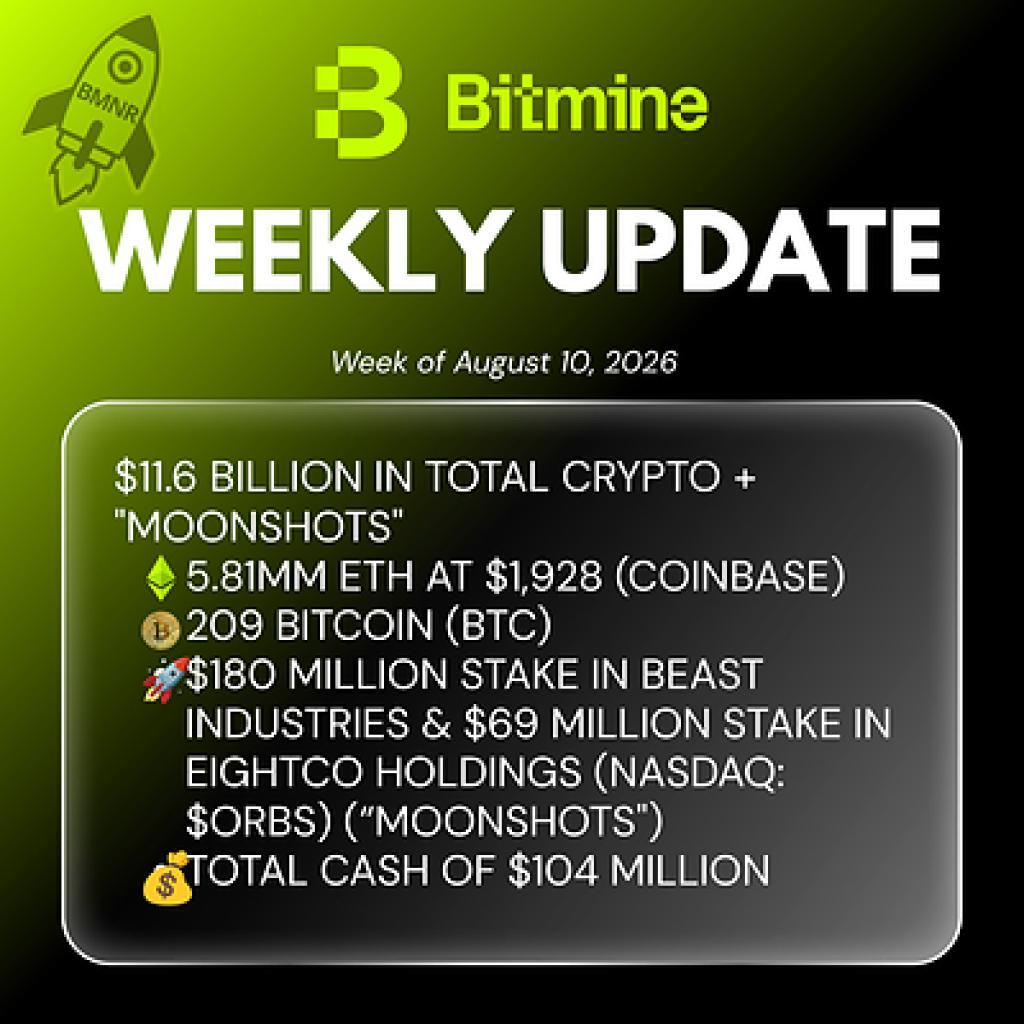
Bitmine Immersion Technologies (BMNR) Announces ETH Holdings Reach 5.81 Million Tokens, and Total Crypto and Total Cash Holdings of $11.6 Billion