Mastercard has agreed to acquire BVNK, a stablecoin infrastructure company, in a deal worth up to $1.8 billion. The acquisition signals a major move by one of the world’s largest payment networks to embed on-chain payment rails directly into its existing fiat infrastructure.
Mastercard Acquires BVNK: What Happened
On March 17, 2026, Mastercard announced it had entered a definitive agreement to acquire BVNK for up to $1.8 billion, including $300 million in contingent payments tied to performance targets. The deal represents Mastercard’s largest crypto-sector acquisition to date.
Mastercard’s March 31, 2026 Form 10-Q filed with the SEC breaks the structure down further: a $1.5 billion base purchase price, excluding customary closing adjustments, with up to $300 million of additional contingent consideration. The transaction remains subject to regulatory approval, with Mastercard expecting to close before the end of 2026.
BVNK is a payments infrastructure company that enables businesses to move value between fiat currencies and stablecoins. The company says it processes $30 billion annually and operates across multiple geographies.
Why Mastercard Is Targeting Stablecoin Infrastructure
Mastercard framed the acquisition as a bridge between its existing fiat rails and the growing universe of stablecoins, tokenized deposits, and other on-chain payment use cases. Mastercard’s press release cited digital currency payment volumes reaching at least $350 billion in 2025, a figure attributed to Boston Consulting Group research.
Jorn Lambert, a Mastercard executive, stated the strategic logic directly:
“Adding on-chain rails to our network will support speed and programmability for virtually every type of transaction.”
Jorn Lambert, Mastercard
BVNK’s specific capabilities fill a gap in Mastercard’s product suite. After the deal closes, BVNK would power stablecoin capabilities across Mastercard payment endpoints, including 24/7 stablecoin settlement for processors and acquirers, and stablecoin checkout integrated into Mastercard’s payment gateway.
The acquisition comes as traditional payment companies face pressure to move beyond card rails. The stablecoin market alone has reached significant scale: USDC, one of the most widely used stablecoins, carries a market capitalization of roughly $76.26 billion. That figure reflects the size of the addressable market Mastercard is pursuing through BVNK’s infrastructure.
What the Deal Could Mean for Crypto Payments
The Mastercard-BVNK combination would create a rare direct link between a top-tier card network and stablecoin settlement infrastructure. For merchants and payment processors, 24/7 stablecoin settlement could reduce the delays and costs associated with cross-border fiat transfers.
BVNK’s gateway integration means stablecoin checkout could become available wherever Mastercard is accepted, without requiring merchants to build their own crypto infrastructure. That lowers the barrier for enterprise-grade stablecoin adoption considerably.
The deal also fits a broader pattern of institutional capital flowing into digital asset infrastructure. Securitize recently reported record Q1 revenue as tokenized asset AUM reached $3.4 billion, illustrating how traditional finance firms are moving beyond pilot projects into production-scale digital asset operations.
S&P Global Market Intelligence noted that Mastercard’s move may pressure Visa and other incumbents to accelerate their own stablecoin infrastructure plans. S&P identified Bridge and Zero Hash as notable competitors in the category, suggesting the deal could trigger a wave of similar acquisitions.
The competitive dynamics extend beyond payments. As stablecoins become embedded in traditional financial infrastructure, regulatory scrutiny intensifies. The deal comes amid what Mastercard described as increased regulatory clarity on digital currencies across multiple geographies, though the U.S. government has simultaneously stepped up enforcement actions involving crypto-linked financial flows.
What Users, Partners, and the Market Should Watch Next
The most immediate question is regulatory approval. Mastercard’s 10-Q filing confirms the transaction remains subject to regulatory review and other customary closing conditions, with a target completion date before year-end 2026.
For BVNK’s existing clients, the integration roadmap matters. BVNK outlined two specific post-close products: 24/7 stablecoin settlement for processors and acquirers, and stablecoin checkout within Mastercard’s payment gateway. How quickly those products roll out will determine whether the acquisition delivers immediate value or remains a strategic bet.
Partners and competitors should watch for Visa’s response. S&P’s analysis explicitly flagged competitive pressure on incumbents, and Bridge and Zero Hash could become acquisition targets as card networks race to build stablecoin capabilities.
The contingent payment structure, with $300 million tied to performance targets, also signals that Mastercard is hedging. If BVNK hits its targets, the full deal reaches the maximum value. If it doesn’t, Mastercard’s downside is capped at $1.5 billion.
Corporate treasuries are also watching how large payment networks handle digital asset exposure. SpaceX’s recent disclosure of holding 18,712 BTC highlighted growing corporate appetite for crypto assets, and Mastercard’s acquisition of an entire stablecoin infrastructure company takes that trend a step further.
FAQ About Mastercard’s Acquisition of BVNK
What is BVNK?
BVNK is a payments infrastructure company that enables businesses to send, receive, and settle transactions in both fiat currencies and stablecoins. The company processes $30 billion annually and serves enterprise clients across multiple markets.
How much is Mastercard paying for BVNK?
The deal has a maximum value of $1.8 billion. The base purchase price is $1.5 billion, with an additional $300 million contingent on BVNK meeting specific performance targets after the acquisition closes.
Why did Mastercard acquire BVNK?
Mastercard wants to connect its existing fiat payment rails with stablecoin and on-chain payment capabilities. BVNK’s infrastructure allows Mastercard to offer 24/7 stablecoin settlement and stablecoin checkout across its payment endpoints without building the technology from scratch.
When will the deal close?
Mastercard expects to complete the acquisition before the end of 2026, subject to regulatory approval and other customary closing conditions.
What does this mean for crypto payments?
If completed, the deal would embed stablecoin settlement directly into one of the world’s largest card networks. Merchants and processors using Mastercard could gain access to stablecoin payment options without building separate crypto infrastructure, potentially accelerating enterprise adoption of digital currency payments.
Disclaimer: This article is for informational purposes only and does not constitute financial or investment advice. Cryptocurrency and digital asset markets carry significant risk. Always do your own research before making decisions.
No tags available.


Other Posts








- China, US Conclude Trade Talks with Focus on Cooperation
- Crypto Weekly: NYSE Backs OKX, Kraken Gets Fed Access, BTC Sells
- DeriW Launches Edge Hour Trading Competition Platform for Derivatives Traders
- Court Upholds Fed’s Rejection of Custodia Bank’s Request
- Former CFO Convicted for $35M Fraudulent Crypto Investment
- Michael Saylor Denies Bitcoin Sell-Off Amid Large BTC Transfer
- Buy Dogecoin on eToro: Step-by-Step Guide for Beginners (2024)
- Kazakhstan Explores Crypto Reserves Backed by National Funds
- JPMorgan Increases Holdings in BlackRock’s Bitcoin ETF
- Nordea Bank Introduces Bitcoin ETP Trading for Nordic Customers
- XRP Spot ETF Launches on Nasdaq Amid Market Fluctuations
- Crypto Leaders Address Macro Volatility Amid Market Shifts
- Peter Schiff Challenges Michael Saylor on MSTR’s Business Model
- Thailand Orders Worldcoin to Delete 1.2 Million Biometric Records
- UK Proposes New DeFi Tax Framework to Ease User Burden
- WLFI Under Fire: Analyst Warns Hyperliquid Could Be Next
- Ancient Ethereum Whale Moves $1.19 Billion After Decade
- BlackRock Receives Large Crypto Transfers from Coinbase
- SEC Scrutiny on ALT5 Sigma’s Leadership Disclosure Timing
- MoonPay Gains Trust License for Crypto Operations in New York
- China, US Conclude Trade Talks with Focus on Cooperation
- Crypto Weekly: NYSE Backs OKX, Kraken Gets Fed Access, BTC Sells
- DeriW Launches Edge Hour Trading Competition Platform for Derivatives Traders
- Court Upholds Fed’s Rejection of Custodia Bank’s Request
- Former CFO Convicted for $35M Fraudulent Crypto Investment
- Michael Saylor Denies Bitcoin Sell-Off Amid Large BTC Transfer
- Buy Dogecoin on eToro: Step-by-Step Guide for Beginners (2024)
- Kazakhstan Explores Crypto Reserves Backed by National Funds
- JPMorgan Increases Holdings in BlackRock’s Bitcoin ETF
- Nordea Bank Introduces Bitcoin ETP Trading for Nordic Customers
- XRP Spot ETF Launches on Nasdaq Amid Market Fluctuations
- Crypto Leaders Address Macro Volatility Amid Market Shifts
- Peter Schiff Challenges Michael Saylor on MSTR’s Business Model
- Thailand Orders Worldcoin to Delete 1.2 Million Biometric Records
- UK Proposes New DeFi Tax Framework to Ease User Burden
- WLFI Under Fire: Analyst Warns Hyperliquid Could Be Next
- Ancient Ethereum Whale Moves $1.19 Billion After Decade
- BlackRock Receives Large Crypto Transfers from Coinbase
- SEC Scrutiny on ALT5 Sigma’s Leadership Disclosure Timing
- MoonPay Gains Trust License for Crypto Operations in New York
- China, US Conclude Trade Talks with Focus on Cooperation
- Crypto Weekly: NYSE Backs OKX, Kraken Gets Fed Access, BTC Sells
- DeriW Launches Edge Hour Trading Competition Platform for Derivatives Traders
- Court Upholds Fed’s Rejection of Custodia Bank’s Request
- Former CFO Convicted for $35M Fraudulent Crypto Investment
- Michael Saylor Denies Bitcoin Sell-Off Amid Large BTC Transfer
- Buy Dogecoin on eToro: Step-by-Step Guide for Beginners (2024)
- Kazakhstan Explores Crypto Reserves Backed by National Funds
- JPMorgan Increases Holdings in BlackRock’s Bitcoin ETF
- Nordea Bank Introduces Bitcoin ETP Trading for Nordic Customers
- XRP Spot ETF Launches on Nasdaq Amid Market Fluctuations
- Crypto Leaders Address Macro Volatility Amid Market Shifts
- Peter Schiff Challenges Michael Saylor on MSTR’s Business Model
- Thailand Orders Worldcoin to Delete 1.2 Million Biometric Records
- UK Proposes New DeFi Tax Framework to Ease User Burden
- WLFI Under Fire: Analyst Warns Hyperliquid Could Be Next
- Ancient Ethereum Whale Moves $1.19 Billion After Decade
- BlackRock Receives Large Crypto Transfers from Coinbase
- SEC Scrutiny on ALT5 Sigma’s Leadership Disclosure Timing
- MoonPay Gains Trust License for Crypto Operations in New York




Autheo Introduces the Internet Operating System: A Decentralized Coordination Layer for Web, Blockchain, & AI
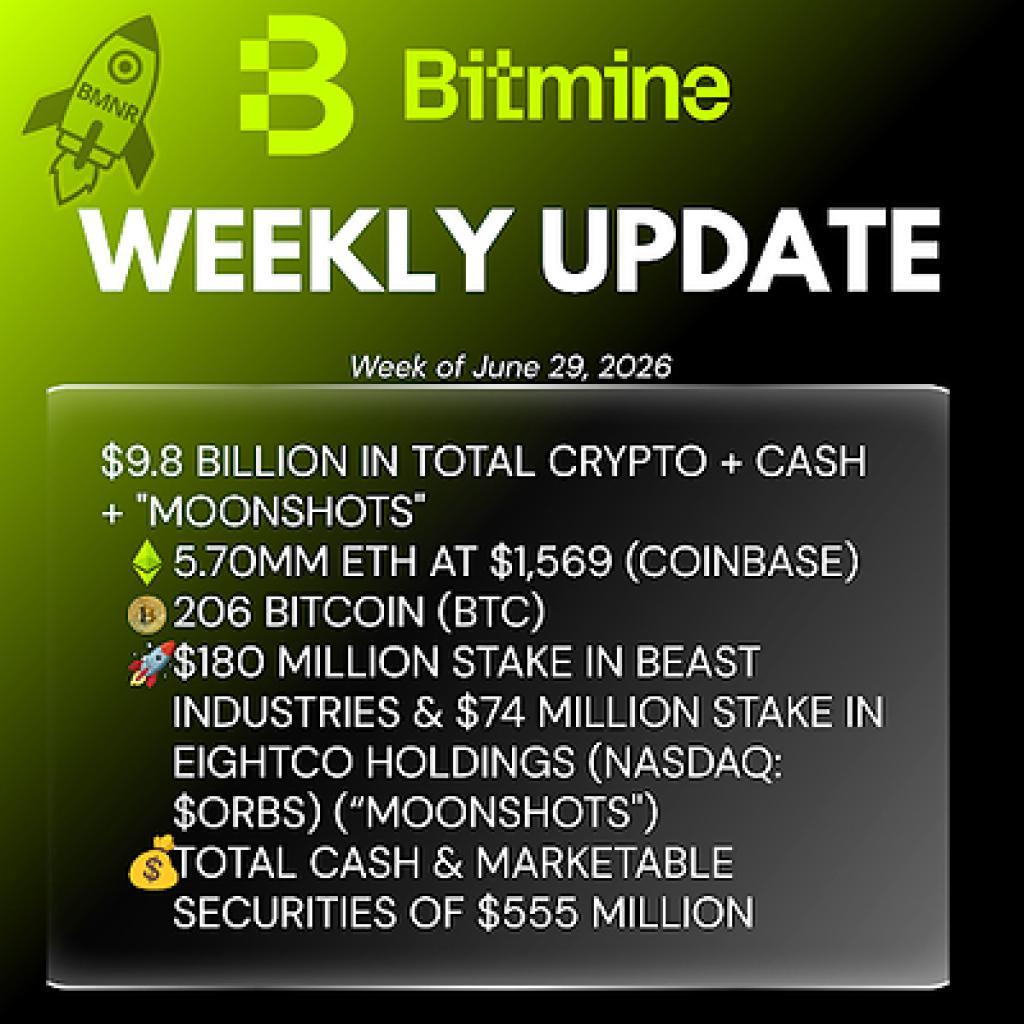
Bitmine Immersion Technologies (BMNR) Announces ETH Holdings Reach 5.70 Million Tokens, and Total Crypto and Total Cash Holdings of $9.8 Billion