

Updated July 9, 2026
Quick Answer
If you want the short version, the most relevant smart contract wallet products to know in 2026 are Safe, Argent, Ambire, Braavos, and Coinbase Smart Wallet.
They do not solve the same problem.

- Safe is the clearest reference point for multisig and modular treasury-style smart accounts.
- Argent remains important for consumer-friendly smart wallet design, especially around recovery and Starknet-oriented onboarding.
- Ambire stands out for bringing smart-wallet features to EVM users without forcing a clean-slate workflow.
- Braavos is one of the clearest examples of a Starknet-native smart wallet built around biometric security and account abstraction.
- Coinbase Smart Wallet matters because it pushes passkey-based onboarding into a mainstream consumer flow.
The better question is not which one is “best” in the abstract. It is which wallet model fits your custody habits, recovery expectations, chain preference, and transaction pattern.
Why This Topic Matters More in 2026
Smart contract wallets are no longer just a niche concept for power users.
They sit at the center of several wallet trends now moving into the mainstream:
- passkey-based onboarding
- programmable permissions
- batched transactions
- social or modular recovery
- app-sponsored gas or gas abstraction
Safe’s official documentation now describes its stack as an open-source, modular smart account system, while Coinbase’s smart wallet help page explains a more retail-facing version of the same shift: users can create a wallet with a passkey instead of starting from a recovery phrase.

That does not mean every smart contract wallet is interchangeable. Some are built for teams and onchain treasuries. Some are built for Starknet-native users. Some are built to make EVM wallets feel less fragile for everyday users.
Coincu already has background explainers on what crypto custody is and on hot wallets vs cold wallets. This page is narrower: it compares live smart contract wallet models readers can actually evaluate in 2026.
What a Smart Contract Wallet Actually Means
A smart contract wallet is a wallet account whose behavior is enforced by onchain code instead of a single private key alone.
That usually enables features that are harder or impossible in a traditional EOA setup, such as:
- multisig approval thresholds
- programmable recovery
- batched transactions
- flexible signer models
- gas abstraction
- spending controls or permission layers
Argent’s support documentation explains this clearly: a smart contract wallet can add features such as guardians, seedless recovery, transaction controls, and account freezing because the wallet logic is implemented through smart contracts rather than one private key.
This is also why the category should be compared carefully. A smart contract wallet can improve usability and safety, but it may also add extra complexity, smart-contract risk, and in some cases higher transaction costs on expensive networks.
How We Chose These 5 Wallets
This refresh does not rank tokens or speculate on wallet-related ecosystems.
These five products made the list because they each represent a recognizable smart-wallet model with current official documentation in 2026:
- a clear smart-account or smart-wallet architecture
- active product surface or support docs
- distinct use case rather than duplicate positioning
- enough official detail to compare custody, recovery, and transaction behavior
The goal is practical utility. Readers should leave this page understanding which smart contract wallet model fits them, not just remembering five brand names.
Quick Comparison
| Wallet | Best for | Main chain focus | Core smart-wallet angle | Strongest point | Main trade-off |
|---|---|---|---|---|---|
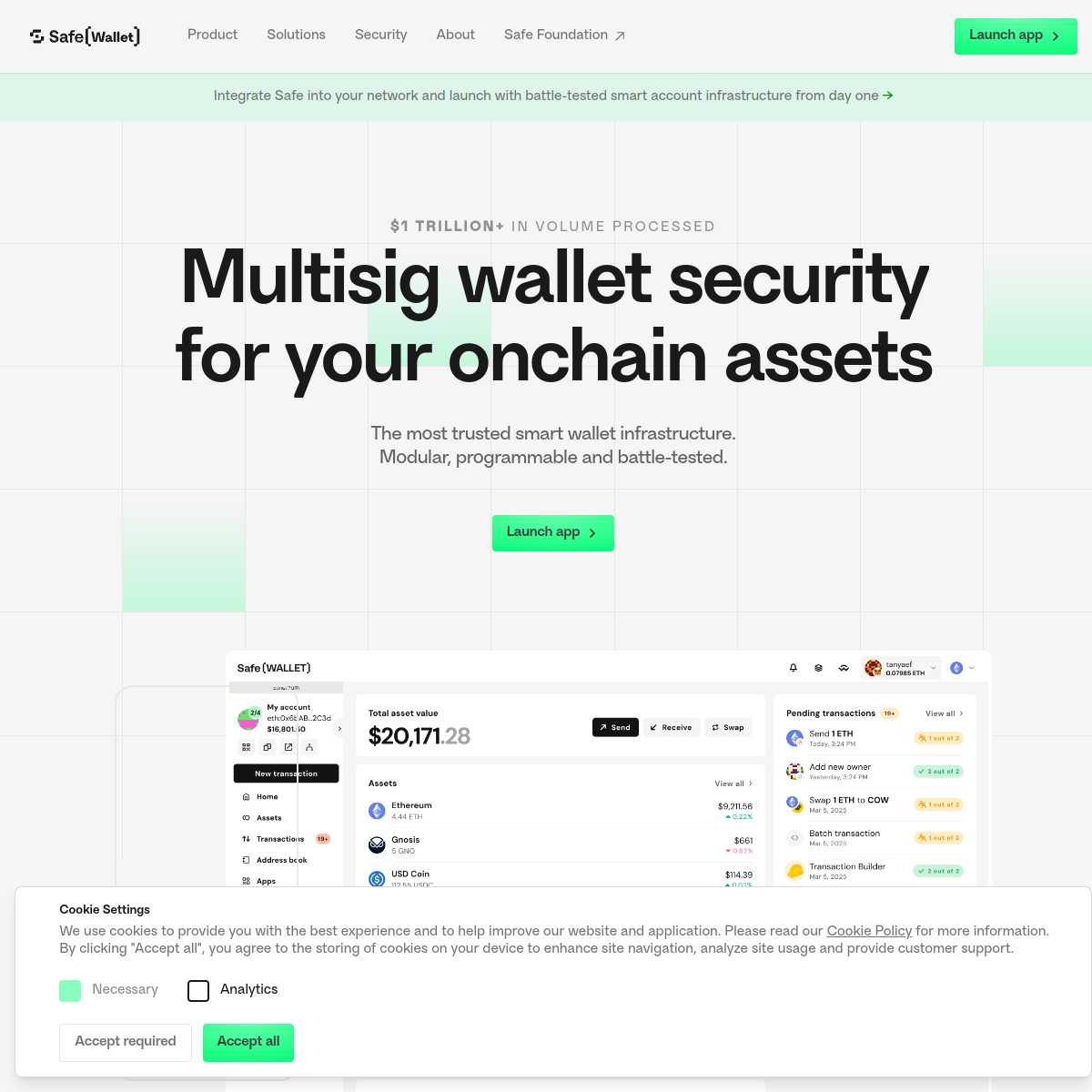
| Safe | teams, treasuries, and users who want threshold control | EVM ecosystems | multisig smart account with modules | battle-tested access control and modularity | more operational overhead than a simple retail wallet |
| Argent | users who want a consumer-oriented smart wallet history with recovery features | Ethereum and Starknet | smart contract wallet with guardians and seedless-style recovery options | strong wallet UX legacy in smart-account design | product surface is broader and more fragmented than a one-purpose wallet |
| Ambire | EVM users who want smarter features without rebuilding their wallet habits from zero | EVM networks | smart features across EOA and smart-account flows, including EIP-7702 paths | flexible bridge between traditional EVM wallet use and smarter execution | feature set is broad enough to feel complex for beginners |
| Braavos | Starknet users who care about biometric security and account abstraction | Starknet and Braavos-linked Bitcoin product surface | self-custody wallet with hardware-signer and multi-owner account options | strong mobile-security narrative and Starknet-native design | narrower ecosystem fit than broad EVM wallets |
| Coinbase Smart Wallet | mainstream users who want low-friction onboarding | Base and supported EVM apps | passkey-based smart wallet onboarding | easiest conceptual path from web2 login to self-custody wallet use | not ideal when the user needs a classic all-purpose extension workflow on every network |
1. Safe
Safe is still the clearest smart contract wallet reference point for readers who think in terms of owners, thresholds, and programmable control.
Safe Docs describes Safe Smart Account as a smart account with multi-signature functionality at its core. That matters because it is not just a wallet UI. It is a smart-account framework where owners, threshold rules, modules, and guards define how funds move.
Why it made the list:
- strong long-term credibility in smart-account infrastructure
- clear multisig foundation
- modular extensions for recovery, allowances, automation, and 4337-style functionality
What looks strongest in 2026:
- official module support for more advanced access patterns
- threshold-based approvals that reduce single-key risk
- strong fit for DAO treasuries, teams, family vault setups, and higher-value self-custody
What remains weaker:
- it is usually not the easiest starting point for casual first-time users
- modules increase flexibility, but they also widen the security review burden because Safe explicitly warns that only trusted and audited modules should be enabled
Who it may suit:
- teams and treasury operators
- users who want shared control or approval thresholds
- advanced users who care more about control design than the simplest onboarding
2. Argent
Argent still matters because it helped turn the smart wallet idea into something consumer-facing rather than purely technical. That remains true even though the broader product surface now sits closer to the Ready brand.
According to Argent’s support documentation on smart contract wallets, the smart-contract-wallet model can support features such as guardians, wallet recovery without a seed phrase, transaction controls, and the ability to pause access if a device is lost. Argent’s current documentation lineage, including the Argent docs portal, keeps the brand relevant in the wider account-abstraction and Starknet wallet conversation.
Why it made the list:
- one of the clearest consumer-smart-wallet case studies
- strong historical association with recovery design and guardian-based protection
- still relevant for readers comparing Ethereum-style smart wallets with Starknet-oriented onboarding
What looks strongest in 2026:
- clear explanation of what smart contract wallet features actually do for end users
- guardian-based security model remains a useful conceptual differentiator from plain seed-phrase wallets
- web-wallet and Starknet wallet documentation still make Argent useful in the account-abstraction conversation
What remains weaker:
- product surface is less straightforward than a single-purpose wallet brand
- some readers may find the mix of mobile, web, and Starknet-specific flows harder to evaluate quickly
Who it may suit:
- users who want self-custody with recovery design beyond a single key
- readers exploring Starknet wallet options
- users who want a more consumer-oriented entry point into smart-wallet ideas
Coincu also has an older Argent wallet review that can support readers who want more brand-specific background after this comparison page.
3. Ambire
Ambire makes this list because it frames smart-wallet functionality as an upgrade path, not a hard break from normal EVM wallet behavior.
Its official help center says a smart wallet means the user account is implemented as a smart contract rather than a plain keypair, which enables batching, gas abstraction, and more sophisticated authentication options. Ambire’s current product materials also emphasize that it supports both traditional account styles and smarter flows, including EIP-7702-based features, hardware-wallet integration, and broad EVM coverage.
Why it made the list:
- practical bridge between EOA habits and smart-wallet features
- broad EVM support
- unusually explicit official documentation around what “smart wallet” means in product terms
What looks strongest in 2026:
- Ambire’s wallet overview and help center are clear that the product supports EOA, smarter-EOA, and smart-account styles
- hardware-wallet support remains a practical strength for users who want more security without abandoning familiar devices
- smart-wallet features like batching and flexible gas handling are framed in operational, not just marketing, terms
What remains weaker:
- broad functionality can feel like feature sprawl
- users still need to understand the difference between an imported hardware-backed account, an EOA, and a smart-account flow
Who it may suit:
- EVM-native users who want a smoother upgrade path
- DeFi users who care about batching and gas flexibility
- users who want smart-wallet benefits without fully changing their wallet stack overnight
4. Braavos
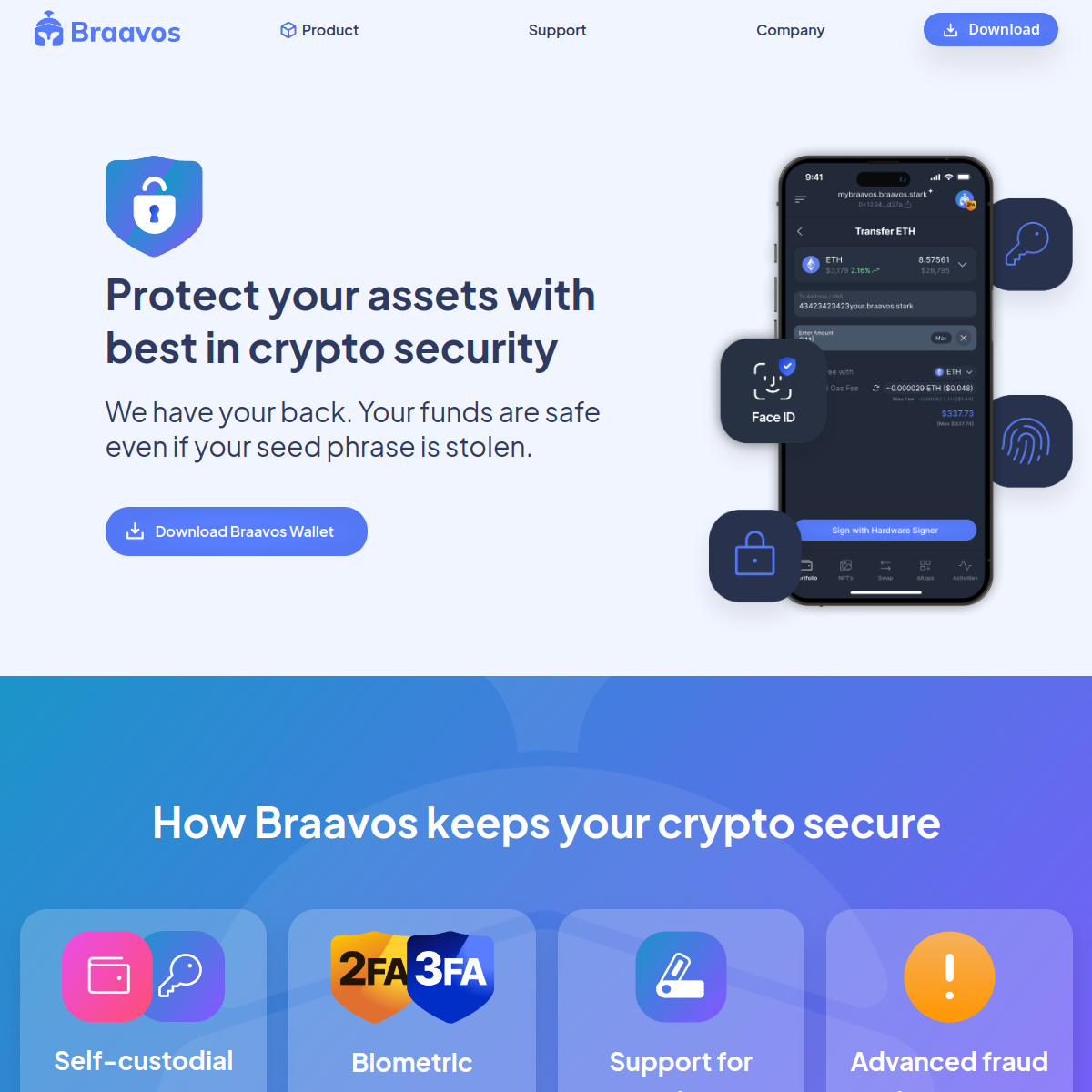
Braavos is one of the strongest examples of a Starknet-native smart contract wallet that leans hard into security design.
Braavos describes itself as a self-custody wallet, and its security page highlights biometric 2FA or 3FA, Ledger support, and scam warnings. Its hardware signer documentation explains that the product uses account abstraction plus the secure subsystem in a mobile device to strengthen signing security. Braavos also has a multi-owner account model for group control on Starknet.
Why it made the list:
- clear Starknet-native smart-wallet identity
- strong explanation of biometric or hardware-backed signing
- more than one smart-account mode, including personal and team-style setups
What looks strongest in 2026:
- self-custody positioning is direct and easy to understand
- hardware-signer model gives Braavos a distinctive security narrative
- strong fit for users who actually spend time inside the Starknet ecosystem
What remains weaker:
- narrower chain relevance than large EVM wallet products
- some recovery and signer-change flows carry extra operational steps and delay, which is the trade-off for stronger security controls
Who it may suit:
- Starknet-native users
- users who prioritize biometric transaction approval
- teams or power users who want Starknet multisig-style control
5. Coinbase Smart Wallet
Coinbase Smart Wallet belongs on this list because it is one of the clearest attempts to make smart-wallet onboarding feel familiar to mainstream users.
Coinbase’s help page for Smart Wallet says users who create the wallet with a passkey are using a smart wallet. The same page explains that smart-wallet transactions on Ethereum can cost more because they use smart contracts, while Base fees may be sponsored. Coinbase’s broader smart wallet launch post framed the product around passkeys, lower-friction onboarding, and portable wallet use across dapps.
Why it made the list:
- strong mainstream distribution and recognition
- passkey-based onboarding is one of the clearest consumer UX shifts in the wallet sector
- useful example of how smart wallets are being packaged for mass-market use
What looks strongest in 2026:
- much easier explanation path for new users than the old “install extension, save seed phrase, fund address” routine
- good fit for Base-centered or supported EVM-app workflows
- helps illustrate how smart wallets can reduce onboarding friction without giving up self-custody entirely
What remains weaker:
- not every user wants a passkey-first wallet flow
- Coinbase itself notes that Ethereum network fees can be higher for smart-wallet transactions because smart contracts add overhead
- some users will still prefer a more classic browser-extension and seed-phrase workflow
Who it may suit:
- newer onchain users
- Base-oriented users
- readers who want the simplest path from a mainstream product environment into self-custody wallet usage
Which Smart Contract Wallet Model Fits Which User
If you only want the practical chooser:
- choose Safe if your main concern is shared control, treasury security, or modular permissions
- choose Argent if you want a consumer-oriented smart wallet with strong recovery concepts and Starknet relevance
- choose Ambire if you want smarter wallet behavior across EVM activity without abandoning familiar account patterns
- choose Braavos if you live on Starknet and care about biometric or multi-owner security design
- choose Coinbase Smart Wallet if you want the lowest-friction mainstream onboarding path into a smart wallet
That is the main reason this page avoids a fake universal ranking. The category contains several different wallet jobs pretending to be one keyword.
What to Check Before Choosing Any Smart Contract Wallet
Before moving funds, check:
- whether the wallet is self-custody and how that is defined
- what recovery model exists if you lose a device
- whether the wallet uses passkeys, guardians, hardware signers, multisig owners, or standard seed backup
- which networks you will actually use every week
- whether some transactions may cost more because they go through smart-contract account logic
- whether the wallet’s advanced features depend on modules, relayers, app compatibility, or a specific chain ecosystem
For readers still comparing broader wallet categories first, Coincu’s guide to the best crypto wallets and its explainer on how to use a crypto wallet are natural next reads.
FAQ
What is the difference between a smart contract wallet and a normal wallet?
A normal EOA wallet is usually controlled by one private key or seed phrase. A smart contract wallet uses onchain code to manage how the wallet behaves, which can enable recovery logic, multisig rules, batched transactions, passkey flows, or gas abstraction.
Are smart contract wallets safer than EOA wallets?
Sometimes yes, but not automatically. They can reduce single-key risk and improve recovery or access control, but they also introduce smart-contract logic and product complexity. The safety depends on the implementation, the recovery design, and how the user configures the wallet.
Is Safe the same thing as an account abstraction wallet?
Safe is a smart account system with multisig at the core and optional 4337-style extensions through modules. In practice, it belongs in the broader smart-account and account-abstraction conversation, but many readers still use it first as a multisig wallet.
Is Coinbase Smart Wallet self-custodial?
Coinbase positions Smart Wallet as a self-custody product. The onboarding and recovery experience differ from a classic seed-phrase wallet because the wallet can use passkeys and related recovery flows instead of making a recovery phrase the default starting point.
Which smart contract wallet is best for beginners?
For many newer users, Coinbase Smart Wallet is the easiest conceptual starting point because passkey onboarding feels familiar. Argent can also make sense for users who want more recovery-oriented smart-wallet concepts. Safe is usually better once the user needs shared control or more deliberate policy design.
Further Reading
- What crypto custody is
- Understanding hot wallets and cold wallets
- Best crypto wallet guide
- How to use a crypto wallet
References
- Safe Smart Account overview
- Safe modules documentation
- Argent support: What is a smart contract wallet?
- Argent docs home
- Ambire Wallet homepage
- Ambire help: What does smart wallet mean?
- Ambire help: What is Ambire Wallet?
- Braavos security page
- Braavos hardware signer explainer
- Braavos multi-owner account page
- Coinbase Help: Smart wallet
- Coinbase blog: A New Era in Crypto Wallets: Smart Wallet is Here