
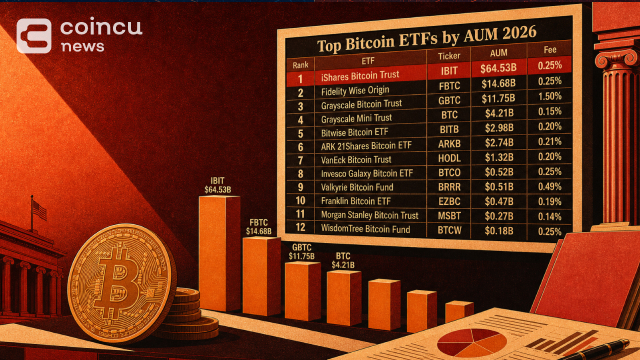

U.S. spot Bitcoin ETFs have changed sharply since their January 2024 debut, following the approval cycle tracked in Coincu’s spot Bitcoin ETF timeline. The largest funds are no longer measured in hundreds of millions of dollars. By mid-May 2026, U.S.-listed spot Bitcoin ETFs held about $104.2 billion in combined assets under management, led by BlackRock’s iShares Bitcoin Trust (IBIT), Fidelity’s Wise Origin Bitcoin Fund (FBTC), and Grayscale Bitcoin Trust ETF (GBTC).
Data in this article is based on U.S. spot Bitcoin ETF assets and holdings as of market close on May 15, 2026, unless otherwise noted. AUM can change daily because Bitcoin prices move continuously and ETF shares can be created or redeemed by authorized participants, which is why Coincu also tracks market updates such as Bitcoin ETF inflows led by Fidelity’s FBTC and IBIT Bitcoin accumulation.
| Key Takeaways – IBIT is the largest U.S. spot Bitcoin ETF by AUM, with about $64.53 billion as of May 15, 2026. – The top three funds, IBIT, FBTC, and GBTC, represent most U.S. spot Bitcoin ETF assets. – Spot Bitcoin ETFs hold Bitcoin directly, while futures Bitcoin ETFs hold futures contracts. This article ranks spot Bitcoin ETFs only. |
What is a crypto ETF?
A Bitcoin ETF is an exchange-traded product that gives investors exposure to Bitcoin through a traditional brokerage account. Instead of buying Bitcoin directly, storing private keys, or using a crypto exchange, investors can buy ETF shares on a stock exchange.

There are two broad types of Bitcoin ETFs:
- Spot Bitcoin ETFs hold Bitcoin directly and aim to track the spot price of Bitcoin, minus expenses and liabilities.
- Bitcoin futures ETFs hold futures contracts rather than Bitcoin itself, which can make their performance differ from spot Bitcoin over time.
The U.S. Securities and Exchange Commission approved the first group of U.S. spot Bitcoin ETFs in January 2024. Since then, the market has grown from a new product category into one of the largest crypto investment channels in traditional finance.
Top U.S. Spot Bitcoin ETFs by AUM in 2026
| Rank | ETF | Ticker | Issuer | AUM | BTC Held | Fee | Custodian |
|---|---|---|---|---|---|---|---|
| 1 | iShares Bitcoin Trust | IBIT | BlackRock | $64.53B | 817.30K BTC | 0.25% | Coinbase |
| 2 | Wise Origin Bitcoin Trust | FBTC | Fidelity | $14.68B | 185.92K BTC | 0.25% | Fidelity self-custody |
| 3 | Grayscale Bitcoin Trust ETF | GBTC | Grayscale | $11.75B | 148.83K BTC | 1.50% | Coinbase |
| 4 | Grayscale Bitcoin Mini Trust | BTC | Grayscale | $4.21B | 53.31K BTC | 0.15% | Coinbase |
| 5 | Bitwise Bitcoin ETF | BITB | Bitwise | $2.98B | 37.68K BTC | 0.20% | Coinbase |
| 6 | ARK 21Shares Bitcoin ETF | ARKB | ARK/21Shares | $2.74B | 34.73K BTC | 0.21% | Coinbase |
| 7 | VanEck Bitcoin Trust | HODL | VanEck | $1.32B | 16.75K BTC | 0.20% | Gemini |
| 8 | Invesco Galaxy Bitcoin ETF | BTCO | Invesco Galaxy | $0.52B | 6.54K BTC | 0.25% | Coinbase |
| 9 | Valkyrie Bitcoin Fund | BRRR | Valkyrie | $0.51B | 6.41K BTC | 0.49% | Coinbase / BitGo |
| 10 | Franklin Bitcoin ETF | EZBC | Franklin Templeton | $0.47B | 5.93K BTC | 0.19% | Coinbase |
| 11 | Morgan Stanley Bitcoin Trust | MSBT | Morgan Stanley | $0.27B | 3.47K BTC | 0.14% | Coinbase / BNY Mellon |
| 12 | WisdomTree Bitcoin Fund | BTCW | WisdomTree | $0.18B | 2.23K BTC | 0.25% | Coinbase |
1. iShares Bitcoin Trust (IBIT)
The iShares Bitcoin Trust (IBIT) is the largest U.S. spot Bitcoin ETF by AUM in 2026. Managed by BlackRock under the iShares brand, IBIT gives investors direct Bitcoin exposure through a traditional ETF-style product that can be bought and sold in brokerage accounts.


In 2026, IBIT’s main value is scale, liquidity, and institutional adoption. Its large AUM can support tighter spreads and deeper trading, which matters for advisors, funds, and larger investors. Coincu has also covered BlackRock-related ETF movements, including IBIT accumulation and Coinbase Prime transfers, both of which show why custody and ETF operations matter.
The main 2026 watch item is concentration. IBIT’s dominance makes it the key benchmark for Bitcoin ETF flows, but it also means large inflows or outflows can shape market headlines. Investors should still compare live spreads, tracking quality, fees, and custody disclosures before trading.
| Field | Detail |
|---|---|
| Ticker | IBIT |
| Issuer | BlackRock / iShares |
| AUM | $64.53B |
| Fee | 0.25% |
| Custodian | Coinbase |
| Best known for | Scale, liquidity, institutional adoption |
2. Fidelity Wise Origin Bitcoin Fund (FBTC)
Fidelity Wise Origin Bitcoin Fund (FBTC) is the second-largest spot Bitcoin ETF in this ranking. It gives investors direct Bitcoin exposure and is backed by Fidelity, one of the most recognized names in U.S. brokerage, retirement, and asset-management services.

In 2026, FBTC’s biggest distinction is Fidelity self-custody. Most U.S. spot Bitcoin ETFs rely on Coinbase as custodian, while Fidelity uses its own digital asset infrastructure. That makes FBTC important for investors who care about custody diversification as well as issuer reputation.
FBTC does not use leverage or futures for its core exposure. It is designed to track Bitcoin after expenses, making it useful for investors who want a clean spot product. Coincu’s coverage of Bitcoin ETF inflows led by Fidelity’s FBTC shows why FBTC remains one of the most watched funds for daily flow analysis.
| Field | Detail |
|---|---|
| Ticker | FBTC |
| Issuer | Fidelity |
| AUM | $14.68B |
| Fee | 0.25% |
| Custodian | Fidelity self-custody |
| Best known for | Brand strength, self-custody infrastructure |
3. Grayscale Bitcoin Trust ETF (GBTC)
Grayscale Bitcoin Trust ETF (GBTC) remains one of the most recognized Bitcoin investment products, but its role changed after U.S. spot Bitcoin ETF approvals. Before 2024, GBTC was the dominant public-market Bitcoin trust; in 2026, it competes with cheaper and newer spot ETFs.
GBTC’s main 2026 strengths are brand history, legacy scale, and liquidity, but its 1.50% fee is much higher than most competitors. That fee gap is why investors often compare GBTC with IBIT, FBTC, and Grayscale’s lower-cost BTC product. Coincu’s background pieces on Grayscale’s Bitcoin holdings and Grayscale’s investment products provide useful context.
The key issue is fee drag. A high annual fee can reduce long-term returns compared with lower-cost spot Bitcoin ETFs. Investors should watch GBTC’s AUM trend, outflows, tracking performance, and whether Grayscale changes its fee strategy.
| Field | Detail |
|---|---|
| Ticker | GBTC |
| Issuer | Grayscale |
| AUM | $11.75B |
| Fee | 1.50% |
| Custodian | Coinbase |
| Best known for | Long history, legacy AUM, high fee |
4. Grayscale Bitcoin Mini Trust (BTC)
Grayscale Bitcoin Mini Trust (BTC) is the lower-cost Grayscale Bitcoin ETF. It was created to compete more directly with low-fee spot Bitcoin ETFs from BlackRock, Fidelity, Bitwise, ARK 21Shares, VanEck, and Franklin Templeton.

In 2026, BTC has become an important test of whether Grayscale can retain investors who want its brand but not GBTC’s high fee. Its 0.15% fee makes it one of the more cost-competitive products in the category.
BTC does the same basic job as other spot Bitcoin ETFs: it gives exchange-traded Bitcoin exposure without self-custody. The 2026 watch item is liquidity growth. Lower fees help, but investors should still compare trading volume, bid-ask spreads, and AUM momentum against IBIT, FBTC, GBTC, BITB, and ARKB.
| Field | Detail |
|---|---|
| Ticker | BTC |
| Issuer | Grayscale |
| AUM | $4.21B |
| Fee | 0.15% |
| Custodian | Coinbase |
| Best known for | Lower-cost Grayscale Bitcoin exposure |
5. Bitwise Bitcoin ETF (BITB)
Bitwise Bitcoin ETF (BITB) is one of the largest spot Bitcoin ETFs outside the BlackRock, Fidelity, and Grayscale group. Its issuer, Bitwise, is a crypto-focused asset manager known for digital asset research and public market commentary.

In 2026, BITB offers a mix of competitive fee, crypto-native positioning, and meaningful AUM. Its 0.20% fee keeps it in the low-cost range, while its sponsor profile may appeal to investors who want a Bitcoin ETF from a specialist rather than only a traditional finance giant.
BITB’s job is to provide direct Bitcoin exposure with a focus on transparency and specialist asset-management experience. Coincu has covered Bitwise’s broader 2026 market views, including Bitwise’s Bitcoin reserve forecast and Bitcoin cycle comments after ETF adoption. The watch item is whether BITB can keep gaining share against larger distribution platforms.
| Field | Detail |
|---|---|
| Ticker | BITB |
| Issuer | Bitwise |
| AUM | $2.98B |
| Fee | 0.20% |
| Custodian | Coinbase |
| Best known for | Crypto-native asset management |
6. ARK 21Shares Bitcoin ETF (ARKB)
ARK 21Shares Bitcoin ETF (ARKB) is a joint product from ARK Invest and 21Shares. It gives investors spot Bitcoin exposure while connecting the fund to ARK’s innovation-investing audience and 21Shares’ crypto ETP background.

In 2026, ARKB is a thematic Bitcoin ETF for investors who connect Bitcoin with technology adoption, digital asset infrastructure, and long-term innovation narratives. It has a competitive fee and meaningful AUM, though it sits behind the largest products by scale.
ARKB does not require investors to hold Bitcoin directly, manage private keys, or use crypto exchanges. Coincu has covered institutional ETF usage involving ARKB, including Intesa Sanpaolo’s reported Bitcoin ETF exposure and ARK’s own portfolio trim of ARKB, both useful for understanding how the product appears in real portfolios.
| Field | Detail |
|---|---|
| Ticker | ARKB |
| Issuer | ARK / 21Shares |
| AUM | $2.74B |
| Fee | 0.21% |
| Custodian | Coinbase |
| Best known for | Thematic Bitcoin exposure |
7. VanEck Bitcoin Trust (HODL)
VanEck Bitcoin Trust (HODL) is a spot Bitcoin ETF from VanEck, an established issuer with experience in commodities, thematic funds, and digital asset research. It is smaller than the top six funds, but it remains relevant because of its sponsor and custody model.
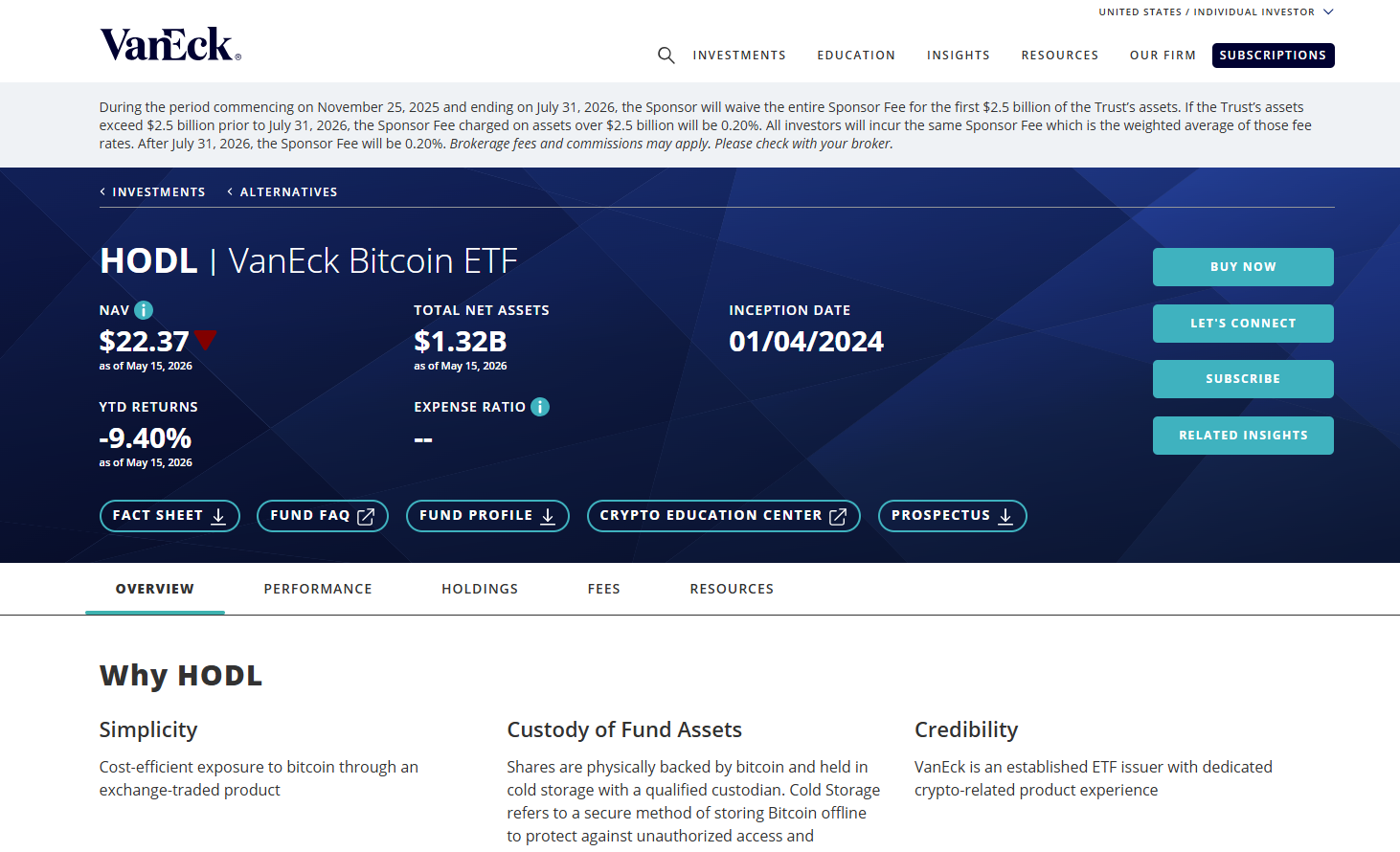
In 2026, HODL stands out because it uses Gemini custody while many larger U.S. spot Bitcoin ETFs use Coinbase. That difference does not eliminate custody risk, but it gives investors another institutional custody option in a market where custody concentration is a recurring concern.
HODL provides direct Bitcoin exposure through a traditional ETF issuer. Coincu previously covered VanEck’s sponsor-fee waiver extension, which is important because fee waivers can expire or change. Investors should check the current fee, volume, and spreads before trading.
| Field | Detail |
|---|---|
| Ticker | HODL |
| Issuer | VanEck |
| AUM | $1.32B |
| Fee | 0.20% |
| Custodian | Gemini |
| Best known for | Non-Coinbase custody exposure |
8. Invesco Galaxy Bitcoin ETF (BTCO)
Invesco Galaxy Bitcoin ETF (BTCO) combines Invesco’s ETF distribution experience with Galaxy’s digital asset expertise. It is smaller than the leading ETFs, but it gives investors another traditional-finance route into spot Bitcoin exposure.
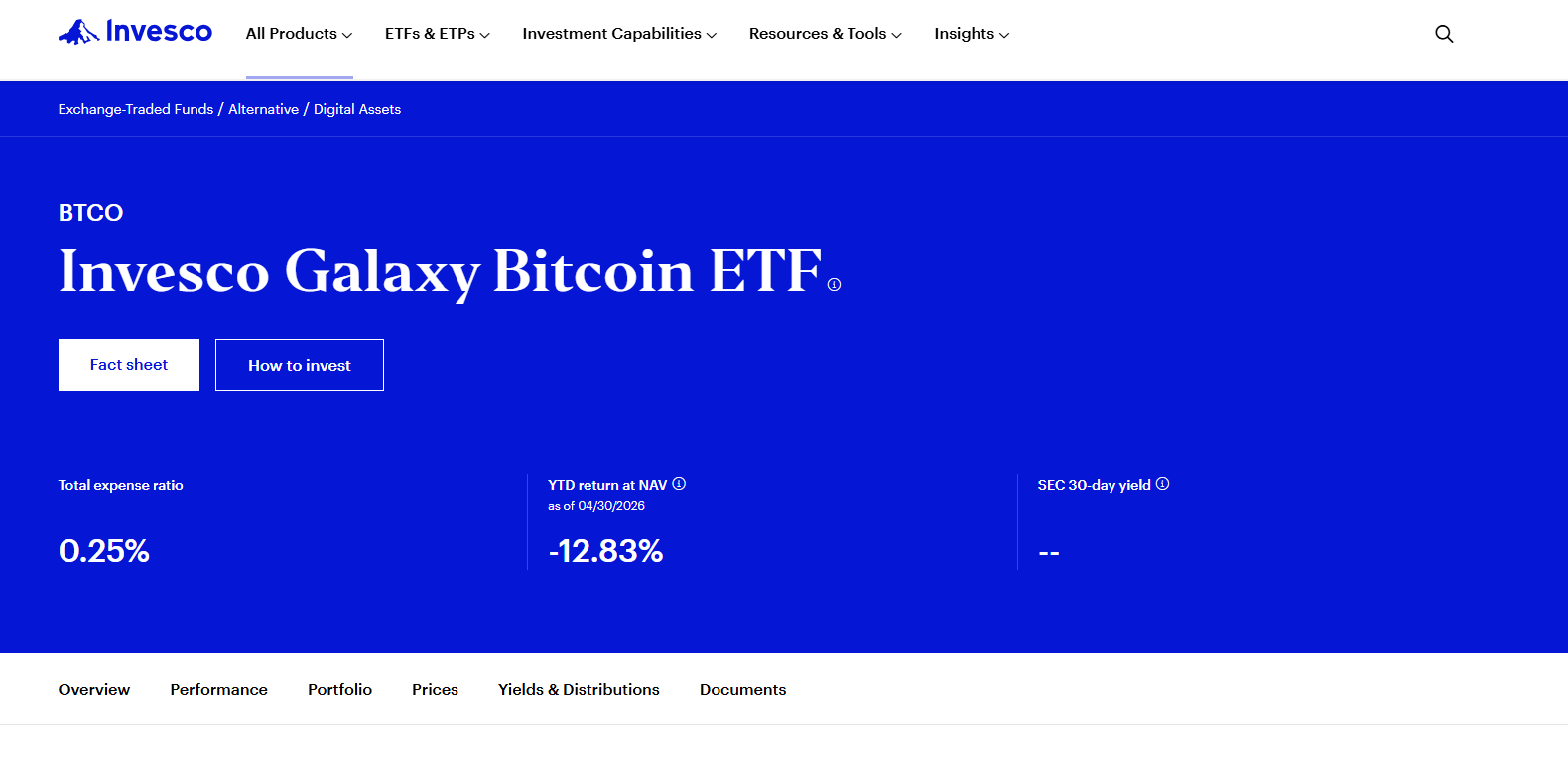
In 2026, BTCO’s differentiator is the Invesco Galaxy partnership. Invesco brings ETF operations and distribution, while Galaxy brings crypto market knowledge and execution experience. That mix can matter for investors who want a product supported by both traditional ETF infrastructure and digital asset specialization.
BTCO does the same core job as other spot Bitcoin ETFs: it tracks Bitcoin exposure through a listed product rather than direct custody. The 2026 watch item is scale. With AUM below the top tier, investors should evaluate trading volume, spreads, and whether BTCO is gaining or losing market share.
| Field | Detail |
|---|---|
| Ticker | BTCO |
| Issuer | Invesco Galaxy |
| AUM | $0.52B |
| Fee | 0.25% |
| Custodian | Coinbase |
| Best known for | Invesco and Galaxy partnership |
9. Valkyrie Bitcoin Fund (BRRR)
Valkyrie Bitcoin Fund (BRRR) is a smaller U.S. spot Bitcoin ETF that holds Bitcoin directly. It gives investors listed Bitcoin exposure, but it competes in a crowded field against larger products with lower fees, stronger distribution, or deeper liquidity.
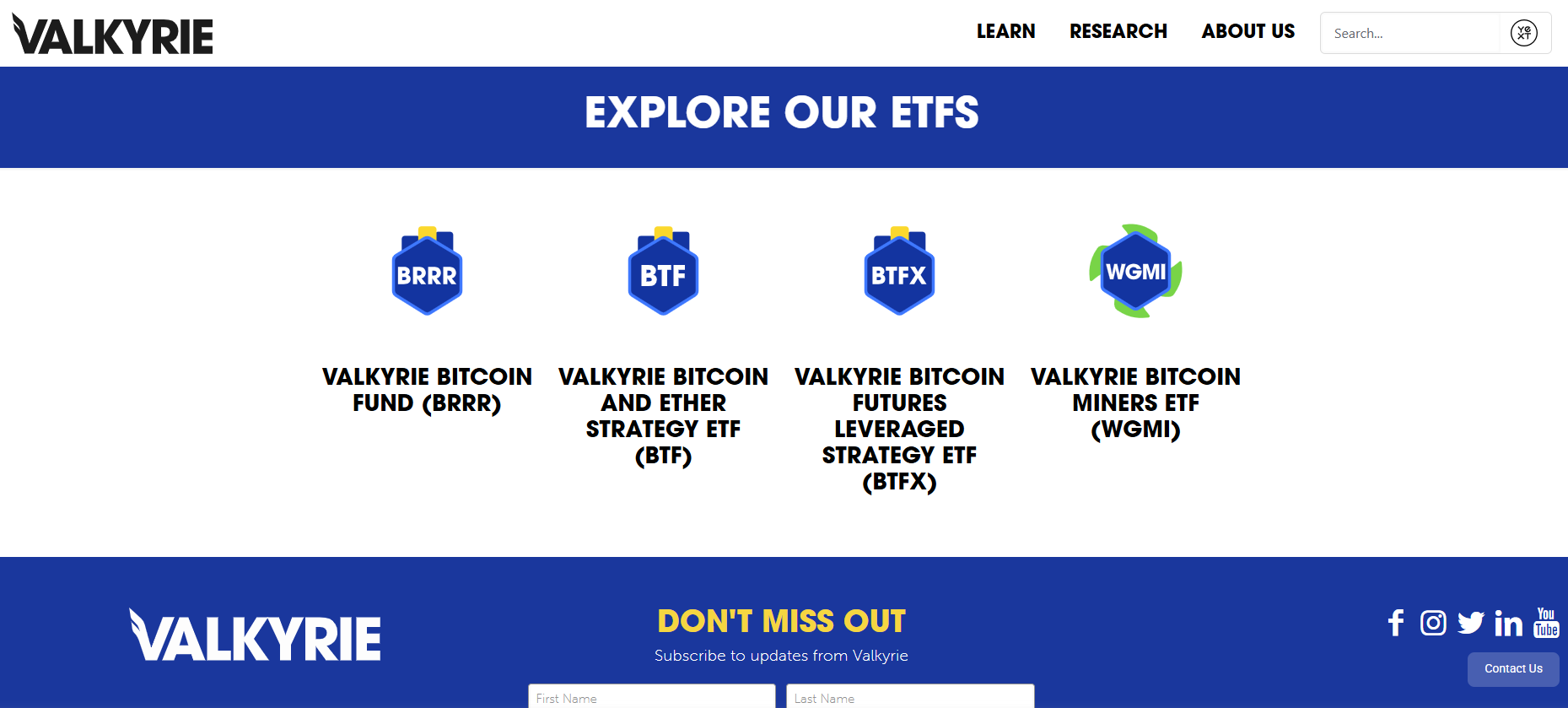
In 2026, BRRR’s key features are spot exposure, crypto-market branding, and a Coinbase/BitGo custody setup. The presence of multiple service providers may be relevant for operational comparison, but investors should read the prospectus for exact custody and service-provider terms.
BRRR’s main issue is cost competitiveness. Its listed fee is higher than many larger rivals, which can matter for long-term holders. Investors should compare expense ratio, liquidity, and spreads before choosing BRRR over lower-fee alternatives.
| Field | Detail |
|---|---|
| Ticker | BRRR |
| Issuer | Valkyrie |
| AUM | $0.51B |
| Fee | 0.49% |
| Custodian | Coinbase / BitGo |
| Best known for | Spot Bitcoin exposure through Valkyrie |
10. Franklin Bitcoin ETF (EZBC)
Franklin Bitcoin ETF (EZBC) is Franklin Templeton’s U.S. spot Bitcoin ETF. It is smaller than the leading funds, but it has one of the more competitive listed fees in the category and is backed by a major global asset manager.
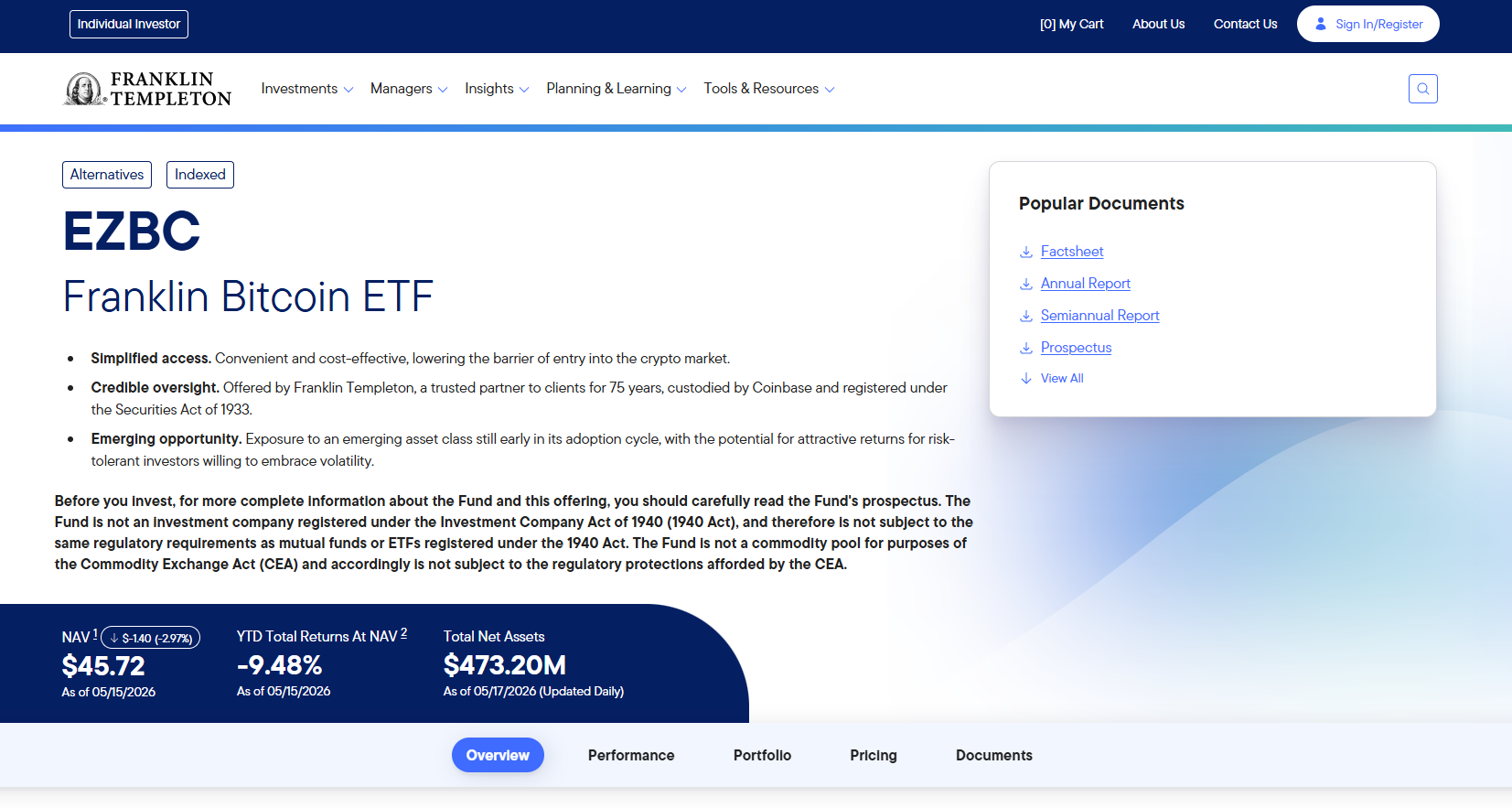
In 2026, EZBC’s strengths are low cost and issuer credibility. Its 0.19% fee is lower than several better-known competitors, which can appeal to advisors and long-term allocators who compare expense ratios carefully.
EZBC provides direct Bitcoin exposure through a traditional asset-management sponsor. The key watch item is adoption: low fees do not automatically create high liquidity. Investors should check daily volume, bid-ask spreads, fund flows, and whether Franklin Templeton expands distribution support.
| Field | Detail |
|---|---|
| Ticker | EZBC |
| Issuer | Franklin Templeton |
| AUM | $0.47B |
| Fee | 0.19% |
| Custodian | Coinbase |
| Best known for | Low fee, Franklin Templeton brand |
11. Morgan Stanley Bitcoin Trust (MSBT)
Morgan Stanley Bitcoin Trust (MSBT) appears in 2026 ETF trackers as a newer and smaller spot Bitcoin ETF with a low listed fee. Because it is less established than IBIT, FBTC, GBTC, or BITB, readers should verify issuer documentation before relying on any snapshot data.
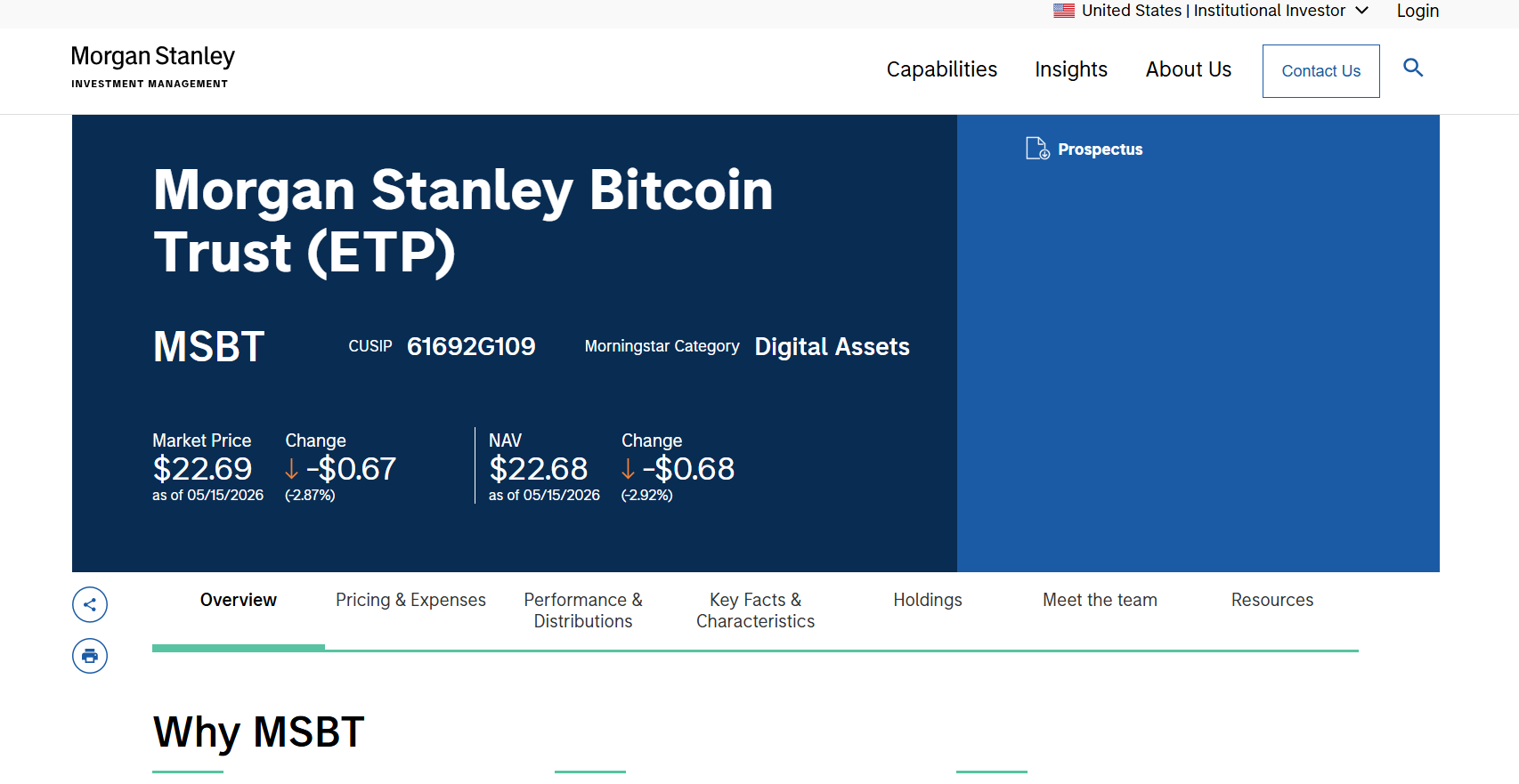
In 2026, MSBT is notable for low fee and large wealth-management brand recognition. If it gains distribution across advisory platforms, it could become more relevant for fee-sensitive investors who prefer traditional finance sponsors.
The key watch item is data confirmation. Investors should verify ticker availability, prospectus details, custody disclosures, trading volume, and spreads. For SEO and editorial accuracy, this section should be updated first if official issuer data differs from tracker data.
| Field | Detail |
|---|---|
| Ticker | MSBT |
| Issuer | Morgan Stanley |
| AUM | $0.27B |
| Fee | 0.14% |
| Custodian | Coinbase / BNY Mellon |
| Best known for | Low listed fee, newer market entry |
12. WisdomTree Bitcoin Fund (BTCW)
WisdomTree Bitcoin Fund (BTCW) is one of the smaller U.S. spot Bitcoin ETFs by AUM. It offers direct Bitcoin exposure through a familiar ETF structure, but its smaller asset base means investors should pay closer attention to liquidity and bid-ask spreads.
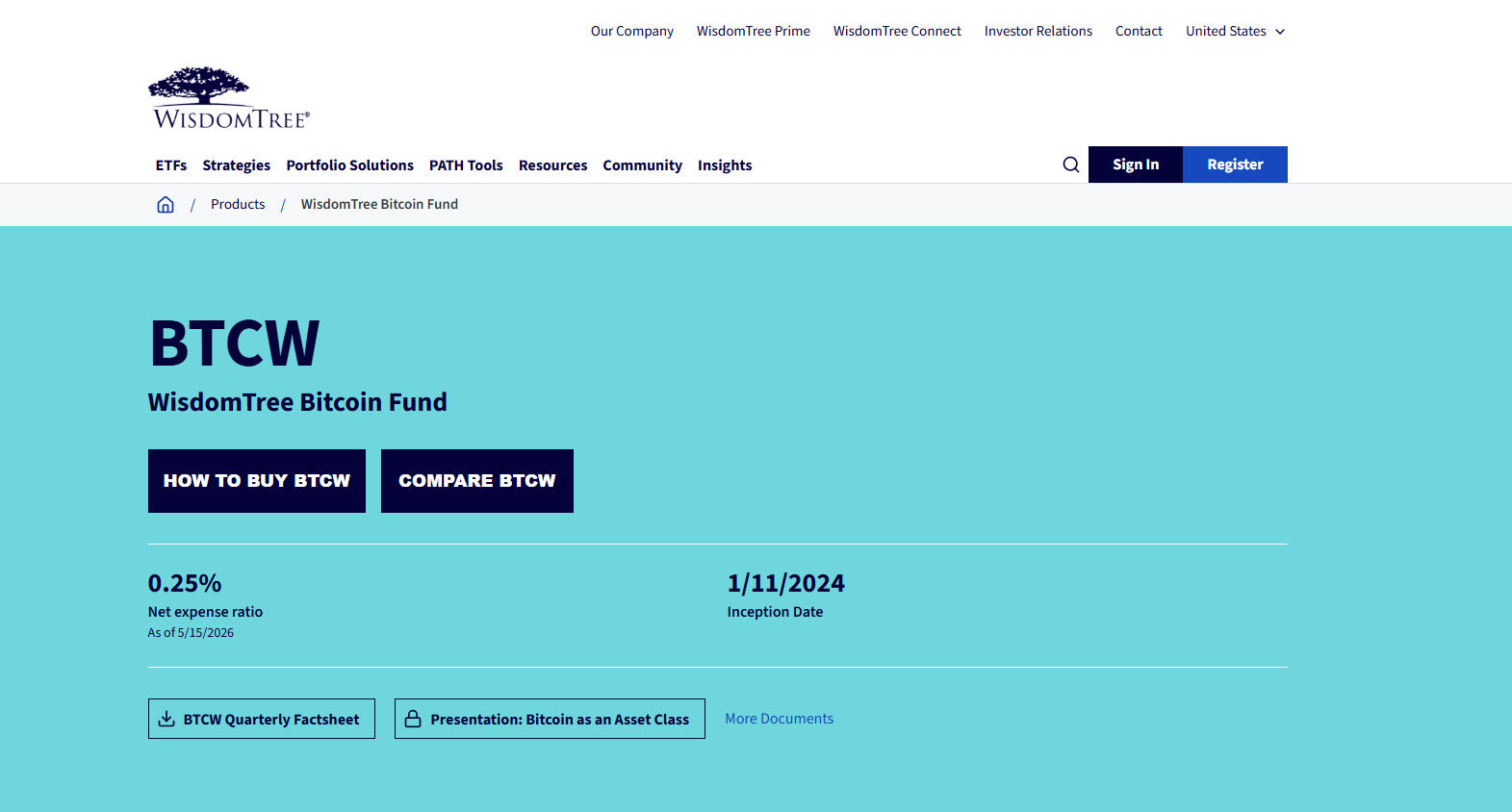
In 2026, BTCW remains a niche Bitcoin ETF from an established ETF issuer. It may appeal to investors who already use WisdomTree products or who want to compare all available U.S. spot Bitcoin ETFs rather than only the biggest funds.
BTCW simplifies Bitcoin access by removing the need for private keys or crypto exchange accounts. The main 2026 watch item is scale: smaller ETFs need enough AUM, volume, and market-maker support to remain attractive for investors.
| Field | Detail |
|---|---|
| Ticker | BTCW |
| Issuer | WisdomTree |
| AUM | $0.18B |
| Fee | 0.25% |
| Custodian | Coinbase |
| Best known for | WisdomTree ETF platform, spot Bitcoin access |
How to Compare Bitcoin ETFs
AUM is useful, but it should not be the only factor. Investors usually compare Bitcoin ETFs across several dimensions:
1. Assets under management
Higher AUM can indicate stronger market adoption and can support better liquidity. However, AUM changes with both net flows and Bitcoin’s price.
2. Fees
Fees reduce fund returns over time. In 2026, most U.S. spot Bitcoin ETF fees are far below GBTC’s 1.50% fee, with several funds listed between 0.14% and 0.25%.
3. Liquidity and spreads
Large funds often trade with tighter bid-ask spreads, but investors should still check live trading conditions before buying or selling.
4. Custody
Most U.S. spot Bitcoin ETFs use Coinbase as custodian. Fidelity uses its own custody infrastructure, VanEck uses Gemini, and some products use more than one custodian or service provider. Custody concentration is an important risk factor for the category.
5. Tracking and premiums or discounts
Spot Bitcoin ETFs are designed to track Bitcoin, but ETF shares trade on exchanges and can trade slightly above or below net asset value. Premiums and discounts tend to matter more during volatile market periods.
Benefits of Spot Bitcoin ETFs
Spot Bitcoin ETFs can make Bitcoin exposure easier for traditional investors. Key benefits include:
- Brokerage account access without managing private keys
- Regulated exchange trading
- Daily transparency around holdings, NAV, and market price
- Easier integration into portfolio reporting and tax workflows
- Potentially better liquidity than some direct crypto venues for large investors
These benefits do not remove Bitcoin’s underlying volatility. ETF shares can still lose significant value if Bitcoin falls.
Risks of Spot Bitcoin ETFs
Bitcoin ETFs carry substantial risk. Investors should consider:
- Bitcoin price volatility
- Possible loss of principal
- Custody and operational risks
- Regulatory uncertainty around digital assets
- Premiums or discounts between share price and NAV
- Fee drag over long holding periods
- No direct control over private keys or on-chain activity
- No entitlement to forks or airdrops unless the fund’s documents say otherwise
Several issuer risk disclosures state that Bitcoin can experience extreme volatility and that investors may lose all or substantially all of their investment.
Spot Bitcoin ETFs vs Futures Bitcoin ETFs
Spot Bitcoin ETFs and futures Bitcoin ETFs are not the same. Spot Bitcoin ETFs hold Bitcoin directly and aim to follow Bitcoin’s spot price after expenses. Futures Bitcoin ETFs hold Bitcoin futures contracts, which can introduce roll costs and performance differences over time.

For investors looking for the closest ETF exposure to Bitcoin’s spot price, spot Bitcoin ETFs are generally the more direct structure. Futures ETFs may still be useful for specific trading, hedging, or strategy use cases, but they should not be treated as identical to spot funds.
2026 Market Context
The U.S. spot Bitcoin ETF market has matured quickly since January 2024. The biggest change is the shift from a Grayscale-dominated market to a market led by BlackRock and Fidelity.
As of May 2026:
- IBIT is the dominant product by AUM.
- FBTC is the second-largest fund.
- GBTC is still large but faces pressure from lower-fee alternatives.
- BTC, BITB, and ARKB form the next competitive tier.
- Smaller funds compete on fees, issuer brand, custody model, or niche positioning.
The market is also more competitive than it was at launch. Fee waivers, lower-cost share classes, and new entrants can change rankings over time, so this page should be updated regularly.
Conclusion
The top Bitcoin ETFs by AUM in 2026 are led by BlackRock’s IBIT, Fidelity’s FBTC, and Grayscale’s GBTC. IBIT has become the category leader, while FBTC has established itself as the strongest second-place product. GBTC remains large because of its legacy asset base, but its high fee makes it less cost-competitive than newer spot Bitcoin ETFs.
For readers comparing Bitcoin ETFs, the most important factors are AUM, fees, liquidity, custody, tracking quality, and risk disclosures. A large AUM ranking can show market adoption, but it should not be treated as an investment recommendation.
FAQs
What is the largest Bitcoin ETF by AUM in 2026?
The largest Bitcoin ETF by AUM in this May 15, 2026 snapshot is iShares Bitcoin Trust (IBIT), with about $64.53 billion in assets under management. AUM can change daily because Bitcoin’s price and ETF flows move continuously.
Are spot Bitcoin ETFs safer than buying Bitcoin directly?
Spot Bitcoin ETFs can reduce operational risks such as private-key management, wallet setup, and exchange custody. They do not remove Bitcoin price volatility, fee drag, regulatory risk, or the possibility of losing money.
Why does GBTC still have high AUM despite a higher fee?
GBTC has a long operating history and a large legacy investor base from before the U.S. spot Bitcoin ETF approvals. However, its 1.50% fee is much higher than many newer funds, so investors should compare GBTC with lower-cost alternatives.
How often should Bitcoin ETF AUM rankings be updated?
For a high-quality finance article, ETF AUM rankings should be reviewed at least monthly, and preferably weekly during volatile markets. The article should always show a visible data as of date.
Methodology
This ranking uses assets under management as the primary sorting metric because AUM is the clearest way to compare the current scale of U.S. spot Bitcoin ETFs. The table uses a single snapshot date, May 15, 2026, so the ranking is not distorted by mixing data from different trading days.
The analysis prioritizes issuer pages, ETF trackers, fund disclosures, and market-data references. Where numbers differ between sources, the article treats AUM as an estimate and explains that daily Bitcoin price changes, creations, redemptions, and trading activity can move each fund’s assets quickly.
This article ranks spot Bitcoin ETFs only. It does not rank Bitcoin futures ETFs, leveraged Bitcoin funds, crypto equity ETFs, or multi-asset crypto funds.
| DISCLAIMER: The information on this website is provided as general market commentary and does not constitute investment advice. We encourage you to do your own research before investing. |