UK FCA Releases Rules for Tokenized Funds on Public Blockchains
The UK Financial Conduct Authority has released new guidance for tokenized funds, formally allowing public funds to issue shares on public blockchains. The move marks a significant step in the UK’s approach to regulated digital asset infrastructure, positioning the country as one of the first major jurisdictions to provide explicit regulatory clarity for blockchain-based fund operations.
What the FCA’s New Tokenized Fund Guidance Covers
The FCA published its guidance on fund tokenization, confirming that authorized funds can use distributed ledger technology to record and transfer fund shares. The rules apply to public funds, not just private sandbox experiments.
Public blockchains are explicitly included within the scope of permissible infrastructure. This means fund managers are not limited to private or permissioned ledgers when tokenizing share classes.
The FCA also issued a related consultation paper on progressing fund tokenization, signaling that additional rulemaking is expected as the regulator gathers industry feedback on implementation details.
How Public Blockchain Share Issuance Changes Fund Operations
In traditional fund administration, share ownership records sit in centralized registries maintained by transfer agents. Tokenized fund shares replace those records with blockchain-based tokens that represent ownership units.
Issuing these tokens on a public blockchain, rather than a private ledger, means the ownership records exist on infrastructure that is openly verifiable. Settlement can happen faster, and secondary trading becomes technically feasible without the intermediary layers that currently govern fund share transfers.
The distinction between public and private blockchains matters in a regulated context. Public chains like Ethereum offer broader interoperability and composability with existing decentralized finance infrastructure, but they also raise questions about compliance, data privacy, and custody that fund managers will need to address under the FCA’s framework.
Why This Matters for the UK Tokenization Market
The FCA’s decision to issue formal guidance, rather than simply tolerating tokenization through regulatory sandboxes, sends a clear signal to institutional participants. Asset managers now have a defined pathway to launch tokenized fund products without ambiguity about whether they comply with existing rules.
This regulatory clarity may accelerate institutional adoption of tokenized finance in the UK. Fund managers evaluating blockchain-based operations previously faced uncertainty about whether public blockchain usage would be acceptable to the regulator. That question is now answered.
The UK’s formal stance also positions it competitively against other jurisdictions working on similar frameworks. The Investment Association previously published a blueprint for fund tokenization implementation, and the FCA’s guidance builds on that industry groundwork.
The development comes as digital asset regulation continues to evolve globally. In the US, recent activity around governance decisions in decentralized protocols and institutional ETF flows highlights the growing intersection between traditional finance infrastructure and blockchain technology.
What Asset Managers and Crypto Firms Should Watch Next
The guidance creates a foundation, but implementation questions remain. Fund issuers will need to determine which public blockchains meet their operational and compliance requirements, including considerations around transaction finality, gas costs, and network reliability.
Custody arrangements for tokenized fund shares on public blockchains will be a key area where firms may seek further FCA clarification. Traditional custodians and digital asset custodians operate under different models, and the intersection of fund regulation with blockchain-based custody is still developing.
Infrastructure readiness is another factor. While blockchain infrastructure projects continue to attract funding, the specific tooling needed for regulated fund tokenization, including compliant smart contracts, investor whitelisting, and AML integration, requires further development before large-scale adoption.
Firms on both sides of the traditional-crypto divide should monitor the FCA’s consultation process closely. The responses to the consultation paper will shape the final regulatory framework and determine how quickly tokenized fund products can reach the UK market.
FAQ About the FCA’s Tokenized Fund Rules
What are tokenized funds? Tokenized funds are investment funds where ownership shares are represented as digital tokens on a blockchain, rather than recorded in traditional centralized registries.
Can public funds now issue shares on public blockchains in the UK? Yes. The FCA’s new guidance explicitly allows authorized public funds to use public blockchains for recording and transferring fund shares.
Why does the FCA announcement matter? It provides the first formal regulatory clarity in the UK for tokenized fund operations on public blockchains, removing a key barrier that previously left fund managers uncertain about compliance.
Disclaimer: This article is for informational purposes only and does not constitute financial or investment advice. Cryptocurrency and digital asset markets carry significant risk. Always do your own research before making decisions.
No tags available.


Other Posts








- China, US Conclude Trade Talks with Focus on Cooperation
- Crypto Weekly: NYSE Backs OKX, Kraken Gets Fed Access, BTC Sells
- DeriW Launches Edge Hour Trading Competition Platform for Derivatives Traders
- Court Upholds Fed’s Rejection of Custodia Bank’s Request
- Former CFO Convicted for $35M Fraudulent Crypto Investment
- Michael Saylor Denies Bitcoin Sell-Off Amid Large BTC Transfer
- Buy Dogecoin on eToro: Step-by-Step Guide for Beginners (2024)
- Kazakhstan Explores Crypto Reserves Backed by National Funds
- JPMorgan Increases Holdings in BlackRock’s Bitcoin ETF
- Nordea Bank Introduces Bitcoin ETP Trading for Nordic Customers
- XRP Spot ETF Launches on Nasdaq Amid Market Fluctuations
- Crypto Leaders Address Macro Volatility Amid Market Shifts
- Peter Schiff Challenges Michael Saylor on MSTR’s Business Model
- Thailand Orders Worldcoin to Delete 1.2 Million Biometric Records
- UK Proposes New DeFi Tax Framework to Ease User Burden
- WLFI Under Fire: Analyst Warns Hyperliquid Could Be Next
- Ancient Ethereum Whale Moves $1.19 Billion After Decade
- BlackRock Receives Large Crypto Transfers from Coinbase
- SEC Scrutiny on ALT5 Sigma’s Leadership Disclosure Timing
- MoonPay Gains Trust License for Crypto Operations in New York
- China, US Conclude Trade Talks with Focus on Cooperation
- Crypto Weekly: NYSE Backs OKX, Kraken Gets Fed Access, BTC Sells
- DeriW Launches Edge Hour Trading Competition Platform for Derivatives Traders
- Court Upholds Fed’s Rejection of Custodia Bank’s Request
- Former CFO Convicted for $35M Fraudulent Crypto Investment
- Michael Saylor Denies Bitcoin Sell-Off Amid Large BTC Transfer
- Buy Dogecoin on eToro: Step-by-Step Guide for Beginners (2024)
- Kazakhstan Explores Crypto Reserves Backed by National Funds
- JPMorgan Increases Holdings in BlackRock’s Bitcoin ETF
- Nordea Bank Introduces Bitcoin ETP Trading for Nordic Customers
- XRP Spot ETF Launches on Nasdaq Amid Market Fluctuations
- Crypto Leaders Address Macro Volatility Amid Market Shifts
- Peter Schiff Challenges Michael Saylor on MSTR’s Business Model
- Thailand Orders Worldcoin to Delete 1.2 Million Biometric Records
- UK Proposes New DeFi Tax Framework to Ease User Burden
- WLFI Under Fire: Analyst Warns Hyperliquid Could Be Next
- Ancient Ethereum Whale Moves $1.19 Billion After Decade
- BlackRock Receives Large Crypto Transfers from Coinbase
- SEC Scrutiny on ALT5 Sigma’s Leadership Disclosure Timing
- MoonPay Gains Trust License for Crypto Operations in New York
- China, US Conclude Trade Talks with Focus on Cooperation
- Crypto Weekly: NYSE Backs OKX, Kraken Gets Fed Access, BTC Sells
- DeriW Launches Edge Hour Trading Competition Platform for Derivatives Traders
- Court Upholds Fed’s Rejection of Custodia Bank’s Request
- Former CFO Convicted for $35M Fraudulent Crypto Investment
- Michael Saylor Denies Bitcoin Sell-Off Amid Large BTC Transfer
- Buy Dogecoin on eToro: Step-by-Step Guide for Beginners (2024)
- Kazakhstan Explores Crypto Reserves Backed by National Funds
- JPMorgan Increases Holdings in BlackRock’s Bitcoin ETF
- Nordea Bank Introduces Bitcoin ETP Trading for Nordic Customers
- XRP Spot ETF Launches on Nasdaq Amid Market Fluctuations
- Crypto Leaders Address Macro Volatility Amid Market Shifts
- Peter Schiff Challenges Michael Saylor on MSTR’s Business Model
- Thailand Orders Worldcoin to Delete 1.2 Million Biometric Records
- UK Proposes New DeFi Tax Framework to Ease User Burden
- WLFI Under Fire: Analyst Warns Hyperliquid Could Be Next
- Ancient Ethereum Whale Moves $1.19 Billion After Decade
- BlackRock Receives Large Crypto Transfers from Coinbase
- SEC Scrutiny on ALT5 Sigma’s Leadership Disclosure Timing
- MoonPay Gains Trust License for Crypto Operations in New York

BlackRock Transfers About $344M in Bitcoin and Ether to Coinbase Prime
I Applied Hegel’s Dialectics to Crypto Markets. Here Is the 2027 Framework I Ended Up With

OKX launches OKX.AI, a decentralized platform for the agent economy

Autheo Introduces the Internet Operating System: A Decentralized Coordination Layer for Web, Blockchain, & AI
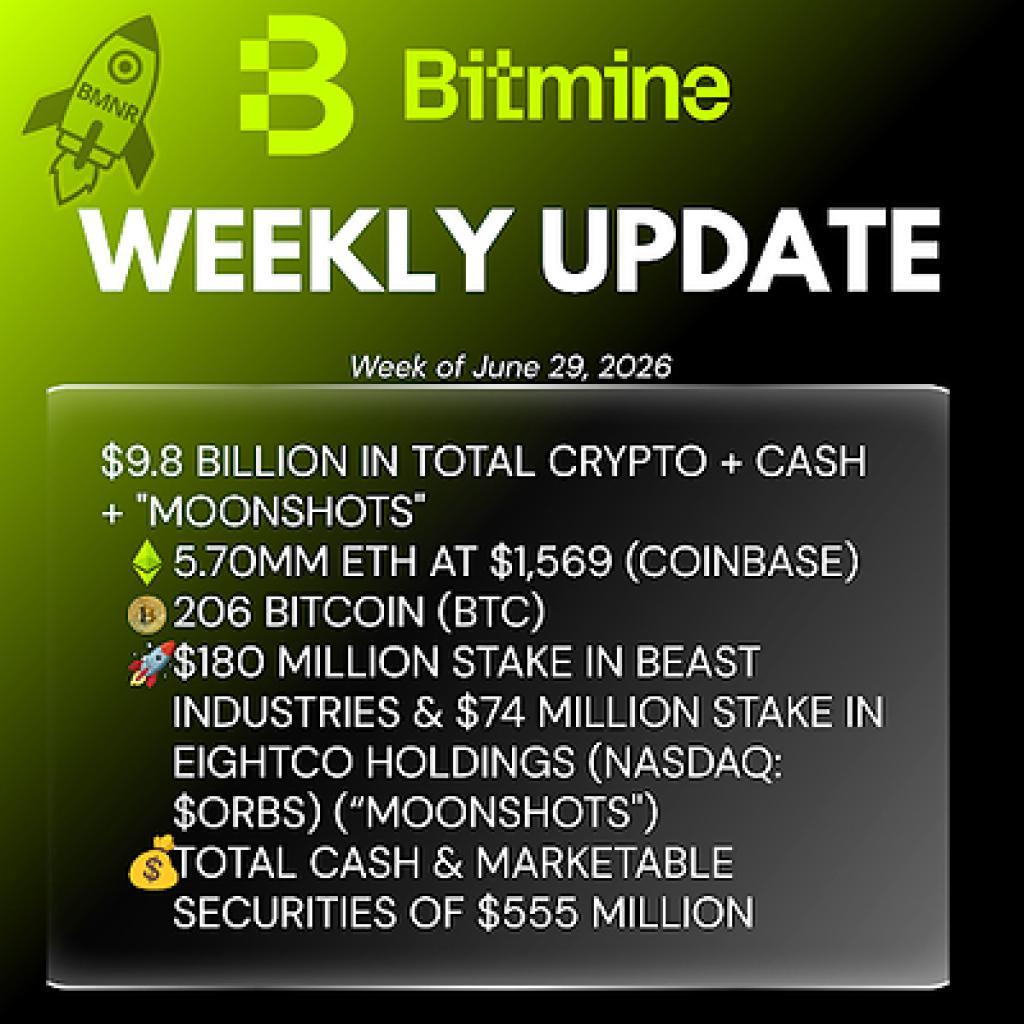
Bitmine Immersion Technologies (BMNR) Announces ETH Holdings Reach 5.70 Million Tokens, and Total Crypto and Total Cash Holdings of $9.8 Billion