Spot Ethereum ETF vs Spot Bitcoin ETF in 2026: What Actually Differs
Updated July 9, 2026
Quick Answer
The biggest difference between a spot Ethereum ETF and a spot Bitcoin ETF is not the wrapper. It is the underlying asset.
Both products are exchange-traded vehicles that offer crypto exposure inside a brokerage account. But the exposure itself is different:
- a spot Bitcoin ETF is usually bought as Bitcoin-price exposure
- a spot Ethereum ETF is bought as Ether-price exposure, which also carries the market’s view on Ethereum as a smart-contract platform
That means the ETF structure can look similar while the investment thesis is not.
Why This Comparison Changed After Spot ETH ETFs Went Live
Before spot Ethereum ETFs existed, many comparisons were hypothetical.
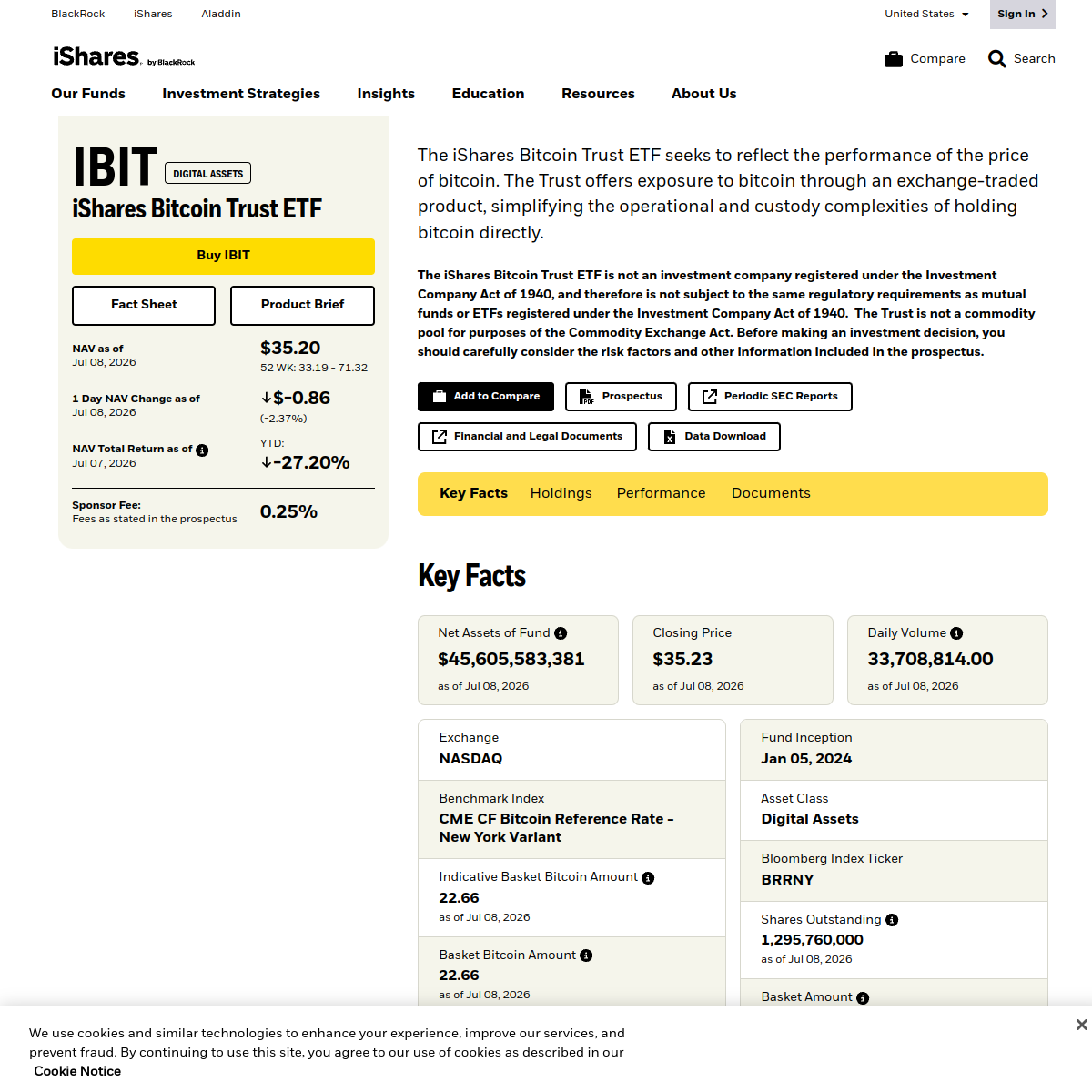
That is no longer the case. BlackRock’s iShares Bitcoin Trust ETF and iShares Ethereum Trust ETF now provide a clean side-by-side example of how similar wrappers can package very different crypto exposures.
Coincu already has a refreshed comparison of spot Bitcoin ETFs versus Bitcoin futures ETFs and a separate guide to spot Ethereum ETFs versus Ethereum futures ETFs. This page asks a different question: what changes when the wrapper is similar but the underlying asset is different?
Quick Comparison
| Feature | Spot Bitcoin ETF | Spot Ethereum ETF |
|---|---|---|
| Underlying exposure | bitcoin price exposure | ether price exposure |
| Common investor thesis | digital gold, reserve-style asset, macro hedge narrative | network-asset plus platform narrative |
| Product structure | spot trust-style ETF exposure | spot trust-style ETF exposure |
| Main conceptual risk | BTC volatility and crypto-market cycles | ETH volatility plus platform-competition narrative |
| What readers often miss | ETF convenience is not the same as self-custody BTC | ETF convenience is not the same as direct ETH use or staking |
How Similar the Wrappers Actually Are
At the product level, these ETFs often look structurally similar.
BlackRock says IBIT seeks to reflect generally the performance of the price of bitcoin. It says ETHA seeks to reflect generally the performance of the price of ether.
That is the cleanest starting point:
- neither product is direct self-custody
- both are brokerage-account wrappers
- both simplify access for traditional investors
So if a reader only wants the product wrapper, the difference is smaller than many headlines imply.
Where the Real Difference Starts: The Asset Thesis
Bitcoin and Ether are not bought for exactly the same reasons.
Bitcoin is more often framed as:
- a scarce digital asset
- a reserve-style holding
- a macro or treasury instrument
Ether is more often framed as:
- the core asset of the Ethereum network
- exposure to the smart-contract ecosystem
- a network asset connected to broader app, settlement, and tokenization activity
That difference matters even if the ETF structure feels nearly identical.
What the ETF Holder Does Not Receive Directly
An ETF investor gets price exposure, not the full native-asset experience.
With Bitcoin, that mostly means the investor does not self-custody BTC.
With Ether, the gap can feel wider because direct ETH ownership can also connect to staking, onchain app usage, gas payments, and broader Ethereum-native activity. The ETF holder does not directly do those things just by owning the fund.
That does not make the ETF worse. It just means readers should not confuse:
- ETH price exposure
with:
- using Ether as a native network asset
Fees and Product-Level Comparison Still Matter
Readers should still compare normal ETF factors:
- sponsor fee
- liquidity
- spread
- issuer size and brand familiarity
For example, BlackRock and VanEck both publish standard product pages for their spot Bitcoin and spot Ethereum ETFs:
Those are the details that matter once a reader has already decided whether they want BTC or ETH exposure.
Which Type of Investor Fits Each Better?
This is the most useful simplification:
- choose a spot Bitcoin ETF if you want simpler Bitcoin-price exposure inside a brokerage account
- choose a spot Ethereum ETF if you specifically want Ether exposure and accept that the thesis is more tied to Ethereum’s network role
The better answer depends less on hype and more on what problem the investor is trying to solve.
FAQ
Is a spot Ethereum ETF riskier than a spot Bitcoin ETF?
It can be, depending on how the investor thinks about each asset. Bitcoin is often treated as the simpler crypto exposure. Ether can carry additional narrative complexity because it is tied more directly to the Ethereum platform ecosystem.
Is a spot Ethereum ETF the same as owning ETH?
No. It is ETH price exposure through an ETF wrapper. The investor does not directly self-custody the ETH or use it natively on Ethereum.
Is a spot Bitcoin ETF the same as owning BTC?
No. It is Bitcoin price exposure through a traditional fund wrapper. The investor does not directly control onchain BTC.
Further Reading
References
- iShares Bitcoin Trust ETF
- iShares Ethereum Trust ETF
- VanEck Bitcoin ETF HODL
- VanEck Ethereum ETF ETHV


- China, US Conclude Trade Talks with Focus on Cooperation
- Crypto Weekly: NYSE Backs OKX, Kraken Gets Fed Access, BTC Sells
- Court Upholds Fed’s Rejection of Custodia Bank’s Request
- Former CFO Convicted for $35M Fraudulent Crypto Investment
- DeriW Launches Edge Hour Trading Competition Platform for Derivatives Traders
- Michael Saylor Denies Bitcoin Sell-Off Amid Large BTC Transfer
- Buy Dogecoin on eToro: Step-by-Step Guide for Beginners (2024)
- Kazakhstan Explores Crypto Reserves Backed by National Funds
- JPMorgan Increases Holdings in BlackRock’s Bitcoin ETF
- Nordea Bank Introduces Bitcoin ETP Trading for Nordic Customers
- XRP Spot ETF Launches on Nasdaq Amid Market Fluctuations
- Peter Schiff Challenges Michael Saylor on MSTR’s Business Model
- Thailand Orders Worldcoin to Delete 1.2 Million Biometric Records
- UK Proposes New DeFi Tax Framework to Ease User Burden
- WLFI Under Fire: Analyst Warns Hyperliquid Could Be Next
- Ancient Ethereum Whale Moves $1.19 Billion After Decade
- BlackRock Receives Large Crypto Transfers from Coinbase
- SEC Scrutiny on ALT5 Sigma’s Leadership Disclosure Timing
- Yala Injects $5.5 Million Amid Recovery Efforts
- Radiant Capital Faces $50M Loss in Major Security Breach
- China, US Conclude Trade Talks with Focus on Cooperation
- Crypto Weekly: NYSE Backs OKX, Kraken Gets Fed Access, BTC Sells
- Court Upholds Fed’s Rejection of Custodia Bank’s Request
- Former CFO Convicted for $35M Fraudulent Crypto Investment
- DeriW Launches Edge Hour Trading Competition Platform for Derivatives Traders
- Michael Saylor Denies Bitcoin Sell-Off Amid Large BTC Transfer
- Buy Dogecoin on eToro: Step-by-Step Guide for Beginners (2024)
- Kazakhstan Explores Crypto Reserves Backed by National Funds
- JPMorgan Increases Holdings in BlackRock’s Bitcoin ETF
- Nordea Bank Introduces Bitcoin ETP Trading for Nordic Customers
- XRP Spot ETF Launches on Nasdaq Amid Market Fluctuations
- Peter Schiff Challenges Michael Saylor on MSTR’s Business Model
- Thailand Orders Worldcoin to Delete 1.2 Million Biometric Records
- UK Proposes New DeFi Tax Framework to Ease User Burden
- WLFI Under Fire: Analyst Warns Hyperliquid Could Be Next
- Ancient Ethereum Whale Moves $1.19 Billion After Decade
- BlackRock Receives Large Crypto Transfers from Coinbase
- SEC Scrutiny on ALT5 Sigma’s Leadership Disclosure Timing
- Yala Injects $5.5 Million Amid Recovery Efforts
- Radiant Capital Faces $50M Loss in Major Security Breach
- China, US Conclude Trade Talks with Focus on Cooperation
- Crypto Weekly: NYSE Backs OKX, Kraken Gets Fed Access, BTC Sells
- Court Upholds Fed’s Rejection of Custodia Bank’s Request
- Former CFO Convicted for $35M Fraudulent Crypto Investment
- DeriW Launches Edge Hour Trading Competition Platform for Derivatives Traders
- Michael Saylor Denies Bitcoin Sell-Off Amid Large BTC Transfer
- Buy Dogecoin on eToro: Step-by-Step Guide for Beginners (2024)
- Kazakhstan Explores Crypto Reserves Backed by National Funds
- JPMorgan Increases Holdings in BlackRock’s Bitcoin ETF
- Nordea Bank Introduces Bitcoin ETP Trading for Nordic Customers
- XRP Spot ETF Launches on Nasdaq Amid Market Fluctuations
- Peter Schiff Challenges Michael Saylor on MSTR’s Business Model
- Thailand Orders Worldcoin to Delete 1.2 Million Biometric Records
- UK Proposes New DeFi Tax Framework to Ease User Burden
- WLFI Under Fire: Analyst Warns Hyperliquid Could Be Next
- Ancient Ethereum Whale Moves $1.19 Billion After Decade
- BlackRock Receives Large Crypto Transfers from Coinbase
- SEC Scrutiny on ALT5 Sigma’s Leadership Disclosure Timing
- Yala Injects $5.5 Million Amid Recovery Efforts
- Radiant Capital Faces $50M Loss in Major Security Breach

Bitwise’s Rasmussen Says Circle Is Mispriced on Stablecoin Growth Outlook


Syntetika Launches Tokenization Hub Bringing Regulated Investment Strategies Onchain
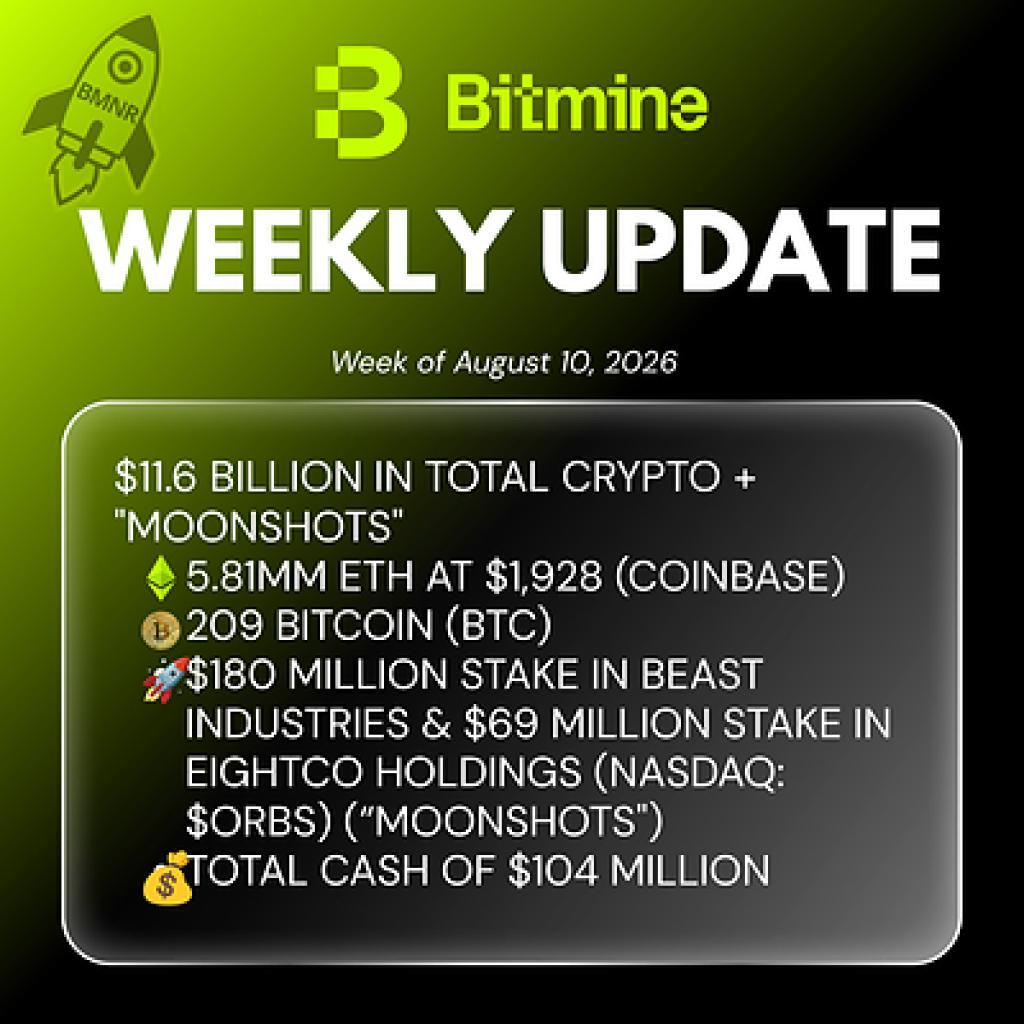
Bitmine Immersion Technologies (BMNR) Announces ETH Holdings Reach 5.81 Million Tokens, and Total Crypto and Total Cash Holdings of $11.6 Billion