The best crypto payment gateways are CoinGate, Stripe Stablecoin Payments, Coinbase Commerce, BitPay, NOWPayments, MoonPay Commerce, and PayRam. The strongest picks now separate themselves through stablecoin support, payout design, custody model, fiat-settlement flexibility, and how easily a merchant can plug them into a real checkout flow.
That answer is tighter because the category has changed. Accepting Bitcoin alone no longer settles the question. Merchants now care more about whether a gateway can reduce treasury volatility, support USDC or USDT on the right chains, pay out quickly, and fit the operating model behind the business. A WooCommerce store, a SaaS company, a cross-border exporter, and an AI-native API product do not need the same gateway.
Table of Contents

Which Crypto Payment Gateway Is Best?
For most merchants, CoinGate is the best all-around crypto payment gateway because it combines transparent pricing, flexible crypto or fiat settlement, broad integration options, and a regulated operating model. The better specialist picks are Stripe for Stripe-native stablecoin checkout, Coinbase Commerce for crypto-native onchain flows, and NOWPayments for non-custodial breadth.
Why Crypto Payment Gateways Matter More
Crypto payments are more useful now because the infrastructure underneath them is no longer just a speculative add-on. Stablecoins gave merchants a cleaner way to accept digital assets without taking open-ended balance-sheet risk. Faster settlement made crypto checkout more relevant for international businesses. API-led payment design also expanded the category beyond simple QR-code checkout into billing, embedded finance, and machine-triggered transaction flows.
That is why a serious comparison cannot reward only brand size or the raw number of supported coins. The real filters are operating filters: who controls the funds, how quickly those funds can turn into usable revenue, which chains matter, what compliance burden sits on the merchant, and how much development work the integration really takes.
How This Ranking Was Built
This list prioritizes:
- transaction fees and hidden cost structure
- fiat payout and auto-conversion flexibility
- stablecoin and chain support
- custody model
- plugin, API, and SDK quality
- merchant onboarding and compliance burden
- checkout UX and payout practicality
Official docs, pricing pages, and official help-center material were checked for evergreen relevance. Where a provider does not publicly disclose a clean merchant fee, that is treated as a real comparison drawback rather than glossed over.
Best Crypto Payment Gateways At A Glance
| Gateway | Best for | Transaction fee | Fiat payout | Custody model | Integration |
|---|---|---|---|---|---|
| CoinGate | balanced merchant use | 1% standard | Yes | managed processor | plugins, API, buttons, invoices |
| Stripe Stablecoin Payments | existing Stripe merchants | 1.5% | Yes | Stripe-managed | Checkout, Elements, Payment Links, Invoicing |
| Coinbase Commerce | crypto-native checkout | 1% | indirect via settlement design | flexible | API and hosted checkout |
| BitPay | compliance-heavy merchants | 1-2% + $0.25 | Yes | managed processor | plugins, invoicing, online and in-store |
| NOWPayments | non-custodial breadth | 0.5% + 0.5% exchange if needed | limited fiat tools, wallet-first | non-custodial | API, invoices, subscriptions, plugins |
| MoonPay Commerce | developers and creators | 2%, or 1% with HelioX | Yes | managed commerce stack | SDKs, API, widgets, Shopify |
| PayRam | sovereignty-first stacks | not simply disclosed | onchain-first | self-hosted, self-custody | headless APIs, links, MCP |
1. CoinGate

Introduction
CoinGate ranks first because it is the cleanest all-around merchant answer in this field. It fits businesses that want a real payment processor rather than a crypto-only toolset, but still want more flexibility than the oldest custodial incumbents usually provide.
Advantages
- public standard pricing at 1%
- no monthly fee on the standard plan
- settlement in EUR, USD, stablecoins, or crypto
- practical mix of plugins, API, payment buttons, and email billing
- regulated posture that is easier to justify for mainstream businesses
Disadvantages
- weekly automatic settlement on the standard plan is slower than daily-first rivals
- KYC and AML requirements are materially stricter than self-hosted or lighter crypto-native stacks
- less attractive for merchants that want full self-custody control
Quick Specs
- Transaction fee: 1% standard
- Withdrawal or payout fee: 0.50 EUR + 0.5% for crypto payouts; 0.50 EUR + 1.5% with conversion
- Coin coverage: BTC, USDC, and 10+ public-facing payment assets, with broader multi-network support in the help center
- Network coverage: includes Lightning, Base, Arbitrum, Optimism, Polygon, Solana, Tron, XRP, Dogecoin, and others
- Integration type: plugins, API, buttons, invoicing, hosted checkout
2. Stripe Stablecoin Payments
Introduction
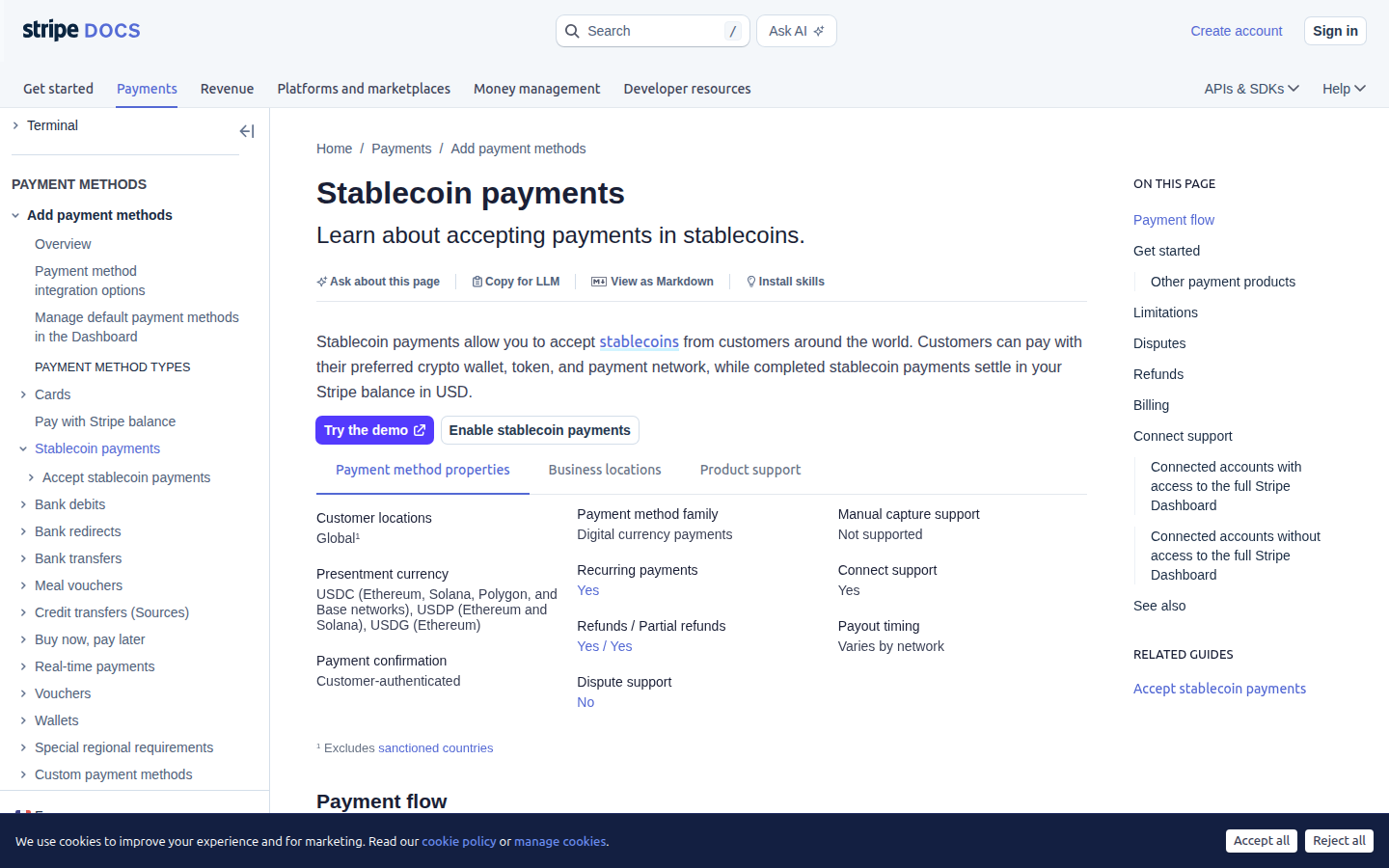
Stripe is not trying to be the broadest crypto gateway. It is trying to make stablecoin acceptance feel native inside the Stripe stack. That is a different proposition, and for businesses already running on Stripe, it is a strong one.
Advantages
- stablecoin checkout inside familiar Stripe infrastructure
- fiat settlement in the Stripe balance
- support for Checkout, Elements, Payment Intents, Payment Links, and Invoicing
- clear support for USDC across Ethereum, Solana, Polygon, and Base
- useful for teams that want stablecoin acceptance without building a separate treasury workflow
Disadvantages
- availability is still limited to a narrower merchant footprint
- asset support is stablecoin-led rather than broad-crypto
- less useful for merchants who want to receive many different tokens directly
Quick Specs
- Transaction fee: 1.5%
- Withdrawal or payout fee: not separated in the stablecoin payment doc the way crypto-native gateways often present it
- Coin coverage: USDC, USDP, USDG
- Network coverage: Ethereum, Solana, Polygon, Base
- Integration type: Checkout, Elements, Payment Links, Invoicing, API
3. Coinbase Commerce

Introduction
Coinbase Commerce remains one of the best crypto-native options for merchants that want onchain payment acceptance without forcing every checkout path through a traditional processor mindset. It is strongest where crypto already matters to the merchant and the customer.
Advantages
- public merchant fee of 1%
- customers can pay in hundreds of currencies converted into USDC through the onchain payment protocol
- flexible settlement path into self-custody or Coinbase-managed destinations
- strong fit for merchants who want to anchor around USDC rather than broad fiat-bank payout logic
Disadvantages
- not the most plugin-first or beginner-friendly option in the list
- enterprise payment-acceptance track is more partner-driven than light self-serve tools
- broader merchant operations can still feel less turnkey than BitPay or CoinGate
Quick Specs
- Transaction fee: 1%
- Withdrawal or payout fee: not positioned like a bank-payout fee sheet
- Coin coverage: customers can pay in hundreds of currencies
- Network coverage: Payment Acceptance supports USDC and upcoming USDT across Ethereum, Base, Arbitrum, Optimism, and Polygon
- Integration type: API and hosted checkout
4. BitPay
Introduction
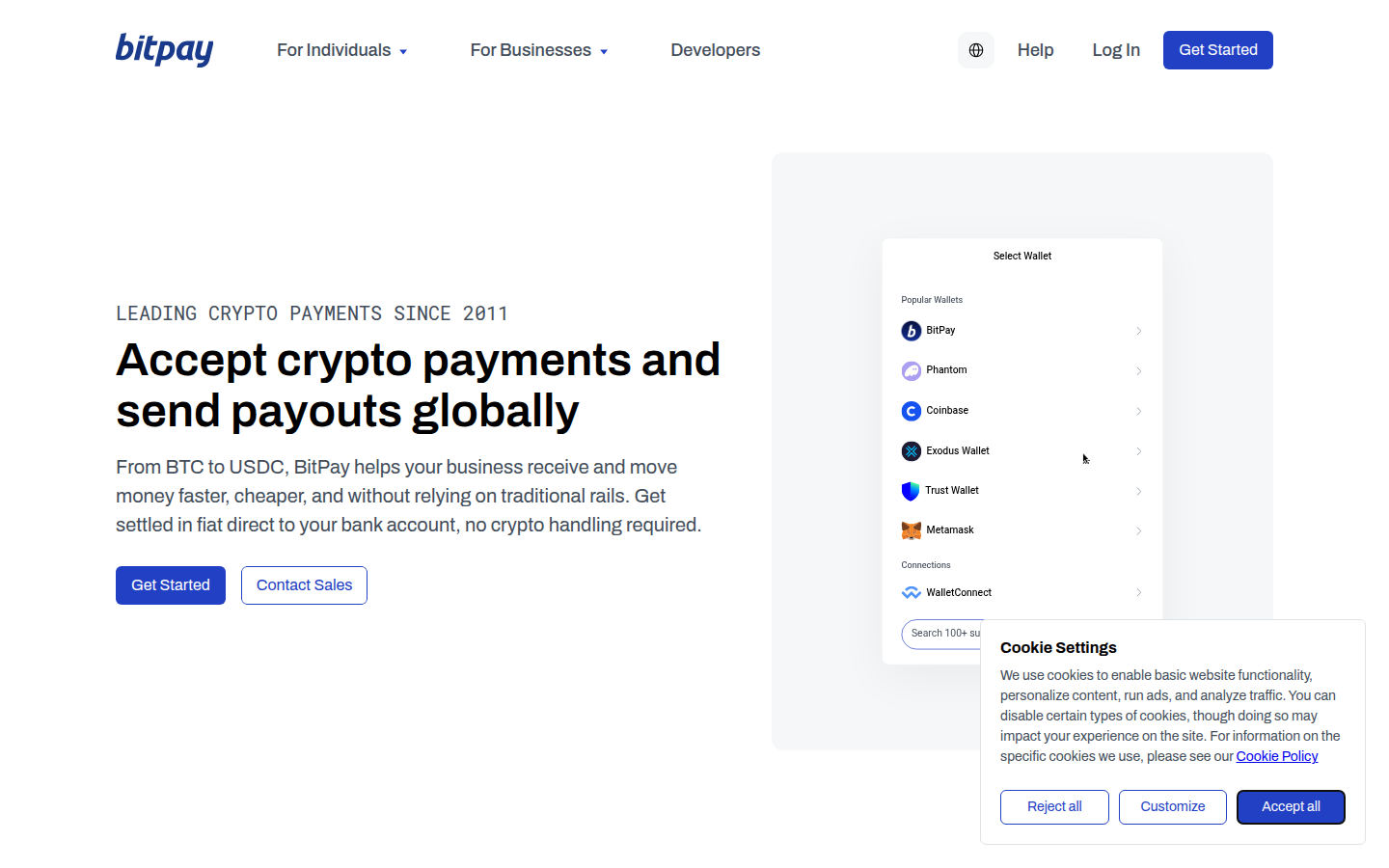
BitPay still matters because some merchants do not want to be early adopters of every new crypto-merchant narrative. They want a known processor, a known compliance posture, and regular fiat settlement. BitPay still serves that use case well.
Advantages
- long-running merchant brand with a mature processor model
- fiat or crypto settlements
- plugins for mainstream e-commerce stacks
- daily settlement rhythm suits businesses that care about accounting predictability
- stronger comfort level for businesses that want regulated infrastructure around the checkout
Disadvantages
- fee structure is heavier than the lowest-cost crypto-native rivals
- less flexible than non-custodial or sovereignty-first stacks
- not the most modern product story when compared with stablecoin-native API players
Quick Specs
- Transaction fee: 1-2% + $0.25
- Withdrawal or payout fee: depends on settlement route
- Coin coverage: major assets including BTC, BCH, ETH, DOGE, LTC, XRP, USDC, USDT and others
- Network coverage: major supported chains plus merchant settlement in 15 cryptocurrencies
- Integration type: Shopify, WooCommerce, Magento, invoicing, online and in-store
5. NOWPayments
Introduction
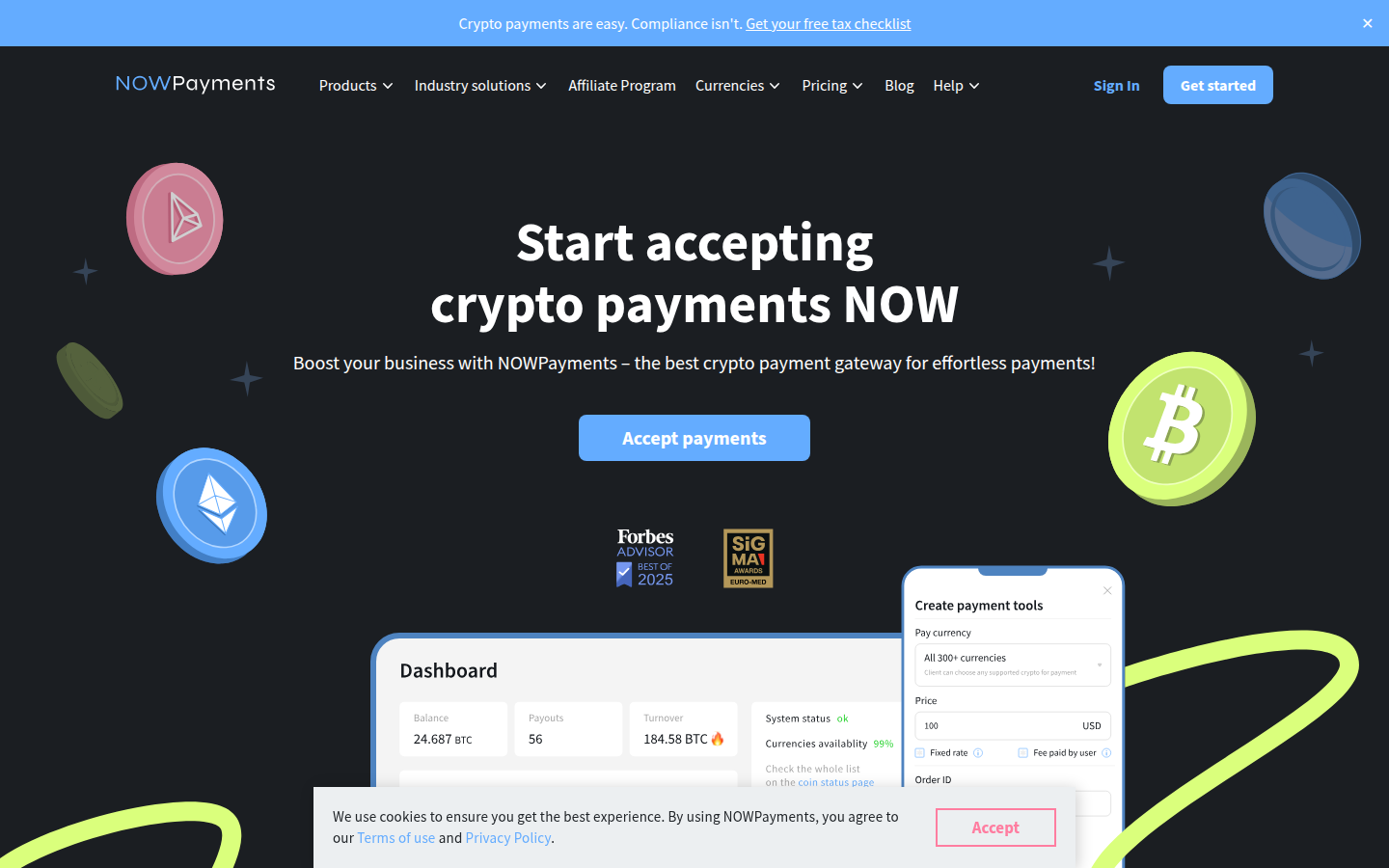
NOWPayments is the strongest non-custodial broad-coverage gateway in this ranking. It is best for merchants who want crypto to flow to their own wallets, want many supported assets, and can live with a more tool-centric merchant experience.
Advantages
- low headline fee starting at 0.5%
- non-custodial payout logic
- very broad token coverage
- subscriptions, invoices, donations, POS tools, and mass payouts expand the use cases
- strong fit for crypto-native businesses that want wallet-level control
Disadvantages
- extra exchange fee applies if the customer pays in a different asset than the merchant receives
- UX and merchant polish can feel more utilitarian than enterprise-focused rivals
- less persuasive for businesses that need deep fiat settlement and regulated processor comfort
Quick Specs
- Transaction fee: 0.5%
- Additional exchange fee: 0.5% when conversion is needed
- Coin coverage: 100+ supported currencies
- Network coverage: broad multi-chain support across BTC, ETH, XRP, SOL, TRX, USDT, USDC, PYUSD and more
- Integration type: API, invoices, subscriptions, plugins, POS, mass payout tools
6. MoonPay Commerce
Introduction
MoonPay Commerce is one of the strongest product-led gateway choices for developers, apps, and creators who want more than a simple merchant QR page. The stack covers SDKs, widgets, Shopify support, deposits, subscriptions, and agent-payment positioning.
Advantages
- wide product surface for modern commerce flows
- clear published pricing for core merchant usage
- optional auto-offramp to fiat
- stronger creator and app distribution logic than many older processors
- fits teams that want SDKs and embedded checkout instead of only classic merchant invoicing
Disadvantages
- standard fee is not cheap at 2% unless HelioX pricing applies
- total cost can rise once swap and auto-offramp layers are used
- still more product-stack than simple processor for merchants who only need a basic checkout page
Quick Specs
- Transaction fee: 2%, or 1% with HelioX
- Other fees: swaps 0.25%; auto-offramp 0.50%
- Coin coverage: thousands of supported cryptos across major chains and wallets
- Network coverage: broad multi-chain and wallet support
- Integration type: SDKs, API, widgets, pay links, charges, Shopify, subscriptions
7. PayRam
Introduction
PayRam is not the easiest merchant processor in this ranking, but it is the most sovereignty-first. It belongs here because self-hosted crypto payment infrastructure remains a real need for teams that do not want their checkout and treasury logic to depend on a hosted processor.
Advantages
- self-hosted and self-custody by design
- no signup and no KYC for the gateway stack itself in PayRam’s positioning
- multi-currency and multi-chain support
- direct fit for API-first, privacy-sensitive, or agent-payment-forward teams
- strongest ideological contrast to compliance-first processors
Disadvantages
- merchant fee is not presented as a simple public processor-style number
- not the right fit for companies that want turnkey bank-led settlement and managed compliance
- operational burden is higher than using a hosted processor
Quick Specs
- Transaction fee: not simply disclosed in the way hosted processors usually present it
- Withdrawal or payout fee: onchain payout workflow built into the stack
- Coin coverage: BTC, ETH, USDT, USDC, TRX, cbBTC, POL
- Network coverage: Bitcoin, Ethereum, Base, Polygon, Tron
- Integration type: self-hosted deployment, APIs, payment links, payout panel, MCP server
Best Crypto Payment Gateways By Use Case
- Best all-around merchant gateway: CoinGate
- Best for existing Stripe merchants: Stripe Stablecoin Payments
- Best for crypto-native checkout: Coinbase Commerce
- Best for compliance-heavy fiat settlement: BitPay
- Best non-custodial choice: NOWPayments
- Best for developer and creator commerce: MoonPay Commerce
- Best for self-hosted sovereignty: PayRam
Other Gateway Models Still Worth Watching
Two categories still matter even though they did not make this top-seven final cut.
Triple-A is one of the strongest compliance-first merchant processors when the merchant wants fiat or crypto settlement and broad wallet compatibility, but the public pricing transparency is weaker than the leaders above. BVNK is one of the strongest enterprise stablecoin infrastructure names in the category, but it is much more enterprise-platform-focused than SMB checkout-focused. 0xProcessing also deserves attention when broad token coverage and crypto-native flexibility matter more than public fee simplicity.
What Actually Separates The Winners
The category no longer breaks cleanly into “best crypto gateway” versus “worst crypto gateway.” It breaks into operating models.
One model is processor-first: BitPay, Triple-A, and parts of CoinGate speak to merchants that want compliance, managed settlement, and lower internal treasury complexity. Another model is stablecoin-first infrastructure: Stripe, Coinbase, and BVNK fit businesses that care more about programmable dollars than about supporting every possible token. A third model is sovereignty-first crypto tooling: NOWPayments, 0xProcessing, and PayRam are more compelling when wallet control, crypto-native flexibility, or self-hosted infrastructure matter more than turnkey compliance.
That split matters because the best gateway is no longer universal. It depends on which layer the merchant wants to outsource and which layer the merchant insists on controlling.
Final Verdict
The best crypto payment gateway is CoinGate for most businesses, because it balances transparent pricing, broad merchant usability, flexible payout options, and a cleaner regulated structure than many smaller rivals.
That does not make it the best answer for every business. Stripe Stablecoin Payments is stronger for merchants already inside Stripe. Coinbase Commerce is stronger for crypto-native checkout logic. NOWPayments is stronger for non-custodial breadth. PayRam is stronger when sovereignty matters more than convenience. The right decision starts with the business model, not the logo on the checkout page.
FAQ
What is the best crypto payment gateway?
For most merchants, CoinGate is the strongest all-around answer because it combines public pricing, flexible settlement, useful integrations, and a more regulated merchant-ready operating model.
Which crypto payment gateway is best for WordPress or WooCommerce?
CoinGate and BitPay are the strongest mainstream answers for WooCommerce-style merchants, while NOWPayments is attractive if non-custodial crypto payouts matter more than processor polish.
Which crypto payment gateway is best for fiat withdrawals?
BitPay, CoinGate, and Stripe Stablecoin Payments are the strongest answers when fast or cleaner fiat-settlement logic matters more than direct wallet control.
Which crypto payment gateway is best for self-custody?
NOWPayments is the strongest low-friction non-custodial choice, while PayRam is the strongest self-hosted sovereignty-first option.
Do merchants still need Bitcoin support first?
Not necessarily., stablecoin support often matters more because it reduces volatility and fits operational cash flow better than a Bitcoin-only payment strategy.
References
- Coinbase. Commerce Onchain Payments: Accepting Crypto
- Coinbase. Payment Acceptance Overview
- Coinbase. Commerce Fees
- BitPay. Business Payments
- BitPay. Merchant Fees
- CoinGate. Pricing
- CoinGate. Accept Crypto Payments
- NOWPayments. Pricing
- NOWPayments. About NOWPayments
- Stripe. Stablecoin Payments
- MoonPay Commerce. Pricing & Fees
- PayRam. Introduction
Disclaimer: This article is for informational and editorial purposes only and does not constitute legal, tax, accounting, or financial advice. Payment-gateway fees, supported networks, onboarding rules, and jurisdiction availability can change quickly. Merchants should confirm the latest terms directly with each provider before integrating production checkout flows.
No tags available.





- China, US Conclude Trade Talks with Focus on Cooperation
- Crypto Weekly: NYSE Backs OKX, Kraken Gets Fed Access, BTC Sells
- DeriW Launches Edge Hour Trading Competition Platform for Derivatives Traders
- Court Upholds Fed’s Rejection of Custodia Bank’s Request
- Former CFO Convicted for $35M Fraudulent Crypto Investment
- Michael Saylor Denies Bitcoin Sell-Off Amid Large BTC Transfer
- Kazakhstan Explores Crypto Reserves Backed by National Funds
- JPMorgan Increases Holdings in BlackRock’s Bitcoin ETF
- Nordea Bank Introduces Bitcoin ETP Trading for Nordic Customers
- XRP Spot ETF Launches on Nasdaq Amid Market Fluctuations
- Crypto Leaders Address Macro Volatility Amid Market Shifts
- Buy Dogecoin on eToro: Step-by-Step Guide for Beginners (2024)
- Peter Schiff Challenges Michael Saylor on MSTR’s Business Model
- Thailand Orders Worldcoin to Delete 1.2 Million Biometric Records
- UK Proposes New DeFi Tax Framework to Ease User Burden
- WLFI Under Fire: Analyst Warns Hyperliquid Could Be Next
- Ancient Ethereum Whale Moves $1.19 Billion After Decade
- BlackRock Receives Large Crypto Transfers from Coinbase
- SEC Scrutiny on ALT5 Sigma’s Leadership Disclosure Timing
- MoonPay Gains Trust License for Crypto Operations in New York
- China, US Conclude Trade Talks with Focus on Cooperation
- Crypto Weekly: NYSE Backs OKX, Kraken Gets Fed Access, BTC Sells
- DeriW Launches Edge Hour Trading Competition Platform for Derivatives Traders
- Court Upholds Fed’s Rejection of Custodia Bank’s Request
- Former CFO Convicted for $35M Fraudulent Crypto Investment
- Michael Saylor Denies Bitcoin Sell-Off Amid Large BTC Transfer
- Kazakhstan Explores Crypto Reserves Backed by National Funds
- JPMorgan Increases Holdings in BlackRock’s Bitcoin ETF
- Nordea Bank Introduces Bitcoin ETP Trading for Nordic Customers
- XRP Spot ETF Launches on Nasdaq Amid Market Fluctuations
- Crypto Leaders Address Macro Volatility Amid Market Shifts
- Buy Dogecoin on eToro: Step-by-Step Guide for Beginners (2024)
- Peter Schiff Challenges Michael Saylor on MSTR’s Business Model
- Thailand Orders Worldcoin to Delete 1.2 Million Biometric Records
- UK Proposes New DeFi Tax Framework to Ease User Burden
- WLFI Under Fire: Analyst Warns Hyperliquid Could Be Next
- Ancient Ethereum Whale Moves $1.19 Billion After Decade
- BlackRock Receives Large Crypto Transfers from Coinbase
- SEC Scrutiny on ALT5 Sigma’s Leadership Disclosure Timing
- MoonPay Gains Trust License for Crypto Operations in New York
- China, US Conclude Trade Talks with Focus on Cooperation
- Crypto Weekly: NYSE Backs OKX, Kraken Gets Fed Access, BTC Sells
- DeriW Launches Edge Hour Trading Competition Platform for Derivatives Traders
- Court Upholds Fed’s Rejection of Custodia Bank’s Request
- Former CFO Convicted for $35M Fraudulent Crypto Investment
- Michael Saylor Denies Bitcoin Sell-Off Amid Large BTC Transfer
- Kazakhstan Explores Crypto Reserves Backed by National Funds
- JPMorgan Increases Holdings in BlackRock’s Bitcoin ETF
- Nordea Bank Introduces Bitcoin ETP Trading for Nordic Customers
- XRP Spot ETF Launches on Nasdaq Amid Market Fluctuations
- Crypto Leaders Address Macro Volatility Amid Market Shifts
- Buy Dogecoin on eToro: Step-by-Step Guide for Beginners (2024)
- Peter Schiff Challenges Michael Saylor on MSTR’s Business Model
- Thailand Orders Worldcoin to Delete 1.2 Million Biometric Records
- UK Proposes New DeFi Tax Framework to Ease User Burden
- WLFI Under Fire: Analyst Warns Hyperliquid Could Be Next
- Ancient Ethereum Whale Moves $1.19 Billion After Decade
- BlackRock Receives Large Crypto Transfers from Coinbase
- SEC Scrutiny on ALT5 Sigma’s Leadership Disclosure Timing
- MoonPay Gains Trust License for Crypto Operations in New York
Latest
Aave Founder Says Protocol Is ‘Resilient’ After $8.45B Deposit Run Highlights Risks
MetaMask launches Agent Wallet for self-custody AI transactions
Press Release

Bitmine Immersion Technologies (BMNR) Announces ETH Holdings Reach 5.54 Million Tokens, and Total Crypto and Total Cash Holdings of $9.6 Billion

MapleStory Universe Opens MSU Space and Launches Global Game Jam Competition as Part of MSU 2.0 Expansion