KOSDAQ Circuit Breaker Triggered Again: What Happened on the Korean Exchange
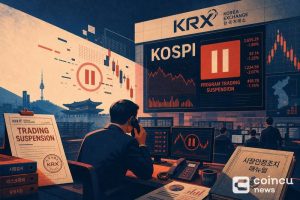
The Korean Exchange has once again activated the circuit breaker mechanism on the Korea Growth Enterprise Market Index, known as KOSDAQ, halting trading after a sharp selloff pushed the index past its threshold for automatic intervention.
The activation marks another instance of the exchange stepping in to pause trading on South Korea’s junior market amid intense selling pressure. Circuit breakers were triggered on the KOSDAQ, forcing a temporary halt in all trading on the growth-oriented index.
The repeated use of the mechanism signals that volatility on the Korean exchange has not subsided, with sellers continuing to dominate price action on the technology and growth-heavy board.
How the KOSDAQ circuit breaker mechanism works
A circuit breaker is an automatic trading halt that exchanges activate when an index falls by a predetermined percentage within a set timeframe. The mechanism is designed to interrupt panic-driven selling and give market participants time to reassess conditions before trading resumes.
The Korea Exchange, which operates both the KOSPI and KOSDAQ markets, uses the circuit breaker to protect investors from cascading losses during periods of extreme stress. Unlike normal intraday volatility, a circuit breaker event represents a level of decline severe enough to warrant a full pause in price discovery.
During the halt, no orders are matched. When trading resumes, a brief call auction period allows buy and sell interest to rebuild before continuous matching restarts. The goal is orderly price formation rather than free-fall.
Why renewed KOSDAQ volatility matters for broader sentiment
KOSDAQ is widely associated with growth-oriented and risk-sensitive equities, including technology startups, biotech firms, and smaller industrial companies. Sharp declines on this board tend to reflect deteriorating appetite for speculative assets more broadly.
Repeated circuit breaker activations can amplify fear rather than contain it. Each halt reminds participants that conditions are fragile enough to trigger automatic intervention, which can discourage fresh buying and reinforce defensive positioning.
The selloff on KOSDAQ also carries implications for how investors assess near-term risk across Asian markets. Growth indexes are often treated as leading indicators of sentiment shifts, and persistent weakness in South Korea’s junior market may weigh on confidence in similar segments elsewhere. In the derivatives space, elevated volatility in traditional equity markets sometimes spills over into digital asset positioning, similar to how Binance Futures has expanded its contract offerings to meet demand during volatile periods.
A trading halt does not by itself resolve the underlying selling pressure. It pauses price discovery temporarily but does not change the fundamental conditions driving the decline.
What traders and investors will watch after the halt
Post-halt price action is the first signal participants will monitor. If selling accelerates immediately after the resumption of trading, it suggests that the halt only delayed further downside rather than stabilizing the market.
Volume patterns during and after the reopening will also be closely watched. A surge in turnover with prices stabilizing or recovering would indicate that buyers are stepping in at lower levels. Thin volume on a continued slide would suggest the opposite.
Sector breadth matters as well. If the decline is concentrated in a handful of heavily weighted names, the damage may be contained. If selling is broad-based across sectors, it points to a more systemic risk-off move that could extend into subsequent sessions. Large directional bets in related markets, such as the significant short positions recently built by notable on-chain actors, can offer clues about where institutional sentiment sits.
Periods of extreme traditional market stress have historically coincided with heightened activity across digital asset ecosystems as well, with participants in spaces like blockchain-based gaming platforms and crypto derivatives both reacting to shifts in global risk appetite.
The next full trading session on the Korean Exchange will be critical in determining whether this circuit breaker event was an isolated spike or the beginning of a deeper correction on the KOSDAQ.
FAQ about the KOSDAQ circuit breaker
What is the KOSDAQ circuit breaker?
The KOSDAQ circuit breaker is an automatic trading halt triggered when the index falls beyond a set threshold during a single session. It is managed by the Korea Exchange and is designed to slow panic selling and allow orderly price discovery.
Why was the KOSDAQ circuit breaker triggered again?
The circuit breaker was activated because the KOSDAQ index declined sharply enough to cross the exchange’s automatic halt threshold. The repeated activation indicates that selling pressure on South Korea’s growth-stock market has remained elevated.
Does the circuit breaker halt affect all stocks on the KOSDAQ?
Yes. When the index-level circuit breaker is activated, trading across all securities listed on the KOSDAQ is paused. Individual stock circuit breakers also exist but operate separately from the market-wide mechanism.
Does a trading halt mean the market will keep falling?
Not necessarily. A halt pauses trading temporarily but does not determine direction when trading resumes. Post-halt price action depends on whether underlying selling pressure has eased or whether new buyers have emerged during the pause.
Disclaimer: This article is for informational purposes only and does not constitute financial or investment advice. Cryptocurrency and digital asset markets carry significant risk. Always do your own research before making decisions.
No tags available.


Other Posts




- China, US Conclude Trade Talks with Focus on Cooperation
- Crypto Weekly: NYSE Backs OKX, Kraken Gets Fed Access, BTC Sells
- Court Upholds Fed’s Rejection of Custodia Bank’s Request
- Former CFO Convicted for $35M Fraudulent Crypto Investment
- DeriW Launches Edge Hour Trading Competition Platform for Derivatives Traders
- Michael Saylor Denies Bitcoin Sell-Off Amid Large BTC Transfer
- Buy Dogecoin on eToro: Step-by-Step Guide for Beginners (2024)
- Kazakhstan Explores Crypto Reserves Backed by National Funds
- JPMorgan Increases Holdings in BlackRock’s Bitcoin ETF
- Nordea Bank Introduces Bitcoin ETP Trading for Nordic Customers
- XRP Spot ETF Launches on Nasdaq Amid Market Fluctuations
- Peter Schiff Challenges Michael Saylor on MSTR’s Business Model
- Thailand Orders Worldcoin to Delete 1.2 Million Biometric Records
- UK Proposes New DeFi Tax Framework to Ease User Burden
- WLFI Under Fire: Analyst Warns Hyperliquid Could Be Next
- Ancient Ethereum Whale Moves $1.19 Billion After Decade
- BlackRock Receives Large Crypto Transfers from Coinbase
- SEC Scrutiny on ALT5 Sigma’s Leadership Disclosure Timing
- Yala Injects $5.5 Million Amid Recovery Efforts
- Radiant Capital Faces $50M Loss in Major Security Breach
- China, US Conclude Trade Talks with Focus on Cooperation
- Crypto Weekly: NYSE Backs OKX, Kraken Gets Fed Access, BTC Sells
- Court Upholds Fed’s Rejection of Custodia Bank’s Request
- Former CFO Convicted for $35M Fraudulent Crypto Investment
- DeriW Launches Edge Hour Trading Competition Platform for Derivatives Traders
- Michael Saylor Denies Bitcoin Sell-Off Amid Large BTC Transfer
- Buy Dogecoin on eToro: Step-by-Step Guide for Beginners (2024)
- Kazakhstan Explores Crypto Reserves Backed by National Funds
- JPMorgan Increases Holdings in BlackRock’s Bitcoin ETF
- Nordea Bank Introduces Bitcoin ETP Trading for Nordic Customers
- XRP Spot ETF Launches on Nasdaq Amid Market Fluctuations
- Peter Schiff Challenges Michael Saylor on MSTR’s Business Model
- Thailand Orders Worldcoin to Delete 1.2 Million Biometric Records
- UK Proposes New DeFi Tax Framework to Ease User Burden
- WLFI Under Fire: Analyst Warns Hyperliquid Could Be Next
- Ancient Ethereum Whale Moves $1.19 Billion After Decade
- BlackRock Receives Large Crypto Transfers from Coinbase
- SEC Scrutiny on ALT5 Sigma’s Leadership Disclosure Timing
- Yala Injects $5.5 Million Amid Recovery Efforts
- Radiant Capital Faces $50M Loss in Major Security Breach
- China, US Conclude Trade Talks with Focus on Cooperation
- Crypto Weekly: NYSE Backs OKX, Kraken Gets Fed Access, BTC Sells
- Court Upholds Fed’s Rejection of Custodia Bank’s Request
- Former CFO Convicted for $35M Fraudulent Crypto Investment
- DeriW Launches Edge Hour Trading Competition Platform for Derivatives Traders
- Michael Saylor Denies Bitcoin Sell-Off Amid Large BTC Transfer
- Buy Dogecoin on eToro: Step-by-Step Guide for Beginners (2024)
- Kazakhstan Explores Crypto Reserves Backed by National Funds
- JPMorgan Increases Holdings in BlackRock’s Bitcoin ETF
- Nordea Bank Introduces Bitcoin ETP Trading for Nordic Customers
- XRP Spot ETF Launches on Nasdaq Amid Market Fluctuations
- Peter Schiff Challenges Michael Saylor on MSTR’s Business Model
- Thailand Orders Worldcoin to Delete 1.2 Million Biometric Records
- UK Proposes New DeFi Tax Framework to Ease User Burden
- WLFI Under Fire: Analyst Warns Hyperliquid Could Be Next
- Ancient Ethereum Whale Moves $1.19 Billion After Decade
- BlackRock Receives Large Crypto Transfers from Coinbase
- SEC Scrutiny on ALT5 Sigma’s Leadership Disclosure Timing
- Yala Injects $5.5 Million Amid Recovery Efforts
- Radiant Capital Faces $50M Loss in Major Security Breach
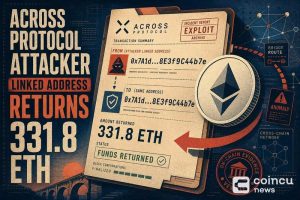
Across Protocol Attacker-Linked Address Returns 331.8 ETH After Exploit

Psalion Launches $50 Million Fund for Early-Stage Blockchain Startups

HSBC Says Crypto Allocation Fell to 6% as 45% of HNW Investors Plan to Increase Holdings
Canton’s Decentralized App Layer Launches, Backed by $1M+ Foundation Grant
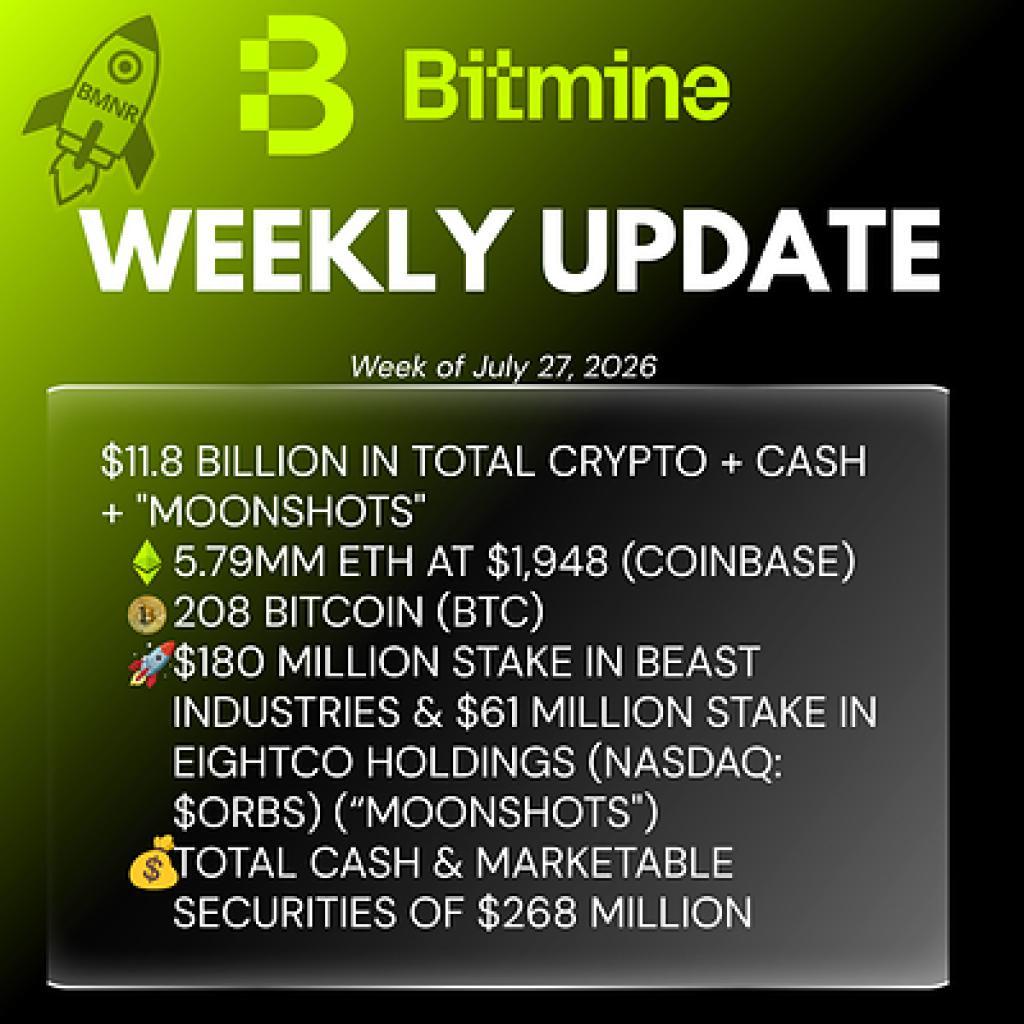
Bitmine Immersion Technologies (BMNR) Announces ETH Holdings Reach 5.79 Million Tokens, and Total Crypto and Total Cash Holdings of $11.8 Billion