Eight Bitcoin wallets dormant since the earliest days of the network moved a combined 80,000 BTC in what has been described as the largest-ever batch of Satoshi-era transfers. The wallets had sat untouched for roughly 14 years, placing their origin in the period when Bitcoin’s anonymous creator was still active on the network.
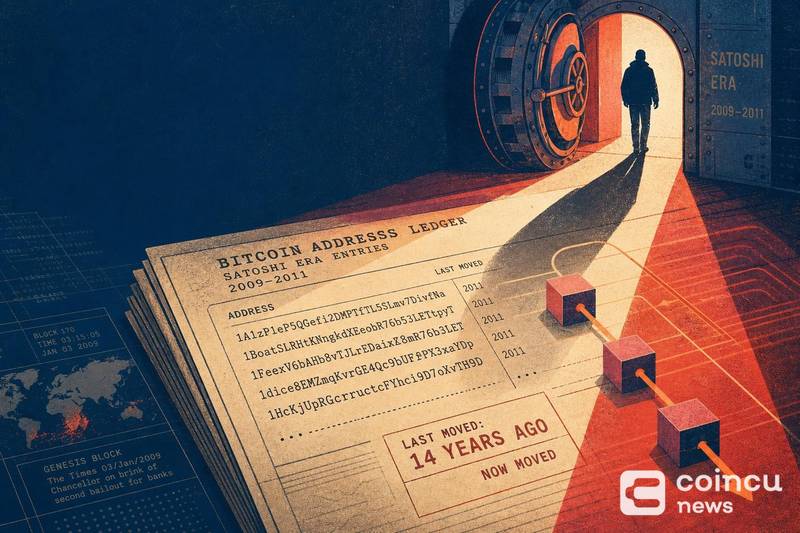
What Happened to These Satoshi-Era Bitcoin Addresses
According to a CoinDesk report, eight long-dormant Bitcoin wallets moved 80,000 BTC in a coordinated set of transfers. The wallets had been inactive since approximately 2011, placing them squarely in the so-called Satoshi era, the period before Bitcoin’s pseudonymous creator Satoshi Nakamoto disappeared from public communication.
The label “Satoshi era” refers to the time frame, not to ownership. There is no confirmed evidence linking these specific wallets to Nakamoto. The transfers drew attention because of the combination of extreme dormancy and the sheer volume of coins moved.
Movements from wallets this old are exceptionally rare. Most coins mined in Bitcoin’s first two years have never moved at all, making any reactivation from that period a notable on-chain event.
What the On-Chain Evidence Shows
Blockchain records confirm the dormancy claim. Address 12tLs9c9RsALw3TMaqPVcbLx1oZuQxj2me is one of the wallets involved, with its transaction history showing a long gap between its initial funding and the recent movement.
The 14-year dormancy window is established by comparing the first incoming transaction date on each address against the date of the latest outgoing transfer. That gap, stretching from Bitcoin’s earliest circulation period to mid-2025, is what defines these as Satoshi-era coins.
What the chain data does not reveal is intent. Without confirmed links to exchange deposit addresses, it is impossible to determine whether the transfers represent a sale, a consolidation into new self-custody wallets, or something else entirely. Observers should separate the observable fact of movement from assumptions about liquidation.
Why a 14-Year Wallet Reactivation Matters
Dormant supply movements from Bitcoin’s earliest era attract attention for a specific reason: they represent coins that have been outside active circulation for virtually the entire history of the asset. When those coins move, the market watches closely for signs of potential sell pressure.
The scale of the transfer amplifies the significance. At any recent Bitcoin price level, 80,000 BTC represents billions of dollars in value. That volume, if directed toward exchanges, could create meaningful selling pressure, similar to the kind of large whale-driven transactions that routinely move crypto markets.
However, significance and impact are different things. Without evidence that the coins landed on exchange wallets, any claim about market consequences remains speculative. The symbolic weight of Satoshi-era coins moving is substantial, but symbolism alone does not equal sell pressure.
How This Compares With Earlier Dormant Bitcoin Awakenings
The Satoshi era broadly covers 2009 through early 2011, the period when Nakamoto was actively developing Bitcoin and participating in its community. Coins mined during this window are among the scarcest in active circulation because the vast majority have never moved from their original addresses.
Previous dormant wallet reactivations have typically involved smaller amounts. Individual wallets from 2012 or 2013 have occasionally moved funds, generating headlines but on a far smaller scale. The coordinated movement of eight wallets totaling 80,000 BTC stands apart in both volume and the number of addresses involved.
The distinction matters for how the market interprets these events. A single old wallet moving a few hundred BTC could reflect an individual recovering lost keys. Eight wallets moving simultaneously suggests coordinated action by an entity, or entities, with access to substantial early-era holdings. That pattern raises different questions about institutional-scale crypto custody and long-term holder behavior.
FAQ About the Satoshi-Era Bitcoin Wallet Move
Do these coins belong to Satoshi Nakamoto?
There is no confirmed evidence linking these wallets to Nakamoto. The “Satoshi era” label refers to the time period when the coins were mined, not to ownership by Bitcoin’s creator. Analysts who have studied Nakamoto’s known mining patterns have not publicly attributed these specific addresses to that entity.
Were the coins sent to an exchange?
The available on-chain data does not confirm that the funds were deposited to any known exchange wallet. Until destination addresses are matched to identified exchange hot or cold wallets, it is premature to conclude that a sale occurred.
Why does 14 years of dormancy matter?
Bitcoin has only existed since 2009. A 14-year dormancy period means these coins have been untouched for nearly the entire lifespan of the network. Coins from this era are exceptionally rare in active circulation, and their movement signals that whoever controls them has chosen to act after more than a decade of inactivity.
Could this affect Bitcoin’s price?
Large movements of previously dormant supply can create sell pressure if the coins reach exchanges. However, without confirmed exchange deposits, any price impact remains theoretical. The market’s reaction to large-scale financial movements in crypto depends heavily on whether the transferred assets enter liquid markets.
Disclaimer: This article is for informational purposes only and does not constitute financial or investment advice. Cryptocurrency and digital asset markets carry significant risk. Always do your own research before making decisions.
No tags available.


Other Posts








- China, US Conclude Trade Talks with Focus on Cooperation
- Crypto Weekly: NYSE Backs OKX, Kraken Gets Fed Access, BTC Sells
- Court Upholds Fed’s Rejection of Custodia Bank’s Request
- Former CFO Convicted for $35M Fraudulent Crypto Investment
- DeriW Launches Edge Hour Trading Competition Platform for Derivatives Traders
- Michael Saylor Denies Bitcoin Sell-Off Amid Large BTC Transfer
- Buy Dogecoin on eToro: Step-by-Step Guide for Beginners (2024)
- Kazakhstan Explores Crypto Reserves Backed by National Funds
- JPMorgan Increases Holdings in BlackRock’s Bitcoin ETF
- Nordea Bank Introduces Bitcoin ETP Trading for Nordic Customers
- XRP Spot ETF Launches on Nasdaq Amid Market Fluctuations
- Peter Schiff Challenges Michael Saylor on MSTR’s Business Model
- Thailand Orders Worldcoin to Delete 1.2 Million Biometric Records
- UK Proposes New DeFi Tax Framework to Ease User Burden
- WLFI Under Fire: Analyst Warns Hyperliquid Could Be Next
- Ancient Ethereum Whale Moves $1.19 Billion After Decade
- BlackRock Receives Large Crypto Transfers from Coinbase
- SEC Scrutiny on ALT5 Sigma’s Leadership Disclosure Timing
- Yala Injects $5.5 Million Amid Recovery Efforts
- Radiant Capital Faces $50M Loss in Major Security Breach
- China, US Conclude Trade Talks with Focus on Cooperation
- Crypto Weekly: NYSE Backs OKX, Kraken Gets Fed Access, BTC Sells
- Court Upholds Fed’s Rejection of Custodia Bank’s Request
- Former CFO Convicted for $35M Fraudulent Crypto Investment
- DeriW Launches Edge Hour Trading Competition Platform for Derivatives Traders
- Michael Saylor Denies Bitcoin Sell-Off Amid Large BTC Transfer
- Buy Dogecoin on eToro: Step-by-Step Guide for Beginners (2024)
- Kazakhstan Explores Crypto Reserves Backed by National Funds
- JPMorgan Increases Holdings in BlackRock’s Bitcoin ETF
- Nordea Bank Introduces Bitcoin ETP Trading for Nordic Customers
- XRP Spot ETF Launches on Nasdaq Amid Market Fluctuations
- Peter Schiff Challenges Michael Saylor on MSTR’s Business Model
- Thailand Orders Worldcoin to Delete 1.2 Million Biometric Records
- UK Proposes New DeFi Tax Framework to Ease User Burden
- WLFI Under Fire: Analyst Warns Hyperliquid Could Be Next
- Ancient Ethereum Whale Moves $1.19 Billion After Decade
- BlackRock Receives Large Crypto Transfers from Coinbase
- SEC Scrutiny on ALT5 Sigma’s Leadership Disclosure Timing
- Yala Injects $5.5 Million Amid Recovery Efforts
- Radiant Capital Faces $50M Loss in Major Security Breach
- China, US Conclude Trade Talks with Focus on Cooperation
- Crypto Weekly: NYSE Backs OKX, Kraken Gets Fed Access, BTC Sells
- Court Upholds Fed’s Rejection of Custodia Bank’s Request
- Former CFO Convicted for $35M Fraudulent Crypto Investment
- DeriW Launches Edge Hour Trading Competition Platform for Derivatives Traders
- Michael Saylor Denies Bitcoin Sell-Off Amid Large BTC Transfer
- Buy Dogecoin on eToro: Step-by-Step Guide for Beginners (2024)
- Kazakhstan Explores Crypto Reserves Backed by National Funds
- JPMorgan Increases Holdings in BlackRock’s Bitcoin ETF
- Nordea Bank Introduces Bitcoin ETP Trading for Nordic Customers
- XRP Spot ETF Launches on Nasdaq Amid Market Fluctuations
- Peter Schiff Challenges Michael Saylor on MSTR’s Business Model
- Thailand Orders Worldcoin to Delete 1.2 Million Biometric Records
- UK Proposes New DeFi Tax Framework to Ease User Burden
- WLFI Under Fire: Analyst Warns Hyperliquid Could Be Next
- Ancient Ethereum Whale Moves $1.19 Billion After Decade
- BlackRock Receives Large Crypto Transfers from Coinbase
- SEC Scrutiny on ALT5 Sigma’s Leadership Disclosure Timing
- Yala Injects $5.5 Million Amid Recovery Efforts
- Radiant Capital Faces $50M Loss in Major Security Breach

Strategy Builds $4.75B Cash Cushion as Investors Seek More Than Bitcoin Exposure

Vitalik Buterin’s Ethereum Roadmap Prioritizes Privacy and Quantum Resistance

Trump Media Bitcoin Holdings Shrink as Crypto Losses Hit $361M

ForumPay Expands Payment Infrastructure with New Card and Bank Transfer Acceptance Solution

Newest Assets, Improved User Promotions & Much Greater Crypto Experience_ Xxkk Trade Exchange Reinforces Its Trade Environment