South Korea has reportedly launched a review of Polymarket, the blockchain-based prediction market platform, over concerns that it may constitute illegal gambling under the country’s laws. The review, which has not yet resulted in formal charges or penalties, signals growing regulatory attention toward prediction markets across Asia.
What South Korea’s review of Polymarket is about
According to a report from Focus Gaming News, South Korean authorities are examining whether Polymarket’s operations fall under the country’s gambling regulations. The matter is described as a regulatory review rather than a settled enforcement action.
Polymarket is a decentralized prediction market built on the Polygon blockchain where users place bets on the outcomes of real-world events, from elections to economic indicators. Users buy shares that pay out if their predicted outcome occurs, effectively creating binary options tied to future events.
The review reportedly centers on whether South Korean residents participating in Polymarket’s markets are engaging in illegal gambling activity. No formal charges, sanctions, or penalties have been announced as of this writing.
Why prediction markets trigger gambling scrutiny
Prediction markets occupy a legal gray zone in many jurisdictions because they share structural similarities with sports betting and other forms of wagering. Users stake money on uncertain outcomes, which is the core mechanic that gambling laws typically regulate.
However, prediction markets differ from traditional casinos or sportsbooks in important ways. They are often framed as information aggregation tools, with proponents arguing that the prices of prediction market contracts reflect collective intelligence about the probability of future events.
The distinction matters legally because many countries, including South Korea, have strict anti-gambling statutes but may not have frameworks specifically addressing prediction markets. As Cointelegraph has reported, prediction markets are testing legal limits across multiple Asian jurisdictions, forcing regulators to determine whether existing gambling laws apply or whether new classifications are needed.
South Korea maintains some of the strictest gambling laws in Asia, with most forms of betting prohibited for citizens. The country has previously taken aggressive enforcement action against offshore gambling platforms accessible to Korean users.
What the review could mean for Polymarket users in South Korea
If the review concludes that Polymarket constitutes illegal gambling, South Korean users could face access restrictions or legal consequences. Polymarket already maintains geographic restrictions that block users in certain jurisdictions from accessing the platform.
Possible outcomes include geoblocking of South Korean IP addresses, compliance requirements for identity verification, or formal warnings to citizens against participation. None of these steps have been confirmed as imminent actions.
Active traders on the platform would likely be most concerned about market access continuity and the ability to settle existing positions. Similar to how exchanges have faced sudden outflows during regulatory uncertainty, prediction market users may preemptively withdraw funds if enforcement appears likely.
Regulatory crackdowns can also create ripple effects across the broader crypto ecosystem, as seen when cross-chain settlement platforms have faced operational disruptions in response to shifting compliance landscapes.
Users currently active on Polymarket should monitor official platform notices and statements from South Korean regulators, particularly the Korea Communications Commission and the National Gambling Control Commission, for any formal determinations.
What remains unverified in the current reporting
Several key details about this story remain unconfirmed. No official South Korean government press release has been independently verified as announcing a formal investigation or review of Polymarket specifically.
The reporting does not confirm which specific government body is conducting the review, what legal theory is being applied, or whether Polymarket has been contacted or has responded. No timeline for any determination has been reported.
It is also unclear how many South Korean users actively participate on Polymarket, or whether the platform has already implemented any form of geoblocking for the country. Without these details, the practical scope of any potential enforcement remains speculative.
The uncertain regulatory environment echoes broader patterns in crypto markets, where platforms sometimes face pressure well before formal rulings materialize, as highlighted by recent volatility-driven liquidation risks across major trading pairs.
FAQ about South Korea’s Polymarket review
What is Polymarket?
Polymarket is a prediction market platform built on the Polygon blockchain. Users buy and sell shares representing outcomes of real-world events. If the outcome a user bet on occurs, their shares pay out at full value.
Has South Korea officially banned Polymarket?
As of current reporting, South Korea has not officially banned Polymarket. The situation is described as a review over alleged illegal gambling concerns, not a finalized enforcement action. No formal ban, charges, or penalties have been confirmed.
What should Polymarket users in South Korea watch for?
Users should monitor official statements from South Korean regulatory bodies, particularly any announcements regarding online gambling enforcement. They should also check Polymarket’s geographic restrictions page for updates on platform access changes.
Disclaimer: This article is for informational purposes only and does not constitute financial or investment advice. Cryptocurrency and digital asset markets carry significant risk. Always do your own research before making decisions.
No tags available.


Other Posts








- China, US Conclude Trade Talks with Focus on Cooperation
- Crypto Weekly: NYSE Backs OKX, Kraken Gets Fed Access, BTC Sells
- Court Upholds Fed’s Rejection of Custodia Bank’s Request
- DeriW Launches Edge Hour Trading Competition Platform for Derivatives Traders
- Former CFO Convicted for $35M Fraudulent Crypto Investment
- Michael Saylor Denies Bitcoin Sell-Off Amid Large BTC Transfer
- Buy Dogecoin on eToro: Step-by-Step Guide for Beginners (2024)
- Kazakhstan Explores Crypto Reserves Backed by National Funds
- JPMorgan Increases Holdings in BlackRock’s Bitcoin ETF
- Nordea Bank Introduces Bitcoin ETP Trading for Nordic Customers
- XRP Spot ETF Launches on Nasdaq Amid Market Fluctuations
- Peter Schiff Challenges Michael Saylor on MSTR’s Business Model
- Thailand Orders Worldcoin to Delete 1.2 Million Biometric Records
- UK Proposes New DeFi Tax Framework to Ease User Burden
- WLFI Under Fire: Analyst Warns Hyperliquid Could Be Next
- Ancient Ethereum Whale Moves $1.19 Billion After Decade
- BlackRock Receives Large Crypto Transfers from Coinbase
- SEC Scrutiny on ALT5 Sigma’s Leadership Disclosure Timing
- Yala Injects $5.5 Million Amid Recovery Efforts
- Radiant Capital Faces $50M Loss in Major Security Breach
- China, US Conclude Trade Talks with Focus on Cooperation
- Crypto Weekly: NYSE Backs OKX, Kraken Gets Fed Access, BTC Sells
- Court Upholds Fed’s Rejection of Custodia Bank’s Request
- DeriW Launches Edge Hour Trading Competition Platform for Derivatives Traders
- Former CFO Convicted for $35M Fraudulent Crypto Investment
- Michael Saylor Denies Bitcoin Sell-Off Amid Large BTC Transfer
- Buy Dogecoin on eToro: Step-by-Step Guide for Beginners (2024)
- Kazakhstan Explores Crypto Reserves Backed by National Funds
- JPMorgan Increases Holdings in BlackRock’s Bitcoin ETF
- Nordea Bank Introduces Bitcoin ETP Trading for Nordic Customers
- XRP Spot ETF Launches on Nasdaq Amid Market Fluctuations
- Peter Schiff Challenges Michael Saylor on MSTR’s Business Model
- Thailand Orders Worldcoin to Delete 1.2 Million Biometric Records
- UK Proposes New DeFi Tax Framework to Ease User Burden
- WLFI Under Fire: Analyst Warns Hyperliquid Could Be Next
- Ancient Ethereum Whale Moves $1.19 Billion After Decade
- BlackRock Receives Large Crypto Transfers from Coinbase
- SEC Scrutiny on ALT5 Sigma’s Leadership Disclosure Timing
- Yala Injects $5.5 Million Amid Recovery Efforts
- Radiant Capital Faces $50M Loss in Major Security Breach
- China, US Conclude Trade Talks with Focus on Cooperation
- Crypto Weekly: NYSE Backs OKX, Kraken Gets Fed Access, BTC Sells
- Court Upholds Fed’s Rejection of Custodia Bank’s Request
- DeriW Launches Edge Hour Trading Competition Platform for Derivatives Traders
- Former CFO Convicted for $35M Fraudulent Crypto Investment
- Michael Saylor Denies Bitcoin Sell-Off Amid Large BTC Transfer
- Buy Dogecoin on eToro: Step-by-Step Guide for Beginners (2024)
- Kazakhstan Explores Crypto Reserves Backed by National Funds
- JPMorgan Increases Holdings in BlackRock’s Bitcoin ETF
- Nordea Bank Introduces Bitcoin ETP Trading for Nordic Customers
- XRP Spot ETF Launches on Nasdaq Amid Market Fluctuations
- Peter Schiff Challenges Michael Saylor on MSTR’s Business Model
- Thailand Orders Worldcoin to Delete 1.2 Million Biometric Records
- UK Proposes New DeFi Tax Framework to Ease User Burden
- WLFI Under Fire: Analyst Warns Hyperliquid Could Be Next
- Ancient Ethereum Whale Moves $1.19 Billion After Decade
- BlackRock Receives Large Crypto Transfers from Coinbase
- SEC Scrutiny on ALT5 Sigma’s Leadership Disclosure Timing
- Yala Injects $5.5 Million Amid Recovery Efforts
- Radiant Capital Faces $50M Loss in Major Security Breach

Tom Lee: Rising ETH/BTC Ratio Signals Stronger Ethereum Fundamentals


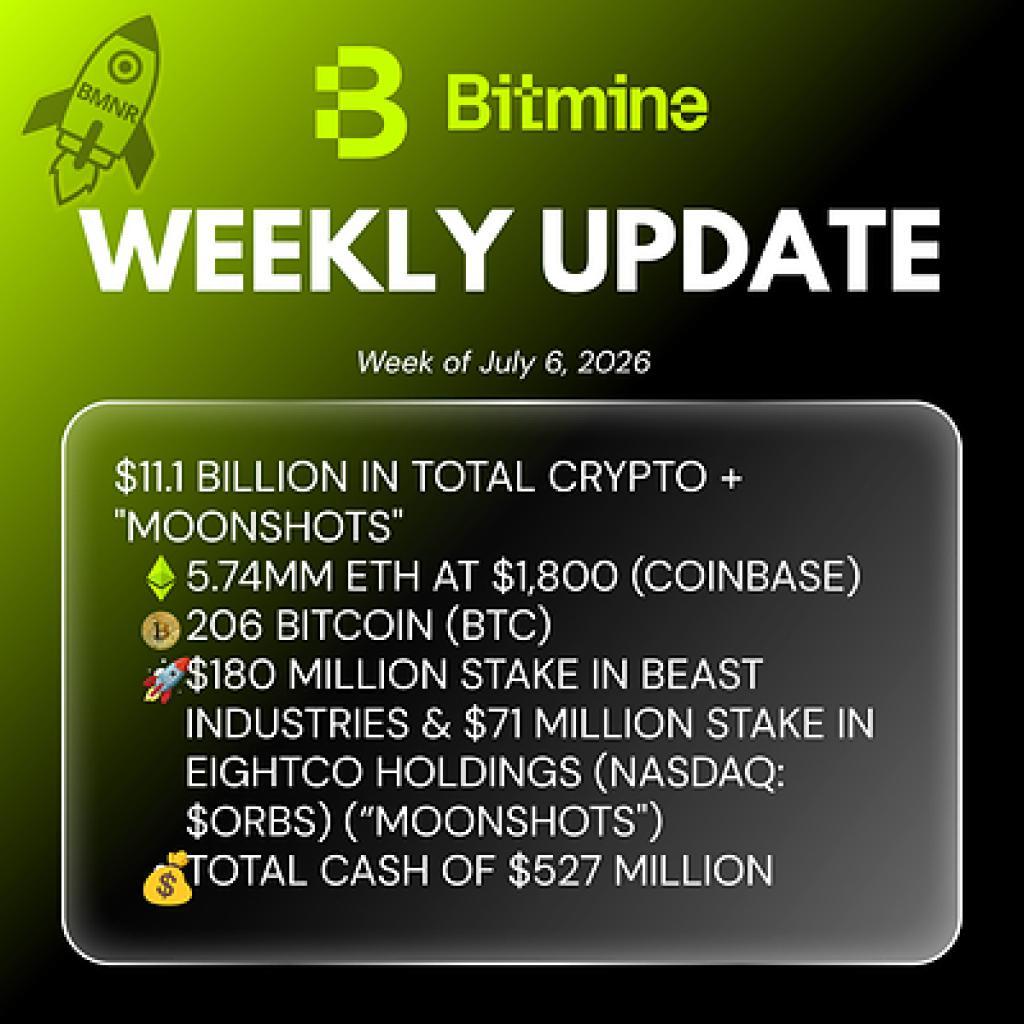
Bitmine Immersion Technologies (BMNR) Announces Total Crypto and Cash Holdings Top $11.1 Billion Now