Strategy Sells Bitcoin Amid Polymarket’s $20M Controversy | Coincu
Strategy, the company formerly known as MicroStrategy, sold 32 BTC for approximately $2.5 million between May 26 and May 31, 2026, marking its first Bitcoin disposal since December 2022. The sale, disclosed via an SEC filing on June 1, has thrown more than $20 million in Polymarket prediction positions into dispute, exposing a structural gap between corporate disclosure timelines and the real-time assumptions baked into crypto prediction markets.
What Happened: Strategy’s Bitcoin Sale and the Polymarket Pool
Strategy executed the sale at an average price of roughly $77,135 per BTC across a six-day window ending May 31. The company disclosed the transaction through a Form 8-K SEC filing on June 1, timestamped “as of May 31, 2026, 4:00 p.m. Eastern Time.”
On Polymarket, the contract “MicroStrategy sells any Bitcoin by May 31?” had been one of the platform’s most active markets. The May 31 contract alone attracted $53.86 million in open positions, while total volume across the May 31, June 30, and December 31 variants reached approximately $85 million.
When Strategy’s filing landed, the May 31 contract was sitting at 81% “Yes” and had already been flagged “in review.” The June 30 and December 31 contracts resolved at 99.9% “Yes” without dispute, confirming the controversy is specific to the May 31 deadline.
Why Traders Are Disputing the Resolution
Polymarket proposed resolving the May 31 contract as “No,” arguing that no information confirmed a Bitcoin sale within the market’s timeframe. The platform’s statement read: “No information from MSTR, on-chain data, or consensus of credible reporting confirmed that MicroStrategy sold Bitcoin within the market’s timeframe. Confirmation achieved outside of the market’s time frame does not qualify.”
Traders pushed back hard. The core of their argument: the market asked whether Strategy sold Bitcoin by May 31, not whether the sale was publicly confirmed by that date.
“The rules of this market are very clearly ‘Did they sell within the timeframe’ and not ‘Is there confirmation they sold within the timeframe.'”
— Voidofhype on Polymarket
Another trader said the dispute had shaken their confidence in the platform entirely: “This has made me lose a lot of faith in Polymarket. It’s confirmed they sold before the outcome was resolved.”
More than $20 million in positions now hinge on whether Polymarket treats the date of the actual sale or the date of public disclosure as the binding criterion.
Polymarket Dispute-Affected Positions
$20M+
Open positions thrown into dispute after Strategy’s first Bitcoin sale since 2022
Strategy’s Bitcoin Strategy: Context Behind the Sale
The 32 BTC sold represents just 0.0038% of Strategy’s 843,706 BTC treasury, valued at over $60 billion. By any measure, this was a rounding error, not a strategic pivot.
Strategy’s Sale vs. Total Treasury
0.0038%
32 BTC sold of 843,706 BTC held
~$2.5M sale — Strategy’s first Bitcoin disposal since December 2022
According to CoinDesk reporting, Strategy CEO Phong Le referenced “disciplined sale of bitcoin” as a capital management tool on the company’s Q1 earnings call. That statement reportedly moved year-end sale odds on Polymarket from 10% to 84%, suggesting the market was already pricing in eventual disposal.
The sale’s purpose appears to be routine treasury management, likely funding preferred stock dividend distributions. SEC rules allow companies up to four business days after a material event to file Form 8-K, which is why Strategy’s May 26-31 sales only became public on June 1. This is standard corporate behavior, but it created a timing gap that prediction markets were not designed to handle.
For investors tracking institutional Bitcoin holdings, similar to how Bitmine Immersion Technologies recently disclosed its $11.6 billion in crypto and cash holdings, the key signal is that Strategy’s accumulation thesis remains intact. Selling 32 BTC out of nearly 844,000 is not a reversal.
How a $20M Polymarket Pool Gets Resolved, and Disputed
Polymarket uses the UMA oracle system for market resolution. When a proposed outcome is challenged, the dispute escalates to UMA’s Data Verification Mechanism, where token holders vote within 48 to 96 hours.
The May 31 contract’s dispute has already been escalated to this DVM vote. The outcome will set a precedent for how prediction markets handle events that occur within a deadline but are disclosed after it.
The structural concern runs deeper than one contract. According to a Wall Street Journal analysis cited in secondary reporting, over 60% of active UMA voters in the past year could be directly linked to Polymarket accounts, and at least one voter had a financial stake in the outcome in nearly one in five disputes reviewed. This concentration raises questions about whether the oracle system can deliver impartial resolution on high-value contracts.
The dispute echoes broader governance challenges facing decentralized platforms. As crypto GPs face questions about product-market fit, prediction market infrastructure is confronting its own maturity test: can decentralized resolution mechanisms scale to handle tens of millions in disputed positions without compromising neutrality?
What to Watch: Implications for Bitcoin Holders and Prediction Market Traders
The UMA DVM vote should conclude within 48 to 96 hours of the dispute filing. Whatever the outcome, it will establish whether Polymarket resolution hinges on event occurrence or public confirmation, a distinction that affects every prediction market tied to corporate actions subject to SEC disclosure rules.
The gap this dispute exposes is not unique to Strategy. Any publicly traded company with crypto treasury holdings faces the same 8-K filing window. Prediction markets that frame questions around corporate actions implicitly assume real-time public information, but securities law does not require it. This design flaw will recur unless platforms explicitly define whether “by date X” means “executed by” or “publicly confirmed by.”
For the broader market, Bitcoin traded at $70,754 at press time, down 3.63% over 24 hours. The Fear & Greed Index sat at 23, deep in “Extreme Fear” territory. Strategy’s sale itself is too small to move prices, but the Polymarket controversy adds another layer of uncertainty at a moment when sentiment is already fragile.
Traders watching the evolving prediction market landscape should note that Kalshi’s recent application to launch perpetual futures on multiple tokens signals growing competition among prediction and derivatives platforms. How Polymarket handles this dispute may influence whether institutional participants view decentralized prediction markets as reliable venues or structurally flawed experiments.
FAQ
Did Strategy actually sell its Bitcoin holdings?
Yes. Strategy sold 32 BTC for approximately $2.5 million between May 26 and May 31, 2026, disclosed via an SEC Form 8-K filing on June 1. This was the company’s first Bitcoin sale since December 2022, but represents just 0.0038% of its total treasury.
What is the Polymarket $20M pool about?
The Polymarket contract asked “MicroStrategy sells any Bitcoin by May 31, 2026?” The May 31 contract drew $53.86 million in open positions, with more than $20 million in positions now disputed over whether the sale counts given that public confirmation came after the deadline.
How does Polymarket resolve disputed prediction markets?
Disputed markets escalate to UMA’s Data Verification Mechanism, where UMA token holders vote on the correct resolution within 48 to 96 hours. The outcome is binding for all positions in the contract.
Does this sale mean Strategy is changing its Bitcoin strategy?
No. The 32 BTC sale appears to be routine treasury management, likely funding preferred stock dividend distributions. Strategy still holds 843,706 BTC worth over $60 billion, and no public statements suggest a change in accumulation strategy.
When will the Polymarket dispute be resolved?
The UMA DVM vote is expected to conclude within 48 to 96 hours of the dispute filing. The exact resolution date depends on when the escalation was formally initiated, but traders should monitor UMA’s voting dashboard for real-time updates.
Disclaimer: This article is for informational purposes only and does not constitute financial or investment advice. Cryptocurrency and digital asset markets carry significant risk. Always do your own research before making decisions.
No tags available.


Other Posts








- Amplify 2024: Ohio’s Premier Blockchain Summit
- China, US Conclude Trade Talks with Focus on Cooperation
- Crypto Weekly: NYSE Backs OKX, Kraken Gets Fed Access, BTC Sells
- DeriW Launches Edge Hour Trading Competition Platform for Derivatives Traders
- Michael Saylor Denies Bitcoin Sell-Off Amid Large BTC Transfer
- Court Upholds Fed’s Rejection of Custodia Bank’s Request
- Former CFO Convicted for $35M Fraudulent Crypto Investment
- EU Opens Antitrust Probe Into Deutsche Boerse and Nasdaq Derivatives Dealings
- Kazakhstan Explores Crypto Reserves Backed by National Funds
- JPMorgan Increases Holdings in BlackRock’s Bitcoin ETF
- Nordea Bank Introduces Bitcoin ETP Trading for Nordic Customers
- XRP Spot ETF Launches on Nasdaq Amid Market Fluctuations
- JPMorgan Chase Launches 24/7 Digital Deposit Token for Clients
- Crypto Leaders Address Macro Volatility Amid Market Shifts
- Buy Dogecoin on eToro: Step-by-Step Guide for Beginners (2024)
- Peter Schiff Challenges Michael Saylor on MSTR’s Business Model
- Thailand Orders Worldcoin to Delete 1.2 Million Biometric Records
- UK Proposes New DeFi Tax Framework to Ease User Burden
- U.S. Treasury Proposes New Tax Relief Regulations
- Uniswap’s UNIfication Proposal Gains Massive Preliminary Support
- Amplify 2024: Ohio’s Premier Blockchain Summit
- China, US Conclude Trade Talks with Focus on Cooperation
- Crypto Weekly: NYSE Backs OKX, Kraken Gets Fed Access, BTC Sells
- DeriW Launches Edge Hour Trading Competition Platform for Derivatives Traders
- Michael Saylor Denies Bitcoin Sell-Off Amid Large BTC Transfer
- Court Upholds Fed’s Rejection of Custodia Bank’s Request
- Former CFO Convicted for $35M Fraudulent Crypto Investment
- EU Opens Antitrust Probe Into Deutsche Boerse and Nasdaq Derivatives Dealings
- Kazakhstan Explores Crypto Reserves Backed by National Funds
- JPMorgan Increases Holdings in BlackRock’s Bitcoin ETF
- Nordea Bank Introduces Bitcoin ETP Trading for Nordic Customers
- XRP Spot ETF Launches on Nasdaq Amid Market Fluctuations
- JPMorgan Chase Launches 24/7 Digital Deposit Token for Clients
- Crypto Leaders Address Macro Volatility Amid Market Shifts
- Buy Dogecoin on eToro: Step-by-Step Guide for Beginners (2024)
- Peter Schiff Challenges Michael Saylor on MSTR’s Business Model
- Thailand Orders Worldcoin to Delete 1.2 Million Biometric Records
- UK Proposes New DeFi Tax Framework to Ease User Burden
- U.S. Treasury Proposes New Tax Relief Regulations
- Uniswap’s UNIfication Proposal Gains Massive Preliminary Support
- Amplify 2024: Ohio’s Premier Blockchain Summit
- China, US Conclude Trade Talks with Focus on Cooperation
- Crypto Weekly: NYSE Backs OKX, Kraken Gets Fed Access, BTC Sells
- DeriW Launches Edge Hour Trading Competition Platform for Derivatives Traders
- Michael Saylor Denies Bitcoin Sell-Off Amid Large BTC Transfer
- Court Upholds Fed’s Rejection of Custodia Bank’s Request
- Former CFO Convicted for $35M Fraudulent Crypto Investment
- EU Opens Antitrust Probe Into Deutsche Boerse and Nasdaq Derivatives Dealings
- Kazakhstan Explores Crypto Reserves Backed by National Funds
- JPMorgan Increases Holdings in BlackRock’s Bitcoin ETF
- Nordea Bank Introduces Bitcoin ETP Trading for Nordic Customers
- XRP Spot ETF Launches on Nasdaq Amid Market Fluctuations
- JPMorgan Chase Launches 24/7 Digital Deposit Token for Clients
- Crypto Leaders Address Macro Volatility Amid Market Shifts
- Buy Dogecoin on eToro: Step-by-Step Guide for Beginners (2024)
- Peter Schiff Challenges Michael Saylor on MSTR’s Business Model
- Thailand Orders Worldcoin to Delete 1.2 Million Biometric Records
- UK Proposes New DeFi Tax Framework to Ease User Burden
- U.S. Treasury Proposes New Tax Relief Regulations
- Uniswap’s UNIfication Proposal Gains Massive Preliminary Support
Latest
Strategy Sells Bitcoin Amid Polymarket’s $20M Controversy | Coincu
Kalshi Applies to Launch Perpetual Futures on ETH, XRP, SOL, DOGE and 8 More Tokens

Crypto GPs’ Mid-Life Crisis: Without PMF, There Is No LP’s Next Check
Press Release
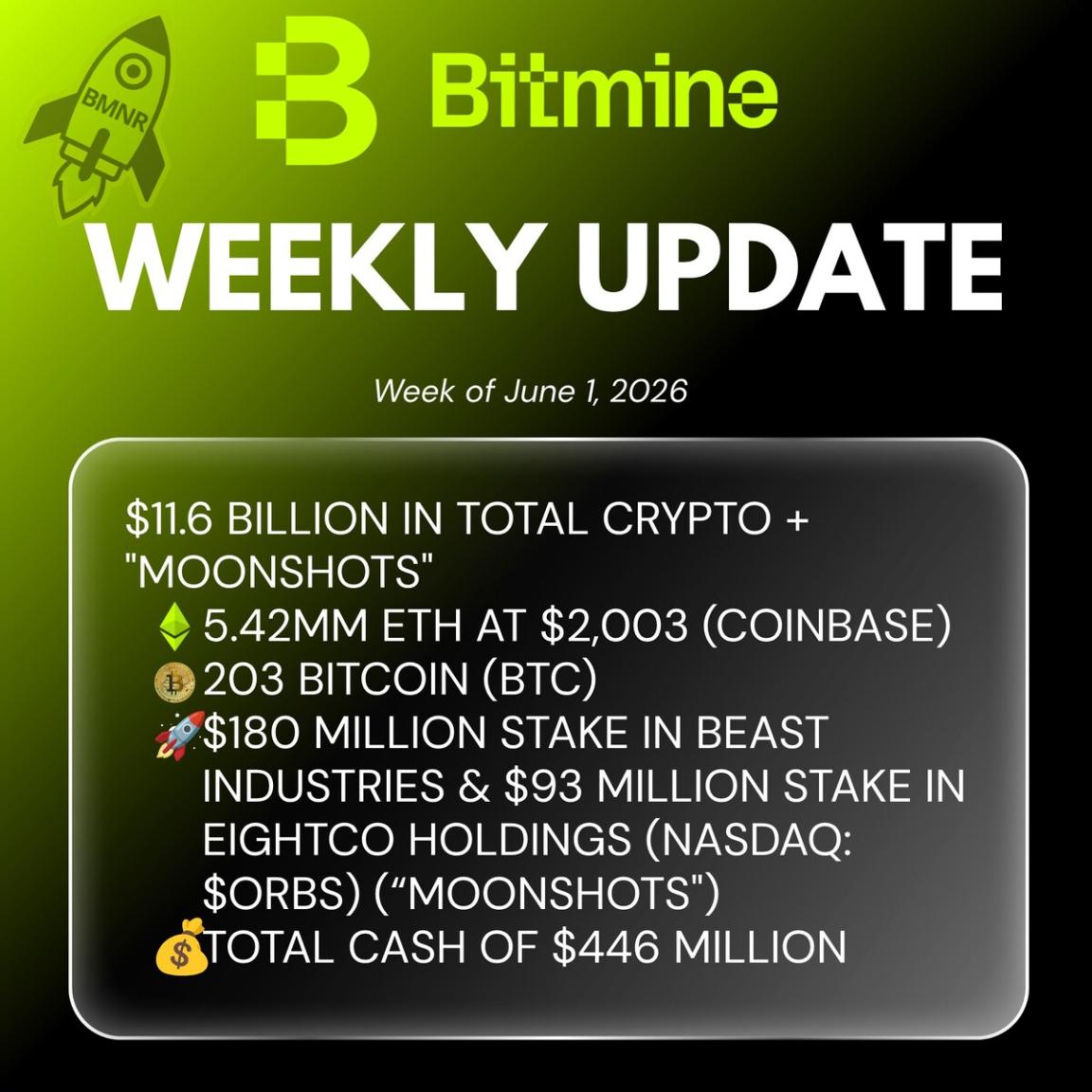
Bitmine Immersion Technologies (BMNR) Announces ETH Holdings Reach 5.42 Million Tokens, and Total Crypto and Total Cash Holdings of $11.6 Billion